Budgeting: How to afford an unpaid internship without debt
To afford an unpaid internship, plan for the full living costs of the placement and find ways to fund them before you start. In a worked example, a three-month internship in a city costs 3,600 to live on.
 By Wealtie Team · 3 min read
Key takeaways
- An unpaid internship still costs money in rent, food and travel.
- Work out the full cost before you accept.
- Grants, part-time work and staying with family can fund it.
- Ask about travel expenses or a stipend, and check your rights to pay.
Can you afford an unpaid internship?
Internships can open doors in competitive fields, giving you experience, contacts and something strong for your CV. But an unpaid internship still costs money. You'll need to pay rent, food and travel while you work for free, sometimes in an expensive city. Before you accept, it's worth working out exactly what it will cost and how you'll pay for it.
In some countries, unpaid internships are restricted or illegal for certain kinds of work, and interns may be entitled to minimum wage if they're doing real work. Check the rules where you live, and don't be afraid to ask questions.
How much does an unpaid internship cost?
Here's a worked example of living costs for a three-month internship in a city, in round numbers that work in any currency:
| Cost | Three months |
|---|---|
| Rent | 2,100 |
| Food | 600 |
| Travel | 450 |
| Phone, clothes and extras | 450 |
| Total | 3,600 |
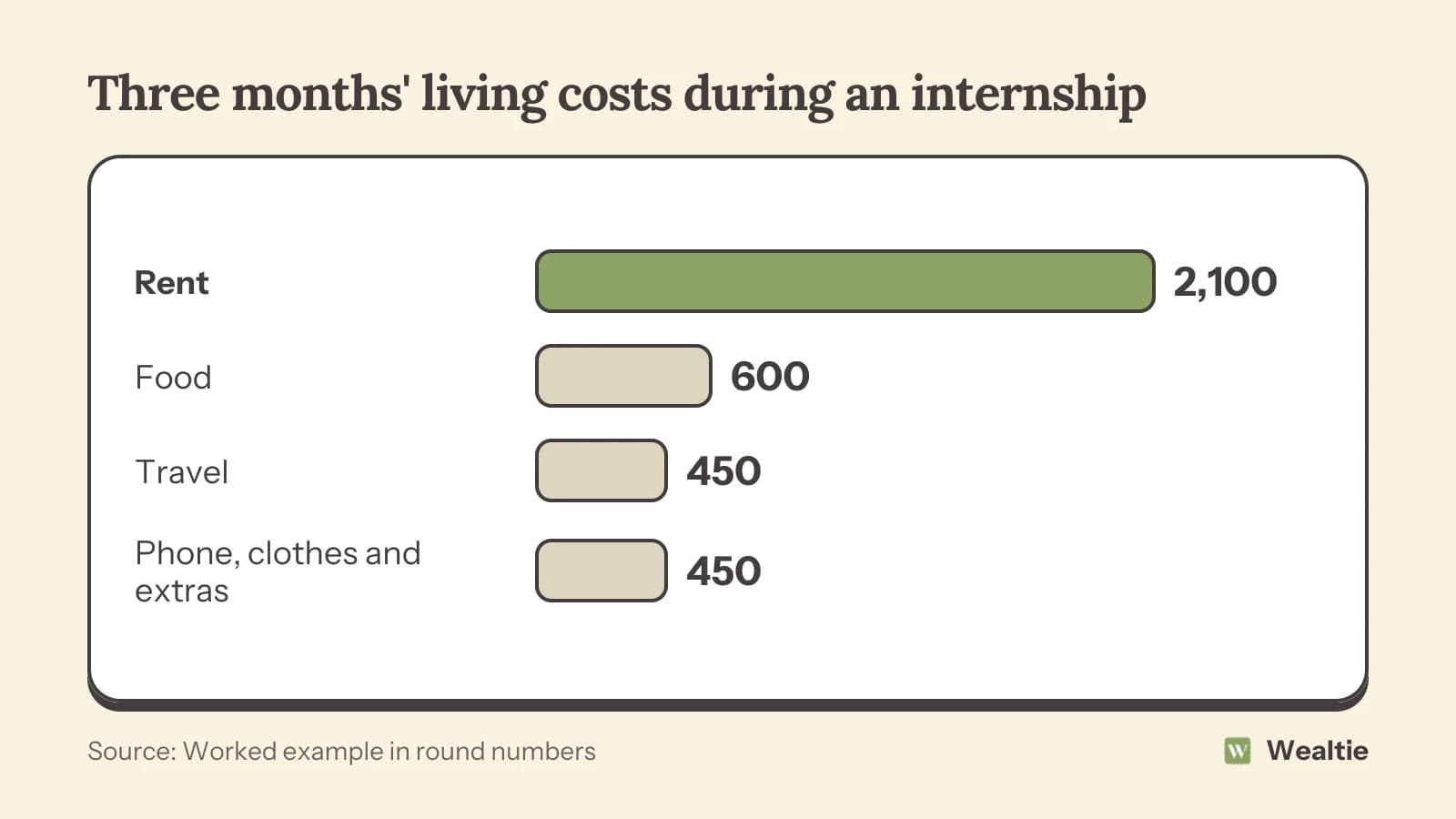
That's 1,200 a month with no income from the internship itself. Costs vary a lot by city. If you can live at home, the cost drops sharply, since rent is the biggest line.
How do you fund an unpaid internship?
Ask about expenses or a stipend
Many organisations will cover travel or lunch, or pay a small stipend, if you ask. It's a reasonable question to raise before accepting.
Look for grants and bursaries
Universities, charities and professional bodies sometimes offer grants for students or graduates taking internships. Your careers service can help you find them.
Work part-time
A part-time job in the evenings or at weekends, earning around 400 a month, would cover 1,200 over three months. Check the internship hours leave room for it.
Stay with family or friends
Living at home or with relatives during the placement cuts the biggest cost. Offering to contribute to bills keeps it fair. How much rent should you pay your parents? covers that conversation.
Use savings
If you've saved from earlier jobs, a short internship can be a good use of them, as long as you keep some as an emergency buffer. How to build an emergency fund covers how much to keep aside.
Avoid expensive debt
Putting living costs on a credit card or payday loan can leave you with debt long after the internship ends. If you need to borrow, look for the cheapest option and have a plan to repay it.
How do you keep costs down during the internship?
Pack lunches
Bringing lunch from home saves a lot in a city where cafés are expensive.
Use travel discounts
Student or young person travel cards, railcards and monthly passes can cut commuting costs.
Share accommodation
A room in a shared house or short-term let often costs much less than a studio.
Set a weekly spending limit
With no income from the internship, a clear limit for food and fun helps your money last.
Is an unpaid internship worth it?
It depends on the opportunity. A well-structured internship with real training, good contacts and a realistic chance of paid work afterwards can be valuable. One with little learning or support may not be worth the cost. Ask past interns about their experience and what happened next. If you're offered a paid role afterwards, how to negotiate a salary offer covers getting a fair starting pay.
Before you accept, ask a few practical questions. What will you be doing day to day? Who will supervise and train you? How many hours a week are expected, and how flexible are they? Is there a chance of paid work afterwards? The answers help you judge whether the internship is worth the cost and whether you'll have time for part-time work alongside it.
If you're comparing a paid and an unpaid opportunity, include the full living costs in the comparison. A paid internship with slightly less prestige might leave you in a much stronger financial position, and many employers value the experience just as much. A paid role also means you won't need to rely on family or savings.
Remember to plan for the end of the internship too. If you don't move straight into a paid job, you'll need money for the weeks or months of job hunting. Keeping a little of your savings for that period, rather than spending it all during the placement, gives you breathing space.
Finally, keep records of any expenses you pay for work, like travel to meetings. If the organisation offers to reimburse costs, you'll have everything ready to claim.
How can Wealtie help you plan an internship?
Set a monthly budget for the internship based on your savings and any part-time income, and log spending in expense categories like rent, food and travel. You'll see how long your money will last and spot early if you need to cut back.
Questions people ask
In a worked example, living costs for a three-month internship in a city came to about 3,600, mostly rent.
Ask about expenses or a stipend, look for grants, work part-time, stay with family and use savings rather than expensive debt.
Rules vary by country and type of work. In some places, interns doing real work are entitled to minimum wage, so check local rules.
It can be if it offers real training, good contacts and a realistic chance of paid work. Ask past interns about their experience.
This article is general information, not financial, tax or legal advice. Your situation is your own; check the numbers that apply to you before you act on them.