Multi-currency & travel: Train vs plane cost: which is cheaper door to door?
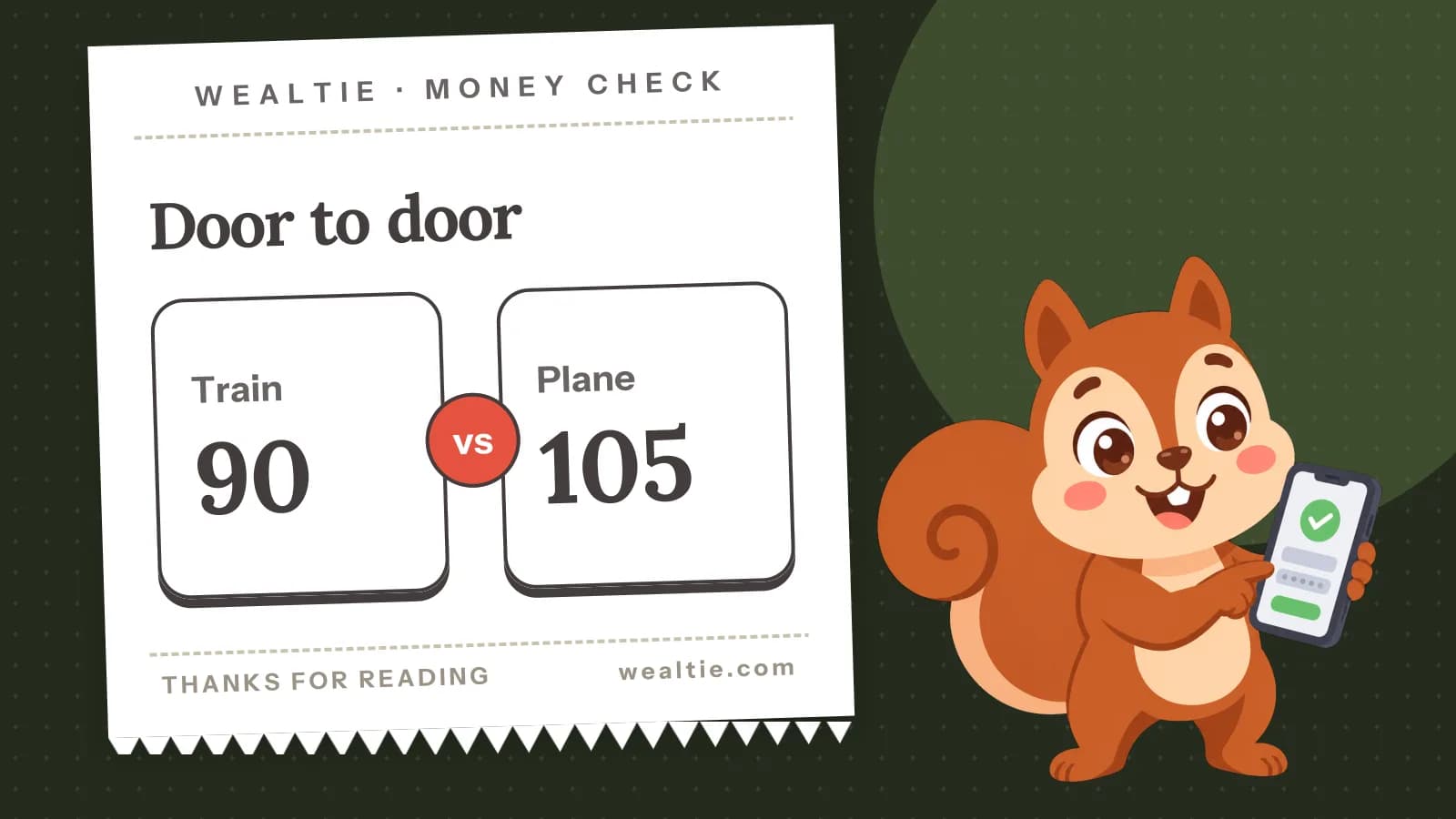
Train vs plane cost depends on more than the fare, since airport transfers and baggage fees often close the gap. In a worked example, a 40 flight costs 105 door to door, against 90 for the train.
 By Wealtie Team · 3 min read
Key takeaways
- Train vs plane cost should be compared door to door, not fare to fare.
- Airport transfers, bags and airport food often double a cheap flight.
- On journeys of a few hours, the train is often similar in total time and cost.
- Booking early and using railcards brings train fares down.
How do you compare train vs plane cost fairly?
At first glance, a cheap flight often looks better than the train. But flight prices rarely include everything you'll pay to get from your front door to where you're staying. Airports are usually outside the city, budget airlines charge for bags and seats, and you'll probably buy food while you wait. The train often starts and ends in city centres, with luggage included.
To compare train vs plane cost fairly, add up the whole journey for each. Here's a worked example of a trip between two cities a few hundred kilometres apart, in round numbers that work in any currency:
| Flight costs | Amount |
|---|---|
| Flight fare | 40 |
| Checked bag | 30 |
| Airport transfers, both ends | 25 |
| Food at the airport | 10 |
| Total | 105 |
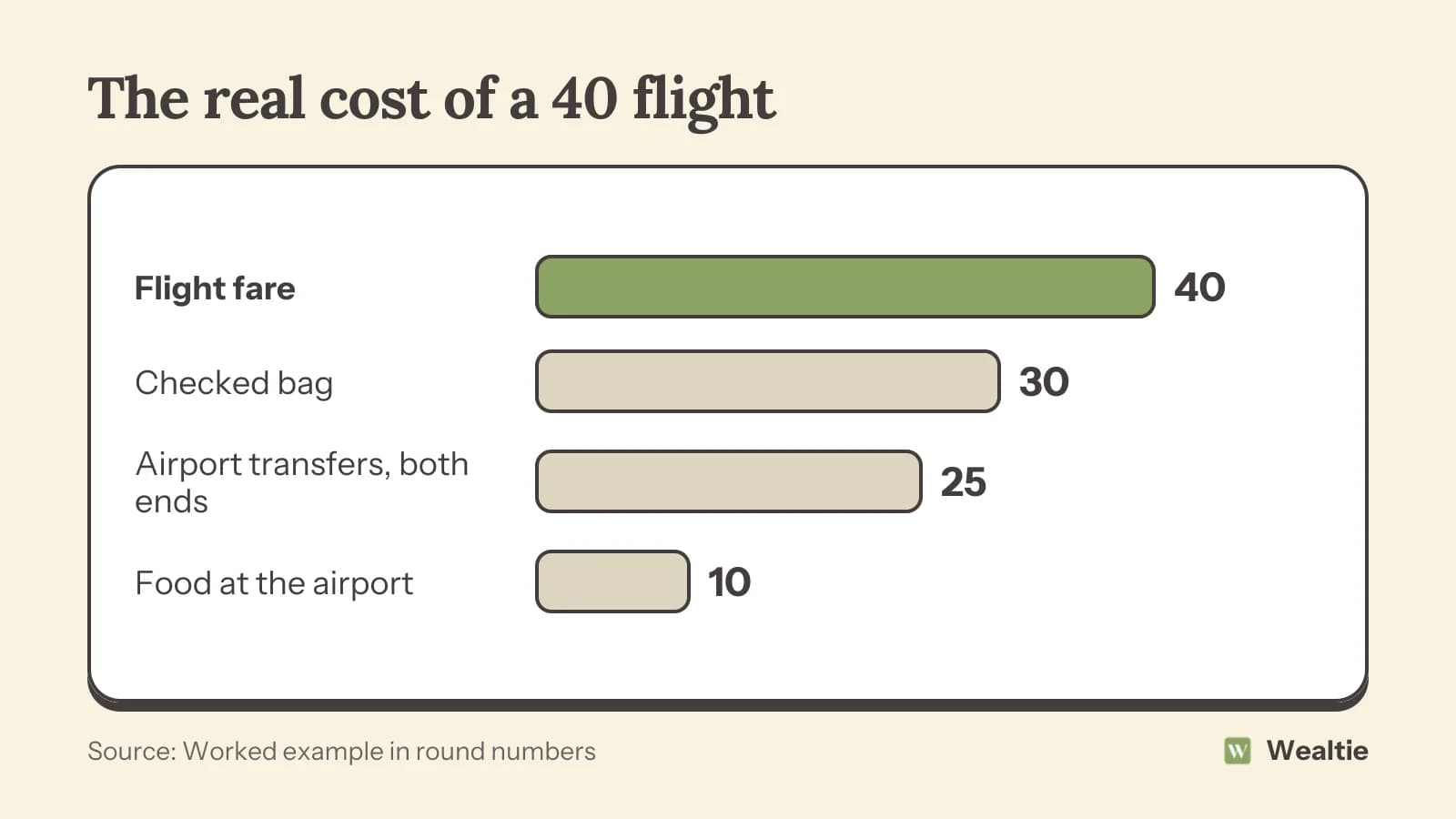
The train ticket for the same journey costs 90, from one city centre to the other, with luggage included and no transfers needed. The flight looked less than half the price, but door to door, the train is cheaper.
What about the time?
Flights are faster in the air, but the time around them adds up. In the same example, the flight takes an hour, but getting to the airport early, security, boarding and waiting for bags add about two hours, and transfers at both ends add another hour and a half. That's around four and a half hours door to door. The train takes four hours from centre to centre.
On the train, much of that time is usable. You can work, read, eat or rest, without queues or security. For journeys up to about five or six hours by train, many travellers find it as quick overall and far less stressful.
When is flying cheaper?
Long distances
Over long distances, or when crossing water, flights are usually much faster and often cheaper than the train.
Hand luggage only
If you travel with a small bag that fits the free allowance, the gap narrows, since there's no bag fee.
Very early booking or sales
Budget airlines sometimes run sales with fares low enough to beat the train even after extras. How to save money on flights covers finding them.
Airports close to both ends
If the airport is easy to reach from your home and destination, transfer costs and time shrink.
When is the train cheaper?
Short and medium distances
For city-to-city trips of a few hours, the train often wins on total cost once you count airport extras.
Booking ahead and railcards
Advance fares, off-peak tickets and railcards can cut train prices sharply. How to save money on train tickets covers the main ways.
Travelling with luggage
If you're carrying a large suitcase or sports kit, the train usually lets you bring it without extra fees.
Multi-city trips
A rail pass can make several train journeys cheaper than separate flights. How to budget a rail pass trip covers whether a pass is worth it.
What else should you factor in?
Comfort and stress
Trains generally have more legroom, no security queues and no liquid limits. For many people, that's worth paying a little more.
Reliability
Both can be delayed. Check your rights to refunds or compensation for each, since rules vary.
Getting around at your destination
Arriving in the city centre by train can save a taxi or bus fare, which matters on a short trip like a city break.
How do you plan a trip budget around it?
Once you've chosen how to travel, add the full door-to-door cost to your trip budget, not just the fare. How to budget for a trip abroad covers building a complete budget, from transport and accommodation to daily spending.
It's also worth thinking about the environment. Trains usually produce far less carbon per passenger than short flights, and some travellers choose the train for that reason even when it costs a little more. If the prices are close, that can tip the balance, and some employers now encourage rail for short business trips too.
When you compare options, open a simple note and write down every cost for each, from the taxi to the station or airport to the bag fee and the coffee you'll buy while you wait. Doing that once or twice gives you a feel for the real price of each kind of journey, so future decisions take seconds.
How can Wealtie help you see the full cost?
Log every part of the journey, like fares, bag fees, transfers and airport food, in a transport expense category. You'll see the real cost of each trip, which makes the next train vs plane decision easier. If the trip crosses currencies, Wealtie handles multiple currencies in one place.
Questions people ask
For short and medium distances, the train is often cheaper door to door once you add airport transfers, bag fees and airport food to a flight.
Common extras are checked bags, seat selection, airport transfers at both ends and food at the airport. In a worked example, they turned a 40 fare into 105.
On journeys of up to about five or six hours by train, the total door-to-door time is often similar once airport time is counted.
Book advance fares, travel off-peak, use a railcard if you're eligible and consider a rail pass for several journeys.
This article is general information, not financial, tax or legal advice. Your situation is your own; check the numbers that apply to you before you act on them.