Budgeting: Teeth whitening cost: dentist vs home kits
Teeth whitening cost ranges from a few units for whitening toothpaste to hundreds for in-chair treatment at a dentist. In a worked example, dentist take-home trays cost 300, against 600 for in-chair whitening.
 By Wealtie Team · 3 min read

Key takeaways
- Teeth whitening cost depends on the method, from toothpaste to in-chair treatment.
- Dentist take-home trays often give good results for less than in-chair whitening.
- Results fade over time, so top-ups are an ongoing cost.
- Whitening should be done safely, ideally with a dentist's advice.
How much does teeth whitening cost?
Teeth naturally darken over time, and coffee, tea, red wine and smoking can add stains. Whitening can brighten your smile, and there are many ways to do it, from whitening toothpaste to professional treatments at a dentist. Teeth whitening cost depends on the method, where you live and how long you want results to last.
Here's a worked example of common options, in round numbers that work in any currency:
| Option | Cost |
|---|---|
| Whitening toothpaste, a year | 40 |
| Dentist take-home trays | 300 |
| In-chair whitening | 600 |
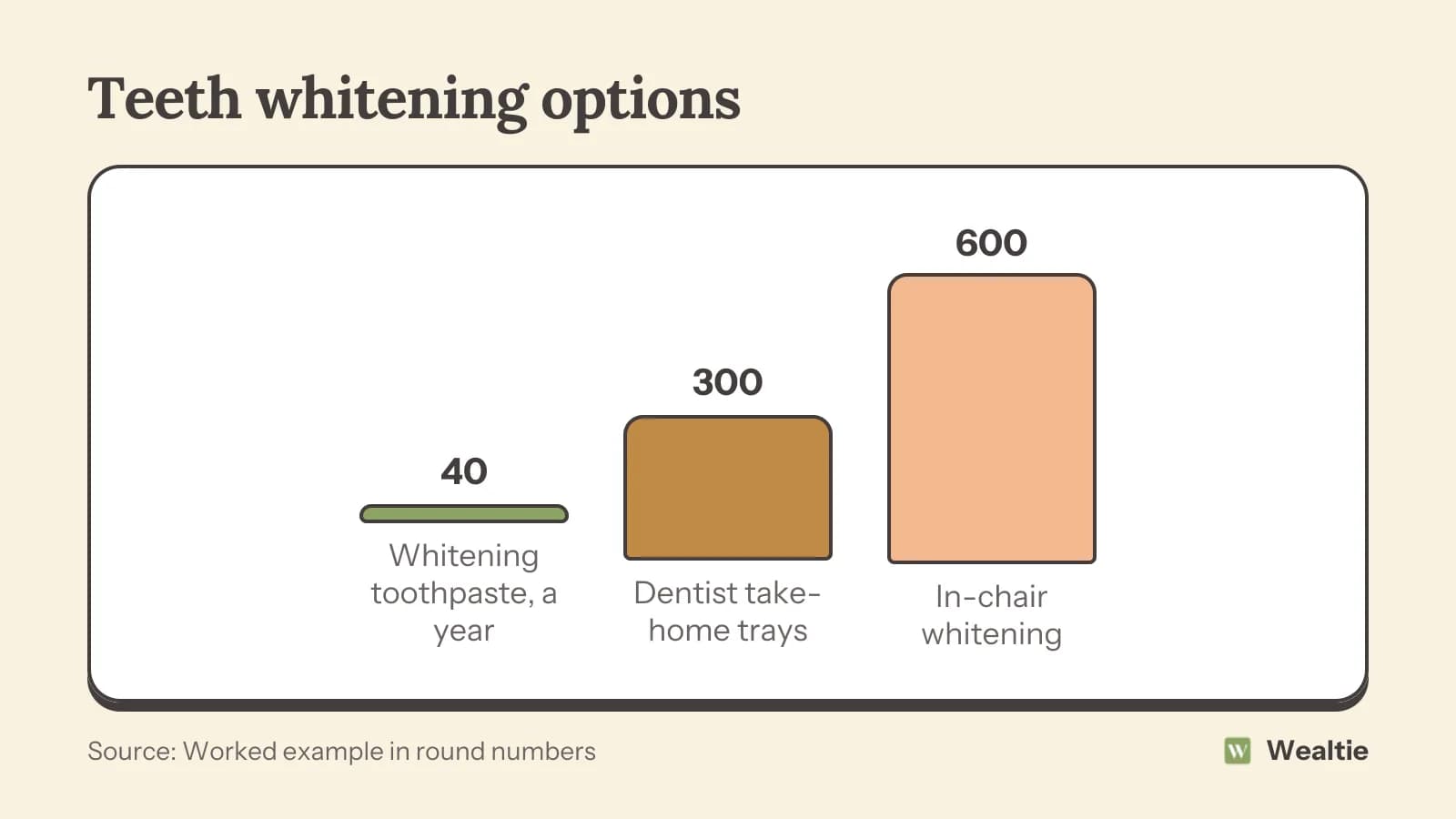
Whitening toothpaste mostly removes surface stains and has a limited effect. Dentist take-home trays use custom-fitted trays and whitening gel, worn at home over a few weeks. In-chair whitening gives faster results in one or two appointments but costs more. Top-up gel for trays might cost around 40 a year.
What are the main options?
Whitening toothpaste
The cheapest option, mainly helping with surface stains. It won't change the natural colour of your teeth much.
Shop kits and strips
Strips and kits from shops are cheaper than dentist treatments, but results vary, and some products may not be safe or effective. In some countries, strong whitening products can only be supplied by dentists.
Dentist take-home trays
Your dentist takes impressions to make trays that fit your teeth, and gives you whitening gel to use at home. Many people find this the best balance of cost and results.
In-chair whitening
A dentist applies stronger whitening gel in the surgery, sometimes with a light. It's quicker but usually the most expensive option.
Is teeth whitening safe?
Whitening done by a dentist, or with products approved where you live, is generally safe, though some people get temporary sensitivity. Unregulated products, especially those bought online or offered by people without dental training, can damage teeth and gums. It's best to talk to your dentist first, since they can check your teeth are healthy and tell you whether whitening will work for you. Crowns, fillings and veneers don't whiten, which can affect results.
How long does whitening last?
Results can last from several months to a few years, depending on your diet and habits. Coffee, tea, red wine and smoking cause stains to return faster. Take-home trays can be reused with top-up gel, which keeps the cost of maintaining results low. In-chair whitening may need repeating every year or two.
How do you whiten teeth for less?
Start with a clean
A professional clean from a hygienist removes surface stains and may be enough for some people. How to save money on dental care covers keeping check-ups and cleans affordable.
Choose take-home trays
Dentist trays usually cost less than in-chair whitening and can be topped up for years.
Look after your results
Rinsing after coffee or tea, using a straw for some drinks and brushing well help results last longer.
Watch for offers
Some dental practices offer whitening deals at certain times of year. Make sure treatment is still done properly.
Avoid cheap, unregulated products
A product that damages your teeth could cost far more to fix.
Is it worth it?
For many people, whitening is a confidence boost and worth the cost, especially before a big event like a wedding. Others are happy with regular cleans. Thinking of it as an ongoing cost, including top-ups, helps you decide. Cost per use can help put the price in perspective.
Before any whitening, it's worth having a check-up. Whitening doesn't treat decay or gum problems, and whitening teeth with untreated issues can cause discomfort. Your dentist can also tell you whether stains are on the surface, which a clean may remove, or deeper, which might need a different approach. Starting with a check-up can save you paying for a treatment that won't give the results you want.
Think about timing too. If you're planning whitening for a wedding or big event, start a few weeks ahead so you have time to reach the shade you want and for any sensitivity to settle. Rushing can mean paying for more expensive in-chair treatment when trays would have done the job.
If you have crowns, veneers or fillings on front teeth, talk to your dentist about how whitening will affect your smile. Since they won't change colour, your natural teeth could end up lighter than them, which might mean replacing them later at extra cost.
Finally, protect your investment with good daily habits. Regular brushing, cleaning between teeth and keeping up with hygienist appointments keep your smile bright for longer and reduce the need for top-ups.
How can Wealtie help you plan for it?
Log whitening and dental costs in a health or personal care expense category, and set a budget if you're saving for treatment. Seeing dental and cosmetic costs together helps you plan both.
Questions people ask
In a worked example, dentist take-home trays cost about 300 and in-chair whitening about 600, while whitening toothpaste cost about 40 a year.
Dentist treatments are usually safer and more effective. Results from shop kits vary, and some products may not be safe.
From several months to a few years, depending on your diet and habits. Take-home trays can be topped up with gel.
Whitening done by a dentist or with approved products is generally safe, though some people get temporary sensitivity.
This article is general information, not financial, tax or legal advice. Your situation is your own; check the numbers that apply to you before you act on them.