Budgeting: How to save money on dental care without skipping check-ups
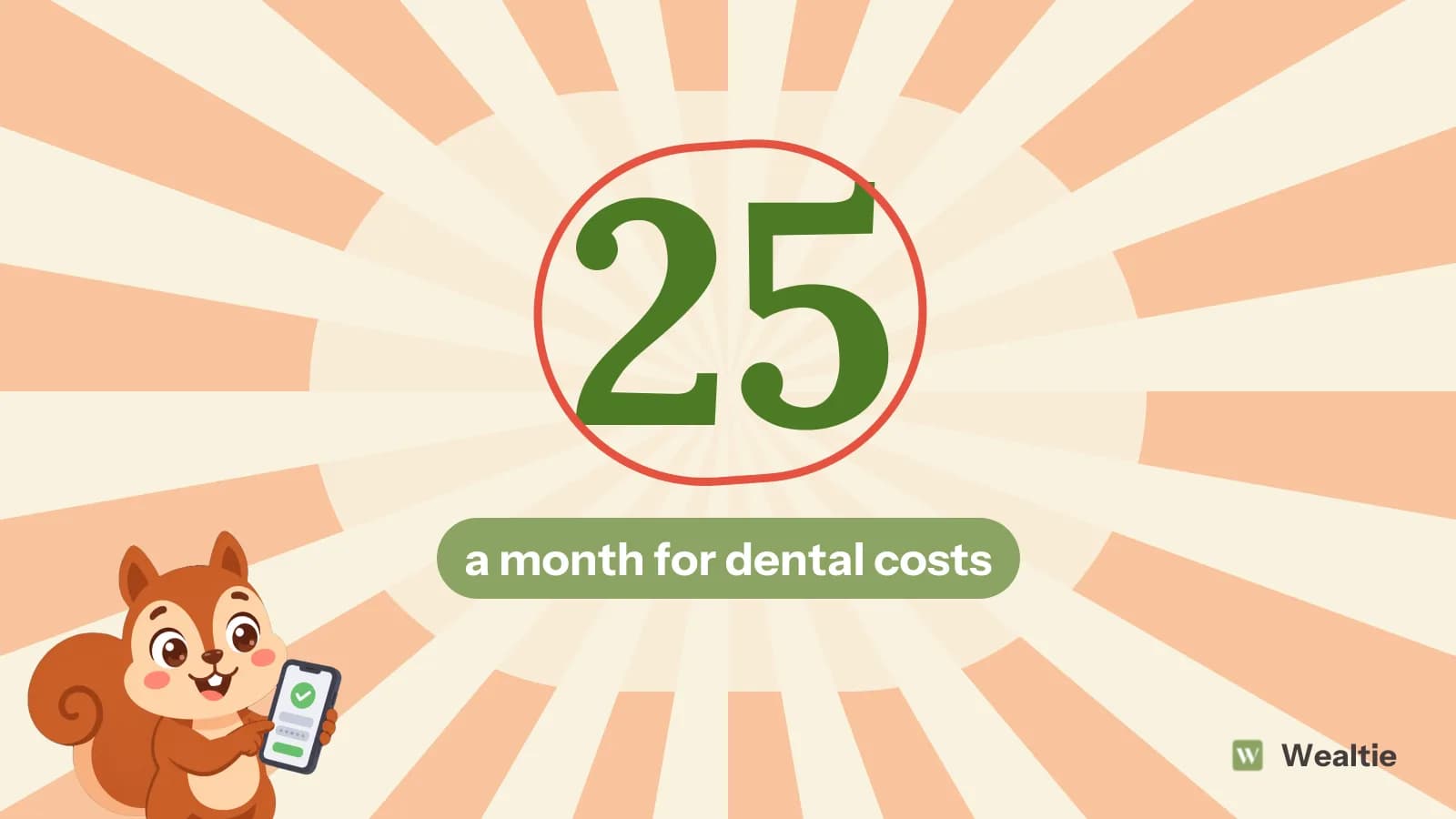
To save money on dental care, keep up routine check-ups, which cost far less than treating problems later, compare prices, ask about payment plans and check for public or training clinics. In a worked example, setting aside 25 a month covers a year of check-ups and a filling.
 By Wealtie Team · 3 min read
Key takeaways
- Routine check-ups usually cost far less than treating a problem that's been left.
- In a worked example, two check-ups, a hygienist visit and a filling cost 300 a year, or 25 a month.
- Prices vary between dentists, so compare and ask for a written estimate before treatment.
- Public dental services, training clinics and payment plans can make treatment more affordable.
How do you save money on dental care?
Keep up the routine care, compare prices for bigger work, and plan for it in your budget. Dental costs can feel unpredictable, but many of them aren't: check-ups and cleaning come round on a schedule, and small problems found early usually cost much less to fix than ones left to grow. A little planning turns dental bills from a shock into a regular line in the budget.
What does dental care cost in a year?
Here's a worked example for one adult, in round numbers that work in any currency:
| Item | Per year |
|---|---|
| Two check-ups | 120 |
| One hygienist visit | 60 |
| One filling | 120 |
| Total | 300 |
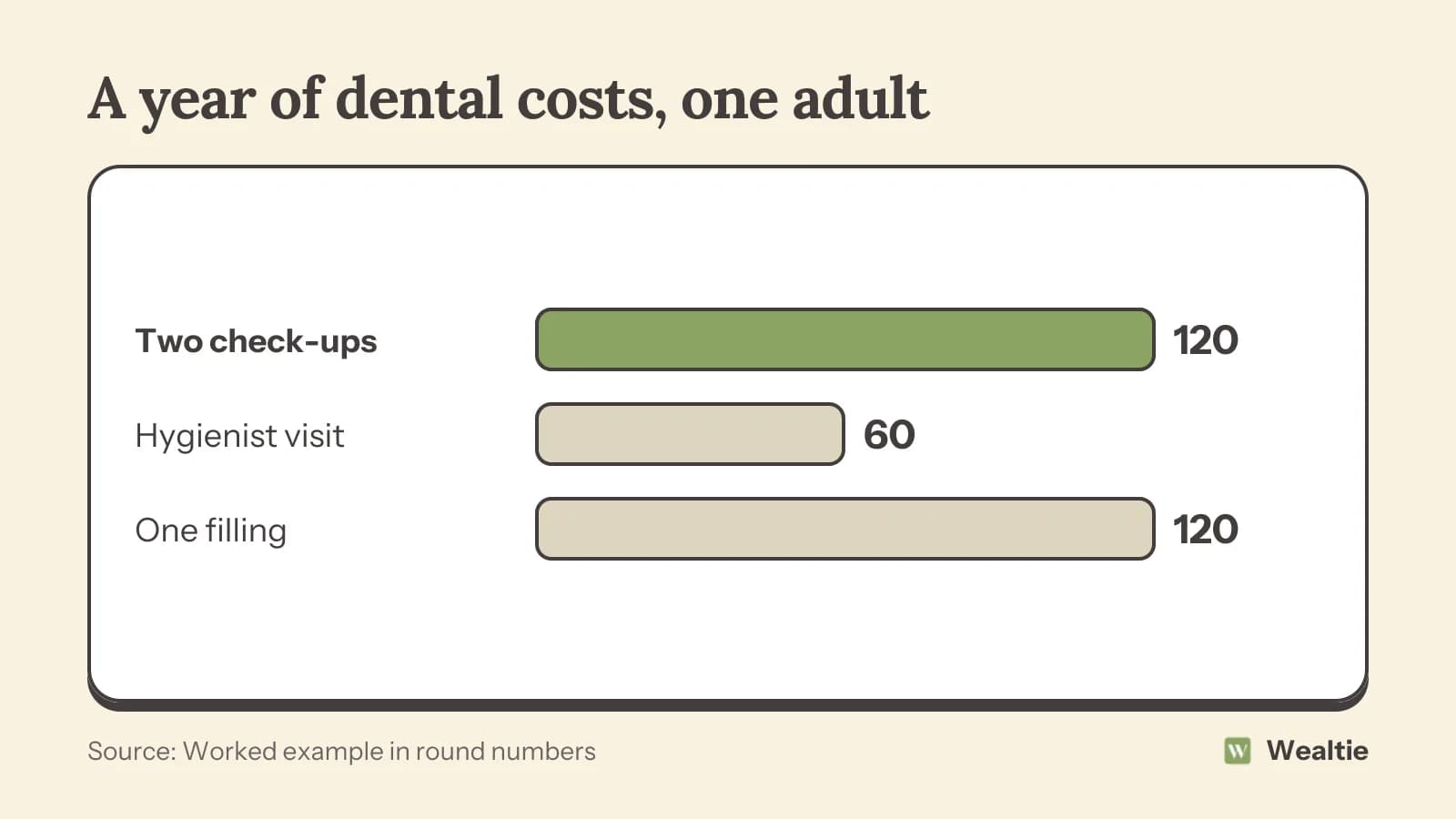
That's 25 a month. Your costs depend on where you live, whether you use public or private care, and your teeth. Some years need nothing beyond check-ups, while others bring a crown or root canal that costs far more. Building the pot during quiet years means a big year doesn't land on a credit card. If you've got a treatment coming up, ask for the estimate early, so you can add it to the monthly amount for a few months before the appointment.
Why do check-ups save money?
Because problems caught early are usually cheaper to treat. A small filling costs much less than a crown, and a crown costs less than an extraction and replacement. Skipping check-ups to save money in the short term can lead to bigger bills later.
Looking after your teeth at home, with regular brushing and cleaning between teeth, also cuts down on treatment over time. Cutting back on sugary snacks and drinks helps your teeth and your food budget at the same time. Ask your dentist how often you need check-ups, since some people can go longer between visits and others need them more often.
How do you find a cheaper dentist?
Compare. Prices for the same treatment can vary a lot between practices. Ask for a price list, or for a written estimate before any treatment beyond a check-up. Other options to look at:
- Public or subsidised dental services, where they're available, which are often cheaper than private care
- Dental schools and training clinics, where students treat patients under supervision for lower fees
- Community clinics, which may offer lower prices for people on low incomes
Check what's available where you live, since dental provision differs a lot between countries. Some practices offer lower prices for new patients or for booking at quieter times, so it's worth asking.
How do you pay for bigger treatment?
Ask about options before you start. Many dentists offer payment plans that spread the cost over months, sometimes without interest. Ask for the total cost in writing, including any follow-up appointments.
If the treatment isn't urgent, you might save for it over a few months instead, or ask whether a cheaper alternative would work. For example, a different material or a simpler approach might do the job for less. Your dentist can explain the trade-offs. For non-urgent cosmetic work, like whitening, decide whether it's worth it for you and save for it separately, rather than mixing it with essential care. If you're worried about a large estimate, getting a second opinion from another dentist is a reasonable step.
Is dental insurance or a dental plan worth it?
It depends on your teeth and the plan. A plan that covers check-ups and a share of treatment for a monthly fee can help spread costs, but compare the total yearly cost with what you'd normally spend. If you only need check-ups, paying as you go may be cheaper. Read what's covered, any waiting periods and limits before signing up. Some employers include dental cover as a benefit, so check your contract before paying for a plan yourself.
How do you budget for dental costs?
Set aside a monthly amount, like 25, in a health pot. When a check-up or treatment comes up, the money's already there. A sinking fund works well for this. For a family, add up the expected costs for each person, including children's check-ups and any orthodontic work. How to budget for medical bills covers the rest of health costs.
How do you track dental costs in Wealtie?
Add a savings account for health costs and move a monthly amount into it as a transfer, which isn't counted as spending. Log dental bills in a Health category, so your expense categories show what dental care costs over a year. Your net worth tracker shows the health pot growing.
Questions people ask
Keep up check-ups, compare prices, ask for written estimates, check public or training clinics and ask about payment plans for bigger treatment.
Problems caught early are usually much cheaper to treat than ones left to grow.
Only if the plan's yearly cost is less than what you'd normally spend on covered treatment. Compare and read the limits first.
Add up your expected check-ups and treatment for the year. A worked example comes to 300, or 25 a month.
This article is general information, not financial, tax or legal advice. Your situation is your own; check the numbers that apply to you before you act on them.