Budgeting: Teacher budget: making pay last through the summer
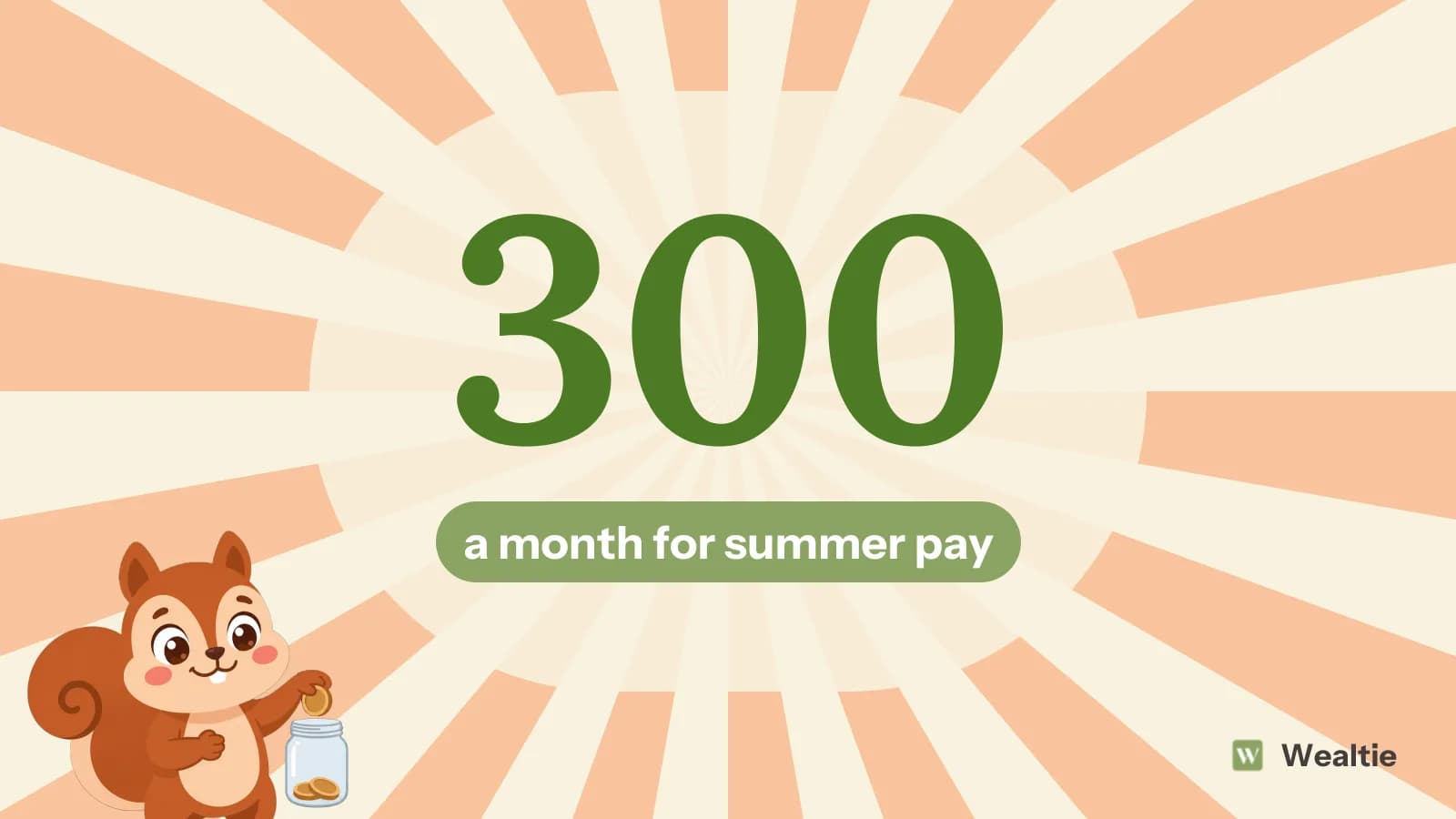
A teacher budget needs a plan for summer, especially if your pay stops for the holidays or arrives in fewer months. In a worked example, saving 300 a month from September covers a 3,000 summer gap.
 By Wealtie Team · 3 min read
Key takeaways
- A teacher budget needs a plan for summer if pay stops or arrives in ten months.
- Saving a set amount each month spreads ten months of pay over twelve.
- Plan summer holiday spending and back-to-school costs separately.
- Even with twelve-month pay, summer often costs more than term time.
Why does a teacher budget need a summer plan?
Teaching comes with long summer holidays, but depending on where you work, your pay may not continue through them. Some teachers are paid over twelve months, so pay arrives evenly all year. Others are paid only during the ten months of the school year, or can choose between the two. Supply and substitute teachers often have no pay at all when schools are closed.
If your pay stops in summer, the bills don't. A teacher budget that plans for those months avoids a stressful July and August, and even teachers paid all year often find summer costs more, with holidays, childcare and time at home.
How do you save for a summer without pay?
Start by working out how much you need over the summer. Here's a worked example in round numbers that work in any currency. A teacher paid over ten months needs 1,500 a month for essentials during July and August, so 3,000 in total. Saving 300 a month from September to June covers it:
| By the end of | Saved |
|---|---|
| December | 1,200 |
| March | 2,100 |
| June | 3,000 |
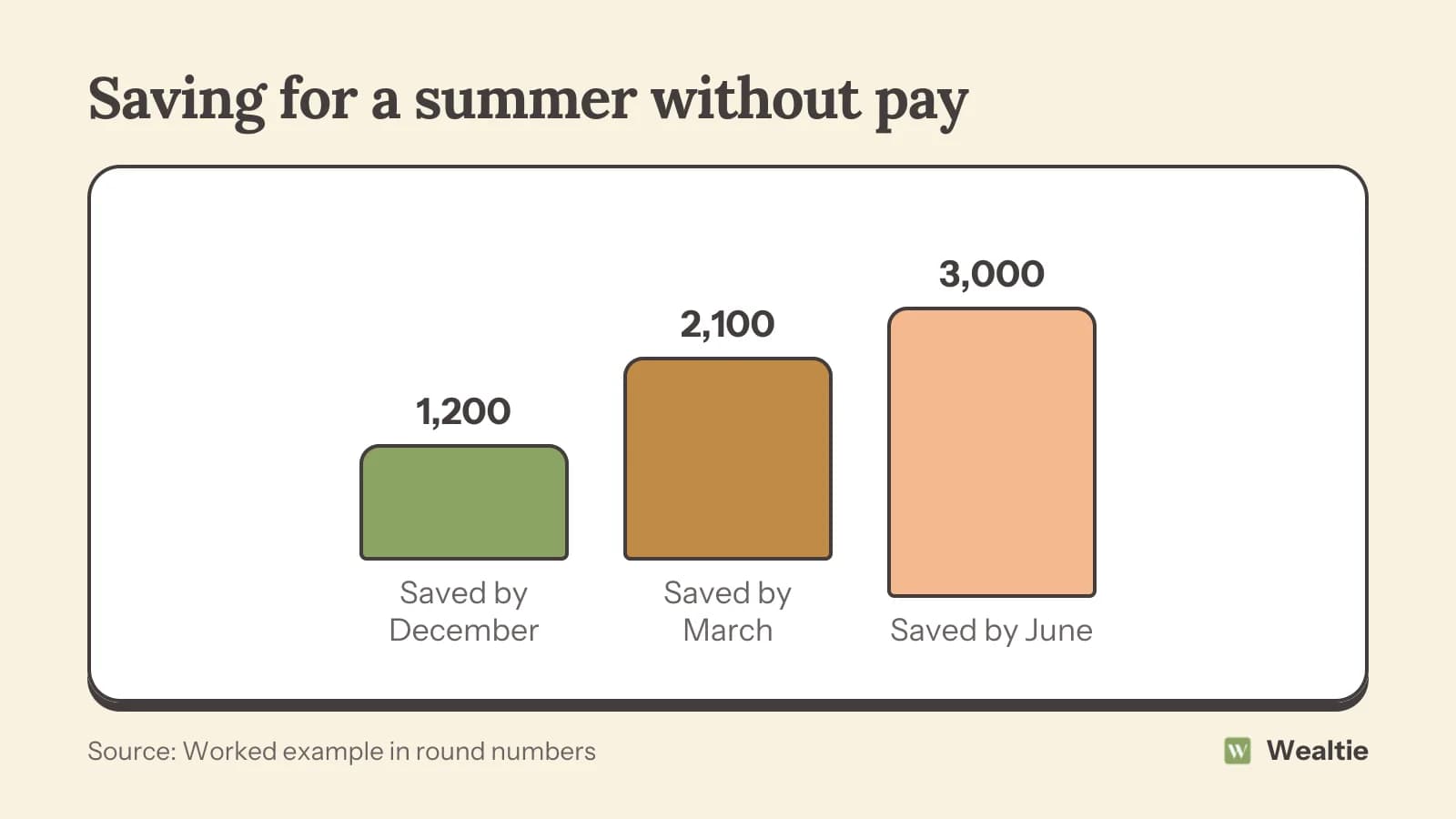
That effectively turns ten months of pay into twelve. Putting the 300 into a separate savings pot on payday, before you spend anything, makes it automatic. How to use a sinking fund covers setting up a pot like this.
What if you're paid over twelve months?
You won't have a gap in pay, but summer can still strain the budget. Holidays, days out with children, childcare for your own children and higher energy bills at home all add up. Planning a summer fund for those extras, separate from essentials, keeps the holidays enjoyable. How to make a summer budget covers seasonal spending in more detail.
How do you plan the whole teaching year?
September: back-to-school costs
New clothes, classroom supplies and sometimes training or materials come at the start of the year. Many teachers spend their own money on classroom extras. Budgeting a set amount, like 200 a year, keeps it under control. How to budget for back to school covers family costs at the same time of year.
Term time: steady spending
During term, keep spending steady and keep paying into your summer and holiday pots.
School holidays: plan breaks
Shorter holidays in the year, like half-terms and winter breaks, often mean higher prices for trips. Booking early or travelling locally helps.
Summer: draw on your savings
If your pay stops, move one month's essentials from your savings pot into your main account at the start of July and August, as if it were a salary.
What other costs should teachers plan for?
Courses and professional development
Some training is paid for by schools, but some teachers pay for qualifications or courses themselves.
Professional fees and union membership
Regular fees can be added as recurring costs so they don't surprise you.
Holiday spending
Keep a separate pot for holidays, so a summer trip doesn't eat into money meant for bills. How to save for a vacation covers building one.
Supply and substitute work
If you work as a supply teacher, your income varies with demand. The irregular income budget guide covers building a budget on uneven pay, and how to budget with seasonal income covers planning for quiet periods.
Can you earn extra in the summer?
Some teachers tutor, mark exams, run holiday clubs or take other summer work. It can top up savings or fund a holiday, but plan your budget without counting on it, so the summer is covered either way.
If you're new to teaching, your first summer can be the hardest, especially if you started in September and haven't had time to save. In that case, even a smaller pot helps, alongside cutting back on flexible spending for a few weeks. Some new teachers also find their first pay arrives later than expected, so checking the pay calendar early avoids surprises.
Teachers in a couple can plan together, too. If your partner is paid all year, you might agree to cover more of the shared bills during term and less in summer, or pool savings into one summer pot. Talking about it in spring gives you time to adjust.
It's also worth reviewing your budget at the end of each summer. Note what you spent, what you underestimated and what you didn't need, then adjust next year's monthly saving. After a year or two, you'll know your summer number with confidence.
How can Wealtie help teachers budget?
Set a monthly budget based on your take-home pay, and add your summer savings as a recurring transaction each payday. Tracking spending in expense categories like classroom supplies, holidays and childcare shows where your money goes across the school year.
Questions people ask
If pay stops in summer, save a set amount each month during term. In a worked example, saving 300 a month covered a 3,000 summer gap.
Some teachers are paid over twelve months, while others are paid only during the ten-month school year.
Work out your essential costs for the summer months, then divide by the number of paid months to get a monthly saving.
Yes. Many teachers spend their own money on classroom extras, so setting a yearly amount keeps it under control.
This article is general information, not financial, tax or legal advice. Your situation is your own; check the numbers that apply to you before you act on them.