Budgeting: Swimming pool cost: building and running one at home
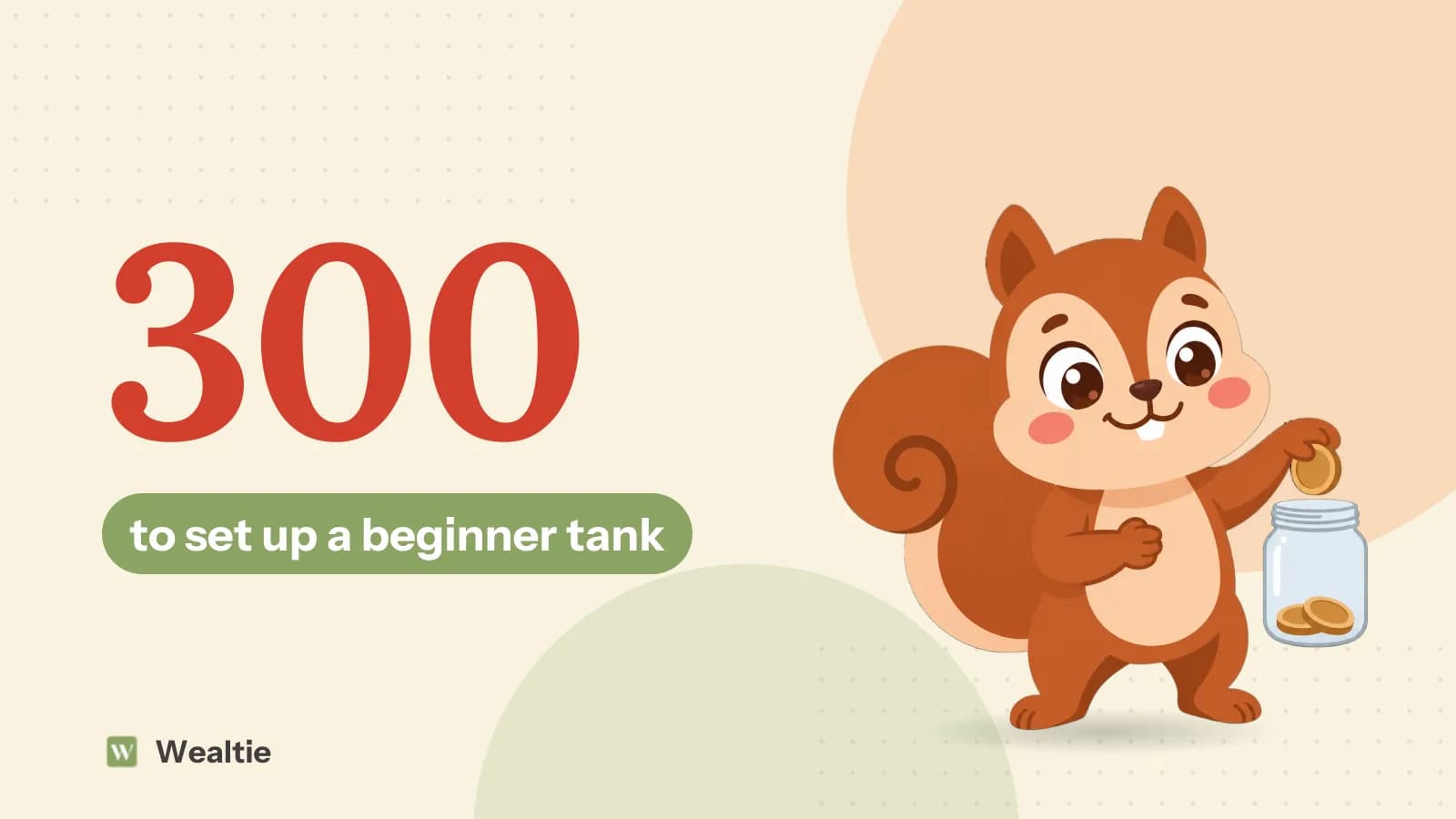
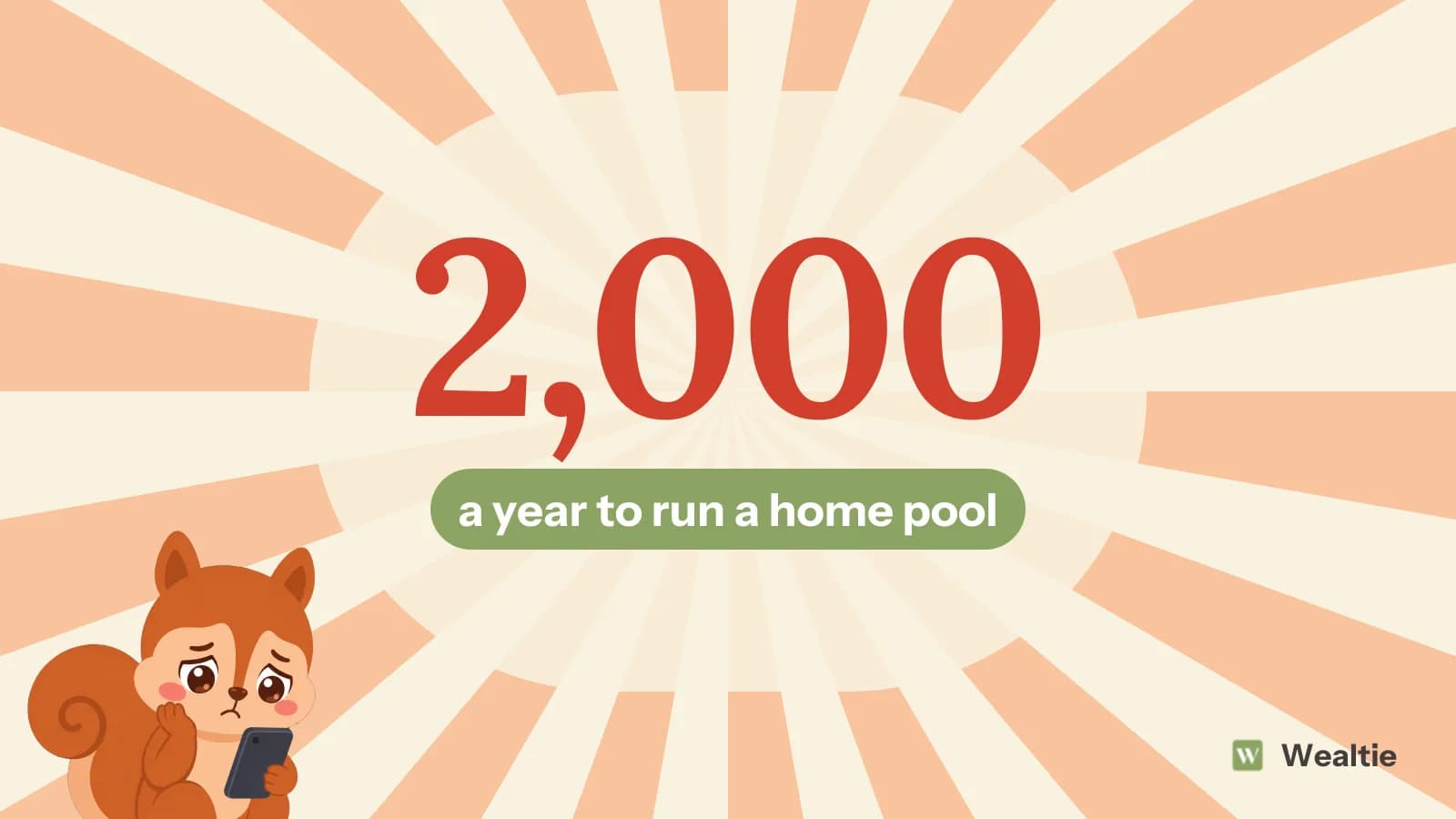
Swimming pool cost includes building it and then paying to run it every year, and the running costs often surprise new owners. In a worked example, an in-ground pool costs 40,000 to build and 2,000 a year to run.
 By Wealtie Team · 3 min read
Key takeaways
- Swimming pool cost includes building it and yearly running costs.
- An in-ground pool costs far more than an above-ground one.
- Heating, electricity, chemicals and repairs make up the yearly bill.
- A pool rarely adds as much value as it costs, so build it for enjoyment.
How much does a swimming pool cost?
A pool at home can be the centre of summer for a family, but it's one of the more expensive things you can add to a property. Swimming pool cost comes in two parts: building or buying the pool, and running it every year after that. Many people focus on the first number and underestimate the second.
Build costs vary enormously by type, size, location and finish. As a rough guide, in round numbers that work in any currency, an above-ground pool might cost around 3,000 including installation, while an in-ground pool could cost 40,000 or more once you include digging, the shell, the pump and filter, paving around it and a safety cover. Get several local quotes to see what your project would cost.
What does a pool cost to run each year?
Here's a worked example of yearly running costs for an in-ground pool, in round numbers that work in any currency:
| Running cost | Per year |
|---|---|
| Heating | 800 |
| Electricity for pump and filter | 400 |
| Chemicals and testing | 300 |
| Repairs and servicing | 300 |
| Water and cover | 200 |
| Total | 2,000 |
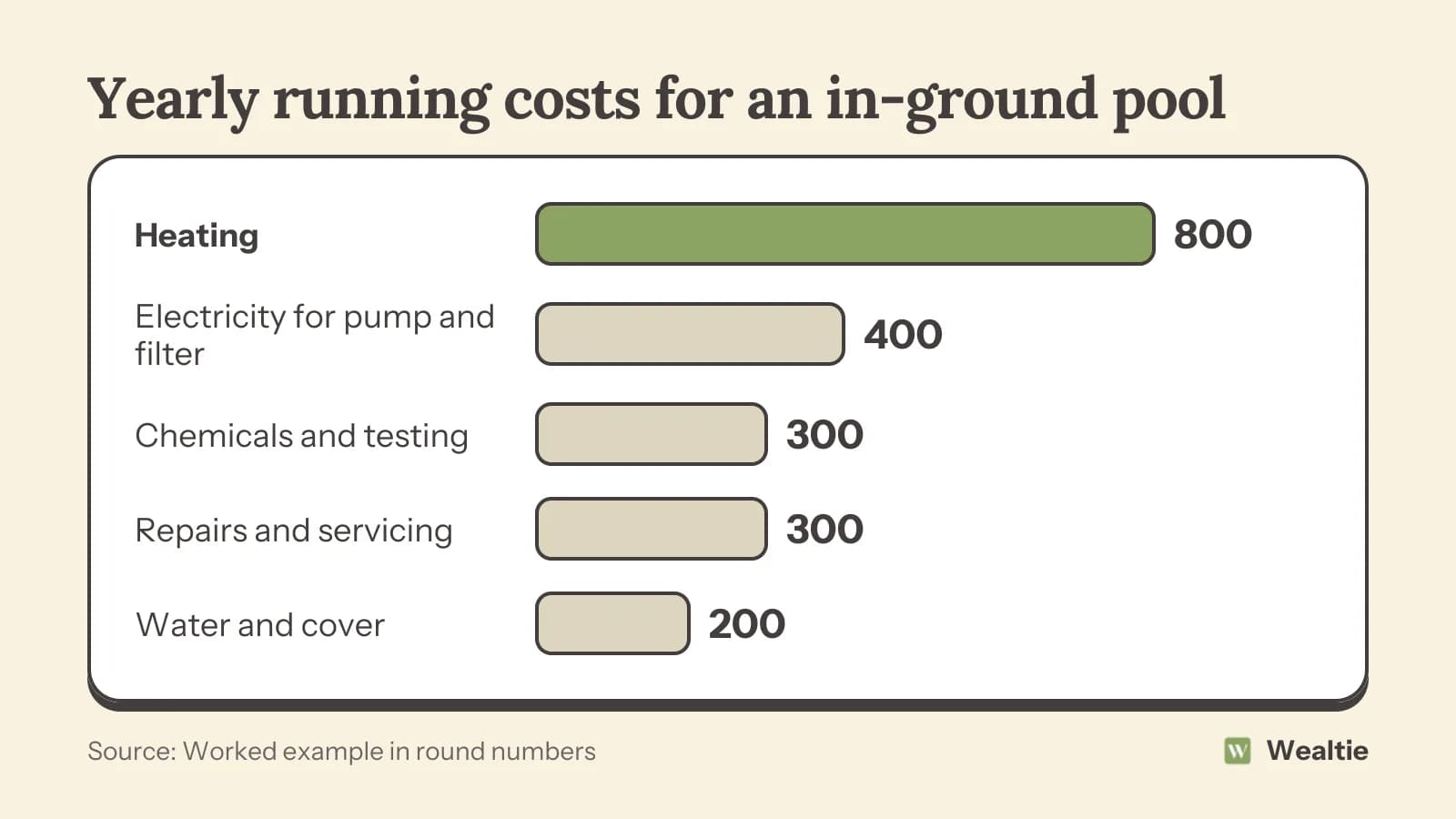
That's 2,000 a year, or 20,000 over ten years, on top of the build cost. Heating is often the biggest line, especially if you want to swim outside the warmest months. Running costs depend on your climate, the pool's size, how long the season is and how you heat it.
What are the main types of pool?
Above-ground pools
These are the cheapest option and can be installed quickly. Some are temporary and can be packed away in winter, while others are more permanent. They usually last fewer years than in-ground pools.
In-ground pools
Built into the ground with concrete, fibreglass or a vinyl liner, they look more permanent and last longer, but cost far more to build and repair.
Natural pools
These use plants and natural filtration instead of chemicals. They cost a lot to build but can have lower chemical costs.
Plunge pools
Small, deep pools for cooling off rather than swimming laps. They take less space and can cost less to heat.
How can you cut running costs?
Use a pool cover
A cover keeps heat in, reduces evaporation and keeps out leaves, which cuts heating, water and cleaning costs.
Choose efficient heating
Heat pumps and solar heating usually cost less to run than older gas or electric heaters. Are solar panels worth it? covers solar for your home more generally.
Run the pump efficiently
Variable-speed pumps and running the filter at cheaper times of day can lower electricity bills. How to save money on your electric bill covers other ways to cut power costs.
Shorten the season
Heating a pool in cooler months costs much more. Keeping it to the warmest part of the year saves money.
Do some upkeep yourself
Testing water and adding chemicals yourself costs less than paying for a weekly service, once you've learned how.
Is a home pool worth it?
For enjoyment
If your family will use it often, a pool can bring years of fun and exercise. That's the main reason to build one.
For property value
A pool rarely adds as much value as it costs, and some buyers see it as a maintenance burden. In warm climates, it may matter more to buyers than in cooler ones.
Compared with the alternatives
A family membership at a local leisure centre might cost around 600 a year, much less than the running cost of a home pool alone. A hot tub is another smaller option. Hot tub running costs covers what one costs each year.
How do you budget for a pool?
Budget the build and the running cost
Add the yearly running cost to your budget before deciding, not after. If 2,000 a year would strain your finances, a smaller or seasonal pool may suit you better.
Save for repairs
Liners, pumps and heaters need replacing eventually. A sinking fund for the pool covers those costs without a shock bill.
Check insurance and safety rules
You may need to update your home insurance and add fencing or a safety cover, especially with young children. Some areas have rules on pool safety.
If you're unsure, try renting a home with a pool for a holiday, or start with a cheaper above-ground pool for a summer or two. You'll learn how often your family swims, how much time upkeep takes and what it adds to your bills, before committing to a permanent build that's expensive to undo.
How can Wealtie help you track pool costs?
Log heating, electricity, chemicals and repairs in a pool expense category, and add regular servicing as a recurring transaction. After a year, you'll know the real cost of running your pool, which helps you plan the next season.
Questions people ask
Costs vary widely. In round numbers, an above-ground pool might cost about 3,000 and an in-ground pool 40,000 or more.
In a worked example, an in-ground pool cost about 2,000 a year to run, with heating as the biggest cost.
Use a cover, choose efficient heating, run the pump at cheaper times, keep the season short and do basic upkeep yourself.
Rarely as much as it costs. Some buyers see it as a bonus, while others see it as extra upkeep.
This article is general information, not financial, tax or legal advice. Your situation is your own; check the numbers that apply to you before you act on them.