Budgeting: How much does a hot tub cost to run?
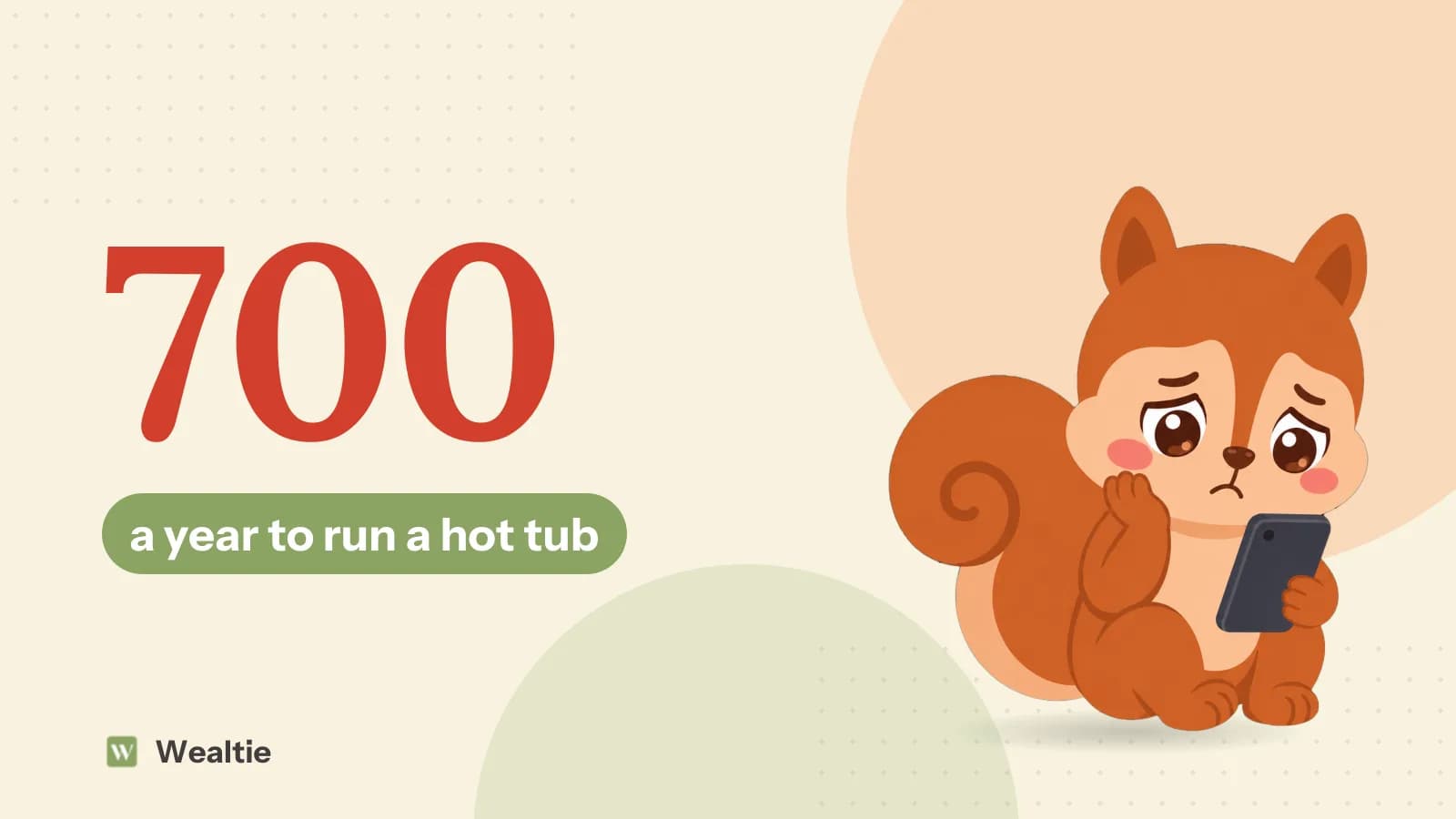
The hot tub cost to run each year depends mostly on electricity, plus water, chemicals, filters and occasional repairs. In a worked example, running costs come to about 700 a year, on top of the buying price, so it's worth adding up the full cost before you buy.
 By Wealtie Team · 3 min read
Key takeaways
- A hot tub's cost to run depends mostly on electricity, plus water, chemicals and filters.
- In a worked example, running costs come to about 700 a year.
- A good insulated cover and sensible temperature settings cut electricity costs the most.
- Add up the buying price and running costs over several years before you buy.
What is a hot tub's cost to run?
The ongoing cost, beyond the price you pay to buy it. A hot tub needs electricity to heat the water and run the pumps, chemicals to keep the water clean, regular filter changes, fresh water a few times a year, and occasional repairs. These costs carry on whether you use it every day or once a month, so it's worth adding them up before you buy.
How much does a hot tub cost to run each year?
Here's a worked example in round numbers that work in any currency:
| Cost | Amount |
|---|---|
| Electricity | 400 |
| Chemicals | 150 |
| Filters and parts | 100 |
| Water | 50 |
| Total | 700 |
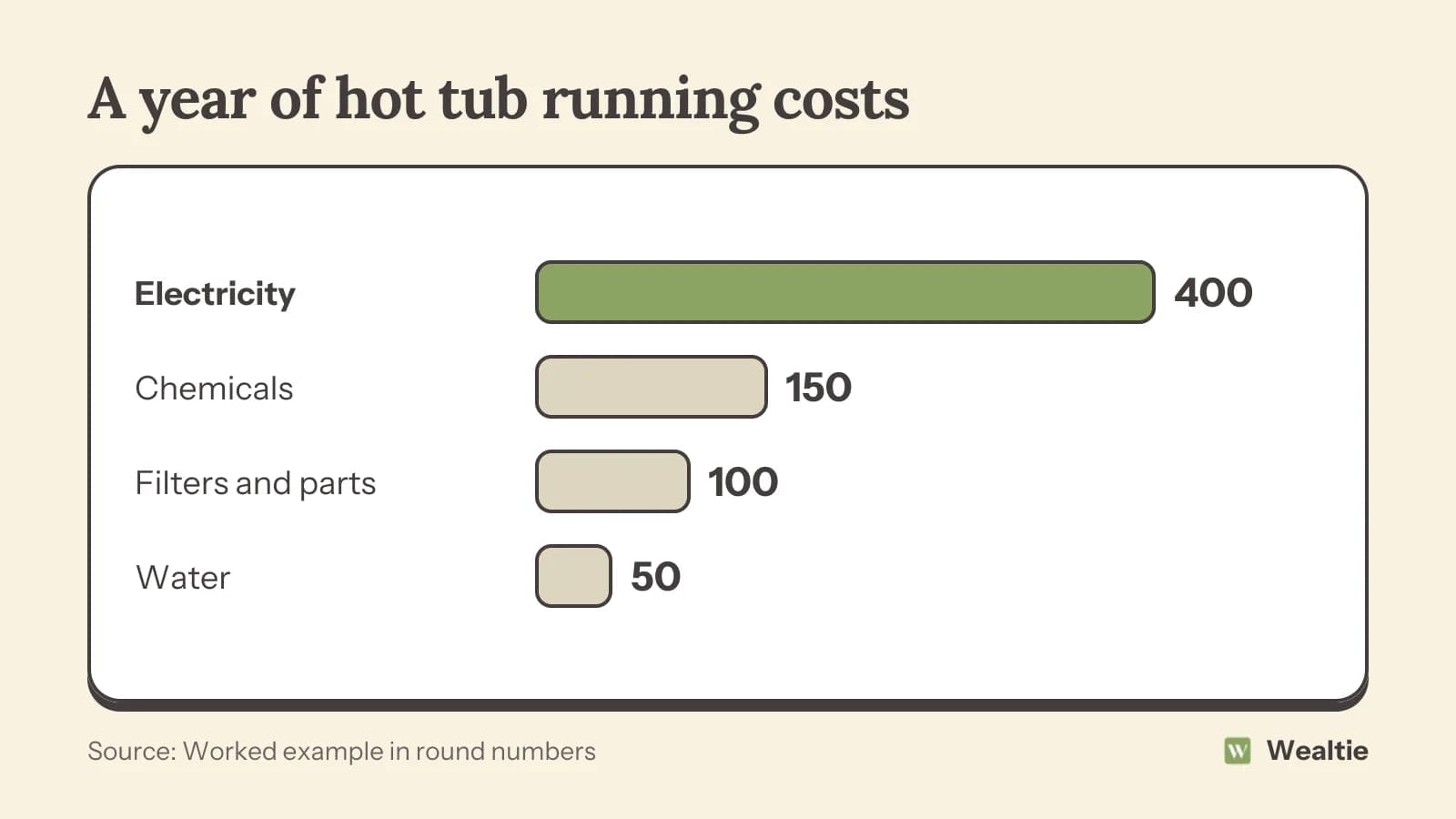
That's about 58 a month. Your own figures depend on electricity prices, the size of the tub, how well it's insulated, the climate and how often you use it. Costs are usually higher in winter, since the tub works harder to stay warm.
What's the full cost over several years?
Add the buying price to the running costs. In a worked example, a tub that costs 5,000 plus 700 a year to run comes to 8,500 over five years, or about 1,700 a year. Seeing the yearly figure helps you decide whether you'd use it enough to be worth it. A hot tub can be hard to take with you if you move, so think about how long you'll stay.
Installation can add to the cost too. Many hot tubs need a solid base and a dedicated electrical connection, so include these when you compare.
How do you cut electricity costs?
Electricity is the biggest running cost, so this is where to focus:
- Use a good, well-fitting insulated cover, and keep it on when the tub isn't in use.
- Lower the temperature by a degree or two when you won't use it for a few days.
- Use timers to heat the water when electricity is cheaper, if your tariff has off-peak rates.
- Shelter the tub from wind, which cools it faster.
- Choose a well-insulated model if you're buying, since it costs less to heat.
A worn or poorly fitting cover can let a lot of heat escape. Replacing it can pay for itself through lower bills. An energy monitor can show how much the tub uses each day, which helps you see the effect of changes. How to save money on your electric bill has more ideas for the whole home.
How do you save on chemicals and water?
Test the water regularly and add chemicals in small amounts, rather than large doses when something goes wrong. Showering before getting in keeps the water cleaner, so you need fewer chemicals. Buying chemicals in bulk is often cheaper, and test strips cost little and help you spot problems early. Changing the water only as often as the manufacturer recommends keeps water costs down, especially if you're on a meter. How to save money on your water bill covers water use more widely.
What about repairs?
Pumps, heaters and control panels can fail over time. A warranty covers the early years, so check how long it lasts and what it includes. After that, setting aside a little each month for repairs avoids a big bill when something breaks. Regular cleaning and filter changes help parts last longer. Some owners take out a service plan with a yearly check; compare its cost with typical repair costs before signing up.
Is a hot tub worth it?
It depends on how much you'll use it. For people who use it several times a week, for relaxation or to ease sore muscles, the cost per use can be reasonable. If it's likely to sit unused after the first few months, it's an expensive garden feature. Some people try a hot tub holiday or a spa visit first to see how much they'd use one. Inflatable tubs cost less to buy, but can be more expensive to heat, so compare running costs as well.
How do you save for a hot tub?
Save for the buying price and installation, and include the running costs in your monthly budget. A sinking fund helps you save for the purchase and future repairs. The home maintenance budget covers setting aside money for upkeep around the home.
How do you track hot tub costs in Wealtie?
Log chemicals, filters and repairs in their own line in your expense categories, so you can see the true yearly cost. Your electricity bill can be set up as a recurring transaction with the bill tracker. Comparing bills before and after installing the tub shows how much it adds.
Questions people ask
In a worked example, about 700 a year for electricity, chemicals, filters and water, or about 58 a month.
Electricity, to heat the water and run the pumps. A good insulated cover cuts it the most.
Use a well-fitting cover, lower the temperature when not in use, heat at off-peak times and shelter it from wind.
It can be if you use it several times a week. Add up the buying price and running costs over several years first.
This article is general information, not financial, tax or legal advice. Your situation is your own; check the numbers that apply to you before you act on them.