Budgeting: Supplements budget: how to stop overspending on vitamins
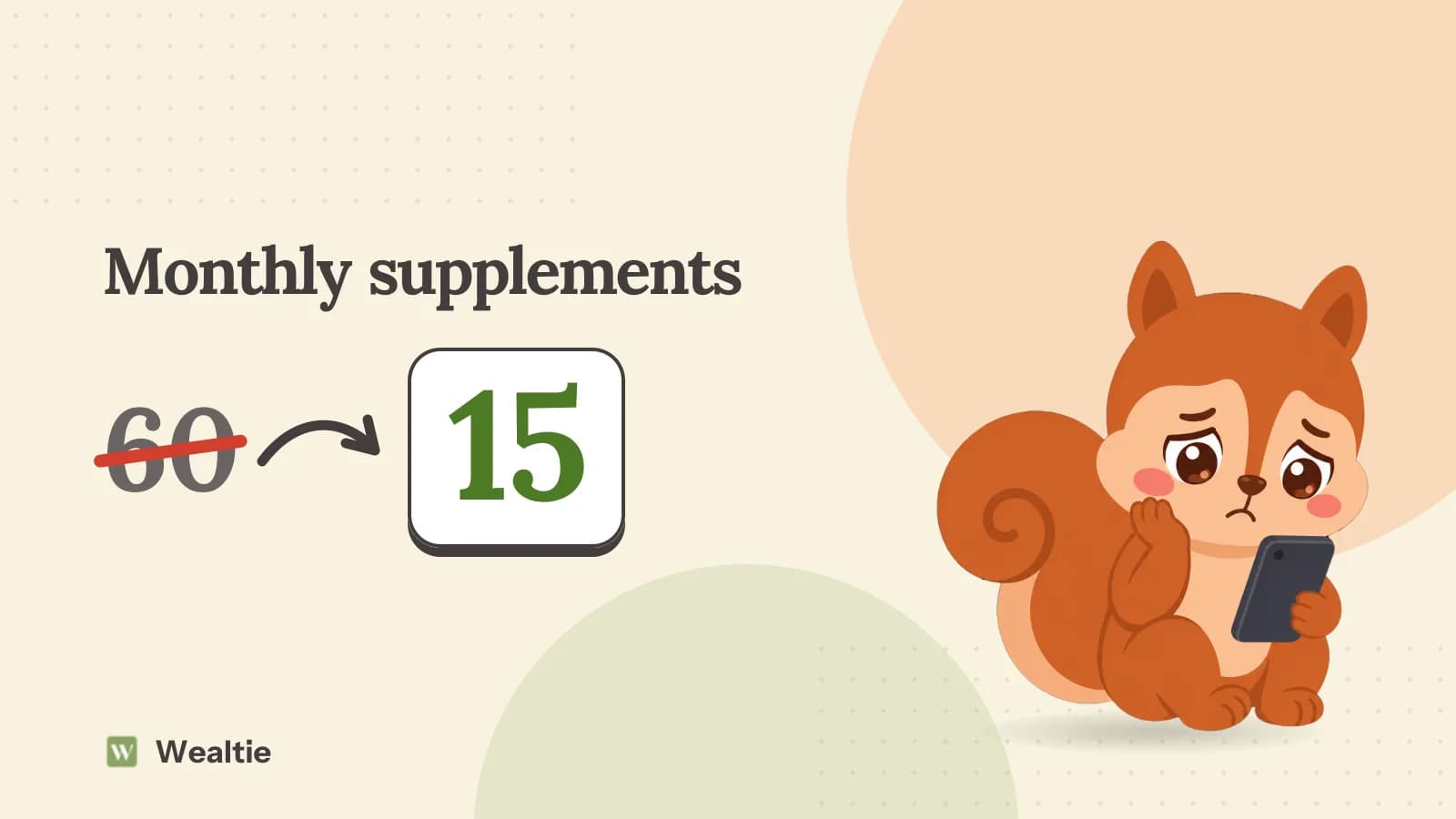
A supplements budget stops a few pills a day from quietly becoming a big yearly cost. In a worked example, five daily supplements cost 60 a month, or 720 a year, while two essentials cost 15.
 By Wealtie Team · 3 min read
Key takeaways
- A supplements budget helps you see what daily pills cost over a year.
- Ask a doctor or pharmacist which supplements you need.
- Own-brand versions often contain the same ingredients for less.
- Subscriptions and multi-buy offers can lead to overspending.
Why set a supplements budget?
Vitamins, minerals, protein powders and other supplements are easy to add to your routine and easy to forget about. Each pot seems small, but a shelf of them can cost more each year than many people spend on their phone. A supplements budget gives you a clear view of what you're spending, so you can keep what's useful and drop what isn't.
This isn't about whether supplements work. Some people need them for good reasons, and a doctor or pharmacist is the right person to ask. It's about making sure you're not paying more than you need to.
How much do supplements cost over a year?
Here's a worked example, in round numbers that work in any currency:
| Option | Yearly cost |
|---|---|
| Five daily supplements | 720 |
| Two essentials, branded | 300 |
| Two essentials, own brand | 180 |
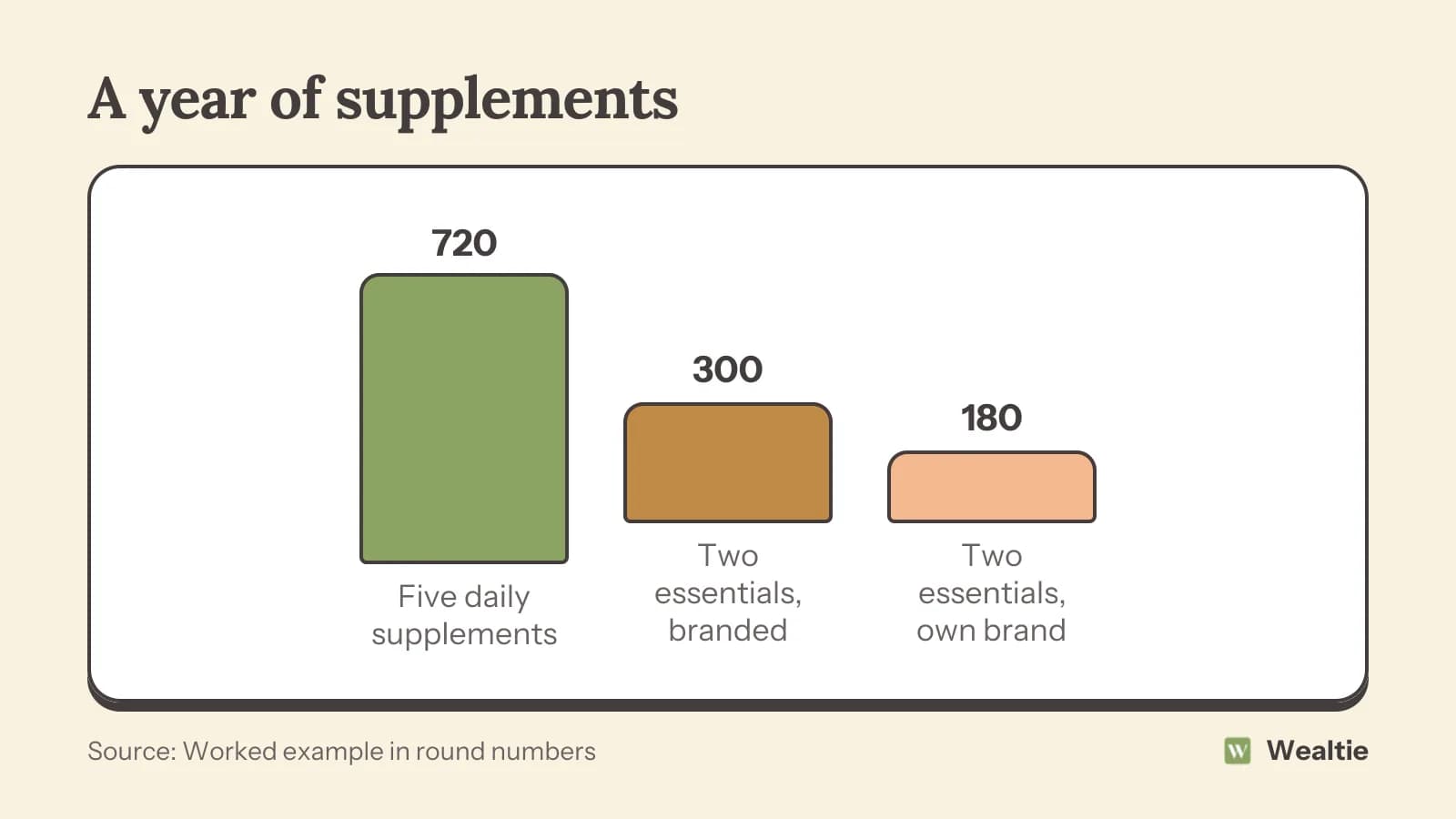
Five supplements at an average of 12 a month each come to 60 a month, or 720 a year. Cutting down to two that you've been advised to take brings it to 300, and switching to own-brand versions brings it to 180. That's a saving of 540 a year without giving up anything you need.
How do you work out what you need?
Ask a professional
A doctor, pharmacist or dietitian can tell you which supplements are worth taking for your age, diet and health. Some, like those recommended during pregnancy or for specific conditions, may be important. Others may not be needed if your diet already covers them.
Check for doubling up
Multivitamins often contain the same vitamins you're taking separately. Read the labels and drop duplicates.
Be wary of big claims
Supplements marketed with dramatic promises often cost more. If a claim sounds too good, ask a professional before buying.
Review once a year
Your needs change over time. A yearly review, perhaps alongside a health check, keeps your routine up to date.
How do you buy supplements for less?
Choose own-brand versions
Supermarket and pharmacy own brands often contain the same active ingredients as big brands at a lower price. Compare the ingredients and amounts per tablet.
Compare the price per dose
Larger pots can be cheaper per tablet, but only if you'll finish them before they expire. Work out the cost per daily dose to compare fairly.
Be careful with subscriptions
Subscribe-and-save deals can be convenient, but they make it easy to keep buying things you no longer take. How to cut subscription costs covers reviewing what you're signed up to.
Watch multi-buy offers
Buy-one-get-one-free deals only save money if you'd use both pots before they expire.
Check what's free or cheaper through health services
In some places, certain supplements are available free or at reduced cost for specific groups, like pregnant women or young children. How to save money on prescriptions covers other health costs that may be cheaper than you think.
What about protein powders and sports supplements?
Protein powders, pre-workout drinks and similar products can be some of the most expensive supplements. Many people get enough protein from food, so check whether you need them before buying. If you do use them, buying unflavoured or larger bags and comparing cost per serving can cut the price a lot.
Where do supplements fit in your budget?
Supplements often get lumped in with groceries or personal care, which hides how much they cost. Giving them their own line makes the total visible. How to save money on personal care covers other small health and beauty costs that add up in a similar way.
A quick way to start is to gather every supplement you own in one place. Check the expiry dates, note what each costs per month and when you last took it. Many people find pots they bought with good intentions and rarely use. Finishing what you have before buying more, and not replacing the ones you've stopped taking, is an easy first saving.
Food can often do the same job for less. A varied diet with plenty of fruit, vegetables, whole grains and protein covers most people's needs, and the money you save on unneeded supplements can go towards fresh food instead. If you're unsure whether your diet is enough, that's another question worth asking a pharmacist or doctor.
Once you've settled on what you need, set a monthly amount and stick to it. A fixed figure makes it easier to say no to new products that appear in adverts or on social media.
How can Wealtie help you track supplement costs?
Log supplements in their own expense category and set a monthly budget for them. If you buy on a subscription, add it as a recurring transaction, so you'll see the cost every month and remember to review it.
Questions people ask
Only spend on supplements you need. In a worked example, cutting five daily supplements to two own-brand essentials saved 540 a year.
Own-brand vitamins often contain the same active ingredients and amounts as branded ones for less. Compare the labels to check.
Ask a doctor, pharmacist or dietitian. They can tell you which supplements suit your age, diet and health.
They can save money on things you take every day, but they make it easy to keep paying for supplements you no longer need.
This article is general information, not financial, tax or legal advice. Your situation is your own; check the numbers that apply to you before you act on them.