Budgeting: The sunk cost fallacy: how it costs you money, and how to stop it
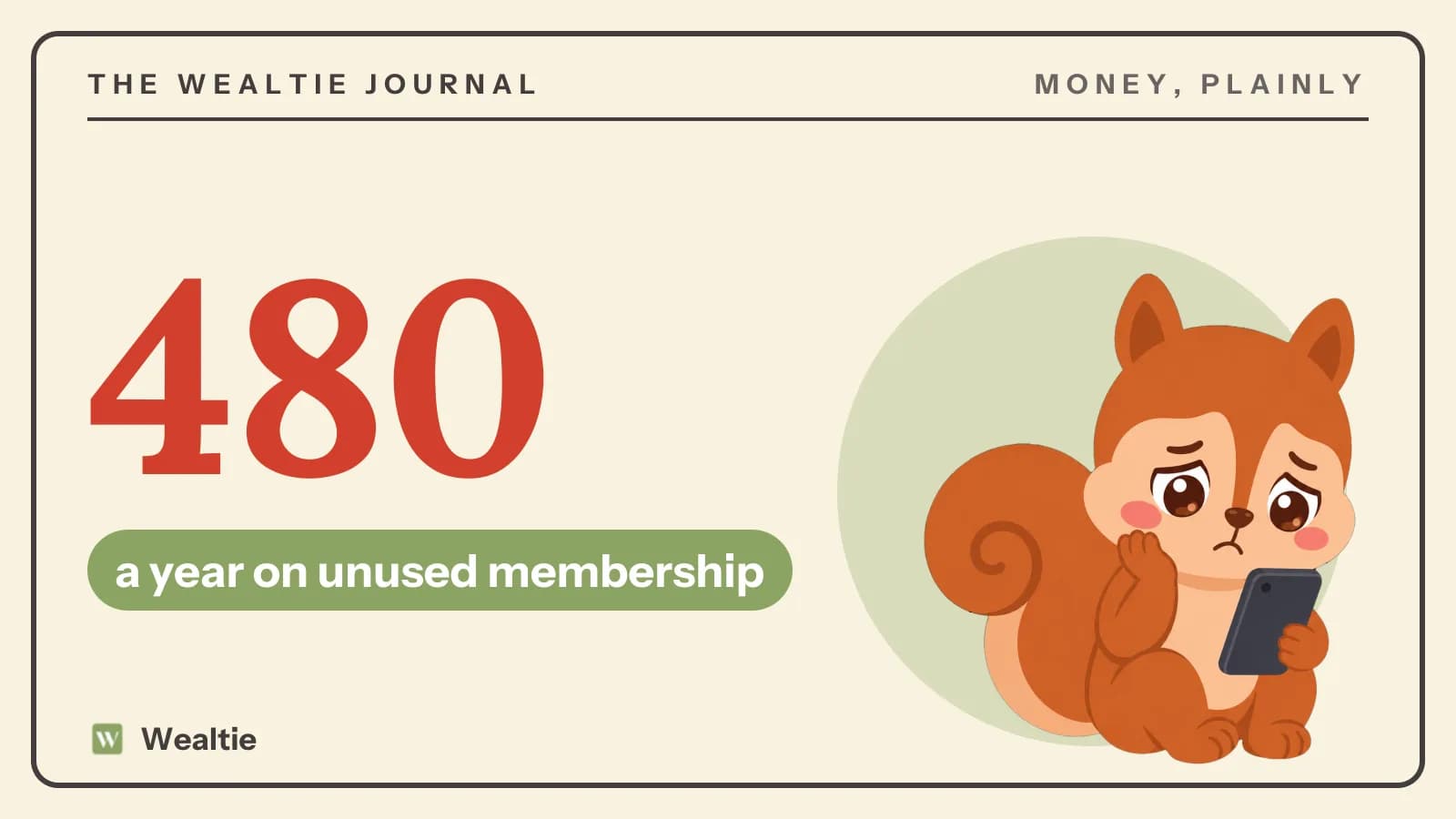
The sunk cost fallacy is carrying on with something because of money you've already spent, even when stopping would leave you better off. In a worked example, keeping a 40 a month membership you rarely use because you paid a joining fee costs 480 a year, and the fee is gone either way.
 By Wealtie Team · 3 min read
Key takeaways
- The sunk cost fallacy is letting money you can't get back drive decisions about the future.
- In a worked example, keeping an unused 40 a month membership costs 480 a year.
- Ask only what each option will cost and give you from now on.
- Setting review points in advance makes it easier to stop when something isn't working.
What is the sunk cost fallacy?
The sunk cost fallacy is the habit of carrying on with something because of what you've already put into it, rather than what it will give you from now on. A sunk cost is money, time or effort that's already spent and can't be recovered. Whatever you decide next, that money is gone. But it often feels like stopping would waste it, so people keep going.
The result is spending more on something that isn't working, just to justify what's already been spent.
What does it look like with money?
Here's a worked example in round numbers that work in any currency. You paid a 100 joining fee for a gym, and the membership costs 40 a month. You've stopped going, but you keep paying because you don't want to waste the joining fee.
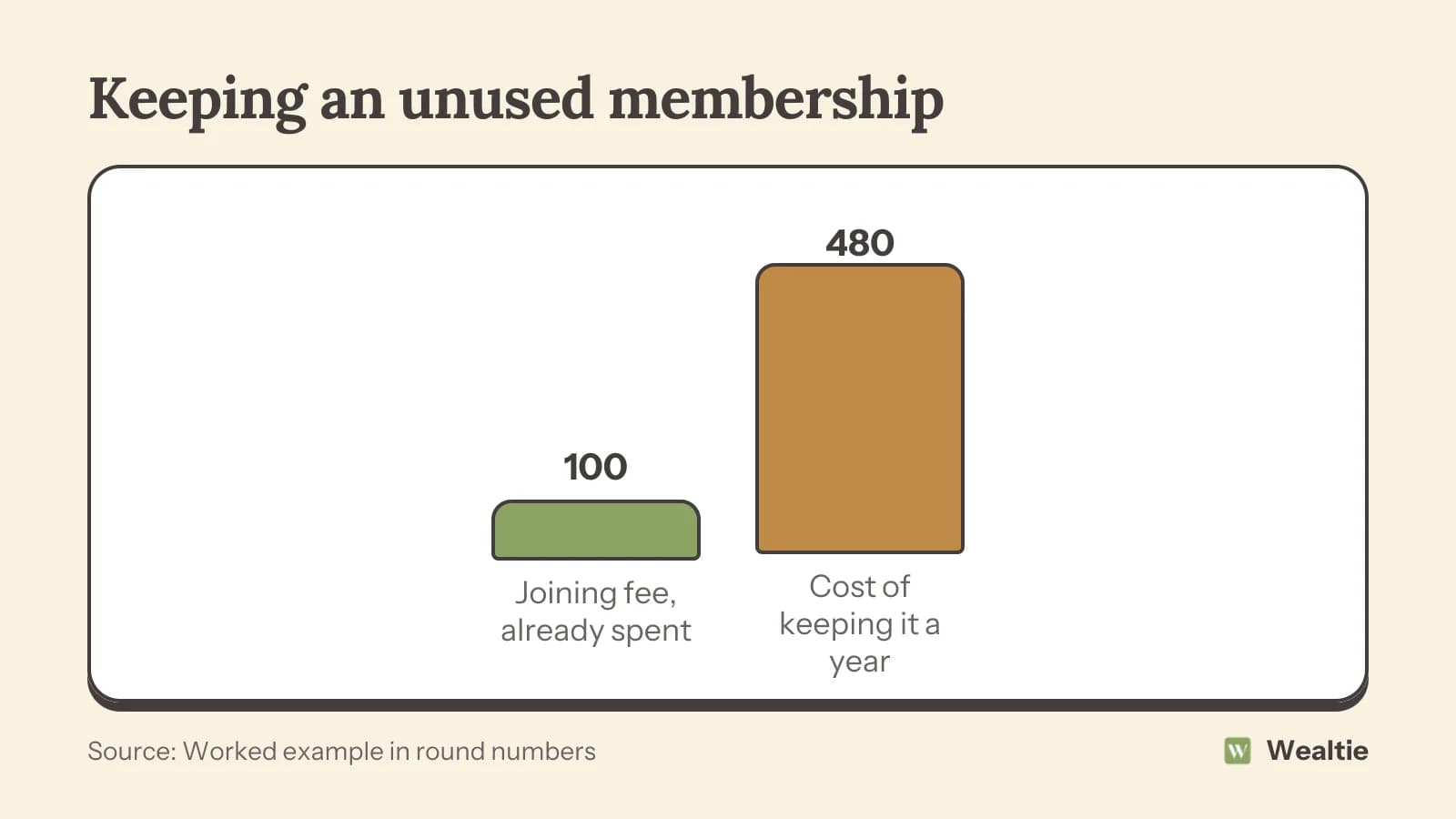
The 100 is gone whether you stay or leave. Staying for another year costs 480 more. The only question that matters is whether the gym is worth 40 a month to you now.
What are common examples of sunk cost thinking?
It shows up in many everyday decisions:
- Memberships and subscriptions you rarely use but keep because you paid upfront
- Car repairs, where you keep fixing an unreliable car because you've already spent a lot on it
- Tickets to an event you no longer want to go to, where you go anyway and pay for travel and food
- Courses or hobbies you've lost interest in, where you keep buying equipment
- Investments that have fallen, where you hold on just to avoid accepting a loss
- Home projects that have gone over budget, where you keep spending rather than rethinking the plan
Each time, past spending is steering a future decision.
The car repair example
Say you've spent 800 on repairs to a car this year. The garage says it needs another 1,200, and the car is worth about 1,000. It's tempting to pay because of the 800 already spent. But the 800 is gone either way. The real question is whether 1,200 on this car is better value than putting that money towards a different one. How to buy a used car without overpaying can help with that comparison.
Why is it so hard to stop?
Because loss feels painful. Walking away can feel like admitting a mistake or wasting money. People also like to be consistent with past choices. And sometimes, the more you've invested, the more you hope it will turn around. These are normal feelings, but they can lead to spending good money after bad. Talking a decision through with someone who wasn't involved can help, since they see only the choice ahead.
How do you avoid the sunk cost fallacy?
Look forward, not back. When deciding whether to continue, ask:
- What will it cost from now on?
- What will I get from it from now on?
- If I were starting today, would I choose this?
If you wouldn't sign up today, the money you've already spent isn't a good reason to stay. Writing the options down, with only future costs and benefits, takes some of the emotion out of it. It helps to say it out loud: "That money is gone. What's the best choice from here?"
Set review points in advance
Before you commit to something, decide when you'll review it. For a membership, check after three months whether you're using it. For a project, set a budget limit at which you'll stop and rethink. Deciding in advance, while you're calm, makes it easier to act later.
Is it ever right to continue?
Yes, when the future value is worth the future cost. Paying for one more repair might be right if it's small and the car is otherwise reliable. Staying in a course might be right if you still want the result. The point isn't to always quit, but to decide on what's ahead, not what's behind.
How do you spot it in your own spending?
Review your regular payments every few months. For each one, ask whether you'd sign up today. Subscriptions and memberships are the most common place sunk cost thinking hides. How to cut subscription costs has a simple checklist, and how to save money on a gym membership covers memberships you don't use.
How do you track this in Wealtie?
Set up memberships and subscriptions as recurring transactions with the bill tracker, so they're all in one list to review. Log one-off spending in your expense categories, so you can see what a project or hobby is costing over time before deciding whether to carry on.
Questions people ask
Continuing with something because of money or time already spent, rather than what it will give you from now on.
Keeping a 40 a month gym membership you don't use because you paid a joining fee. The fee is gone either way.
Ask what each option will cost and give you from now on, and whether you'd choose it if you were starting today.
Yes, if the future value is worth the future cost. Decide on what's ahead, not what's already spent.
This article is general information, not financial, tax or legal advice. Your situation is your own; check the numbers that apply to you before you act on them.