Budgeting: How to use a student overdraft without getting stuck
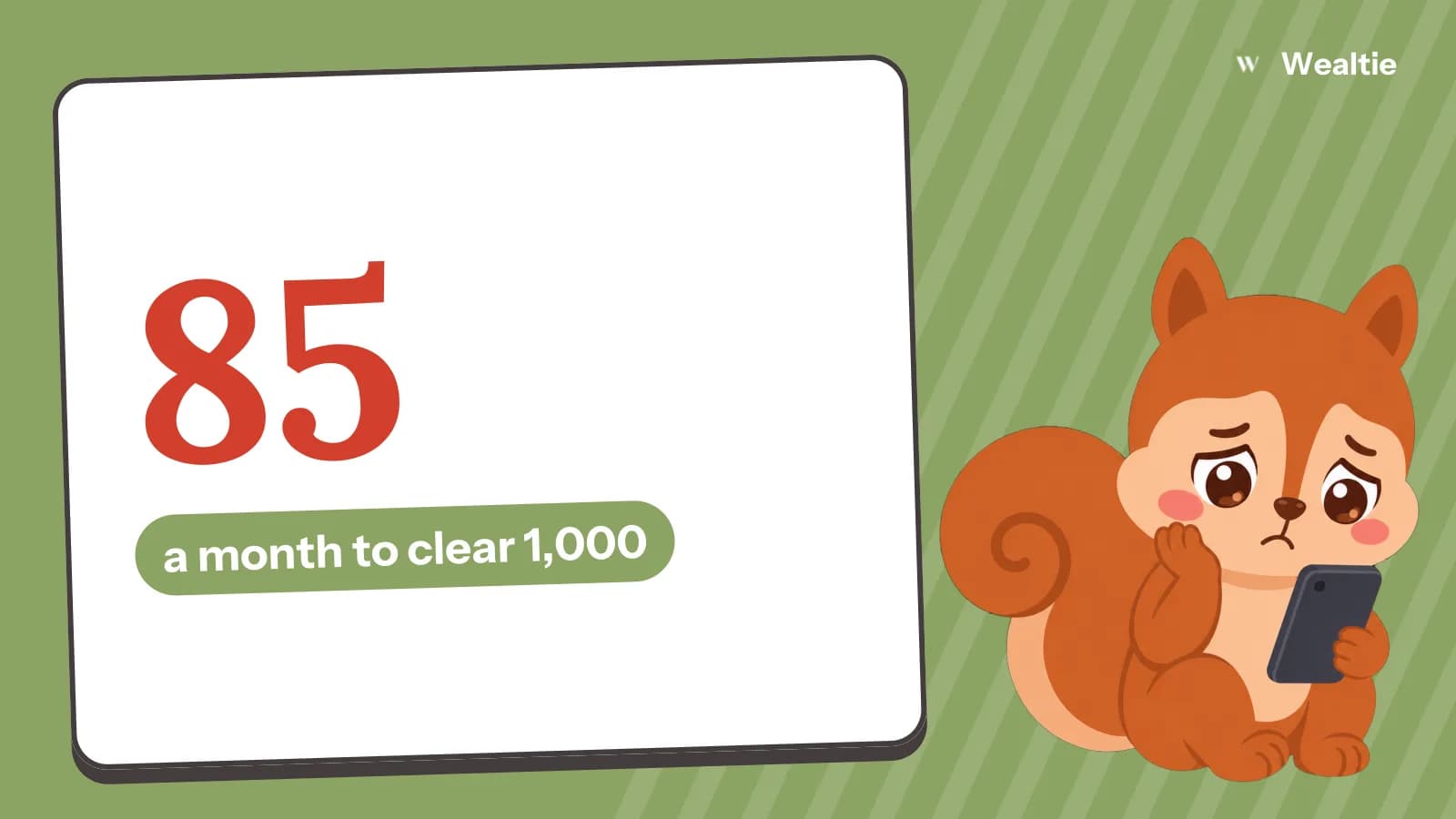
A student overdraft can be a useful safety net, often interest-free while you study, but it's still borrowing that needs paying back. In a worked example, a 1,000 overdraft cleared over a year after graduating takes about 85 a month.
 By Wealtie Team · 3 min read
Key takeaways
- A student overdraft is borrowing, even if it's interest-free while you study.
- In a worked example, clearing 1,000 over a year after graduating takes about 85 a month.
- Use it as a safety net, not as extra income.
- Check when interest starts after graduating and plan to clear it before then.
What is a student overdraft?
A student overdraft lets you spend more than you have in your bank account, up to a limit, while you study. It's often offered when you open a student bank account. In many places, banks offer students overdrafts that are interest-free for the length of the course and a while after. That makes them cheaper than most other borrowing. But it's still money you owe, and it needs to be paid back. Thinking of it as a loan rather than part of your balance helps keep it in perspective.
Terms vary between banks and countries, so read the details of your account.
When does a student overdraft help?
It can be a useful safety net for unexpected costs, like a broken laptop, an emergency trip home or a gap before your next loan payment. Used occasionally and paid back, it can save you from more expensive borrowing like credit cards or payday loans. Having it available can also reduce stress when money is tight between loan payments.
How can it go wrong?
When it becomes part of your everyday income. If you're always in your overdraft, it's easy to lose track of how much you owe, and the balance can grow every term. After graduating, interest-free periods end, and what felt like free money starts costing you. Large overdrafts can also affect your credit when you apply for things like rentals or phone contracts. Some students only realise how much they owe when they graduate and the bank asks for it back.
How do you use it wisely?
- Treat it as a safety net, not extra spending money
- Know your limit and your balance at all times
- Make a budget so your loan and income cover your regular costs
- Try to get back above zero after each loan payment
- Don't increase your limit unless you have a clear need
The college student budget helps you plan spending so you rely on the overdraft less.
Get notifications
Turning on balance alerts in your banking app warns you before you dip into the overdraft or near your limit.
How do you plan to clear it?
Start before graduating. Find out when the interest-free period ends after your course, since many banks gradually reduce the limit and start charging interest. Here's a worked example of clearing a 1,000 overdraft over a year, in round numbers that work in any currency:
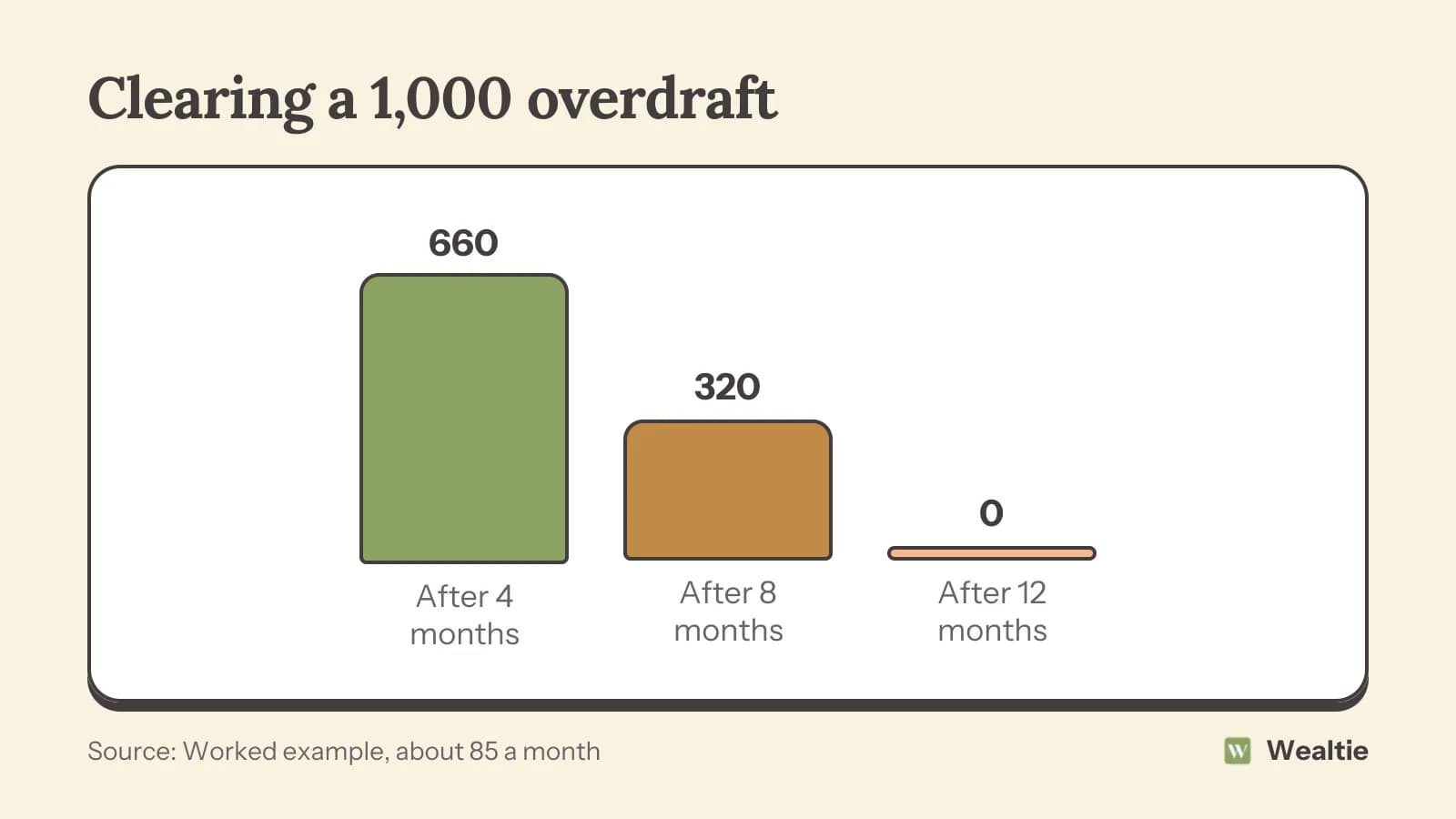
At about 85 a month, it's cleared in twelve months. Starting with your first salary, before your spending grows, makes it much easier. How to get out of your overdraft has a step-by-step plan.
Pay it off during your studies if you can
Money from a part-time job or summer work can reduce the overdraft before you graduate. Even small payments help, and each one reduces what you'll owe when interest starts.
What about student loan repayments?
In some countries, student loans are repaid through your salary once you earn above a threshold. That affects your take-home pay, so include it when planning to clear your overdraft. How to budget with student loan repayments explains how it works.
Does an overdraft affect your credit?
It can. Lenders may see an overdraft on your record, and how you manage it matters. Staying within your limit and clearing it steadily shows you borrow responsibly. Going over your limit or missing payments can harm your credit.
Graduate accounts
Some banks move students to a graduate account after the course ends, with a gradually shrinking interest-free overdraft. Compare graduate accounts from different banks, since the terms vary and switching may give you longer to repay.
What if you're struggling?
If you're relying on your overdraft just to get by, talk to your university's student support or money advice team. They can check whether you're getting all the funding you're entitled to and may offer hardship funds. Your bank may also help if you contact them early. Many universities also have free budgeting workshops or advisers. How to avoid overdraft fees covers charges if your interest-free period has ended.
Check your overdraft terms each year, since some banks change them after graduation. Knowing when interest starts gives you time to plan repayments before it costs you anything.
How do you track your overdraft in Wealtie?
Add your bank account in Wealtie and keep the balance updated, so you can see clearly when you're below zero. Log spending in your expense categories and set a weekly or monthly limit in the budget tracker to keep your overdraft use under control.
Questions people ask
A bank overdraft for students, often interest-free during the course and for a while after.
It can be a useful safety net if used occasionally and paid back, but it's still borrowing.
Check your bank's terms. Interest-free periods usually end some time after graduating.
Start with your first salary and set a fixed monthly amount. In a worked example, 1,000 takes about 85 a month for a year.
This article is general information, not financial, tax or legal advice. Your situation is your own; check the numbers that apply to you before you act on them.