Budgeting: How to eat well on a student food budget
A student food budget can stretch a long way with a weekly plan, a few cheap staples and some batch cooking. In a worked example, a student eats well for about 30 a week by cooking most meals and sharing basics with flatmates.
 By Wealtie Team · 3 min read

Key takeaways
- A student food budget stretches further with a weekly plan and batch cooking.
- In a worked example, a student eats well for about 30 a week.
- Sharing basics like oil, spices and condiments with flatmates saves money.
- Takeaways are often the biggest drain on a student food budget.
How do you eat well on a student food budget?
Plan, shop smart and cook in batches. None of these needs much time once they become habits. Food is one of the biggest costs students can control, and it's often where money slips away through takeaways and convenience food. With a simple weekly plan and a few cheap, filling staples, a student food budget can cover healthy, tasty meals for much less than you might expect. Learning a few basic recipes in your first term pays off for years.
What does a week of food cost?
Here's a worked example of a weekly food shop for one student, in round numbers that work in any currency:
| Food | Cost |
|---|---|
| Vegetables and fruit | 9 |
| Pasta, rice, bread and oats | 6 |
| Eggs, beans and lentils | 6 |
| Dairy | 5 |
| Shared basics and extras | 4 |
| Total | 30 |
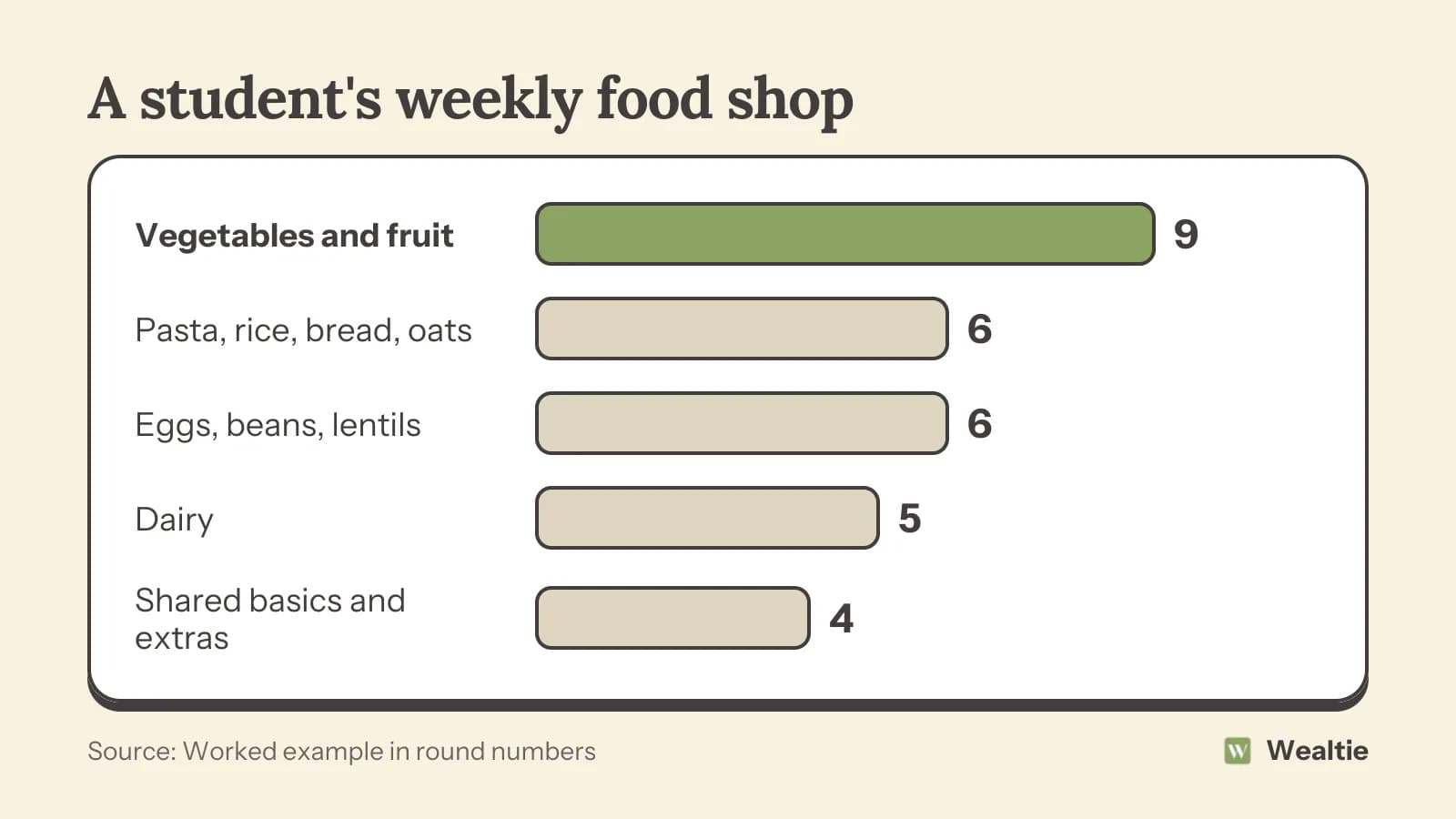
Your own costs depend on local prices and what you like to eat. Shopping at cheaper supermarkets and markets makes a big difference. Shopping once a week, rather than every day, also cuts impulse buys.
What are cheap staples for students?
- Pasta, rice and potatoes
- Oats for breakfast
- Eggs, beans and lentils for protein
- Tinned tomatoes and vegetables
- Frozen vegetables and fruit
- Bread, which can be frozen
- Seasonal fresh vegetables
These form the base of many cheap meals, like pasta sauces, curries, soups, stir-fries and omelettes. Adding herbs, spices and sauces keeps them interesting without much extra cost.
How does batch cooking help?
Cooking a big pot of chilli, curry, soup or pasta sauce once and portioning it for several meals saves money, time and energy. Freeze portions for busy days, so you're not tempted by takeaways during deadlines. Labelled containers in a shared freezer stop your meals going missing. Meal planning on a budget has a simple method.
Cook with flatmates
Taking turns to cook for each other, or sharing big meals, cuts costs and is a good way to socialise. Sharing basics like oil, spices, salt and condiments avoids everyone buying their own. A shared kitty for these, topped up equally, keeps it fair.
Use cheap protein
Eggs, beans, lentils, tinned fish and frozen chicken are much cheaper than fresh meat and just as useful in meals. Planning a couple of meat-free days a week keeps costs down and adds variety. Buying meat in larger packs and freezing portions also saves money.
How do you cut takeaways?
Takeaways are often the biggest drain on a student food budget. Keep a few quick, easy meals ready, like pasta, eggs on toast or frozen leftovers, for the nights you'd usually order in. Set a takeaway limit, like one a week, and enjoy it as a treat rather than a habit. Making a homemade version of your favourite takeaway with flatmates can be just as fun.
How do you shop smart?
- Make a list and stick to it
- Compare price per kilo and try own-brand
- Shop near closing time for reduced items
- Avoid shopping hungry
- Check student discounts at local shops
How to save money on groceries has more tactics.
Cut waste
Store food properly, use leftovers and freeze bread and meals before they go off. Wasted food is wasted money. How to reduce food waste covers simple habits.
Plan around your timetable
On long days on campus, pack lunch and snacks so you're not buying food between lectures. On lighter days, use the time at home to batch cook for the week. Matching your cooking to your timetable makes eating well much easier.
What about eating on campus?
Buying lunch and coffee on campus every day can cost more than your weekly shop. Bringing a packed lunch and a flask most days saves a lot. Keep campus food for the days you're short on time. Some campuses have cheaper cafés or meal deals, so look around before choosing where to buy.
Cooking with flatmates can cut costs further. Taking turns to cook for the group, or sharing staples like oil, spices and rice, means less waste and more variety than cooking for one every night.
How do you track your food budget in Wealtie?
Split groceries, takeaways and campus food into separate expense categories, so you can see where your food money goes. A weekly or monthly limit in the budget tracker keeps spending steady. The college student budget covers the rest of your student costs.
Cooking for the first time
If you've never cooked much, start with a few simple recipes and build from there. Online videos and student cookbooks make it easy. Cooking with friends who know more is a great way to learn, and mistakes are part of the process.
Questions people ask
In a worked example, about 30 a week by cooking most meals.
Pasta dishes, curries, soups, stir-fries and omelettes made with cheap staples.
Plan meals, batch cook, share basics with flatmates, cut takeaways and bring lunch to campus.
Yes. It saves money, time and energy, and frozen portions help avoid takeaways.
This article is general information, not financial, tax or legal advice. Your situation is your own; check the numbers that apply to you before you act on them.