Budgeting: How social media makes you spend more, and what to do about it
Social media makes you spend more through targeted adverts, influencer recommendations and constant comparison with other people's lives. In a worked example, cutting purchases inspired by social media from 80 to 20 a month saves 720 a year.
 By Wealtie Team · 3 min read
Key takeaways
- Social media makes you spend more through ads, influencers and comparison.
- In a worked example, cutting social media purchases from 80 to 20 a month saves 720 a year.
- Unfollowing accounts that trigger spending is one of the simplest fixes.
- A waiting rule turns impulse buys into considered choices.
Why social media makes you spend more
In several ways at once. Social media makes you spend more because it's designed to keep you scrolling and to show you things you might want. Adverts are targeted using what you've looked at before. Influencers recommend products in ways that feel like advice from a friend. And a steady stream of other people's holidays, homes and outfits can make your own life feel like it needs an upgrade.
None of this is your fault, and enjoying social media is fine. But knowing how it works helps you keep scrolling from turning into spending. Even a small change in what you see can make a noticeable difference to what you buy.
How much can it cost?
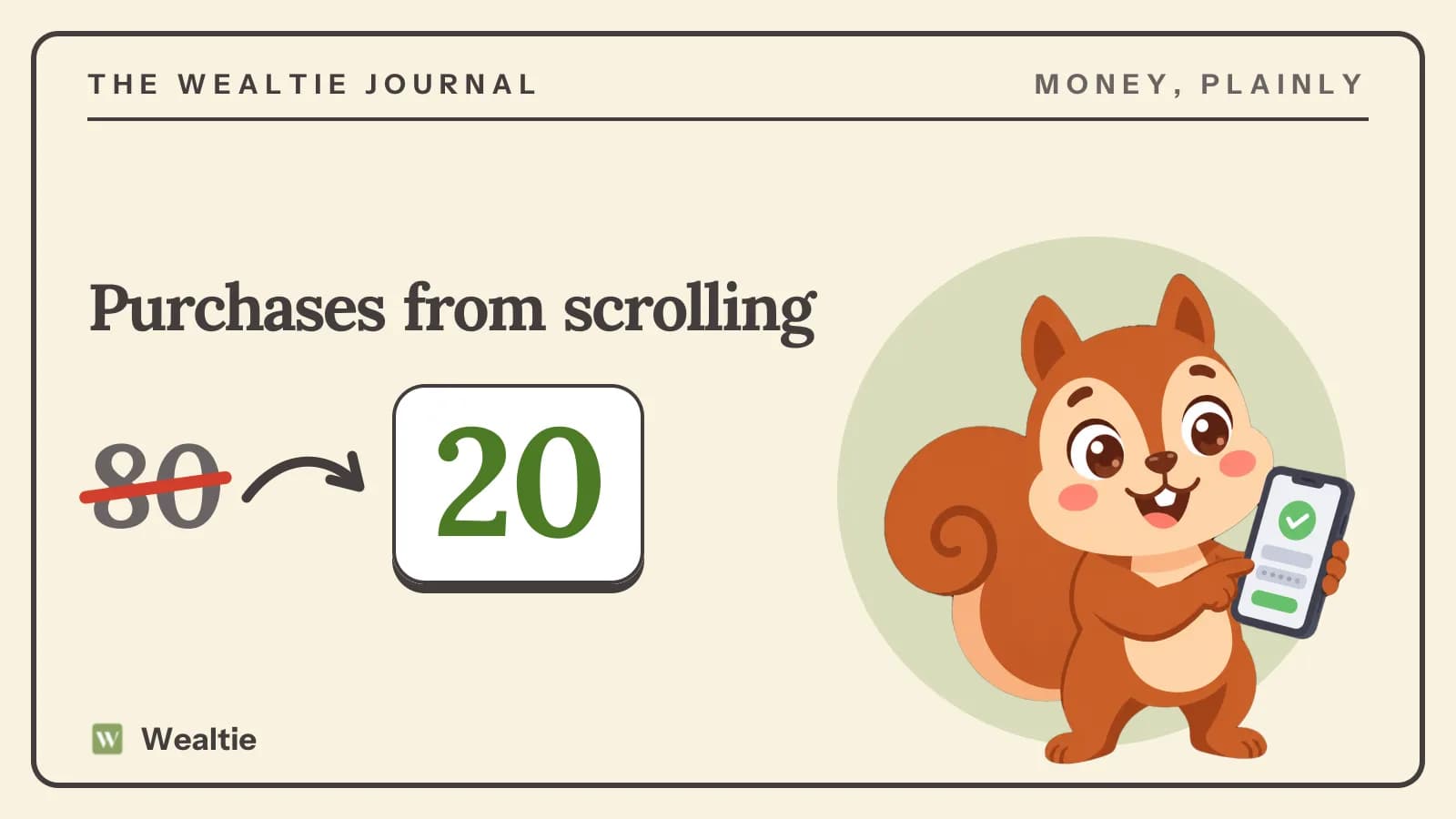
Here's a worked example of purchases inspired by social media, in round numbers that work in any currency:
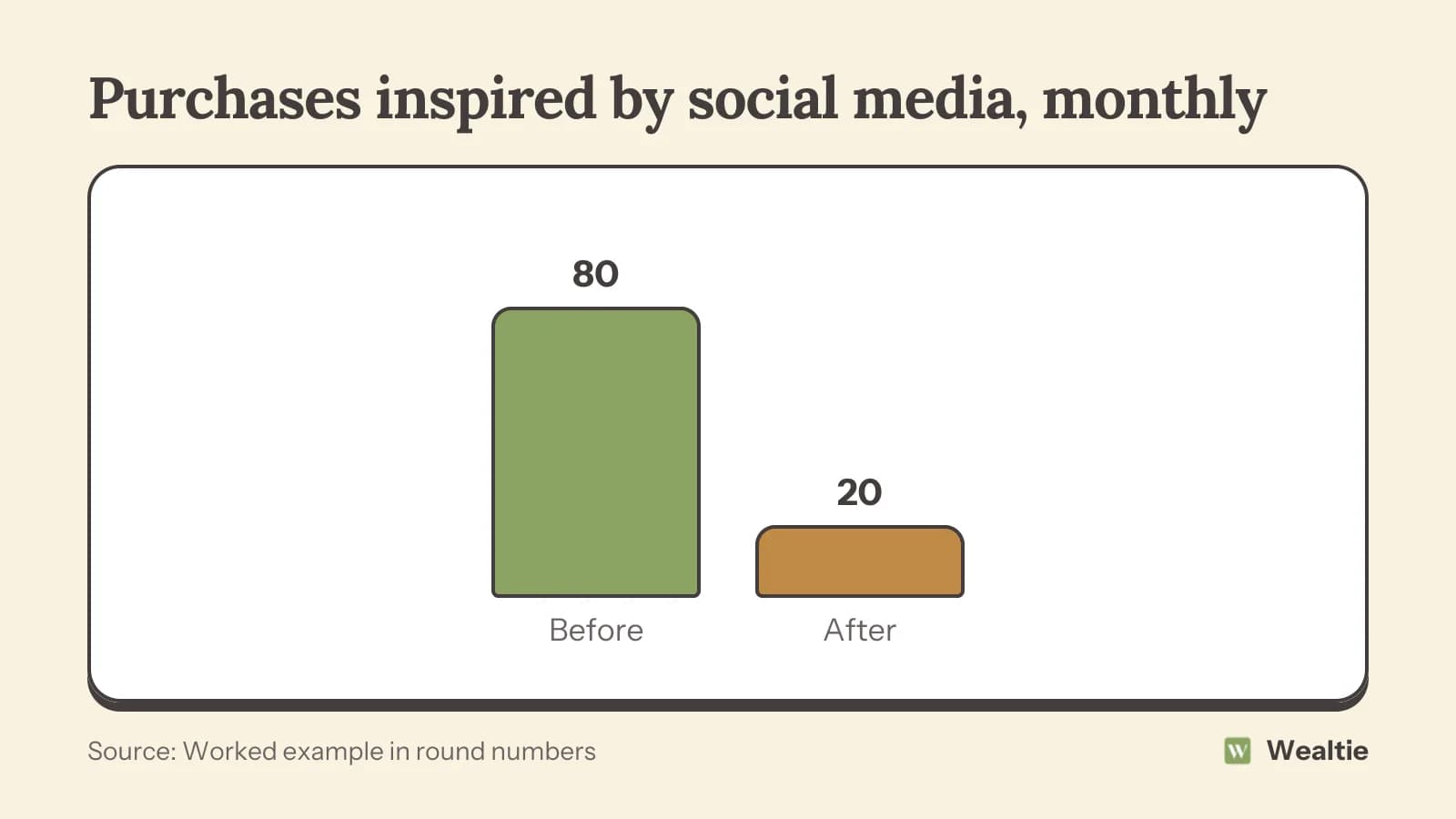
In this example, someone notices they spend about 80 a month on things they first saw while scrolling. After unfollowing a few accounts and using a waiting rule, it falls to about 20. That saves 720 a year. To find your own number, look back at last month's purchases and ask which ones started with a post or advert. Many people are surprised by how many there are.
What are the main triggers?
Targeted adverts
Ads follow what you've browsed, so a product you looked at once can appear again and again until it feels familiar. Repetition makes things feel more desirable and more normal to buy. Clearing your browsing history or adjusting ad settings can reduce how often the same products follow you.
Influencer posts
Recommendations from people you follow can feel personal and trustworthy, even when they're paid. Discount codes and limited-time offers add urgency. Remember that a discount only saves money if you'd have bought the item anyway.
Comparison
Seeing friends and strangers with new things, trips and experiences can create a feeling of falling behind. It's easy to forget that people share their best moments, not their bank statements. Lifestyle creep explains how spending tends to rise to match what's around us. Reminding yourself of your own goals, like a trip or a debt-free date, helps put other people's posts in perspective.
How do you spend less because of social media?
Small changes help a lot:
- Unfollow or mute accounts that make you want to buy things
- Turn off shopping features and hide ads where the app allows
- Remove saved cards from apps and browsers
- Use a waiting rule: save the post and look again in a week
- Limit scrolling time, especially late at night when impulse buying is easier
How to stop impulse buying has more ways to pause before spending.
Follow accounts that help
Your feed can work for you too. Following people who share money tips, free activities, second-hand finds or simple living can shift what feels normal. Over time, your feed can inspire saving instead of spending.
Set a monthly fun budget
Giving yourself a set amount each month for things you see and like, online or otherwise, means you can still enjoy the occasional purchase without guilt. When it's gone, the rest waits until next month, which turns endless temptation into a clear limit.
What about social pressure from friends?
Sometimes the pressure comes from people you know: a friend's new gadget, a group trip or a pricey night out. It's fine to say no or suggest a cheaper plan. How to say no to spending with friends has tips for handling those moments.
How do you know if a purchase is worth it?
Ask a few questions before buying something you saw online: Would I have wanted this if I hadn't seen the post? Do I have something similar? Will I still want it in a month? If the answer to the last one is unclear, wait. Most urges fade within days.
Keep a saved list
Instead of buying, save posts or products to a list. Looking back at it a month later shows how many things you no longer want, and gives you a clear idea of what you'd buy if you had money left over at the end of the month.
How do you track social media spending in Wealtie?
Log purchases in your expense categories, and add a note or a separate category for things bought from social media, so you can see how much they add up to. A monthly limit in the budget tracker helps keep impulse buys in check.
Questions people ask
Through targeted adverts, influencer recommendations and comparison with other people's lives.
In a worked example, cutting it from 80 to 20 a month saves 720 a year.
Unfollow accounts that trigger spending, remove saved cards and wait a week before buying.
Some are, but many are paid. Ask whether you'd want the item if you hadn't seen the post.
This article is general information, not financial, tax or legal advice. Your situation is your own; check the numbers that apply to you before you act on them.