Income & freelancing: How to make money renting out a parking space
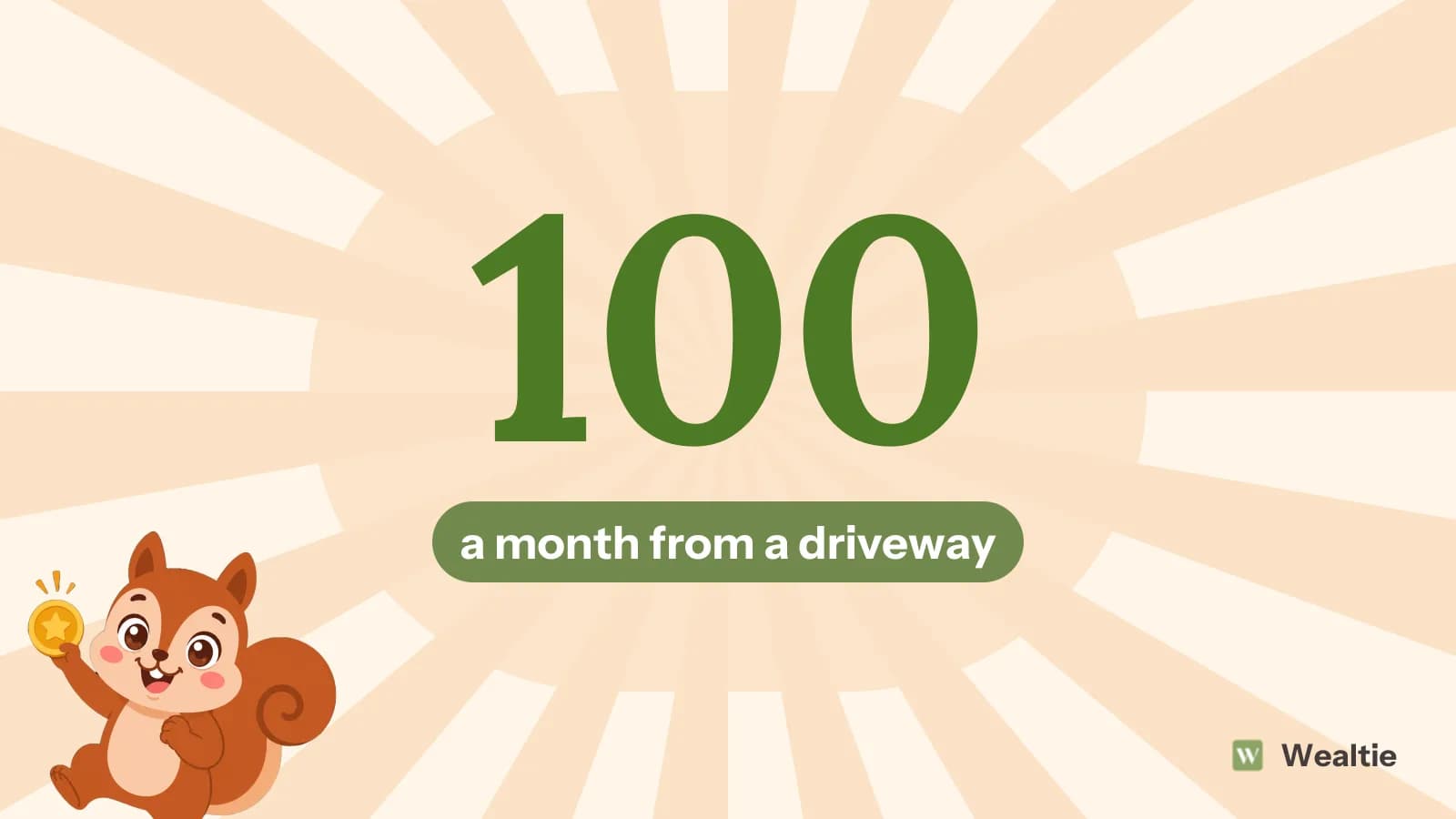
Renting out a parking space or driveway you don't use can bring in steady income with very little effort. In a worked example, a driveway near a train station earns about 100 a month from a weekday commuter.
 By Wealtie Team · 3 min read
Key takeaways
- Renting out a parking space you don't use can bring steady income with little effort.
- In a worked example, a driveway near a train station earns about 100 a month.
- Location matters most: spaces near stations, city centres and events earn more.
- Check your lease, mortgage, insurance and local rules before you start.
Can you make money renting out a parking space?
Yes, if you have a space or driveway you don't use and there's demand nearby. It's one of the simplest side incomes, since there's no product to make and little time involved. Many people pay for reliable parking near work, stations, city centres, hospitals or event venues. Renting out a parking space can bring in a steady monthly income with very little work, especially if you find a regular renter. Once it's set up, it can run for months with almost no effort.
Rules vary, so check your lease, mortgage, insurance and local regulations before you start.
How much could you earn?
Here's a worked example of monthly income by location, in round numbers that work in any currency:
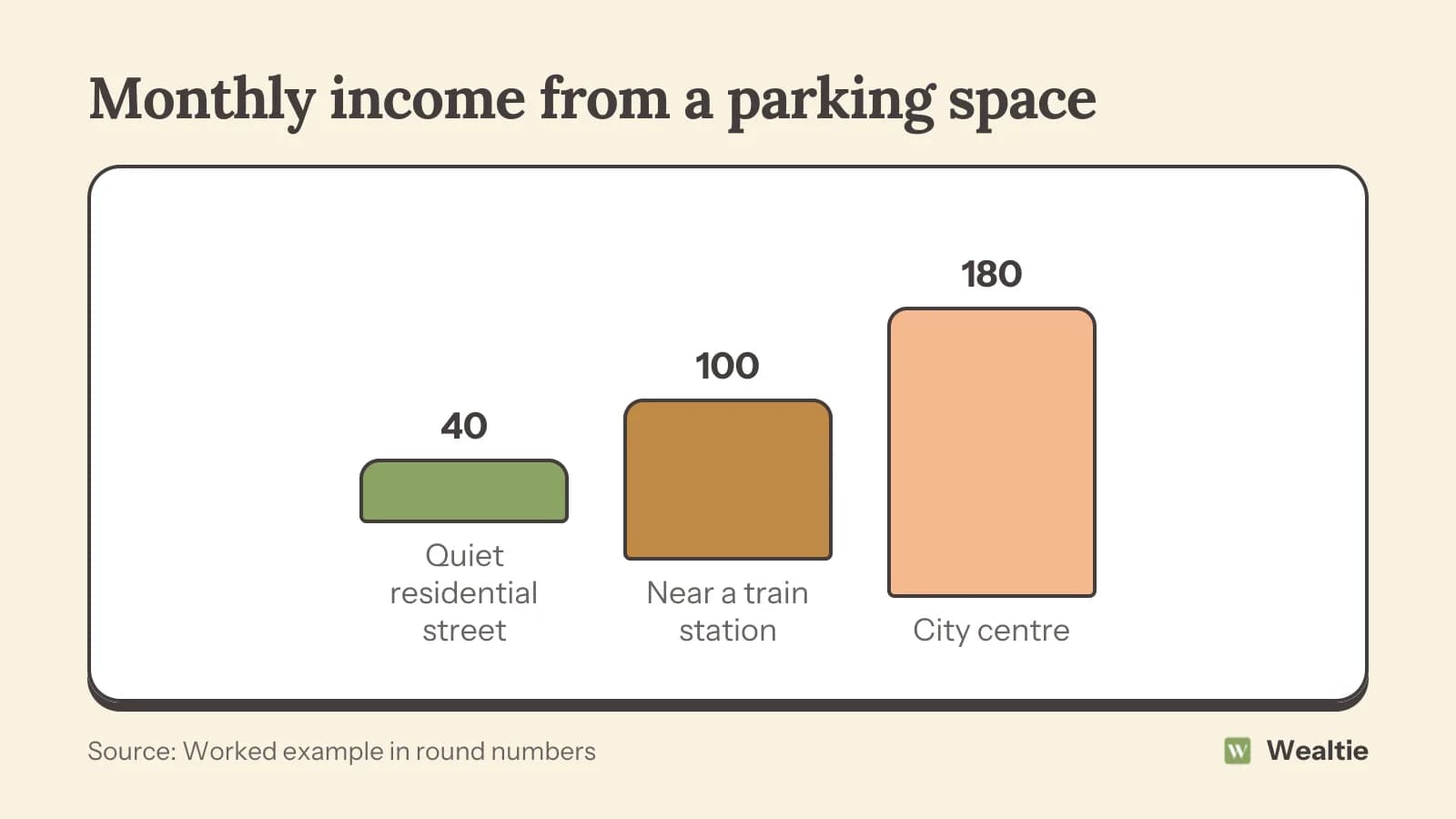
A space on a quiet residential street might earn about 40 a month, one near a train station about 100 and one in a city centre about 180. Over a year, 100 a month adds up to 1,200. Your own earnings depend on local demand and parking prices. Spaces with extras, like being covered, secure or having electric charging, can earn more.
Where is demand highest?
- Near train and bus stations, for commuters
- In city centres, where parking is expensive
- Near hospitals, universities and large workplaces
- Near stadiums, concert venues and event spaces, for one-off bookings
- Near airports, for longer stays
Checking what nearby car parks charge gives you a sense of what people might pay. Pricing a little below them often finds a renter quickly.
Seasonal and event demand
Demand can rise around big events, holidays or busy shopping periods. Listing your space for those dates, even if you don't rent it the rest of the time, can bring in extra money with little effort. Setting a higher price for busy days is common.
How do you find renters?
Parking rental platforms let you list your space and handle bookings and payments, usually for a fee. You can also advertise locally, through community groups or noticeboards, which avoids fees but means handling payments yourself. A regular monthly renter gives steady income; daily or event bookings can earn more but need more management.
Set clear terms
Agree when the space can be used, how payment works and how much notice either side needs to end the arrangement. A short written agreement avoids misunderstandings. Ask for the renter's car details, so you and neighbours know who should be parked there.
Short-term or long-term renters?
A long-term renter, like a commuter paying monthly, gives steady income and little admin. Short-term bookings, like event parking, can earn more per day but need more management and may leave the space empty on other days. Some owners mix the two, renting weekdays to a commuter and weekends for events.
What should you check first?
- Tenancy or lease: renters may need permission from the landlord
- Mortgage: some lenders have conditions about commercial use
- Insurance: tell your home insurer, and check what's covered
- Local rules: some areas have planning or parking restrictions
- Access: make sure the renter won't block neighbours or your own access
Telling neighbours what you're doing avoids confusion and complaints.
Keep it safe and tidy
A well-lit, clearly marked space is more appealing and safer for renters. Keeping it clear of rubbish and making access easy helps you keep a regular renter for longer, which means steadier income.
What are the costs?
Costs are usually low: platform fees, perhaps a sign or a lock, and your time managing bookings. Event bookings can earn more but need more coordination. If you share the driveway with your own car, plan how you'll coordinate. How to save money on parking covers the other side, if you're the one paying for parking.
Do you pay tax on parking income?
In many countries, income from renting out a parking space counts as taxable income, though some have allowances for small amounts. Keep records of what you earn. How to declare side hustle income covers the general steps, and how to track side hustle income has a simple record-keeping method.
Write down a few simple rules for drivers, like where to park, access times and what to do if there's a problem. Clear rules avoid disputes and keep neighbours happy, which matters if you plan to rent the space for a long time.
How do you track parking income in Wealtie?
If you have a regular renter, set up the payment as recurring income, so it logs itself each month in the income tracker. Log any costs, like platform fees, in your expense categories, so you can see what the space earns after costs.
Questions people ask
In a worked example, about 40 a month on a quiet street, 100 near a station and 180 in a city centre.
Near stations, city centres, hospitals, large workplaces, event venues and airports.
Check your lease, mortgage, insurance and local rules before you start.
In many countries, yes, though some have allowances for small amounts. Keep records.
This article is general information, not financial, tax or legal advice. Your situation is your own; check the numbers that apply to you before you act on them.