Budgeting: How to make a school lunch budget that saves money every week
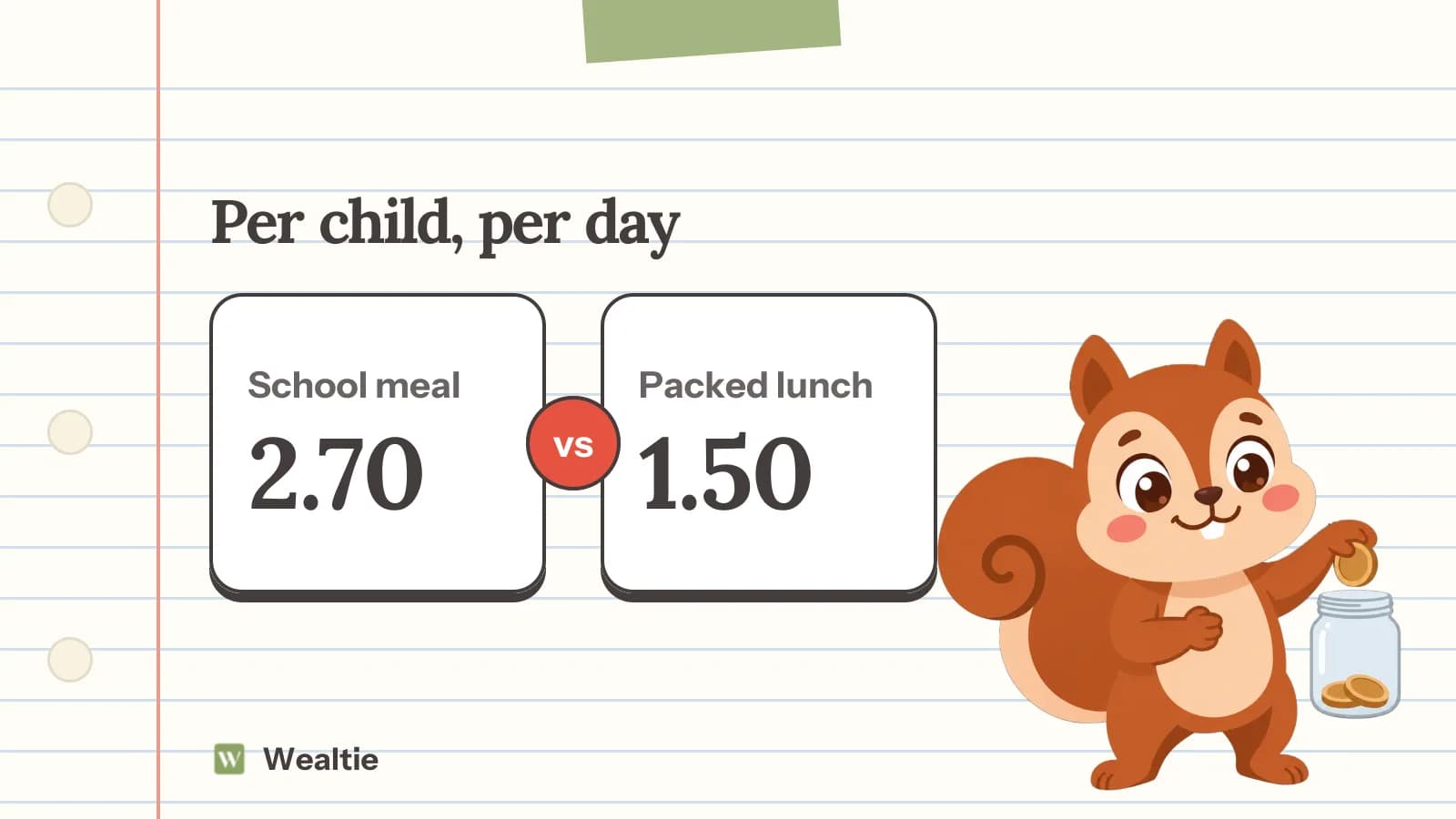
A school lunch budget starts with comparing the cost of school meals with packed lunches, then planning a week's lunches from one shop. In a worked example, packed lunches cost about 1.50 a day against 2.70 for school meals.
 By Wealtie Team · 3 min read
Key takeaways
- Compare the daily cost of school meals with packed lunches, including drinks and snacks.
- In a worked example, packed lunches cost about 1.50 a day against 2.70 for school meals.
- Planning a week of lunches from one shop cuts cost and waste.
- Check whether your child qualifies for free or reduced-price school meals, which many eligible families don't claim.
How do you make a school lunch budget?
Work out what each option costs per day, pick the one that suits your family, and plan lunches for the week in one go. School lunches are a daily cost for years, so a small difference per day adds up to a lot over a school year. Over a child's whole time at school, the difference between options can run into thousands.
Are packed lunches cheaper than school meals?
Often, if you plan them. Here's a worked example in round numbers that work in any currency, over a term of 65 school days:
| Option | Per day | Per term |
|---|---|---|
| School meal | 2.70 | 175.50 |
| Packed lunch | 1.50 | 97.50 |
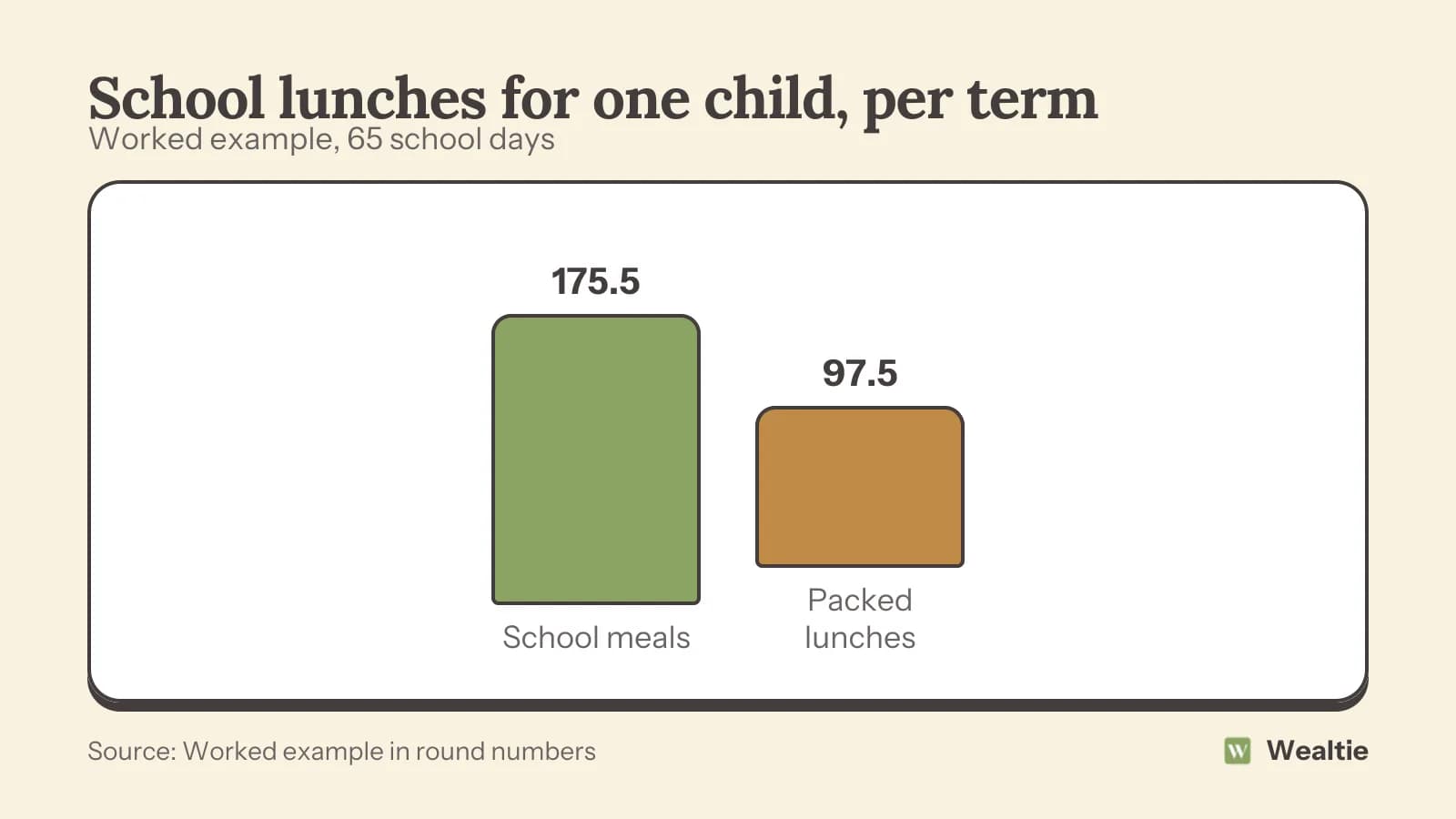
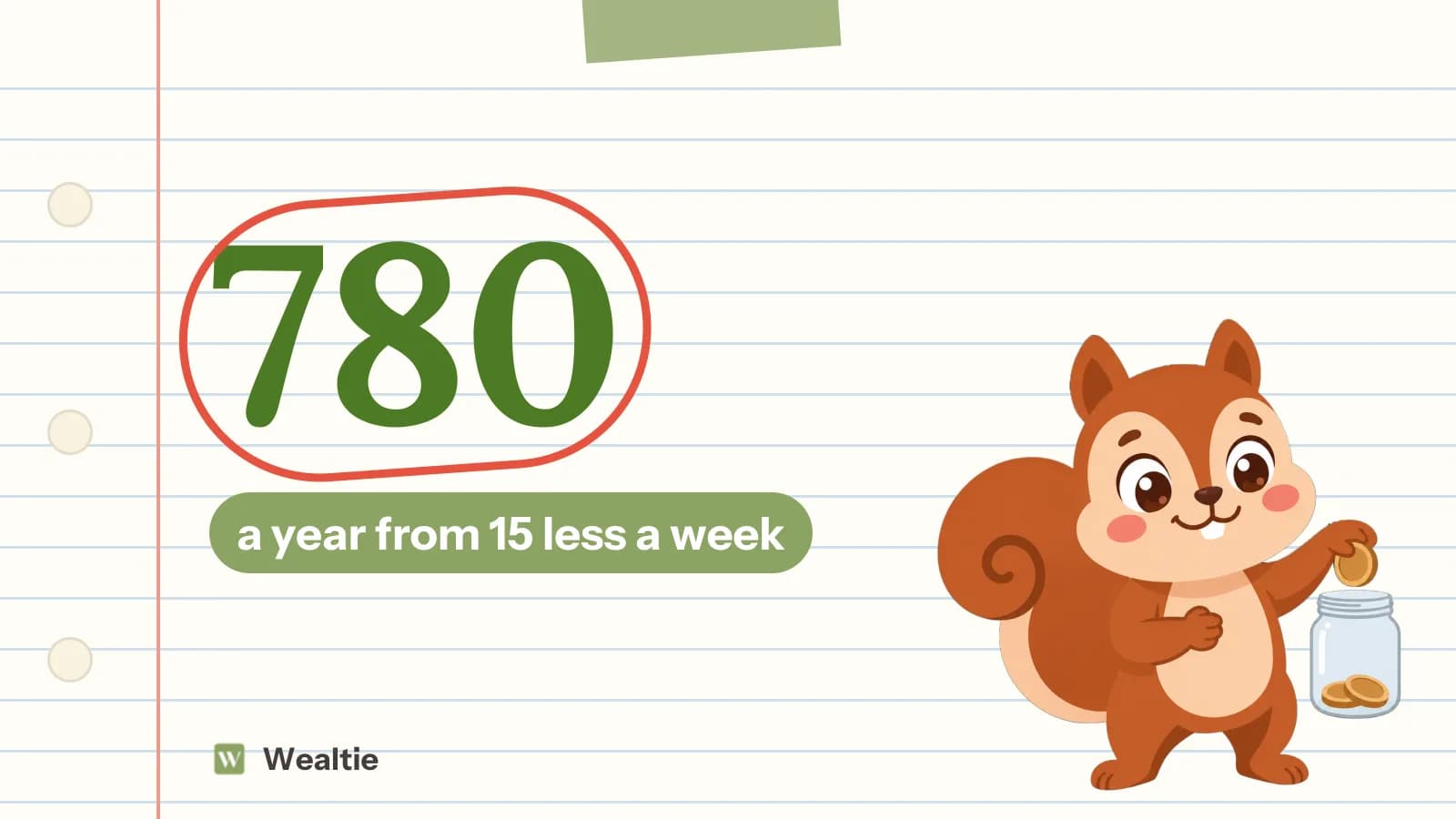
That's 78 a term per child. For two children over three terms, it's about 470 a year. Your figures depend on your school's prices and what goes in the lunchbox.
School meals have advantages too: a hot meal, no preparation and less waste at home. Some families mix the two, with school meals on busy days and packed lunches on others. Check how your school takes payment, since some ask for money upfront each term.
Should you check free school meals?
Yes. Depending on where you live and your income, your child might qualify for free or reduced-price school meals. Some schemes cover all children in certain age groups. Many eligible families don't claim, so check your school's or local authority's guidance. It's usually a short application, and in some places a successful claim also brings help with uniforms or trips.
How do you keep packed lunches cheap?
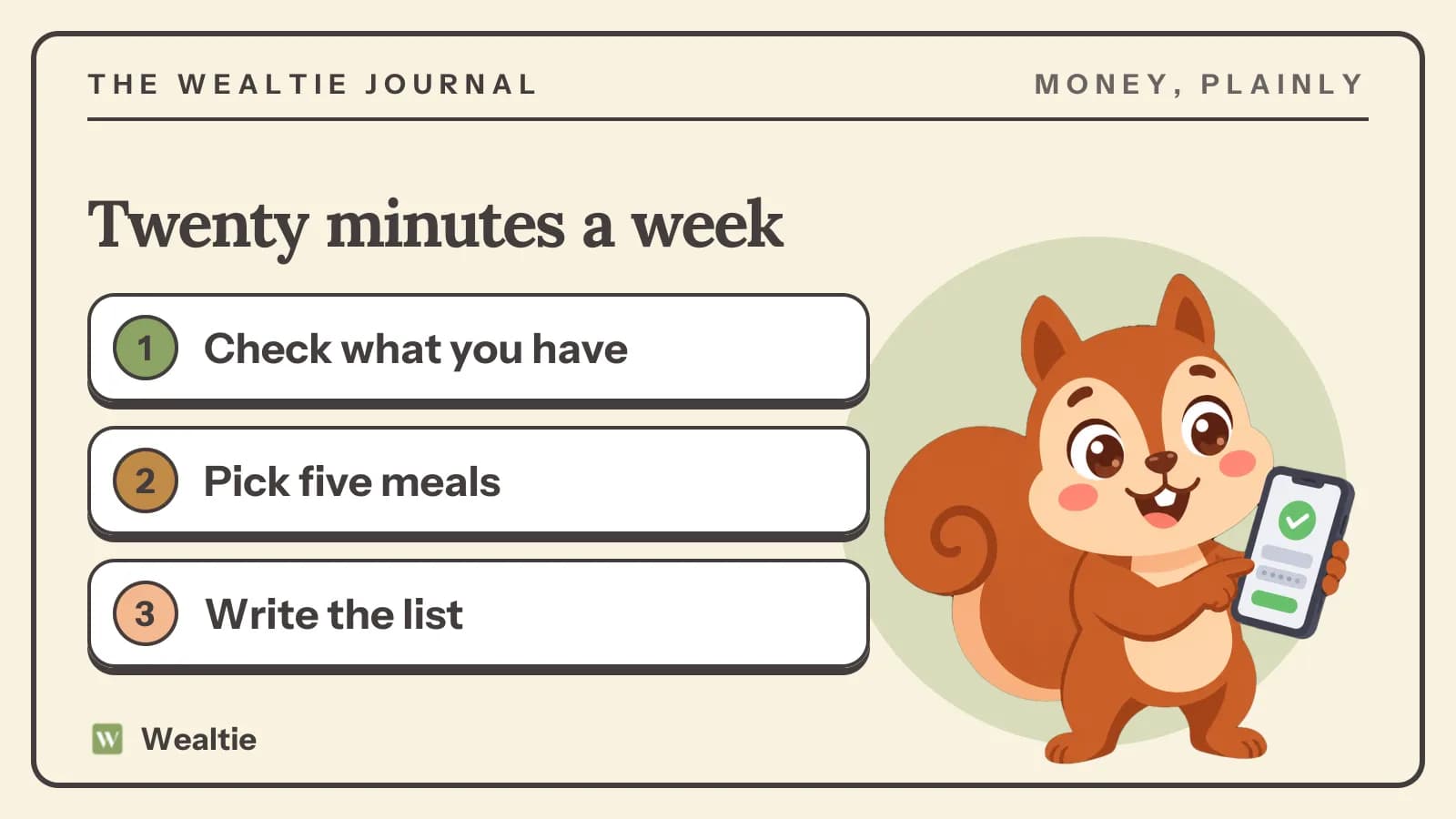
Plan the week and shop once. Buying for five days in one go costs less than daily top-ups. A few ideas:
- Use leftovers from dinner, like pasta, rice or wraps
- Buy larger packs of yoghurt, fruit and crackers and portion them out, instead of individually wrapped snacks
- Make a batch of something at the weekend, like muffins or flapjacks
- Use reusable boxes and bottles instead of disposable bags and cartons
- Choose seasonal fruit, which is cheaper
Individually wrapped snacks are convenient but cost much more per portion. Preparing lunches the night before, or a few at once, saves time on busy mornings. Portioning from a big pack takes a few minutes and saves a lot over a term.
Is it worth buying lunchbox gadgets?
A sturdy lunchbox and bottle that last for years are worth it, since disposable bags and cartons add up. Specialist gadgets, like boxes with lots of compartments or themed accessories, rarely save money and are easily lost or broken. Buy good basics, label them and replace them only when needed.
A small insulated container lets you send leftovers like pasta or soup warm, which widens the options without much cost. Check whether the school has rules about nuts or other foods before you plan the week. If your school uses an online meal account, check the balance weekly so a low balance doesn't catch you out.
How do you cut waste?
Ask what comes home uneaten. If the sandwich crusts or the apple always come back, change what you pack. Children are more likely to eat what they've helped choose, so let them pick from a few options when you plan the week.
Keep portions realistic. A smaller lunch that gets eaten costs less than a big one that gets thrown away. Older children can make their own lunch from what's in the fridge, which teaches a useful skill and saves you time.
What about drinks and snacks?
They add up. A daily carton or bottle can cost as much as the sandwich. A refillable water bottle costs almost nothing per day. Check what the school allows, since many have rules about snacks and drinks. Label bottles and boxes, since lost containers have to be replaced.
How do you fit lunches into the family budget?
Add lunches to your weekly food shop, so they're counted along with everything else. How to save money on groceries has tips that apply to lunchbox shopping too, and the family budget puts school costs alongside other family spending.
How do you track lunch costs in Wealtie?
If you pay for school meals, set the payment up as a recurring transaction, so it logs itself when it's due. Log lunchbox shopping in your Groceries category, and your expense categories show what food costs each month. A monthly limit in the budget tracker keeps the total in view.
Questions people ask
Often, if planned. A worked example puts packed lunches at about 1.50 a day against 2.70 for school meals.
Plan the week, shop once, use leftovers, portion snacks from big packs and use reusable boxes and bottles.
Possibly, depending on where you live, your income and your child's age. Check your school's or local authority's guidance.
Ask what comes home uneaten, let children help choose from a few options, and keep portions realistic.
This article is general information, not financial, tax or legal advice. Your situation is your own; check the numbers that apply to you before you act on them.