Budgeting: Scarcity mindset: how it affects your money and how to ease it
A scarcity mindset is the constant feeling that there's never enough money, which pulls all your attention onto today's shortfall. It's a normal response to tight times, and small buffers and simple plans can ease it.
 By Wealtie Team · 3 min read
Key takeaways
- A scarcity mindset is the feeling that there's never enough money.
- It narrows your focus to today, which makes planning ahead harder.
- It comes from real pressure, not a personal failing.
- A small buffer and bills on fixed dates free up headspace to plan.
What is a scarcity mindset?
A scarcity mindset is what happens when money feels so tight that it takes over your thinking. Every decision becomes about getting through today: this bill, this week, this shortfall. There's little room left to think about next month, let alone next year. People in this state often feel anxious, tired and stuck, and they may make choices that cost more later because the pressure now is so strong.
It's important to say that a scarcity mindset isn't a character flaw. It's a natural response to real pressure. When money is short, the brain focuses on the most urgent problem, the way it would if you were hungry or in danger. The good news is that small changes in your situation can ease the pressure, and with it, the mindset.
How does a scarcity mindset show up?
Tunnel vision
You focus so hard on the immediate problem that other things slip. A bill gets paid, but another is forgotten. A late fee follows, which makes money tighter still.
Borrowing for today
Short-term fixes like payday loans or using an overdraft feel like the only option. They solve today's problem but add costs that make tomorrow harder. Payday loan alternatives covers safer options.
Avoiding the numbers
Looking at your balance feels painful, so you stop checking. Not knowing makes it harder to plan and easier to overspend by accident.
Feeling it even when things improve
Some people keep feeling short of money even after their income rises. Years of tight budgets leave a habit of worry that takes time to fade.
Why does a scarcity mindset cost money?
Because it pushes you towards quick fixes. Paying late, borrowing at high interest and buying cheap things that need replacing often all cost more over time. It's sometimes called the cost of being short: the less slack you have, the more each small problem costs. Breaking the cycle starts with creating a little slack.
How do you ease a scarcity mindset?
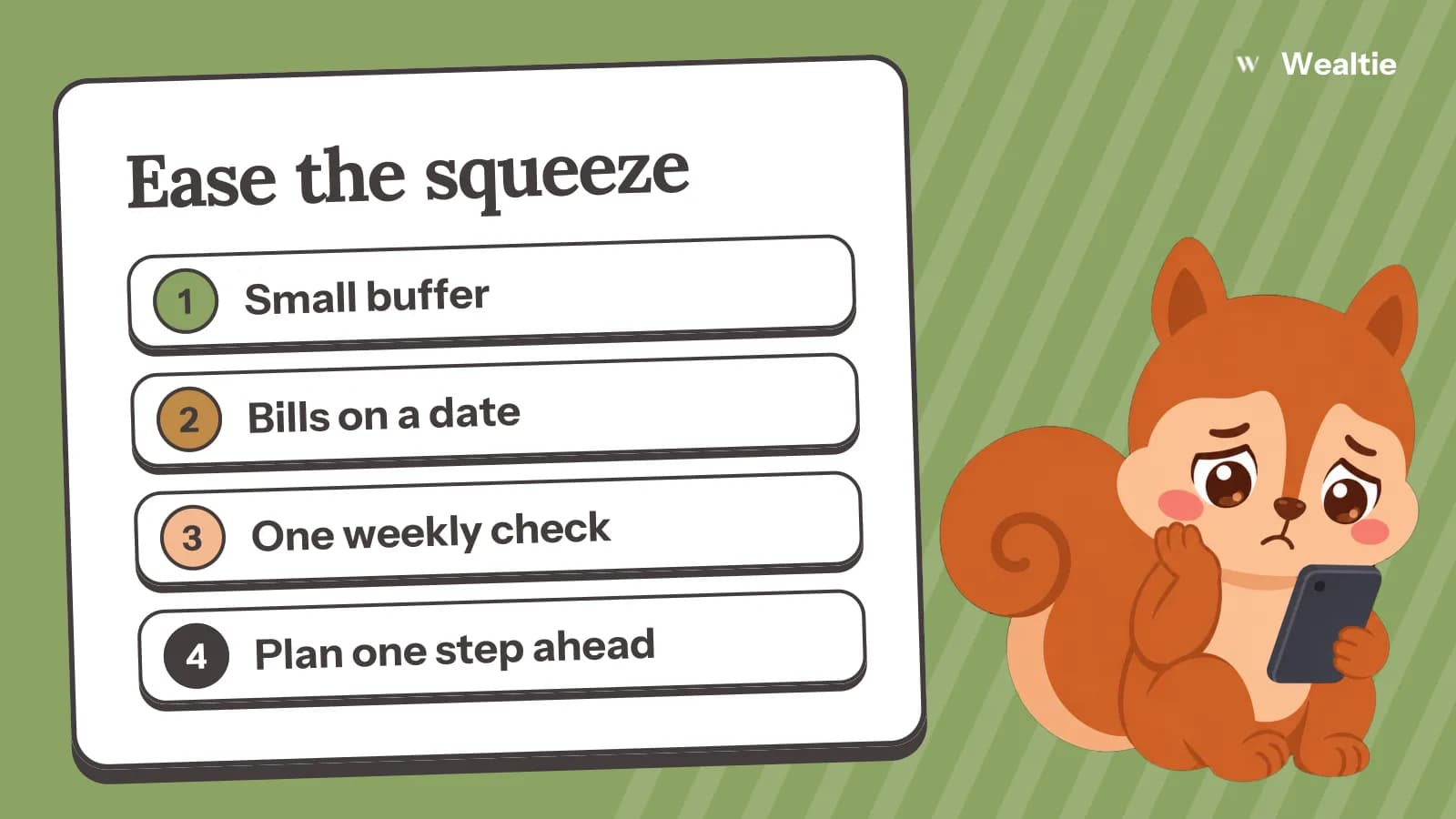
Build a tiny buffer
Even a small amount set aside changes how money feels. Here's a worked example of saving 10 a week, in round numbers that work in any currency:
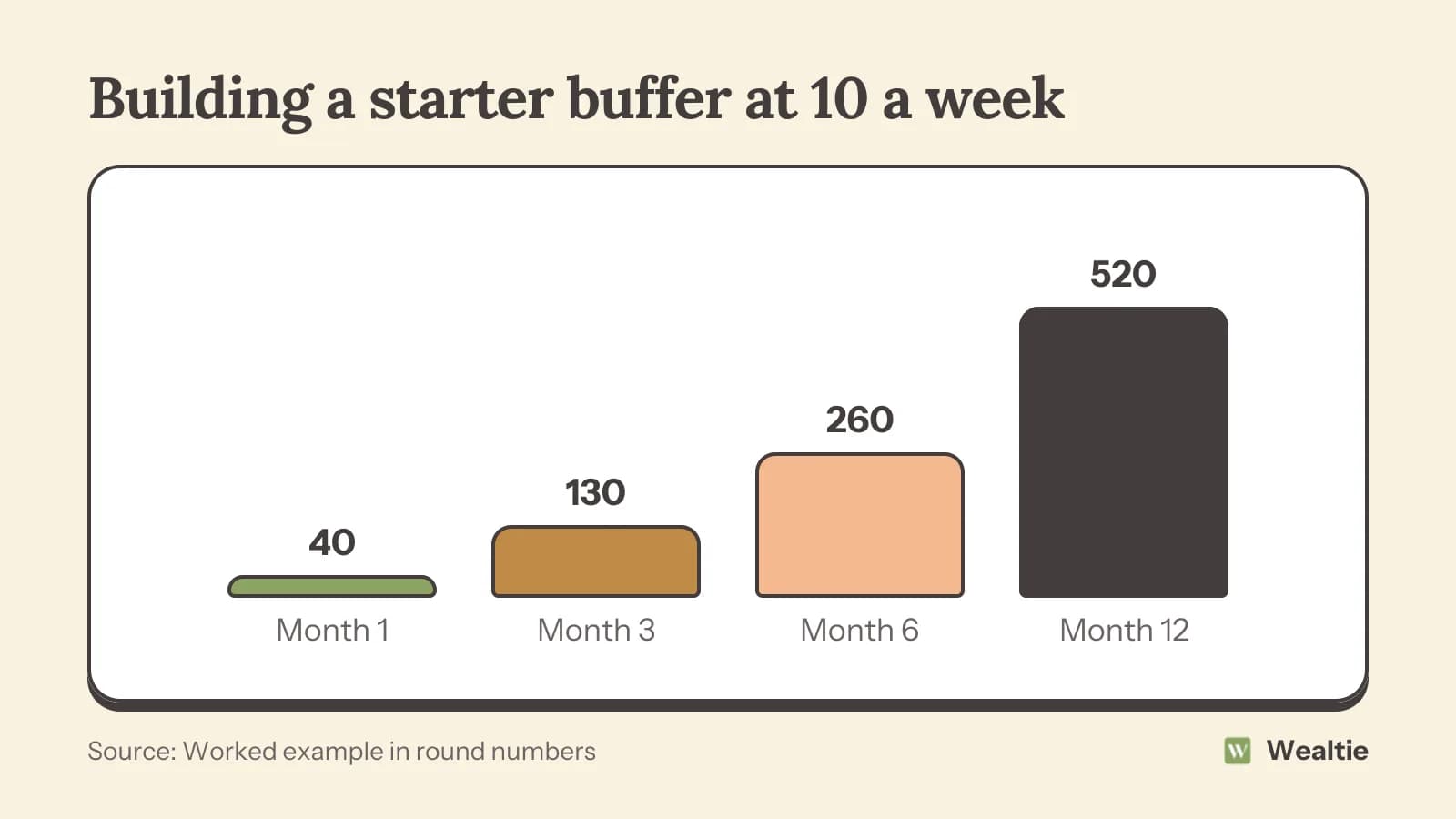
After a year, that's 520, enough to cover many small emergencies without borrowing. Start smaller if 10 is too much. The habit matters more than the amount. How to build an emergency fund covers growing it over time.
Put bills on fixed dates
Knowing when each bill leaves your account means fewer surprises. Ask providers to move payment dates to just after payday if that helps. A short list of bills and dates on paper, or in an app, takes a lot of mental load off.
Check once a week
Pick one time each week to look at your money for ten minutes. A regular, short check feels less frightening than a big review, and it stops small problems growing unseen.
Plan one step ahead
You don't need a five-year plan. Aim to know what's coming next week, then next month. Over time, the horizon grows. How to get one month ahead on bills is a good next goal once the buffer is in place.
Be kind to yourself
Money stress often comes with shame. Remember that the feeling comes from pressure, not from being bad with money. Talking to someone you trust, or to a free debt advice service if debt is part of the picture, can help a lot.
What about an abundance mindset?
You'll often hear that the answer is to switch to an abundance mindset and believe there's enough. Positive thinking alone doesn't pay bills, and being told to think differently can feel dismissive when money is short. What helps is changing your situation a little at a time, with a buffer, a plan and fewer surprises. As the pressure eases, the feeling of scarcity tends to ease with it.
When income is very low
If your income doesn't cover the basics, no mindset change will fix that. Look at benefits or support you may be entitled to, and see how to save money on a low income for practical ideas.
How can Wealtie help ease the pressure?
Add your bills as recurring transactions, so they log themselves on their date and you can see what's coming. Set a monthly budget and check what's left once a week. Keeping spending in a few expense categories shows where small changes could build your buffer.
Questions people ask
A scarcity mindset is the constant feeling that there's never enough money, which narrows your focus to getting through today.
No. It's a natural response to real money pressure, and it eases as the pressure eases.
Build a small buffer, put bills on fixed dates, check your money once a week and plan one step ahead.
It pushes you towards quick fixes like late payments and high-interest borrowing, which cost more over time.
This article is general information, not financial, tax or legal advice. Your situation is your own; check the numbers that apply to you before you act on them.