Saving: How to save money on school uniform
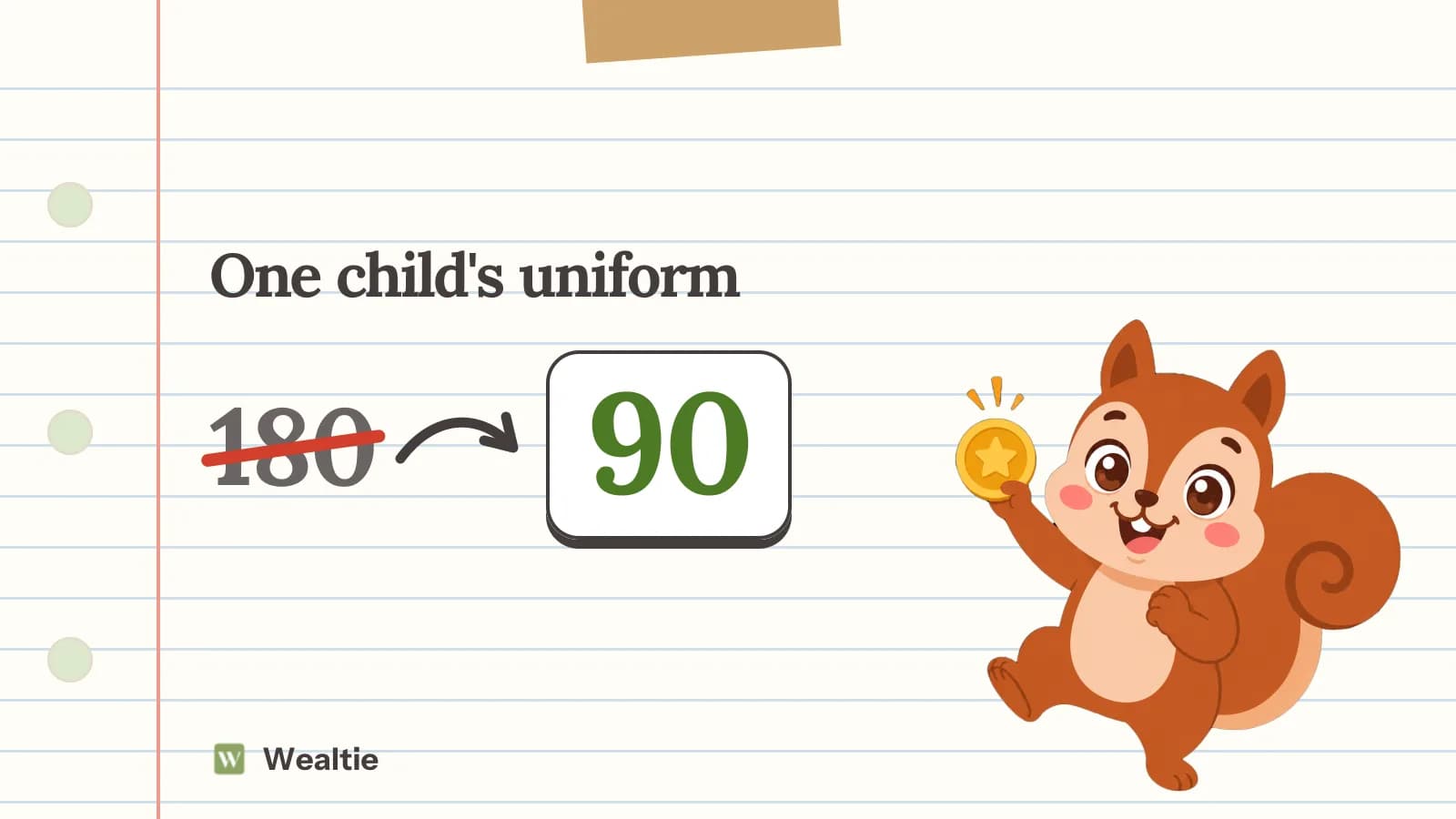
To save money on school uniform, buy only the logo items you must have from the official supplier, get plain basics from supermarkets, and use second-hand and swap schemes. In a worked example, a uniform for one child costs 180 bought new from the school shop, against about 90 with these changes.
 By Wealtie Team · 3 min read
Key takeaways
- To save money on school uniform, buy logo items from the supplier and plain basics elsewhere.
- In a worked example, a uniform costs 180 new from the school shop, against about 90 with cheaper sources.
- Second-hand sales and swap schemes are often the cheapest option of all.
- Labelling clothes and buying a little big helps them last the whole year.
How do you save money on school uniform?
Separate what must come from the school's supplier from what can come from anywhere. School uniform can be a big cost, especially with more than one child or when a growth spurt means buying everything again. Most schools require only a few items with a logo, like a jumper or blazer, while trousers, skirts, shirts and shoes can usually be plain versions from any shop. Knowing the difference is the first step to saving. It's also worth asking whether the school allows plain alternatives for items like PE kit, which are often the most expensive branded pieces.
Check your school's uniform list carefully, and ask if anything is unclear. Lists sometimes include recommended items that aren't required, which you can skip.
How much can you save?
Here's a worked example for one child, in round numbers that work in any currency:
| Cost | |
|---|---|
| Everything new from the school supplier | 180 |
| Logo items from the supplier, basics from a supermarket, some second-hand | 90 |
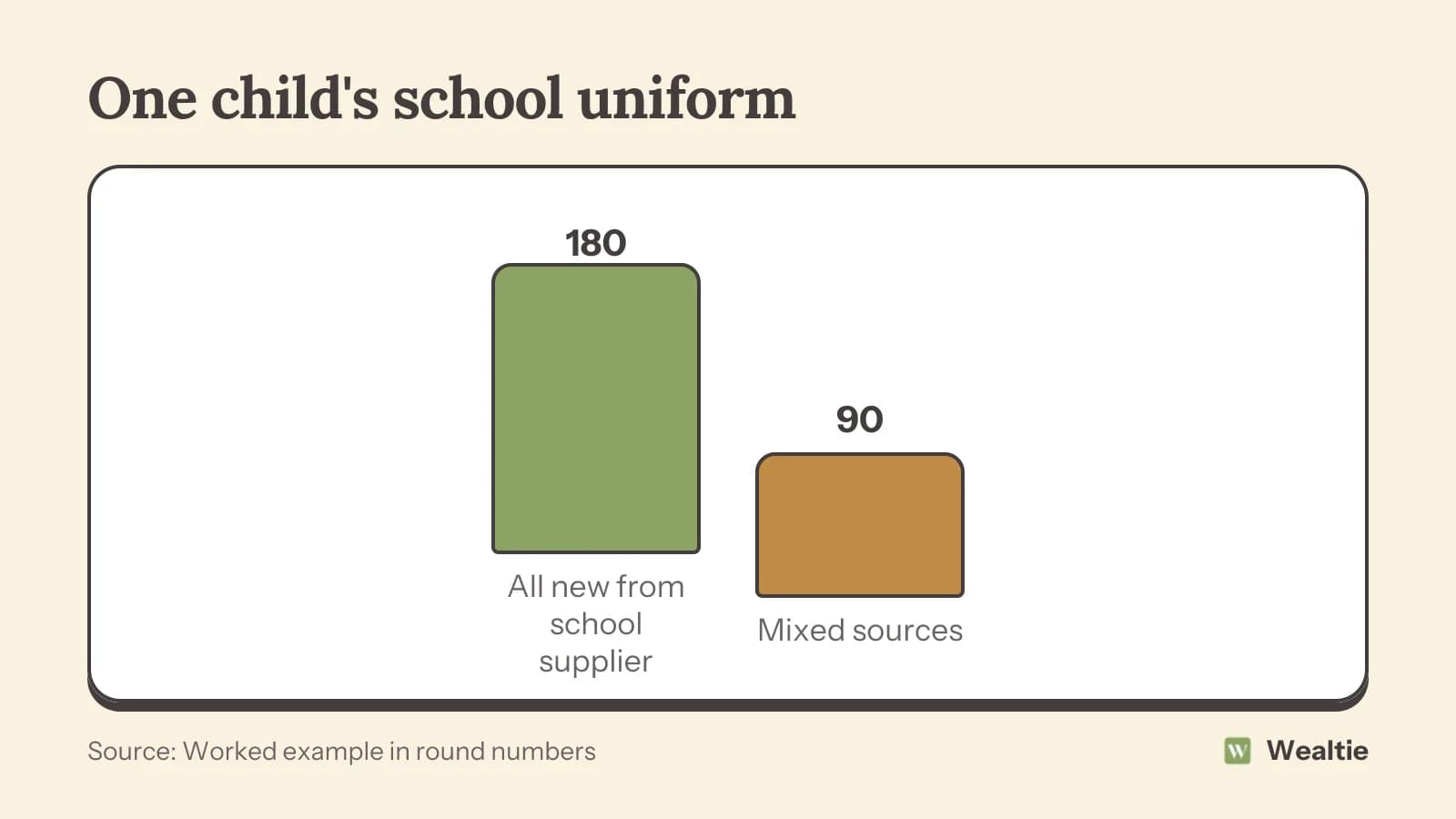
In this example, the cheaper approach halves the cost. With two children, the saving doubles. Your own figures depend on the school's requirements and where you shop.
Where can you buy cheaper basics?
Supermarkets and high-street shops sell plain school trousers, skirts, shirts, polo shirts and jumpers at low prices, often in multipacks. Their quality has improved, and many items wash well and last. Buy these for everything that doesn't need a logo. Checking the fabric and stitching in the shop helps you pick items that will survive a year of washing.
Iron-on logos
Some schools allow plain jumpers or polo shirts with an iron-on or sew-on badge, which costs much less than branded versions. Ask the school whether this is permitted.
How do you find second-hand uniform?
Many schools and parent groups run second-hand uniform sales or swap rails, where items are cheap or free. Local online groups often have uniform for sale from families whose children have moved on. Second-hand uniform is often barely worn, since children outgrow it quickly. How to buy second-hand has tips on checking quality.
When your child outgrows their uniform, pass it on or sell it. It helps other families and can recover a little money. Some schools collect donated uniform to give to families who need it, which is another good home for outgrown items.
When to buy
Avoid the last-minute rush. Supermarkets often have offers on uniform in the weeks before the new school year. Buying a little big, especially for jumpers and coats, can make items last longer. But don't buy too far ahead for young children, who can grow unexpectedly.
Buy only what you need
Children don't need many of each item. Two or three shirts and a couple of pairs of trousers or skirts, with regular washing, are enough for most. You can always buy more if you find you need them. A quick wash midweek often means fewer items are needed overall.
How do you make uniform last?
Label everything with your child's name, since lost items are a common extra cost. Wash at lower temperatures, which is gentler on fabrics. Repair small tears and replace buttons rather than buying new. Iron-on knee patches can extend the life of trousers. Good shoes that fit well last longer than cheap ones that wear out quickly. Having feet measured before buying avoids paying for shoes that pinch and need replacing early.
Is there help with uniform costs?
In some places, families on lower incomes can get help with uniform costs through grants or schools themselves. Some areas also have rules limiting how many branded items schools can require. Ask the school or your local council what's available. If cost is a worry, schools are often more flexible than parents expect, so it's worth a quiet word. The back-to-school budget covers the wider costs of a new school year.
How do you plan for uniform costs?
Set aside a little each month, so the start of the school year doesn't arrive all at once. A 90 uniform saved over six months is 15 a month. How to save money on clothes and the kids' clothes budget cover children's clothing more generally.
How do you track uniform costs in Wealtie?
Give school costs their own line in your expense categories, so uniform, trips and supplies add up in one place. A monthly limit in the budget tracker helps you spread the cost, and comparing years shows whether your savings are working.
Questions people ask
Buy only required logo items from the supplier, get plain basics from supermarkets and use second-hand sales and swaps.
School and parent group sales, swap rails and local online selling groups.
Usually two or three shirts and a couple of pairs of trousers or skirts, with regular washing.
In some places, families on lower incomes can get grants or help from schools. Ask the school or local council.
This article is general information, not financial, tax or legal advice. Your situation is your own; check the numbers that apply to you before you act on them.