Saving: How to save money on contact lenses
To save money on contact lenses, compare the yearly cost of daily and monthly lenses, buy in larger quantities, and shop around using your prescription. In a worked example, switching from daily to monthly lenses cuts the yearly cost from about 400 to 250, though dailies can suit some people better.
 By Wealtie Team · 3 min read
Key takeaways
- Comparing the yearly cost of daily and monthly lenses is the first step to saving.
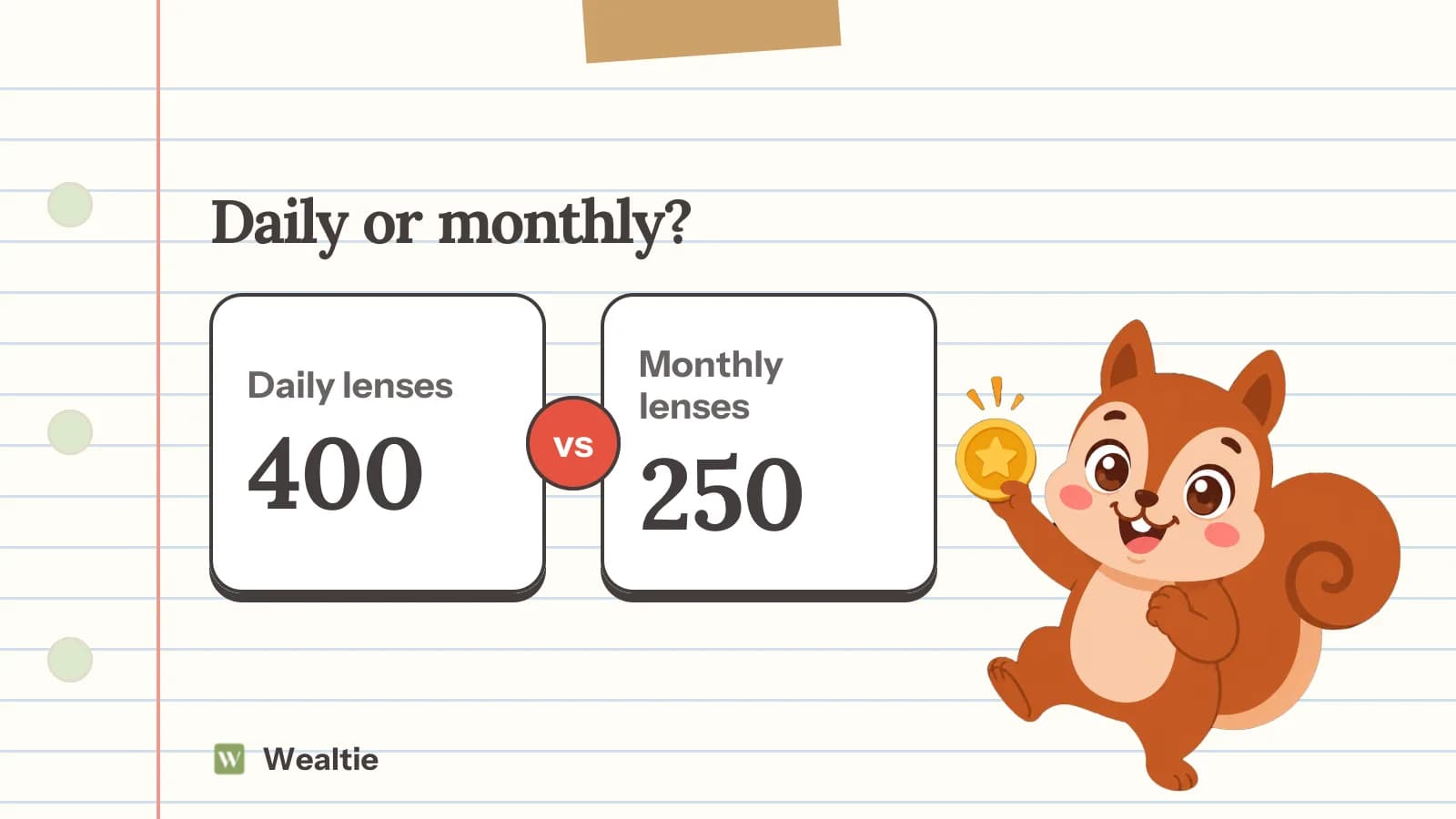
- In a worked example, monthly lenses cost about 250 a year against 400 for dailies.
- Buying a larger supply at once and shopping around with your prescription cut costs.
- Keep up with eye checks; cheap lenses aren't a saving if they cause problems.
How do you save money on contact lenses?
Compare the yearly cost of your options, buy smartly and keep your eyes healthy. Contact lenses are a regular cost that's easy to accept without checking, especially if you've used the same type for years. A few simple changes can make a real difference over a year, without compromising on comfort or eye health.
Always follow your optician's advice on which lenses suit your eyes. This guide covers how to pay less for them.
Daily or monthly lenses: which costs less?
Monthly lenses usually cost less over a year, but dailies can be more convenient and suit some eyes better. Here's a worked example, in round numbers that work in any currency:
| Type | Yearly cost |
|---|---|
| Daily lenses, worn every day | 400 |
| Monthly lenses, with cleaning solution | 250 |
| Daily lenses, worn part-time | 200 |
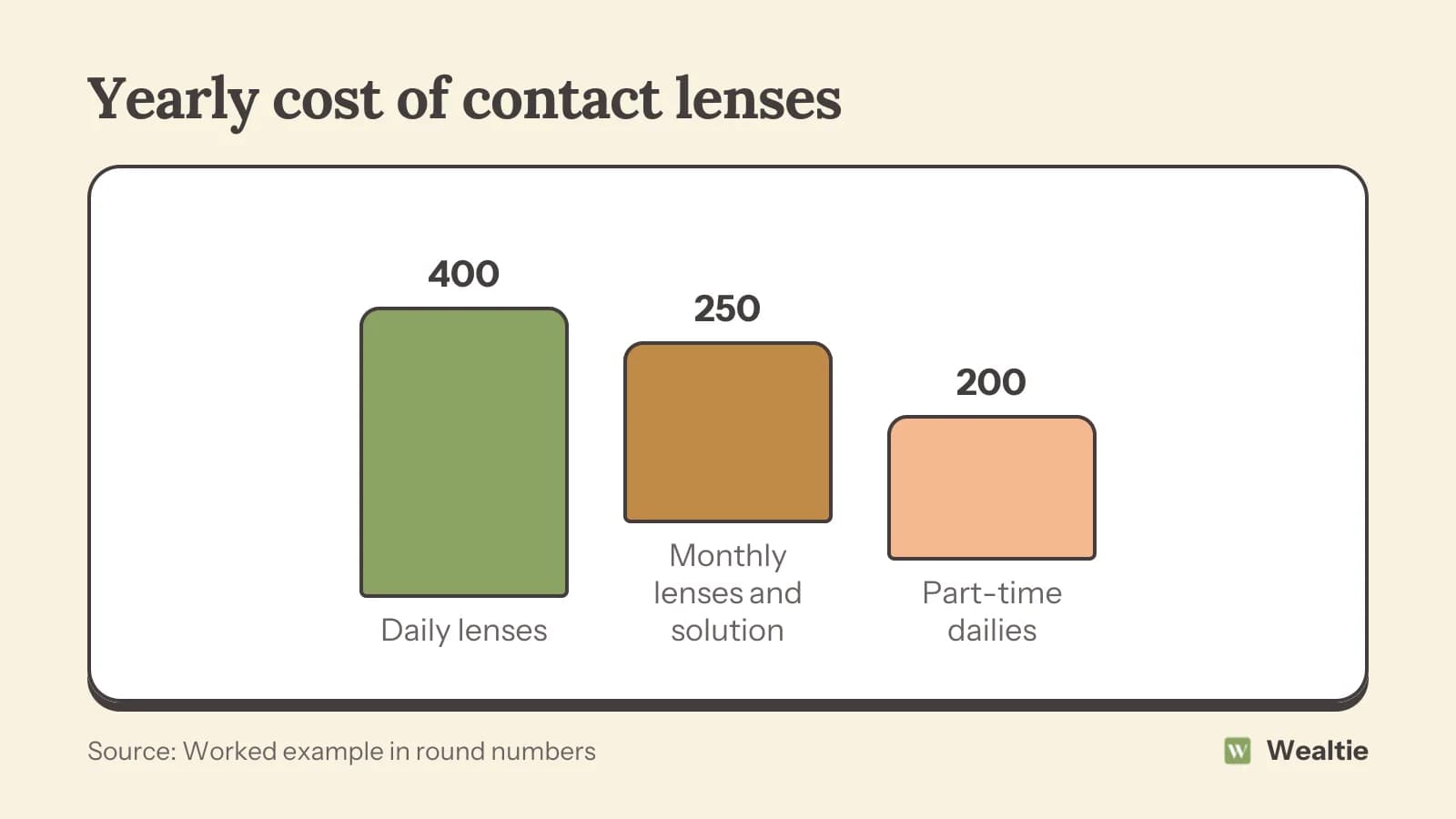
In this example, monthlies save 150 a year compared with wearing dailies every day. But if you only wear lenses some days, like for sport or going out, part-time dailies can be the cheapest option, since you only use a lens when you need it. Your own costs depend on the brand, your prescription and where you buy. Changing type can also change comfort, so ask your optician for a trial before buying a large supply.
Include the solution
Monthly lenses need cleaning solution and a case, which add to the cost. Include these when comparing. Using the right solution and replacing the case regularly also matters for eye health.
How do you buy contact lenses for less?
A few habits keep costs down:
- Buy a larger supply. Six-month or yearly supplies are usually cheaper per lens than monthly boxes.
- Shop around. Once you have a valid prescription, compare prices between opticians and online retailers.
- Check subscription plans. Some opticians offer monthly plans that include lenses and eye checks; compare the total with buying separately.
- Ask about equivalents. Some lenses are sold under different names at different prices; your optician can tell you if a cheaper equivalent suits you.
- Look for offers on first orders or bulk buys, but compare the regular price too.
Rules about buying lenses online vary by country, so make sure you buy from a reputable seller that checks prescriptions. A reminder when your supply runs low lets you wait for a good price rather than buying in a hurry.
Should you mix lenses and glasses?
Many people save by wearing glasses some of the time and lenses for certain activities. Wearing glasses at home in the evening, and lenses for work or sport, can cut lens use a lot. It also gives your eyes a rest, and a spare pair of glasses saves buying emergency lenses if you lose one. How to save money on glasses covers getting a good pair for less.
Why do eye checks matter for your budget?
Because problems cost more than prevention. Regular eye checks make sure your prescription is right and your eyes are healthy. Wearing lenses longer than recommended, sleeping in them when you shouldn't or using the wrong solution can lead to infections, which can be painful and expensive to treat. Stick to the replacement schedule; it's not a place to save.
In some places, eye tests are free or reduced for certain groups. Check what you're entitled to. Many opticians include aftercare checks with lens plans, which can be good value if you'd pay for them anyway.
How do you plan for lens costs?
Treat lenses as a regular cost. Work out what you spend in a year, and either budget for it monthly or save towards a bulk order. A sinking fund works well for a yearly supply, and some workplaces help with eye care costs for people who use screens. How to budget for medical bills covers health costs more broadly. Keeping a note of your prescription expiry date avoids a rushed, expensive appointment.
When are pricier lenses worth it?
If cheaper lenses are uncomfortable, dry your eyes or don't suit your prescription, they're not a good saving. Some people need specialist lenses for astigmatism or other conditions, which cost more. In that case, focus on buying in bulk and shopping around, rather than switching types. Ask your optician to explain why a particular lens is recommended, so you can judge whether the extra cost is needed.
How do you track lens costs in Wealtie?
Set up a lens subscription or regular order as a recurring transaction with the bill tracker, so it's logged on time. Give eye care its own line in your expense categories, so you can see the yearly cost of lenses, solution, glasses and eye tests together.
Questions people ask
Monthly lenses usually cost less over a year. In a worked example, about 250 against 400 for dailies worn every day.
Buy a larger supply, shop around with your prescription, compare subscription plans and ask about cheaper equivalents.
From reputable sellers that check prescriptions, yes. Rules vary by country, so check before you buy.
Yes. Wearing glasses at home and lenses for work or sport cuts lens use and gives your eyes a rest.
This article is general information, not financial, tax or legal advice. Your situation is your own; check the numbers that apply to you before you act on them.