Multi-currency & travel: How to plan a safari budget without overspending
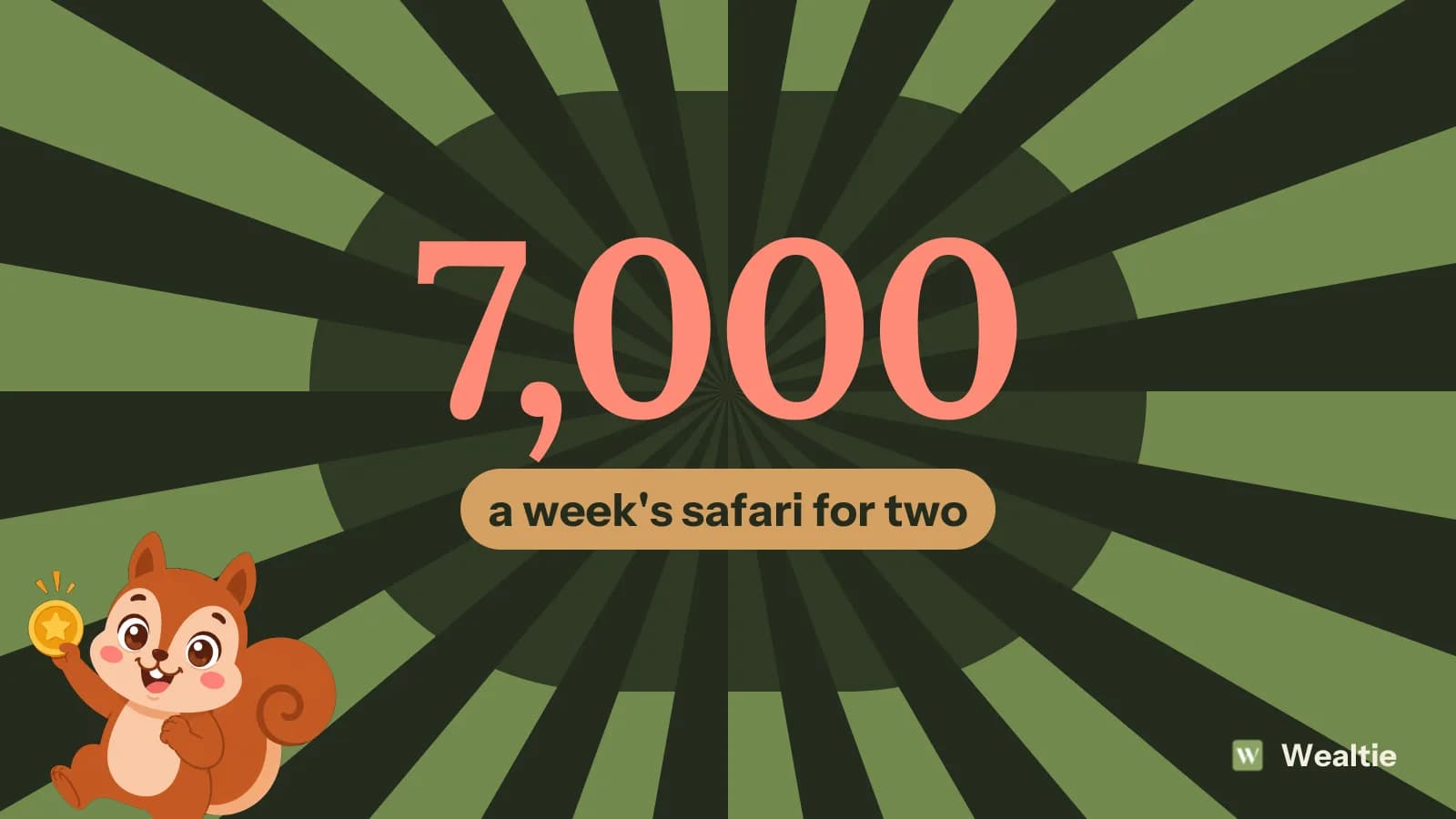
A safari budget is driven by where you stay, how you get around and park fees, with lodges usually the biggest cost. In a worked example, a week for two on a mid-range guided safari comes to 7,000.
 By Wealtie Team · 3 min read
Key takeaways
- A safari budget depends mostly on accommodation style and how you travel.
- Lodges and meals are usually the biggest cost, followed by flights.
- Park fees, tips and visas are easy to forget and add up.
- Travelling in shoulder season and self-driving can cut the cost.
What goes into a safari budget?
A safari is one of the most memorable trips you can take, and it can be planned at very different price levels. Some travellers camp and drive themselves through parks, while others stay in luxury lodges with private guides and flights between camps. Your safari budget depends mostly on where you stay, how you get around and how long you go for.
The main costs are:
- Accommodation and meals: from campsites to lodges, often with meals included
- Flights: international flights, plus any small-plane hops between parks
- Guide, vehicle and game drives: on a guided safari, often bundled into the price
- Park fees: daily charges for entering national parks and reserves
- Tips, visas and extras: guides, staff, visas, vaccinations and souvenirs
How much does a safari cost?
Here's a worked example of a one-week, mid-range guided safari for two people, in round numbers that work in any currency:
| Item | Cost |
|---|---|
| Lodges and meals | 3,200 |
| Flights | 1,800 |
| Guide, vehicle and game drives | 1,000 |
| Park fees | 600 |
| Tips, visas and extras | 400 |
| Total | 7,000 |
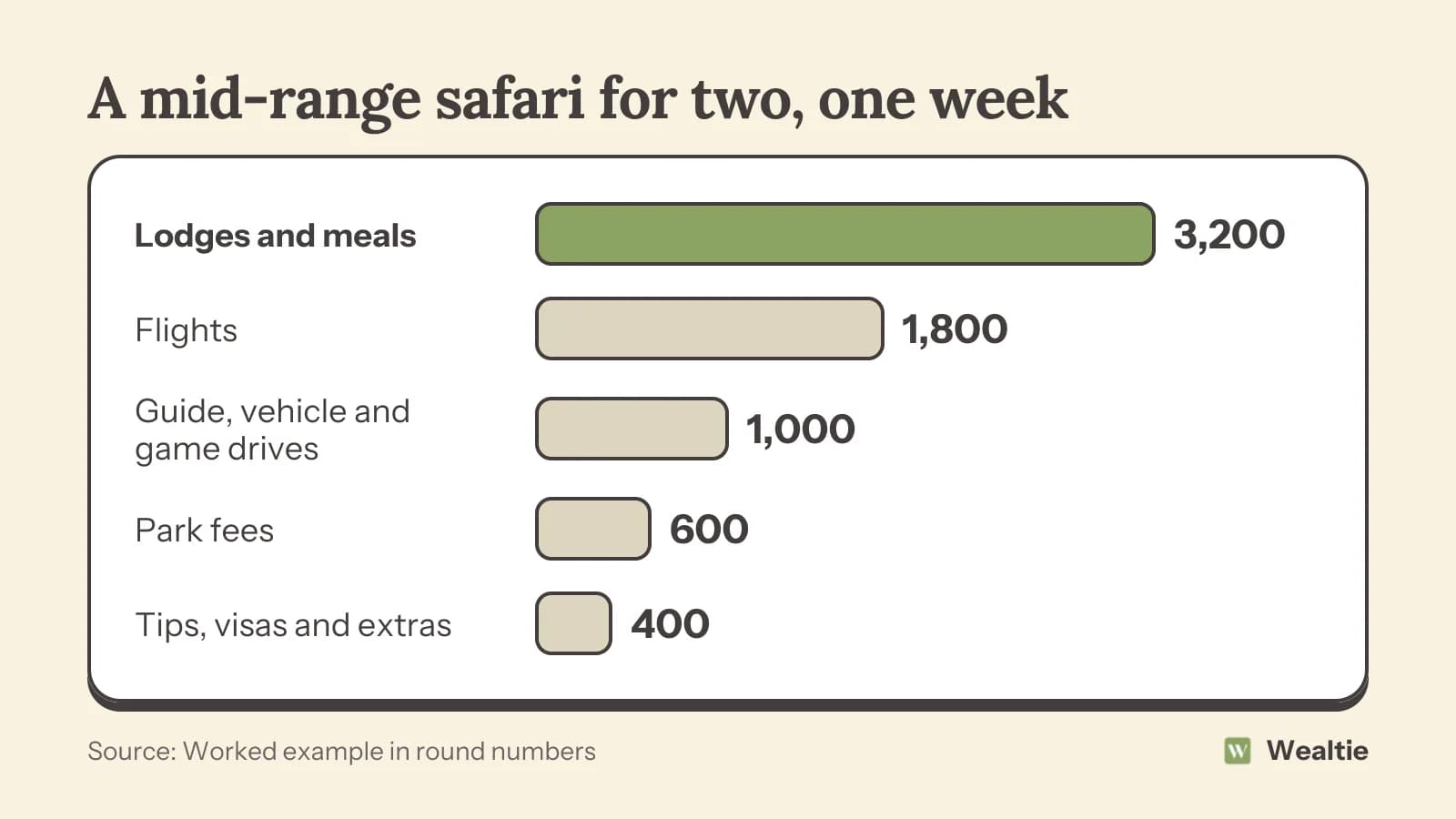
Accommodation takes the biggest share, which is typical. A self-drive trip with campsites could cost a fraction of this, while a luxury lodge safari could cost several times more. Prices also vary a lot between countries and parks, so compare a few destinations before you decide.
What types of safari are there?
Self-drive safari
You hire a vehicle, often a 4x4 with camping gear, and drive yourself through parks. It's usually the cheapest option and gives you freedom, but you'll need confidence driving on rough roads and planning your own route.
Group tour
Joining a small group shares the cost of the guide and vehicle. It's a good middle option for solo travellers and couples.
Private guided safari
A private guide and vehicle give you flexibility and expert knowledge. It costs more, but you set the pace.
Lodge or fly-in safari
Staying at lodges, often with meals and game drives included, and flying between parks is the most comfortable and most expensive way to go.
Which costs are easy to forget?
Park fees
Daily park and conservation fees can add up over a week, especially for popular parks. Check whether they're included in a tour price.
Tips
Tipping guides, drivers and lodge staff is customary in many safari destinations. Ask your operator for local guidance and budget for it. How much to tip covers tipping in general.
Visas and vaccinations
Many countries require a visa, and some trips need vaccinations or malaria tablets. Check well in advance, since some take time to arrange.
Travel insurance
Safaris often involve remote areas, so insurance with good medical and evacuation cover matters. Is travel insurance worth it? covers what to check.
Cash on the ground
Some places only take cash for tips and small purchases. How much cash to travel with covers how much to carry.
How do you save on a safari?
Travel in shoulder season
The months just before and after peak season often have lower lodge prices and fewer crowds, while wildlife viewing can still be good.
Mix accommodation levels
Combine a couple of nights at a special lodge with simpler camps or guesthouses for the rest.
Choose fewer parks
Moving between many parks adds flights and transfer days. Spending longer in one or two areas costs less and gives you more time watching wildlife.
Compare inclusive and separate pricing
Some tours include almost everything, while others charge separately. Add up the full cost of each before choosing.
How do you save up for a safari?
A safari is usually planned well in advance. If you're aiming for 7,000 and start 18 months ahead, that's about 390 a month. How to save for a vacation covers setting up a savings plan, and a separate savings pot keeps the money out of everyday spending.
Think about what matters most to you before choosing. For some travellers, a particular animal or landscape is the main goal, which can point you to one park and the best season to visit. For others, comfort or a once-in-a-lifetime lodge is the priority. Spending on your top priority and keeping the rest simple usually gives you the best trip for the money, and makes the planning easier too.
Booking with a reputable operator matters too. Read recent reviews, check what happens if plans change and pay with a method that offers protection if something goes wrong.
How can Wealtie help with a safari budget?
Set a trip budget and log deposits, flights and on-the-ground costs in their own expense categories. Wealtie supports multiple currencies, so lodge bills, park fees and tips paid in local currency sit alongside your home-currency costs. How to track a trip in Wealtie shows how to set it up.
Questions people ask
Costs vary widely. In a worked example, a one-week mid-range guided safari for two came to about 7,000 in round numbers.
Accommodation and meals are usually the biggest cost, followed by flights. Lodges vary a lot in price.
Yes. Self-drive safaris with campsites usually cost much less than guided or lodge safaris, though you'll need to plan your own route.
Travel in shoulder season, mix lodges with simpler camps, visit fewer parks and compare what's included in each tour price.
This article is general information, not financial, tax or legal advice. Your situation is your own; check the numbers that apply to you before you act on them.