Saving: Regifting: how to save money without causing offence
Regifting can save money and cut waste, as long as the gift is new, suits the person and won't get back to the original giver. In a worked example, regifting five unused gifts a year saves about 120.
 By Wealtie Team · 3 min read
Key takeaways
- Regifting is fine when the gift is new, suitable and from a different circle.
- It saves money and keeps unused items from going to waste.
- Keep a gift drawer with notes on who gave what.
- Selling or donating are good options for gifts you can't regift.
Is regifting okay?
Regifting means passing on a gift you received to someone else. It has a slightly awkward reputation, but done thoughtfully, it's a practical way to save money and avoid waste. Many people have a drawer of unopened candles, toiletry sets, books, gadgets and bottles that they're never going to use. Giving those to someone who'd enjoy them is better than leaving them to gather dust.
The key is to regift in a way that's kind to everyone. The item should be new and unused, it should suit the person you're giving it to and it shouldn't be obvious, or likely to get back to the original giver.
How much can regifting save?
Here's a worked example, in round numbers that work in any currency. You receive five gifts in a year that you won't use, worth about 24 each on average:
| What you do with them | Money saved or raised |
|---|---|
| Regift, saving new gifts | 120 |
| Sell second-hand | 60 |
| Donate | 0 |
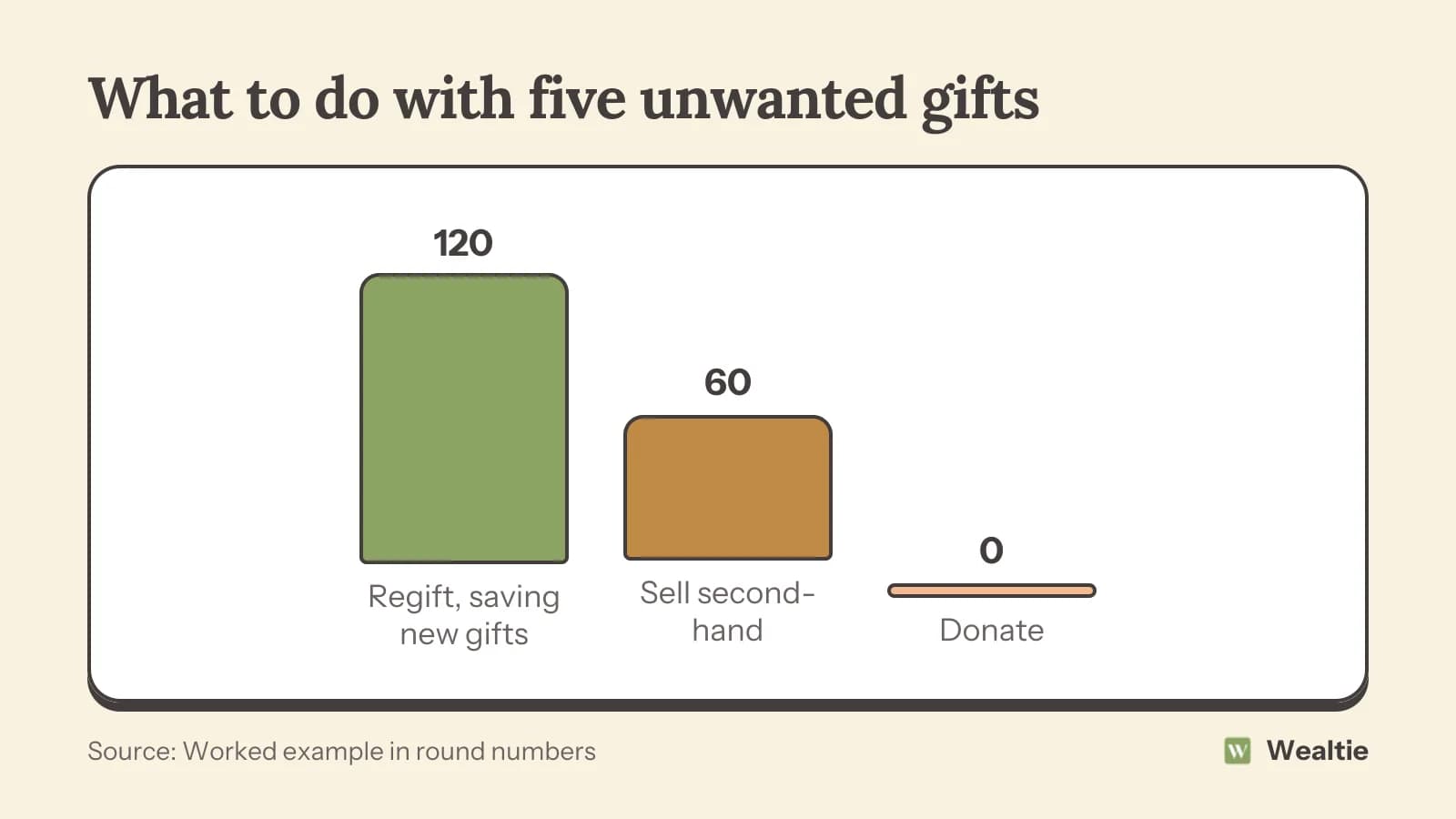
Regifting them in place of buying new gifts saves about 120. Selling them second-hand might raise around 60. Donating doesn't save you money, but it helps others and clears space. All three are better than keeping items you'll never use.
What are the rules for regifting?
Only regift new, unused items
The gift should be in its original packaging and in perfect condition. Anything used or damaged isn't a gift.
Choose the right person
Regift something the person would like, not just anything you want to get rid of. A good match makes it a thoughtful gift.
Keep circles separate
Don't regift within the same group of friends or family as the original giver. The risk of awkwardness is highest there.
Remove all traces
Check for cards, gift tags, notes inside books and personalised messages. Rewrap it in fresh paper.
Avoid personal or handmade gifts
Handmade items, personalised gifts and things chosen with special care should stay with you. Regifting those can hurt feelings if it's discovered.
Keep a note
When you put a gift in your drawer, note who gave it to you. That way you won't accidentally give it back to them.
Where does regifting work well?
Secret Santa and office swaps
Small, general gifts like candles, chocolates or toiletry sets work well for gift swaps with a set limit. How to plan a Secret Santa budget covers those.
Raffles and charity events
Donating unused gifts as raffle prizes helps a good cause and clears space.
Children's party gifts
New toys and books that your children won't use can make good gifts for their friends, as long as they're age-appropriate.
Teacher and host gifts
Unopened chocolates, wine or flowers-in-a-box can make a quick host or teacher gift. How to plan a teacher gifts budget covers other ideas.
What if you can't regift something?
If a gift doesn't suit anyone you know, you can sell it or donate it. Online marketplaces, local selling groups and second-hand shops are good options. How to sell things you don't use covers pricing and selling.
How do you get fewer unwanted gifts in the first place?
Sharing a wish list with family, suggesting experiences or agreeing a no-gift or Secret Santa arrangement can reduce the number of unwanted gifts. Many people are relieved when someone suggests it, since buying for everyone is expensive. How to plan a Christmas budget covers simplifying gifts at the busiest time of year.
A gift drawer or box makes regifting much easier. Keep unopened gifts in one place with a note of who gave each one and when. When a birthday or last-minute invitation comes up, check the drawer first before buying something new. Many people find they can cover several small gifts a year this way, which helps the yearly gift budget go further.
It's also worth being honest with close family about gifts you won't use. Sharing a wish list or saying you'd prefer experiences can reduce unwanted gifts in the first place, so there's less to regift or sell.
Regifting works best as one part of a thoughtful approach to gifts. The aim isn't to avoid spending at all, but to make sure gifts are used and enjoyed by the people who receive them.
If you're ever caught out, honesty usually works best. Saying you thought the item would suit them better than you is kind and true, and most people understand.
How can Wealtie help you see what you save?
Log gifts you buy in a gifts expense category and set a yearly budget for them. When you regift instead of buying, you'll see the gift spending stay lower, and money from selling unwanted gifts can be logged as income.
Questions people ask
Yes, if the gift is new and unused, suits the person and won't get back to the original giver.
In a worked example, regifting five unwanted gifts a year saved about 120 that would otherwise be spent on new gifts.
Avoid regifting used items, handmade or personalised gifts and anything within the same circle as the original giver.
Sell them second-hand, donate them to a charity shop or raffle, or give them to someone who would use them.
This article is general information, not financial, tax or legal advice. Your situation is your own; check the numbers that apply to you before you act on them.