Budgeting: Power of attorney cost: fees and how to set one up
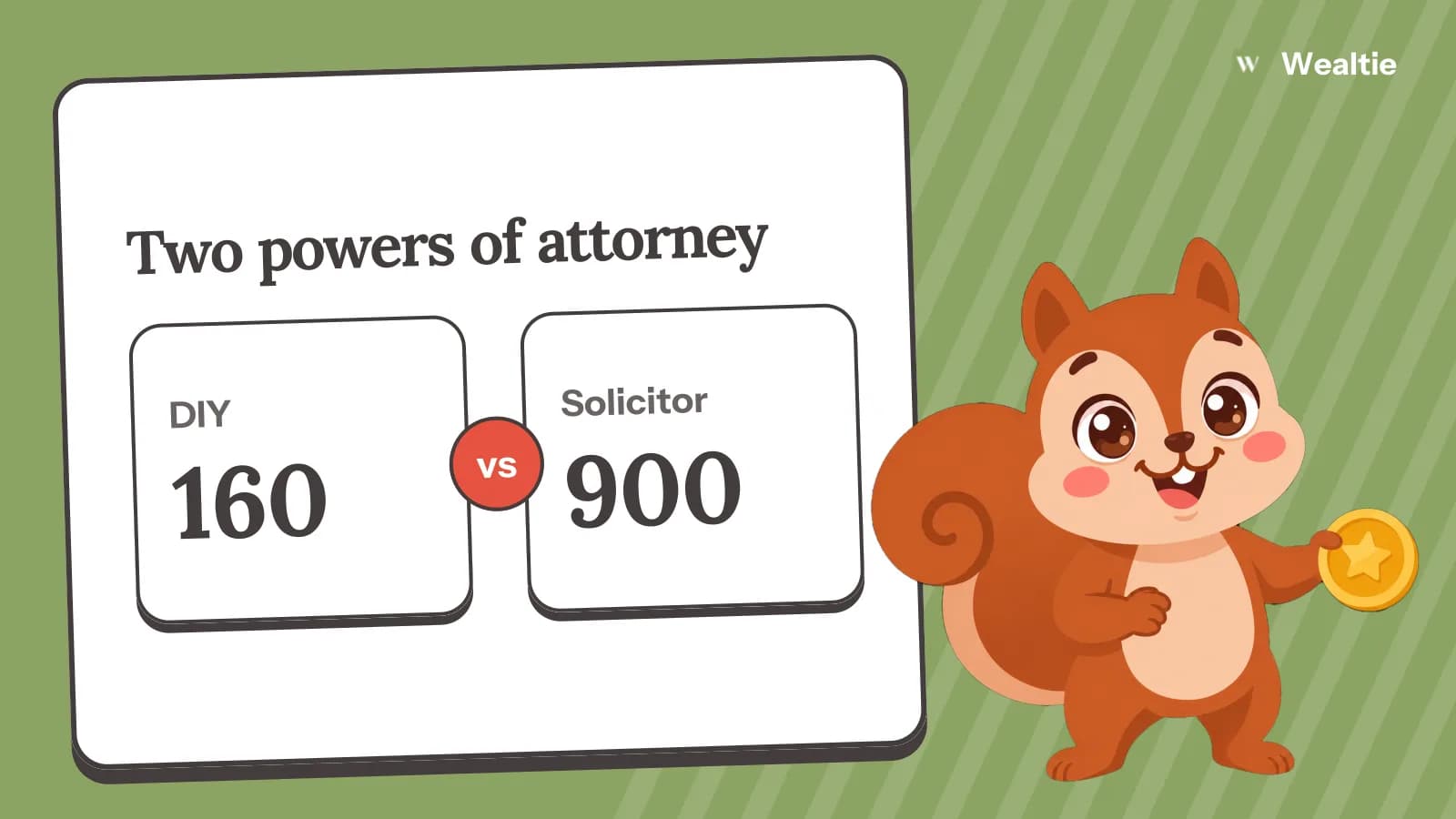
Power of attorney cost depends mostly on whether you use a solicitor or complete the forms yourself, plus any registration fee. In a worked example, setting up two powers of attorney costs 160 yourself or 900 with a solicitor.
 By Wealtie Team · 3 min read
Key takeaways
- Power of attorney cost depends on DIY vs solicitor and local registration fees.
- Setting one up early, while someone can still decide, avoids costly court processes later.
- Many countries offer official forms and guidance online.
- A solicitor is worth it for complex situations or family disagreements.
What is a power of attorney?
A power of attorney is a legal document that lets you choose someone you trust to make decisions for you if you can't make them yourself, for example because of illness, injury or dementia. There are usually separate types for money and property, and for health and care decisions. The names and rules differ between countries, but the idea is the same: you decide in advance who will act for you.
Setting one up while you're well is far easier and cheaper than the alternative. If someone loses the ability to make decisions without one in place, their family may need to apply to a court for permission to manage their affairs, which can take months and cost much more.
How much does a power of attorney cost?
Here's a worked example for setting up two powers of attorney, one for finances and one for health, in round numbers that work in any currency:
| Option | Cost |
|---|---|
| Do it yourself, registration fees | 160 |
| Solicitor, fees and registration | 900 |
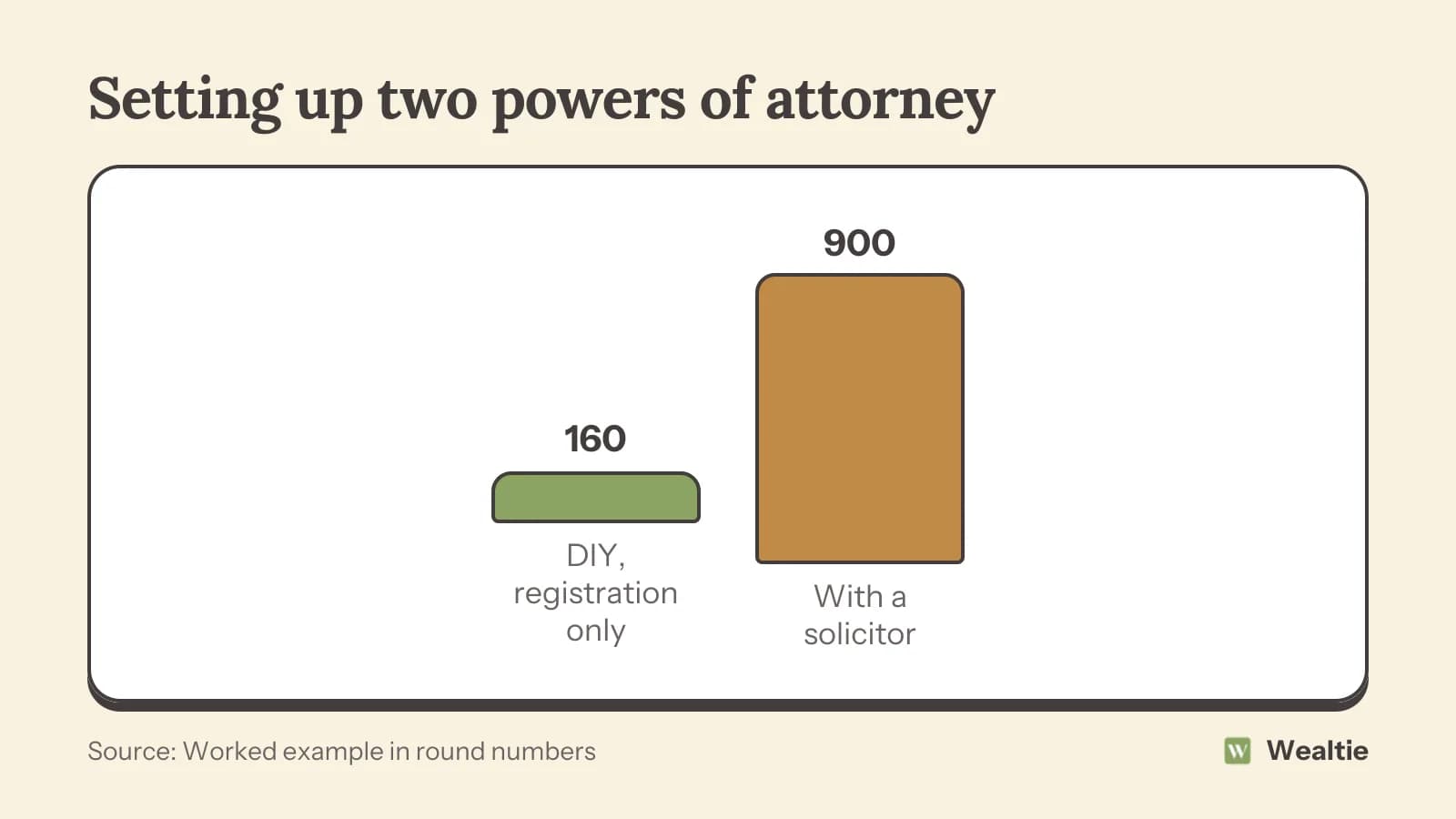
Doing it yourself might cost only the registration fees, around 80 each in this example. Using a solicitor adds legal fees, bringing the total to about 900. Fees vary a lot by country, and some places offer reduced fees for people on lower incomes.
Should you do it yourself or use a solicitor?
Doing it yourself
Many countries provide official forms and step-by-step guidance online. If your situation is straightforward, you trust your chosen attorneys and there are no family disagreements, doing it yourself can work well and save money.
Using a solicitor
A solicitor can help if your finances are complex, if you own a business or property abroad, if there's a risk of family conflict or if you're unsure about the wording. They can also make sure the document is completed correctly, which avoids delays or rejection.
A middle option
Some services check forms you've completed yourself for a smaller fee than full solicitor support.
Why set one up early?
You need to have capacity
A power of attorney can usually only be made while the person can understand and make the decision. Waiting too long can mean it's no longer possible.
Registration can take time
In some places, registration takes weeks or months. Setting it up early means it's ready if needed.
It avoids court costs
Without one, families may need to go through a court process, which costs more and takes longer.
It gives peace of mind
Knowing your affairs will be handled by someone you trust takes pressure off you and your family.
Who should you choose?
Choose people you trust to act in your best interests, who understand your wishes and who are organised enough to manage money or care decisions. Many people choose a partner, adult child or close friend, and some name more than one person. Talking to them first makes sure they're willing.
How does it fit with a will and other planning?
A power of attorney covers decisions while you're alive, while a will covers what happens to your money and belongings after you die. Many people set up both at the same time. The cost of writing a will covers will costs. Keeping important documents organised and telling your attorneys where to find them also helps. How to budget for caring for parents covers planning with ageing relatives, and how to budget in your 50s covers planning ahead in mid-life.
How do you talk to parents about it?
Raising the subject can feel awkward, but framing it as practical planning, like a will or insurance, often helps. Some families set up powers of attorney together, so nobody feels singled out.
Once a power of attorney is registered, keep the original document safe and give copies to your attorneys. Banks, care providers and other organisations may ask to see it before they'll deal with your attorney, so knowing where it is saves time and stress in an emergency. Some people keep a list of accounts, passwords and important contacts alongside it, which makes the attorney's job much easier.
It's also worth reviewing the arrangement every few years. Relationships change, attorneys move away or become unwell, and your wishes may change too. In many places, you can cancel or replace a power of attorney while you still have capacity, though there may be another registration fee.
Talking openly with your attorneys about your wishes, like where you'd want to live or how you'd like your money managed, helps them act as you would want.
How can Wealtie help with planning costs?
Log legal and registration fees in an admin expense category in Wealtie, and set a budget for later-life planning. Keeping these costs in view makes it easier to get important documents done rather than putting them off.
Questions people ask
In a worked example, setting up two powers of attorney cost about 160 in registration fees yourself, or 900 with a solicitor.
In many countries, yes. Official forms and guidance are often available online for straightforward situations.
You can usually only make one while you can understand the decision, and without one, families may face a slower, costlier court process.
A power of attorney covers decisions while you're alive but unable to make them. A will covers what happens after you die.
This article is general information, not financial, tax or legal advice. Your situation is your own; check the numbers that apply to you before you act on them.