Budgeting: Personal alarm cost: monitored vs unmonitored options
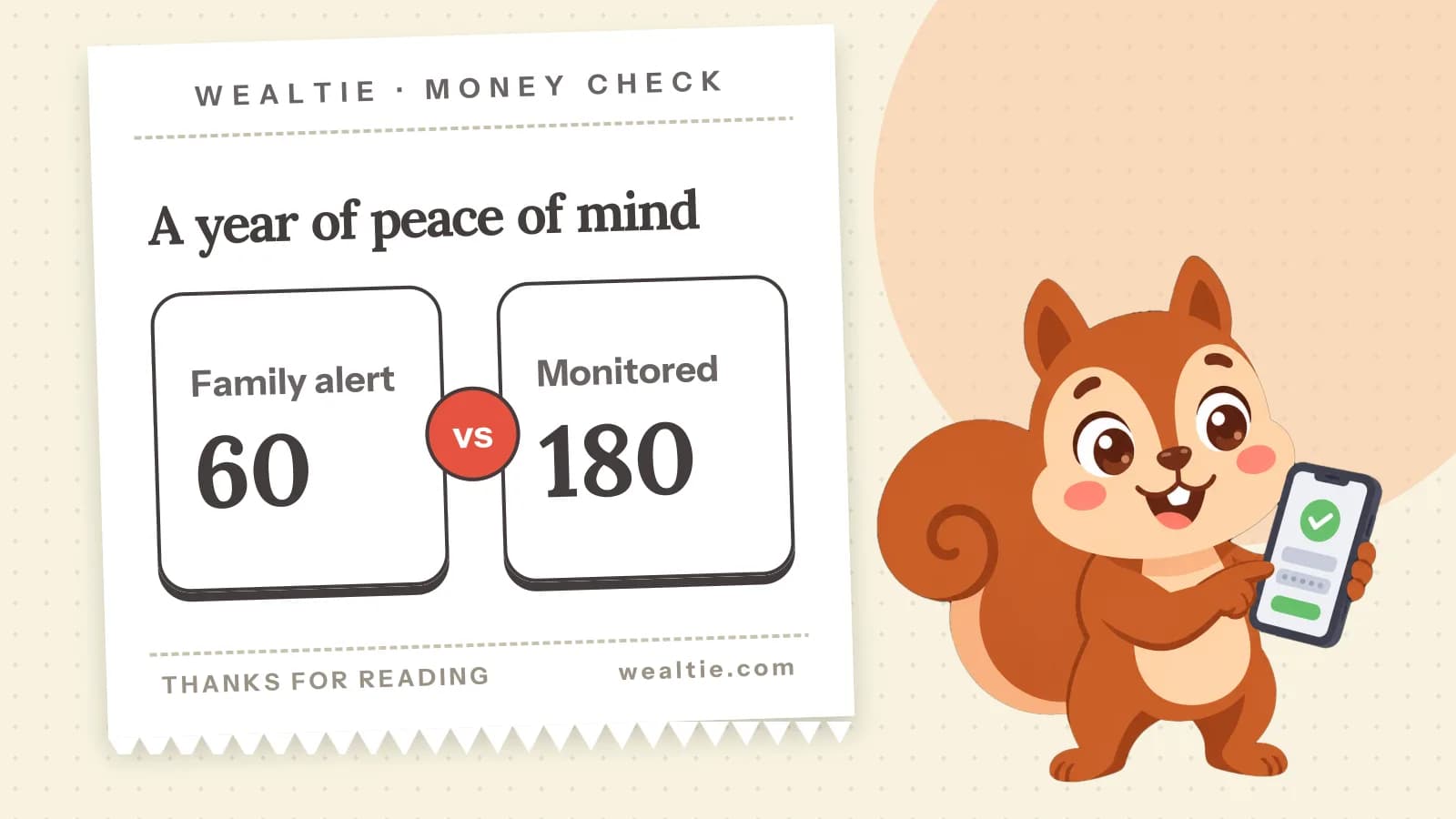
Personal alarm cost depends mostly on whether a response centre monitors it, with monitored services charging a monthly fee. In a worked example, a monitored alarm costs 180 a year, while a family-alert device costs 60 upfront and nothing after.
 By Wealtie Team · 3 min read
Key takeaways
- Personal alarm cost depends on whether calls go to a response centre or to family.
- Monitored alarms charge a monthly fee but answer around the clock.
- Fall detection costs more but helps if someone can't press the button.
- Check for local schemes that provide alarms at lower cost.
What is a personal alarm?
A personal alarm is a small device, usually worn as a pendant or wristband, that lets someone call for help with the press of a button. They're popular with older people living alone, people with health conditions and families who want peace of mind. Some alarms connect to a response centre that answers 24 hours a day. Others call or text family members directly. Some include automatic fall detection.
Personal alarm cost depends mostly on whether the alarm is monitored. Here's a worked example of a first year, in round numbers that work in any currency:
| Option | First-year cost |
|---|---|
| Family-alert device | 60 |
| Monitored alarm | 180 |
| Monitored with fall detection | 250 |
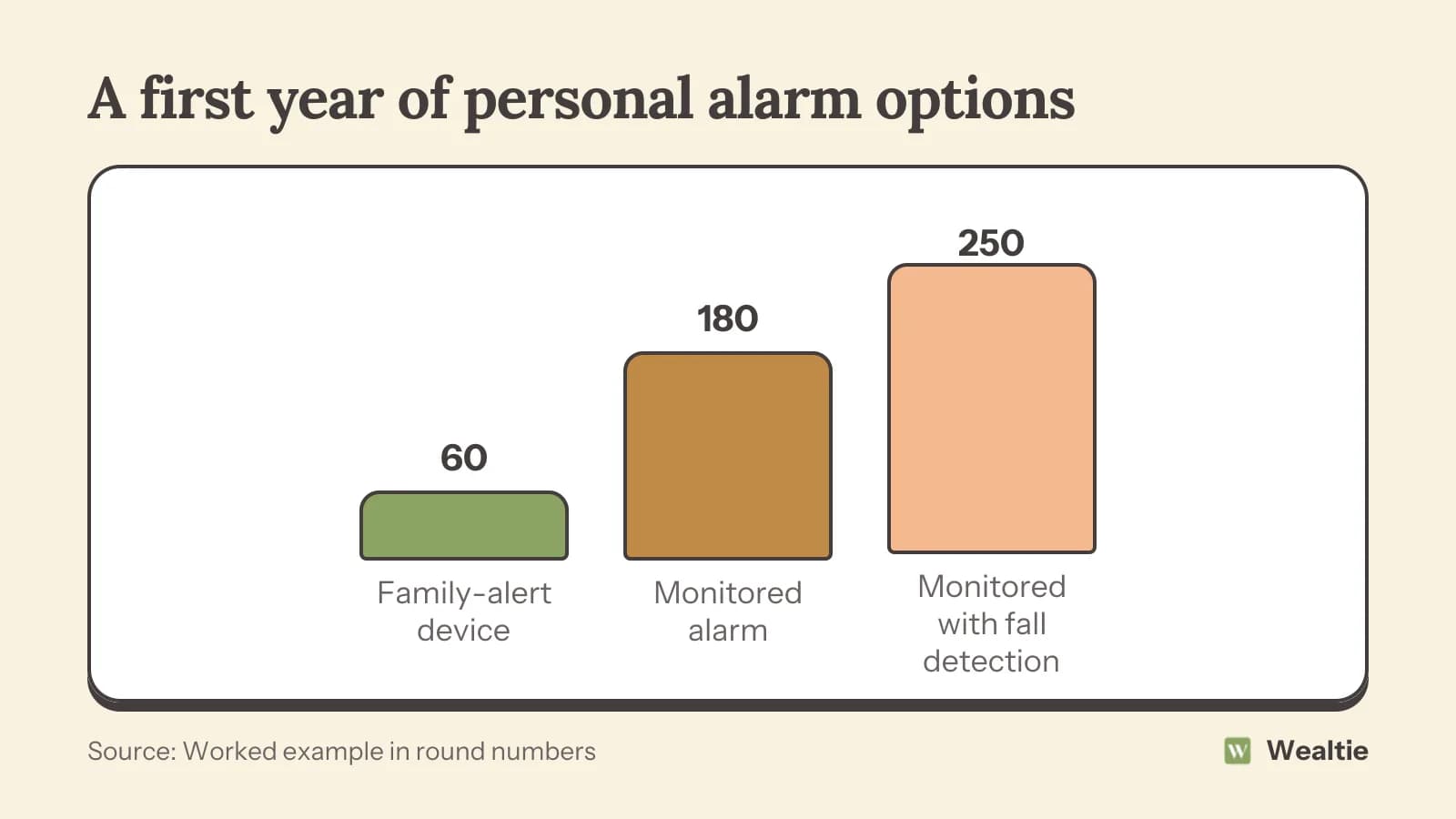
A family-alert device might cost around 60 upfront with no ongoing fee. A monitored alarm at around 15 a month costs 180 a year. Adding automatic fall detection raises it to around 250. Some providers charge a setup or installation fee too.
What are the main types?
Monitored alarms
When the button is pressed, the alarm connects to a response centre. Trained staff speak to the person, check what's wrong and contact family, neighbours or emergency services. Some services can send a responder to the home. This is the most complete option but has an ongoing fee.
Family-alert alarms
These devices call or text a list of family members or friends. There's usually no monthly fee, but someone needs to be available to respond, day and night.
Fall detectors
Fall detectors sense a sudden fall and raise the alarm automatically, which helps if the person can't press the button. They cost more but can be important for people at higher risk of falls.
Mobile alarms with GPS
Some alarms work outside the home using mobile networks and GPS, so help can find the person wherever they are. They're useful for people who still go out alone.
How do you choose the right option?
Think about who will respond
If family live nearby and can always respond, a family-alert device may be enough. If not, a monitored service gives round-the-clock cover.
Consider the person's health and risks
People with a history of falls or certain health conditions may benefit most from fall detection or a monitored service.
Check how it works at home
Some alarms need a landline or a base unit, while others use mobile signal. Make sure it works throughout the home and garden.
Make sure it will be worn
An alarm only helps if it's worn. A comfortable, discreet design the person is happy to wear matters more than extra features.
Is there help with the cost?
In many places, local councils or health services run alarm schemes, sometimes at reduced cost or free for people who qualify. Some charities also offer alarms. Check local options before signing up with a private provider. In some countries, people with disabilities may not have to pay certain taxes on alarm services.
How do you keep personal alarm cost down?
Compare providers
Monthly fees, setup charges and contract lengths vary. Compare a few providers.
Check contract terms
Look for short contracts or the option to cancel, especially if needs may change.
Avoid paying for features you won't use
Extras like GPS or fall detection are valuable for some people but unnecessary for others.
Review the cost each year
Prices can rise at renewal. How to cut subscription costs covers reviewing regular payments.
How does it fit into a care budget?
A personal alarm is often a small part of wider care costs, but it can help someone stay independent at home for longer, which can delay more expensive care. How to budget for caring for parents covers the wider costs of supporting an older relative.
Test the alarm regularly once it's set up. Most providers recommend a monthly test call to check the device, the connection and the contact details all work. It only takes a minute, and it reassures everyone that help will come when it's needed. Updating the list of contacts whenever someone moves or changes their number is just as important.
Talk about the alarm openly with the person who'll wear it. Some older people feel an alarm is a sign of losing independence, while others find it gives them the confidence to keep living alone. Explaining that it's there to help them stay at home, and letting them choose the style, makes it far more likely they'll wear it every day.
If you share the cost with siblings, set up a single payment and split it fairly, so the alarm is never cancelled by mistake.
How can Wealtie help you track care costs?
Add the alarm's monthly fee as a recurring transaction and log it in a care expense category. If family members share the cost, keeping it in one place makes it easy to see what everyone pays.
Questions people ask
In a worked example, a monitored alarm cost about 180 a year, while a family-alert device cost about 60 upfront with no monthly fee.
Monitored alarms connect to a response centre that answers around the clock. Unmonitored alarms call or text family members directly.
For people at higher risk of falls, they can be, since they raise the alarm automatically if the person can't press the button.
In some places, councils, health services or charities provide alarms free or at reduced cost for people who qualify.
This article is general information, not financial, tax or legal advice. Your situation is your own; check the numbers that apply to you before you act on them.