Budgeting: Office collection: how much should you give?
For an office collection, a small amount is usually enough, and closer colleagues often give a little more. In a worked example, someone giving 5 to each of a dozen collections a year spends 60.
 By Wealtie Team · 3 min read

Key takeaways
- For an office collection, a small amount is usually enough.
- Give more to colleagues you're close to, and less to those you barely know.
- Collections should be optional and anonymous.
- Set a yearly amount so collections don't surprise your budget.
How much should you give to an office collection?
Office collections come round for leaving gifts, birthdays, new babies, weddings, retirements and sometimes sad occasions like bereavements. There's no fixed rule for how much to give, and collections are meant to be voluntary. Most people give a small amount, a little more for colleagues they know well and a little less for people they've barely met.
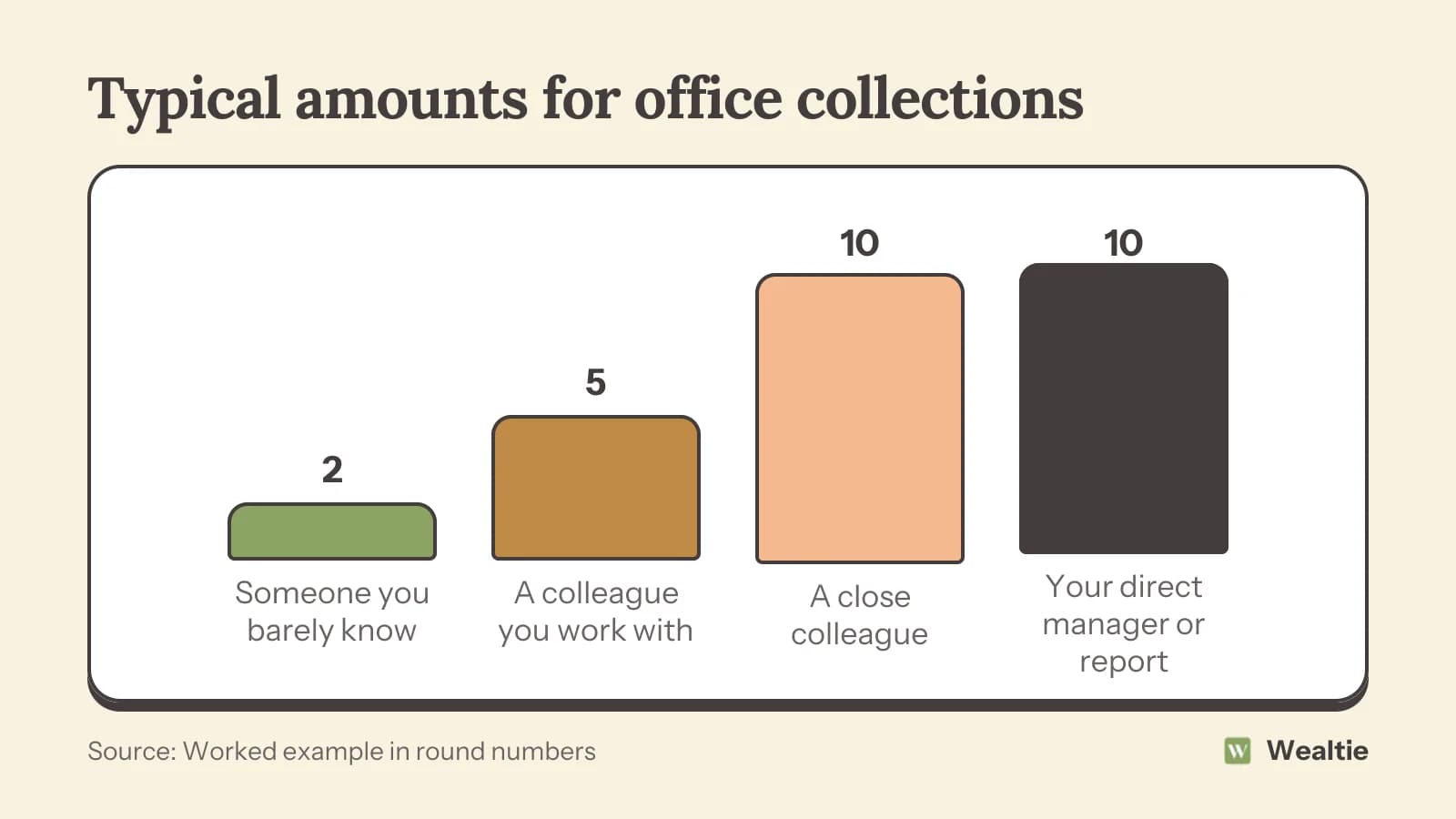
Here's a worked example of typical amounts, in round numbers that work in any currency:
| Your relationship | Typical amount |
|---|---|
| Someone you barely know | 2 |
| A colleague you work with | 5 |
| A close colleague | 10 |
| Your direct manager or report | 10 |
Amounts vary by workplace, country and how much people earn. In a large office with frequent collections, smaller amounts are common. In a small team, people may give more for a close colleague's big moment.
How much do collections add up to over a year?
Individually, collections are small, but they add up. If you give 5 to a dozen collections a year, that's 60. In a big workplace with collections every week, it could be much more. Setting a yearly amount, and giving within it, keeps collections from catching you out. Planning collections alongside birthdays and holidays outside work keeps all your gift spending in one view.
What affects how much to give?
How well you know the person
Give more to people you work with closely and less to people in other teams. That's fair and expected.
The occasion
Leaving and retirement collections often raise more than birthday ones, since they're one-off moments. How to plan a retirement party budget covers bigger work celebrations.
How often collections happen
If there are many, give smaller amounts so you can take part without strain.
What you can afford
Junior staff and people on lower incomes shouldn't feel they have to match senior colleagues. Any amount is welcome.
Do you have to give?
No. Collections should be optional and anonymous, usually with an envelope or online link where nobody sees who gave what. It's fine to sign the card and give nothing, or give a small amount, especially if money is tight. If you're asked directly, a simple "I'll sign the card, thanks for organising" is enough. How to say no to spending with friends has more ways to handle money pressure kindly.
How do you organise a collection fairly?
Keep it anonymous
Use a sealed envelope or an online collection page that doesn't show amounts. People give more comfortably when nobody's watching.
Don't suggest a minimum
Suggesting a fixed amount can pressure people. If asked, you might say "most people give a few" and leave it there.
Give everyone a chance to sign the card
The card often means as much as the gift, and everyone can take part regardless of what they give.
Choose a gift that suits the total
Wait until the collection closes, then choose a gift or voucher that matches the amount raised. Keep receipts in case anyone asks.
Spread the job
If one person always organises, they can end up out of pocket or tired of chasing. Taking turns helps.
How does it compare with other gifts?
Office collections are usually much smaller than gifts for friends and family. How much to spend on a birthday gift and how much to spend on a wedding gift cover those occasions. Secret Santa at work is another common gift cost each December. How to plan a Secret Santa budget covers that.
If you're new to a workplace, it's fine to ask a colleague what's usual. Every office has its own habits, and some teams have a standing arrangement, like a set amount for birthdays or a shared fund that everyone pays into each month. Knowing the norm helps you take part comfortably without overthinking it.
Some workplaces replace individual collections with a small monthly social fund. Everyone pays the same modest amount, and the fund covers cards, cakes and gifts for birthdays and leaving parties. It's simpler, fairer and means nobody gets chased for money every week.
If you're the one leaving, retiring or celebrating, remember that the collection is a kind gesture, not a measure of how much people value you. A heartfelt card from the team often means more than the gift itself.
Finally, if money is tight, don't feel guilty about giving less or not giving at all. Collections work best when they're relaxed, and most colleagues never know or mind who gave what.
How can Wealtie help you track small gifts?
Log office collections in a gifts expense category in Wealtie. Small amounts are easy to forget, and seeing a year's total helps you set a sensible budget for gifts in and out of work.
Questions people ask
A small amount is usually enough. In a worked example, people gave around 5 for a colleague, 2 for someone they barely knew and 10 for a close colleague.
No. Collections should be optional and anonymous, and it's fine to sign the card and give nothing if money is tight.
Give a little more for someone you've worked closely with, and less for someone you barely know. Any amount is welcome.
Keep it anonymous, don't suggest a minimum, let everyone sign the card and choose a gift once the collection closes.
This article is general information, not financial, tax or legal advice. Your situation is your own; check the numbers that apply to you before you act on them.