Budgeting: Money dysmorphia: when how you feel about money doesn't match reality
Money dysmorphia is when the way you feel about your money doesn't match your real finances, such as feeling broke while doing fine or feeling rich while falling behind. Looking at the real numbers regularly is the most reliable fix.
 By Wealtie Team · 3 min read
Key takeaways
- Money dysmorphia is a gap between how you feel about money and your real finances.
- It can make people feel broke while doing fine, or feel safe while falling behind.
- Comparison, past hardship and not tracking money all feed it.
- Regular, short looks at the real numbers close the gap.
What is money dysmorphia?
Money dysmorphia is an informal term for a distorted view of your own finances. It isn't a medical diagnosis. It describes the gap between how you feel about money and what your numbers say. Some people feel broke even though they pay their bills, save each month and have no debt. Others feel comfortable while their savings shrink and their card balance grows.
Both versions cause problems. Feeling poorer than you are can make you anxious, stop you enjoying money you've earned and push you to overwork. Feeling richer than you are can lead to overspending and debt that builds quietly.
What are the signs of money dysmorphia?
Feeling broke when you're not
- You worry about money constantly, even when bills are paid and savings are growing.
- You feel guilty spending on anything beyond essentials.
- You compare yourself with richer friends and feel behind.
- No amount of savings feels like enough.
Feeling secure when you're not
- You're not sure how much you spend each month.
- Your card balance or overdraft is creeping up.
- You assume next month's pay will fix this month's spending.
- You avoid looking at statements because you'd rather not know.
What causes money dysmorphia?
Comparison
Social media and friends' lifestyles set a moving target. Someone doing fine can feel behind when they compare with the few people who seem to have more.
Past hardship
People who grew up with little, or went through a hard patch, often carry the worry long after their situation improves. The feeling is a memory, not a reflection of today.
Not tracking money
Without real numbers, feelings fill the gap. And feelings are shaped by your mood that day, recent purchases and what you've just seen online.
Rising costs and income
When income rises, lifestyle creep can make it feel like nothing has changed. When prices rise, it can feel like you're falling behind even if you're keeping up.
How do you check whether your feelings match reality?
Write down one month of real numbers. Here's a worked example of someone who feels broke, in round numbers that work in any currency:
| Item | One month |
|---|---|
| Income | 2,500 |
| Bills and essentials | 1,600 |
| Spending | 500 |
| Saved | 400 |
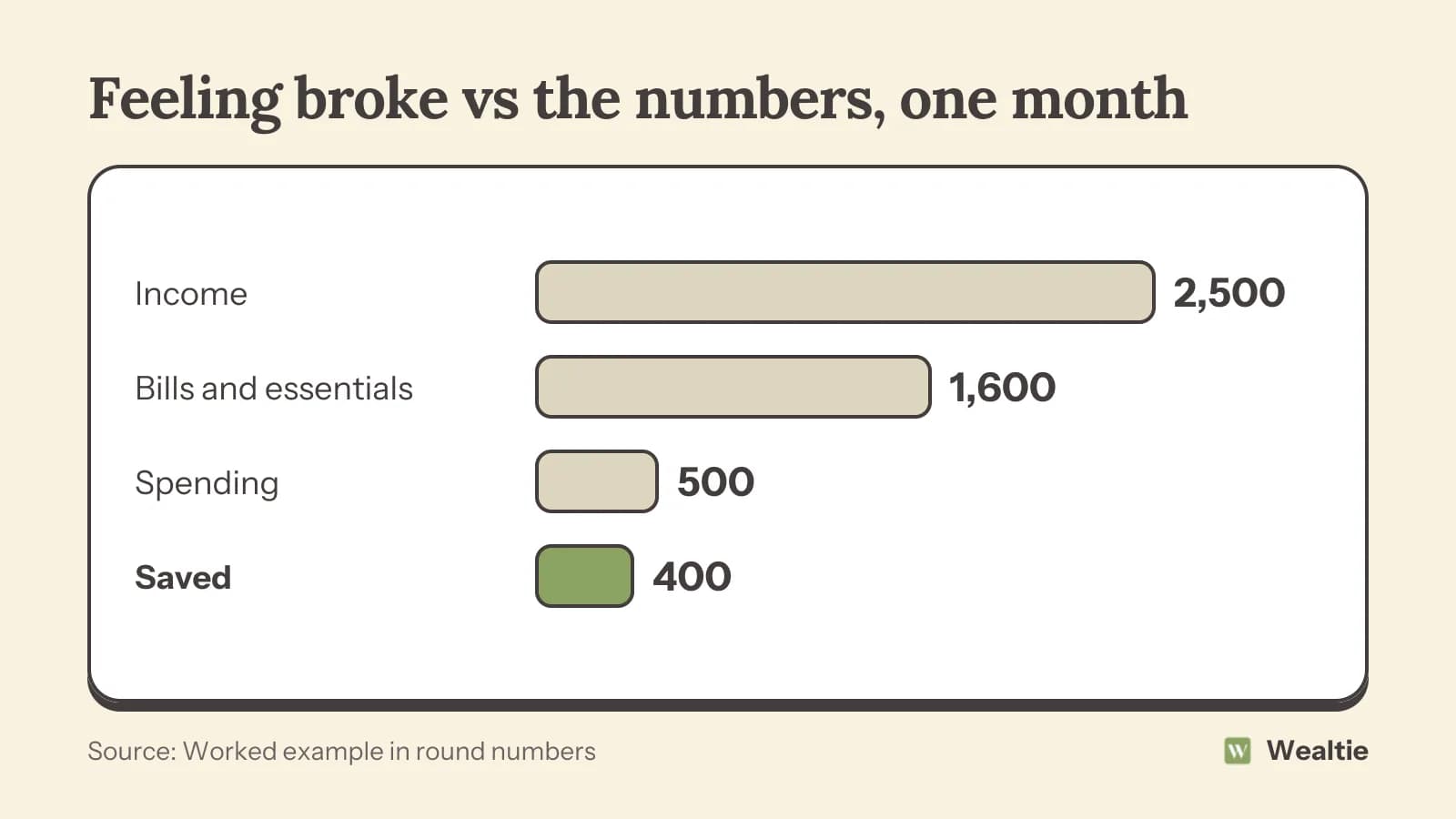
This person covers every bill, spends 500 on their life and saves 400. They're doing well, even though it doesn't feel that way. Seeing it laid out gives them permission to relax and enjoy some of that spending money.
If your own numbers show the opposite, with spending above income, that's useful too. You've caught the problem early.
How do you overcome money dysmorphia?
Track for a month
Log what comes in and goes out for one month. How to track your spending covers simple ways to start. Real numbers beat guesses.
Work out your net worth
Add up what you own and subtract what you owe. Doing this every few months shows whether you're moving forward. Count savings, the value of anything you could sell, and money owed to you, then subtract debts like cards, loans and overdrafts. The total matters less than the direction. A number that grows slowly each quarter is a clear sign you're doing better than you feel. If it's falling, you've spotted a problem while it's still small enough to fix.
Set a "good enough" target
Decide what being on track means for you, such as bills covered, an emergency fund in place and a set amount saved each month. Once you hit it, let yourself feel secure.
Limit comparisons
Mute accounts that leave you feeling behind. Compare yourself with your own past instead of other people's highlights. Asking if you're better off than a year ago is a fairer test than comparing yourself with a friend.
Write about how money feels
A money journal helps you notice when feelings and facts drift apart, and what triggers the worry.
When should you get help?
If money worries keep you awake, affect your relationships or stop you functioning day to day, talk to someone. A doctor, counsellor or free money advice service can help. Money anxiety covers more on this.
It can help to share your numbers with someone you trust. A partner, friend or adviser can often see your situation more clearly than you can, and hearing that you're doing fine from someone else can be more convincing than telling yourself.
How does Wealtie help you see the real numbers?
Wealtie shows your accounts and net worth in one place, and Budget Health gives a quick read on whether you're on track this month. Logging spending in expense categories against a monthly budget replaces vague feelings with real figures you can check in seconds.
Questions people ask
Money dysmorphia is an informal term for when your feelings about money don't match your real finances, like feeling broke while doing fine.
Comparison with others, past hardship, not tracking money and changes in income or prices that shift how money feels.
Track a month of real numbers, work out your net worth, set a target for being on track and compare with your own past.
No. It isn't a medical diagnosis, but if money worries affect your daily life, talking to a doctor or counsellor can help.
This article is general information, not financial, tax or legal advice. Your situation is your own; check the numbers that apply to you before you act on them.