Money as a couple: How to have a money date with your partner that you'll both enjoy
A money date is a regular, relaxed check-in where you and your partner look at your money together and plan what's next. Done once a month with a short agenda, it keeps you on the same page without long, tense talks.
 By Wealtie Team · 3 min read
Key takeaways
- A money date is a regular, relaxed check-in about money with your partner.
- Once a month for about 30 minutes is enough for most couples.
- A short agenda keeps it focused: wins, last month, what's coming, goals and one decision.
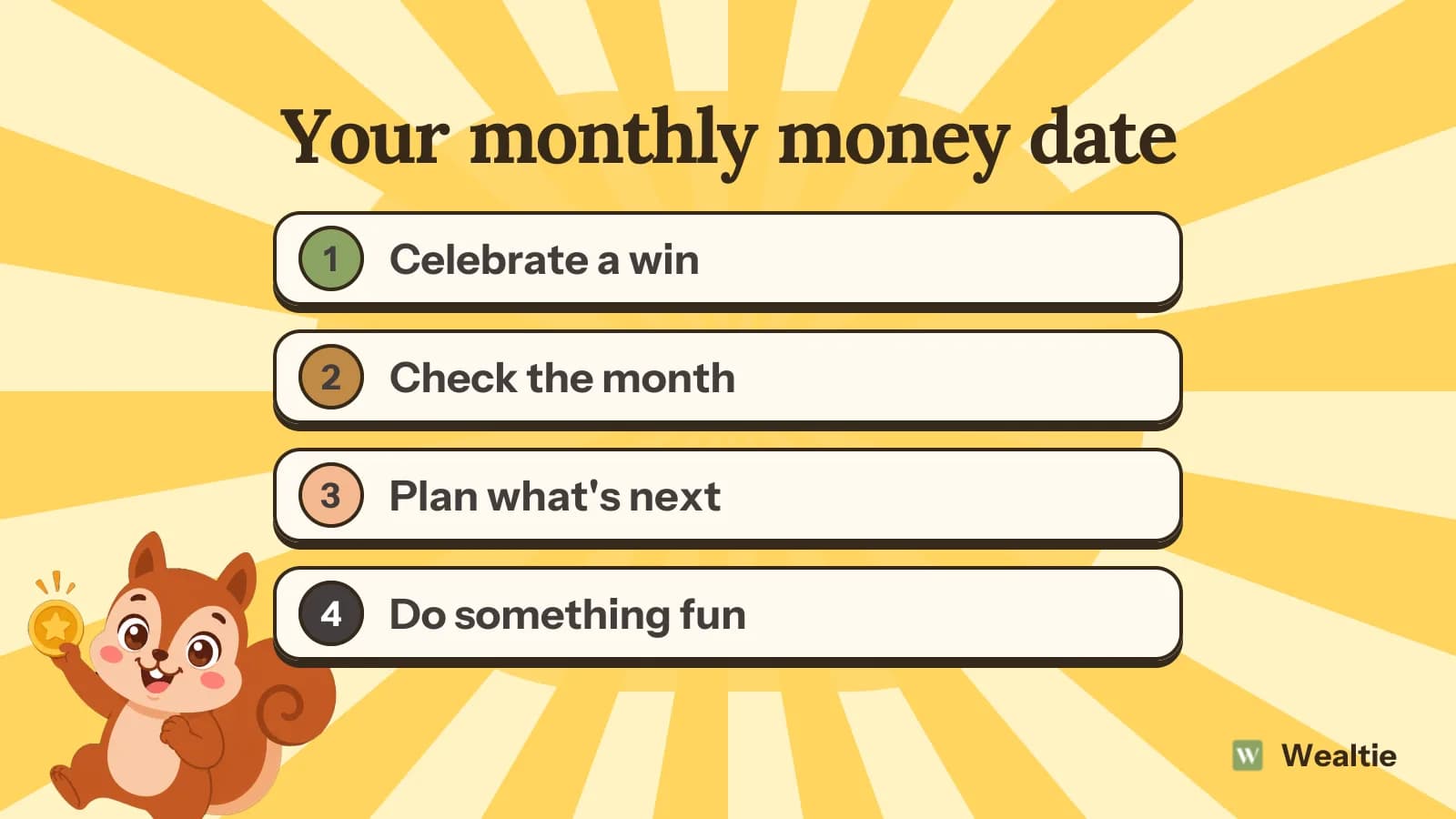
- Keep it light, start with a win and end with something fun.
What is a money date?
A money date is a regular time set aside for you and your partner to talk about money together. It's called a date because the idea is to make it pleasant: a coffee, a favourite snack or a walk, followed by something you both enjoy. Instead of money talks happening only when something goes wrong, a money date makes them a normal, calm part of your routine.
Couples who talk about money regularly tend to argue about it less, because small issues get raised before they grow. A money date also gives you a chance to celebrate progress together, which is easy to forget when you're busy.
How often should you have a money date?
Once a month suits most couples. It's often enough to catch problems early and rare enough not to feel like a chore. Some couples add a short weekly check, and a longer session once a year to set bigger goals. Pick a day that works for both of you, like the weekend after payday, and put it in both your calendars.
What should you talk about on a money date?
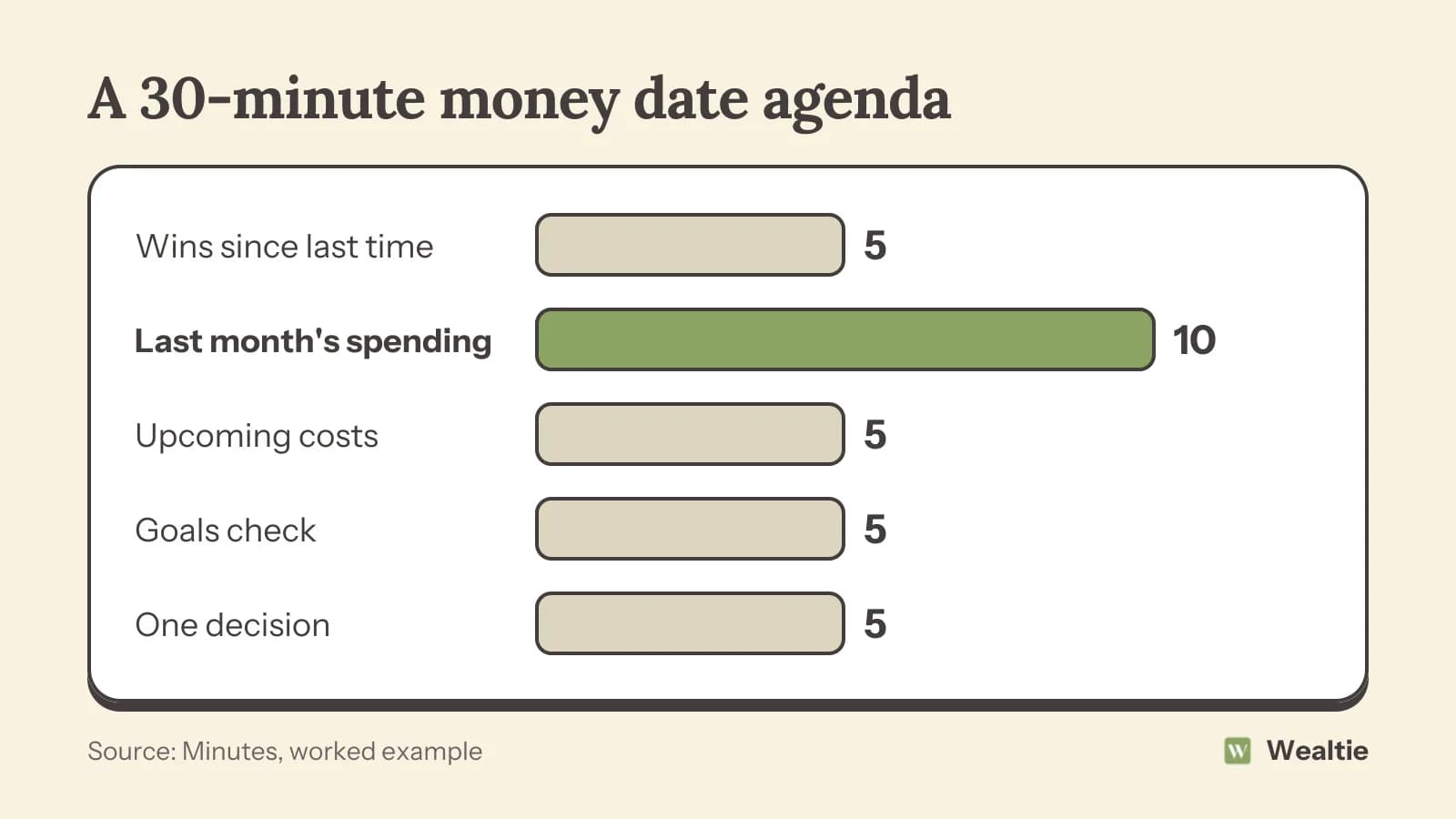
A short, regular agenda keeps things focused. Here's a worked example of a 30-minute money date:
| Topic | Minutes |
|---|---|
| Wins since last time | 5 |
| Last month's spending | 10 |
| Upcoming costs | 5 |
| Goals check | 5 |
| One decision | 5 |
Start with a win
Begin with something that went well: a debt paid down, a savings goal reached, a month under budget. Starting positive sets the tone and reminds you both that the plan is working.
Look at last month
Go through what you spent against your budget. Where did you stay on track, and where did spending drift? Keep it about the numbers, not about blame.
Look ahead
Talk about costs coming up in the next month or two: birthdays, car repairs, a trip, a bill that's due once a year. Planning for them now avoids surprises.
Check your goals
How close are you to your shared goals, like a holiday, a home or an emergency fund? How to save for a goal together covers setting them up.
Make one decision
End with one clear decision or action, like changing a budget, cancelling a subscription or setting a new goal. One step is enough.
How do you keep a money date from becoming an argument?
Agree on ground rules
No blaming, no bringing up old mistakes and no checking phones. If a topic gets heated, park it and come back to it next time.
Use "we", not "you"
Talking about what "we" spent and what "we" want keeps you on the same team. It's your shared money, even if you keep some of it separate.
Allow personal spending
Each of you having some money to spend without explaining it removes a lot of friction. Fun money for couples explains how it works.
Respect different styles
If one of you is a saver and the other a spender, a money date is a chance to meet in the middle. Spender and saver couple covers how to make it work.
What if you've never talked about money?
Start small. Your first money date might just be sharing what you each earn, spend and owe, without any judgement. How to talk about money with your partner covers getting the first conversation going. Once the basics are on the table, the monthly routine gets easier.
Keep it short at first
Your first few money dates might only take 15 minutes. That's fine. A short date you both keep is better than a long one you dread. As the habit settles, you'll find it easier to talk about bigger topics, like moving home, having children or changing jobs.
Make it a real date
Some couples go to a café, bring a favourite snack or light a candle at home. It sounds small, but a pleasant setting makes money feel less like a problem to solve and more like a plan you're building together. Over time, many couples look forward to it.
End with something fun
Finish with something you both look forward to: a meal, a film or a walk. Linking money talks with a treat makes the next date easier to keep.
How do you have a money date in Wealtie?
Share an account so you both see the same spending and budgets. The account owner needs Pro, and the person invited can be on any plan. Look at your expense categories and monthly budget together during the date, so you're talking about the same numbers.
Questions people ask
A money date is a regular, relaxed check-in where you and your partner look at your money together and plan what's next.
Once a month suits most couples, with an optional short weekly check and a longer yearly session.
Wins since last time, last month's spending, upcoming costs, progress on goals and one decision.
Agree on ground rules, avoid blame, use "we" rather than "you" and allow each of you some personal spending money.
This article is general information, not financial, tax or legal advice. Your situation is your own; check the numbers that apply to you before you act on them.