Budgeting: How loss aversion shapes your money decisions, and how to use it
Loss aversion is the pull that makes losing money feel worse than gaining the same amount feels good. It keeps people in bad deals and away from good changes, but you can also use it to save more.
 By Wealtie Team · 3 min read
Key takeaways
- Loss aversion means losses feel bigger than gains of the same size.
- It keeps people paying for things they don't use and holding on to bad deals.
- Framing a choice as a gain, not a loss, makes good changes easier.
- You can use it to save, by treating savings as money you'd hate to lose.
What is loss aversion?
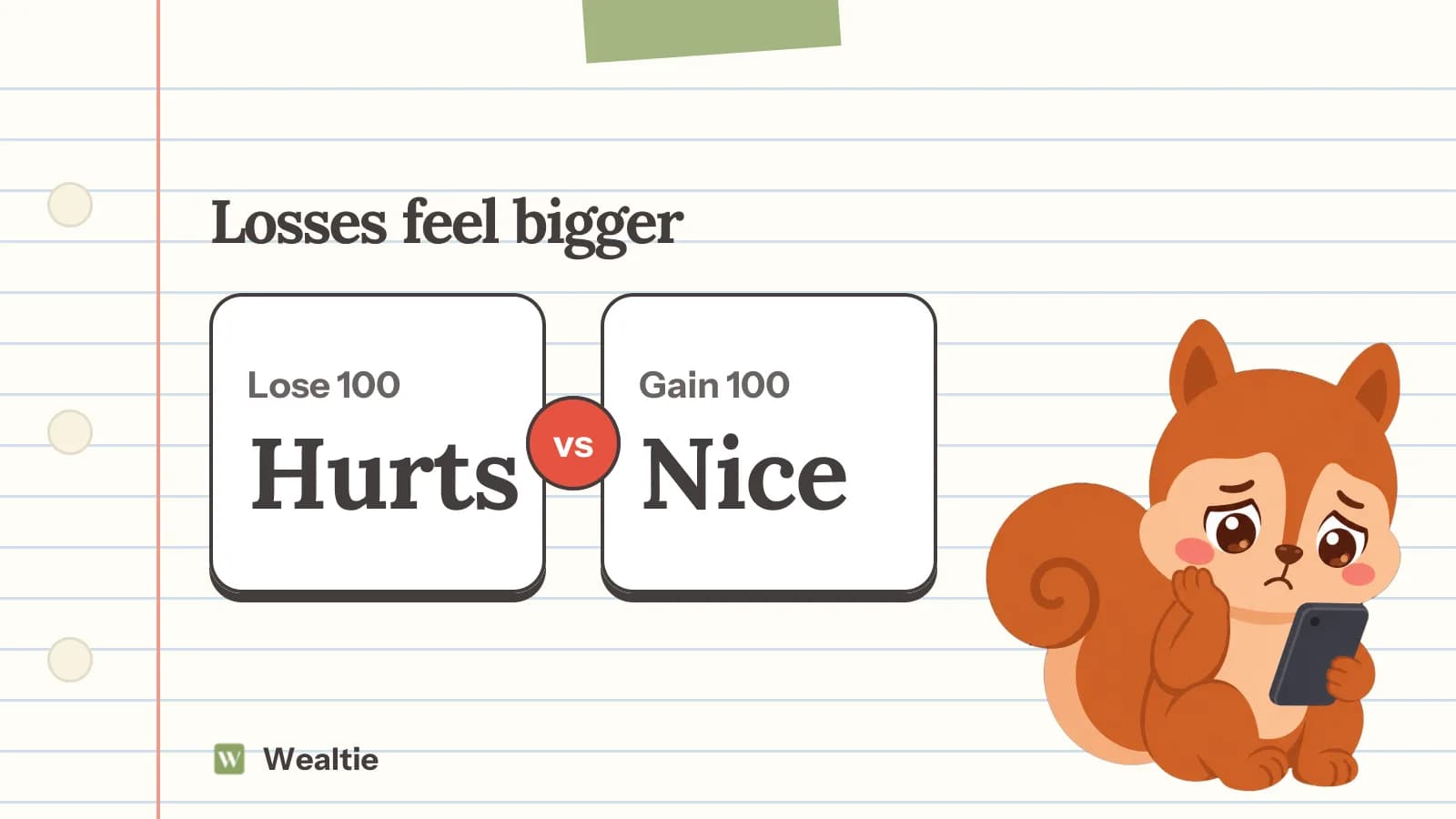
Loss aversion is a well-known pattern in how people think about money: a loss tends to feel worse than a gain of the same size feels good. Losing 100 stings more than finding 100 pleases. That's a normal part of being human, and it helped people survive when losing food or shelter could be deadly. With money, though, it often leads to choices that cost more over time.
Knowing how loss aversion works won't switch it off, but it helps you notice when it's steering you, and it lets you use the same pull to build better habits.
How does loss aversion affect your money?
It shows up in many everyday decisions.
Keeping things you don't use
Cancelling a subscription feels like losing something, even if you rarely use it. So people keep paying. The same goes for gym memberships, magazine deals and phone add-ons. The fear of giving something up outweighs the money it costs each month.
Holding on to bad deals
Switching energy supplier, bank or insurer means giving up what you have for something unknown. Many people stay on expensive deals because a possible loss from switching feels bigger than the clear saving.
Throwing good money after bad
Once you've spent money on something, walking away feels like accepting the loss. So people keep spending on a car that keeps breaking down or a course they don't enjoy. The sunk cost fallacy covers this in more detail.
Falling for "don't miss out" offers
Sales, countdown timers and "only three left" messages work because they make not buying feel like a loss. The offer feels like something you'll lose if you don't act now.
What does loss aversion cost you?
Here's a worked example, in round numbers that work in any currency. Someone pays 15 a month for a streaming service they watch for two months a year. Kept all year, it costs 180. Cancelled, and restarted only for the two months they use it, it costs 30 each time, or 60 for two short spells.
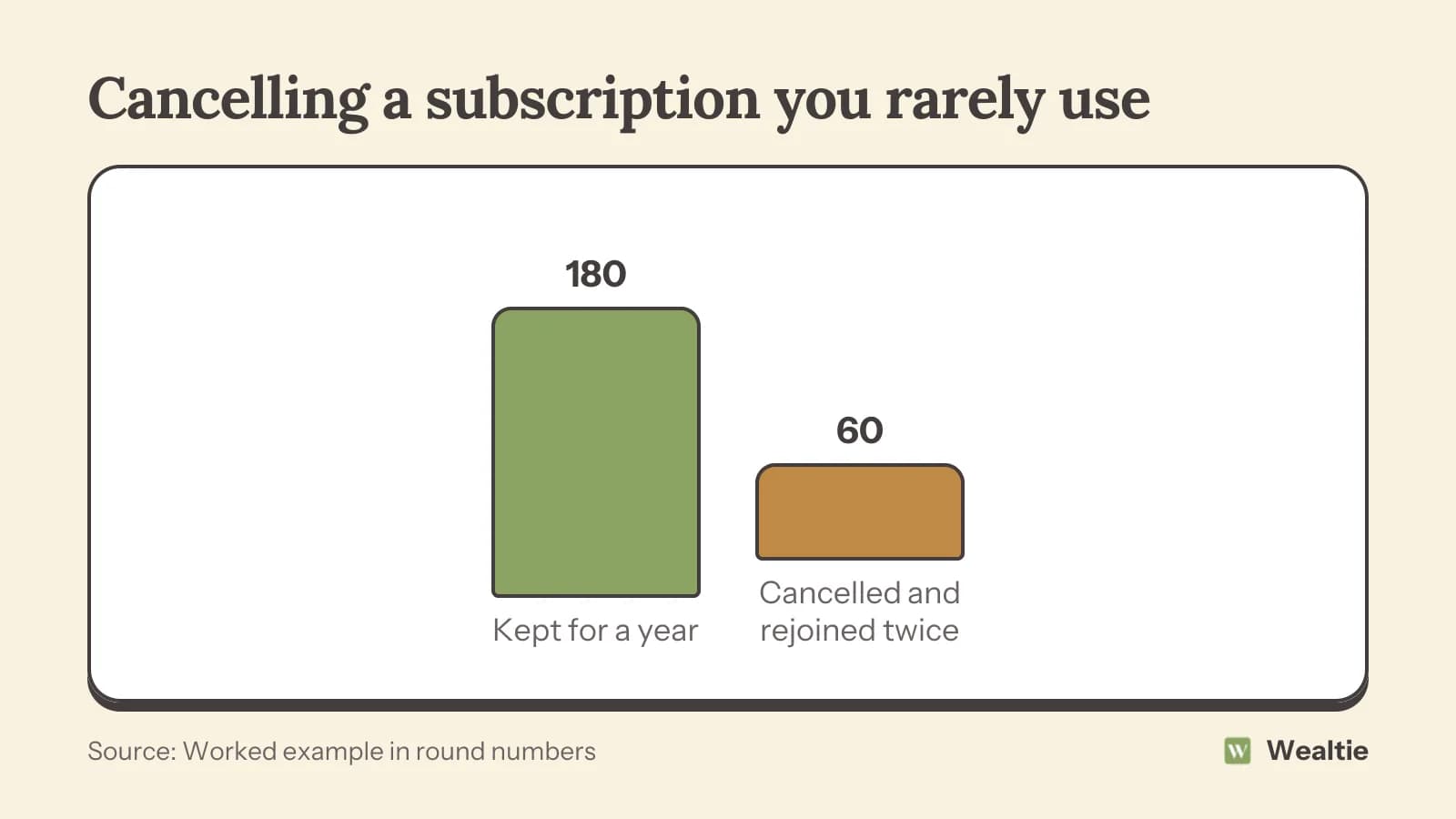
That's 120 a year saved on one subscription, and the only thing stopping them is the feeling of losing access. Across a few subscriptions and a couple of old deals, loss aversion can cost hundreds a year.
How do you stop loss aversion costing you money?
Reframe the choice
Instead of asking "what do I lose if I cancel?", ask "what do I gain?" The answer might be 120 a year, which could go towards something you care about. Seeing the gain makes the change feel less like a loss.
Look at the cost per use
A subscription that costs 15 a month and gets used twice costs 7.50 a use. Seeing that number can make the decision easier. Cost per use explains how to work it out for anything.
Wait before deciding on offers
When a sale or countdown makes you feel you'll lose out, wait a day. If you still want the thing tomorrow, and it fits your budget, buy it. Most "last chance" offers come back. How to stop impulse buying has more ways to slow down.
Review your deals once a year
Put a date in your calendar to check bills, subscriptions and insurance. Treat staying put as a choice that costs money, not a safe default. Comparing your current price with a new quote takes a few minutes and often shows a clear saving.
Can loss aversion help you save?
Yes. The same pull that keeps you in bad deals can protect good habits.
- Move savings first: once money is in savings, spending it feels like a loss, so you're less likely to touch it.
- Keep a streak going: a habit streak you don't want to break turns loss aversion into motivation.
- Pre-commit: tell a friend about a savings goal, or set up a regular transfer. Backing out then feels like losing something.
- Picture what's at stake: a holiday or deposit you'd hate to lose makes skipping a small treat easier.
How do you use loss aversion in Wealtie?
Set a monthly budget and watch Budget Health, so overspending feels like something you'd rather not lose. Wealtie's streaks reward you for logging and staying on budget, and a streak you've built is one you'll want to keep. Putting subscriptions in their own expense category also shows what you'd gain by cancelling the ones you don't use.
Questions people ask
Loss aversion is the pattern where losing money feels worse than gaining the same amount feels good.
It keeps people paying for subscriptions they rarely use, staying on expensive deals and buying in sales out of fear of missing out.
Reframe choices as gains, work out the cost per use, wait a day before buying on offers and review your deals once a year.
Yes. Moving savings first and keeping a streak going make spending savings or breaking a habit feel like a loss you'd rather avoid.
This article is general information, not financial, tax or legal advice. Your situation is your own; check the numbers that apply to you before you act on them.