Budgeting: Laser eye surgery cost vs glasses and contacts
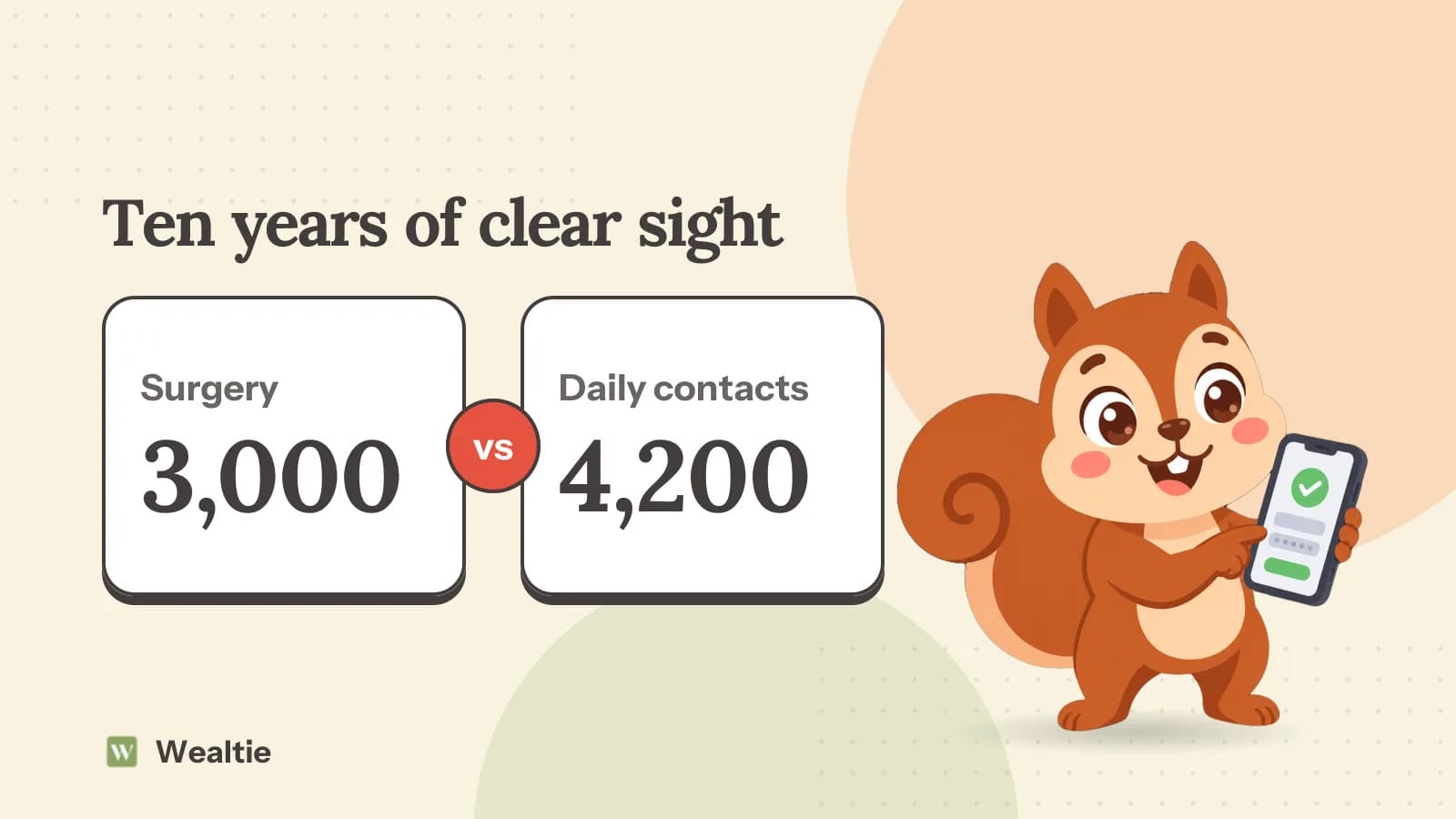
Laser eye surgery cost is high upfront, but it can work out cheaper than years of contact lenses. In a worked example, surgery at 3,000 breaks even with daily contacts after about seven years.
 By Wealtie Team · 3 min read
Key takeaways
- Laser eye surgery cost is paid upfront, while glasses and contacts cost money every year.
- Compared with daily contacts, surgery can pay for itself over several years.
- Glasses are usually the cheapest option over time.
- Choose a clinic on safety and suitability, not price alone.
How much does laser eye surgery cost?
Laser eye surgery reshapes the front of the eye to correct short-sightedness, long-sightedness or astigmatism, so many people no longer need glasses or contacts for everyday life. Laser eye surgery cost depends on the type of procedure, the clinic, where you live and whether you have one eye or both treated. Prices often include an initial assessment and follow-up checks, but not always, so ask exactly what's covered.
Whether it's worth it financially depends on what you spend on vision now. Here's a worked example over ten years, in round numbers that work in any currency:
| Option | Ten-year cost |
|---|---|
| Laser eye surgery, both eyes | 3,000 |
| Glasses, new pair every 2 years | 1,500 |
| Daily contact lenses | 4,200 |
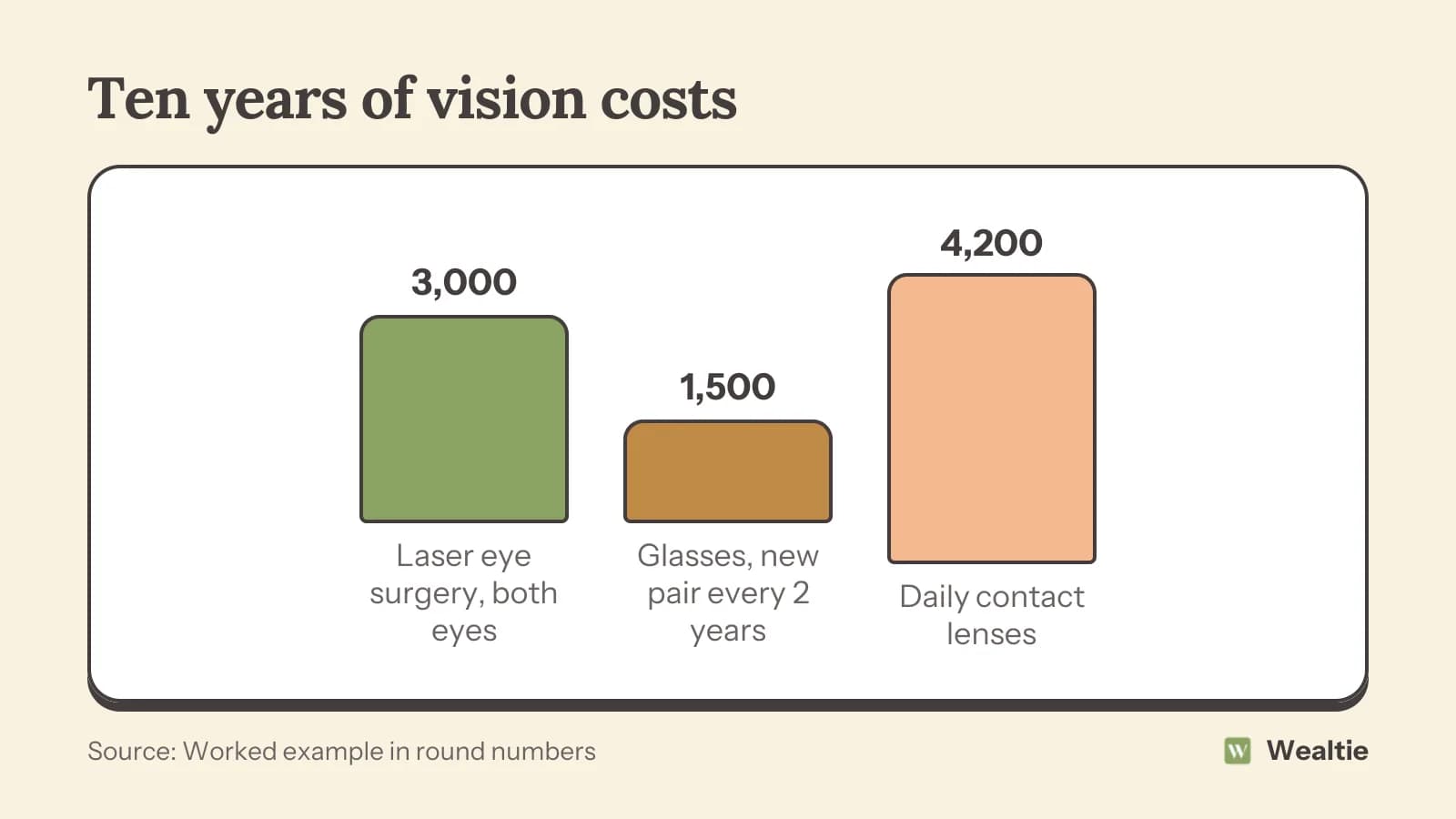
Daily contacts at 35 a month cost 420 a year, so 3,000 of surgery breaks even after about seven years. After that, the surgery is cheaper. Glasses, at 300 for a pair and eye test every two years, cost the least over ten years. So the money case is strongest for people who wear contacts most days.
What affects the price?
The type of procedure
There are several types of laser surgery, and some cost more than others. A specialist will suggest which suits your eyes, and in some cases another treatment, like lens replacement, may be recommended instead.
Your prescription
Stronger or more complex prescriptions can cost more to treat. Some clinics advertise a low starting price that only applies to mild prescriptions.
What's included
Check whether the price covers the consultation, both eyes, aftercare appointments, eye drops and any follow-up treatment if your vision changes.
The clinic and surgeon
Experienced surgeons and well-known clinics may charge more. Price shouldn't be the main factor, but it's fair to compare quotes from reputable clinics.
Is laser eye surgery worth the money?
It can save money for contact lens wearers
If you wear contacts every day, the savings over time can cover the surgery cost. How to save money on contact lenses covers cutting that cost if you're not ready for surgery.
It's less clear for glasses wearers
Glasses are cheaper over time, so surgery is more a lifestyle choice than a saving. How to save money on glasses covers keeping that cost low.
You may still need reading glasses later
Most people need reading glasses as they get older, whether or not they've had surgery. Factor that into your sums.
It's not suitable for everyone
A specialist assessment decides whether surgery is right for your eyes. Some people aren't suitable, and that's worth knowing before you plan the cost.
How do people pay for it?
Saving ahead
Saving a set amount each month is the cheapest way, since there's no interest. If you're putting aside what you'd spend on contacts, plus a little more, you could save 3,000 in under two years.
Clinic finance
Many clinics offer monthly payments, sometimes interest-free. Spreading 3,000 over 24 months is 125 a month. Read the terms carefully, especially what happens if you miss a payment or the interest-free period ends. Buy now, pay later covers similar risks.
Health insurance or workplace schemes
Most health insurance doesn't cover laser eye surgery, but some employers offer discounts through benefits schemes. Is health insurance worth it? covers what policies usually include.
How do you decide?
Start by adding up what you spend on vision each year: contacts, solutions, glasses, sunglasses with prescription lenses and eye tests. Multiply that by the number of years you expect to wear them, and compare it with the surgery quote. Then add the non-money factors, like convenience, sport and travel. Many people decide based on lifestyle as much as savings, and that's a fair reason too, as long as the cost fits your budget.
Take your time over the decision. Most clinics offer a free or low-cost consultation, and it's fine to see two or three before choosing. Ask about the surgeon's experience, what happens if your vision isn't fully corrected and what aftercare is included. A clinic that pressures you to book on the day with a limited-time discount is a reason to slow down, not speed up. The right choice is one you're comfortable with on safety first and price second.
Whatever you decide, keep having regular eye tests. They check the health of your eyes as well as your prescription, and they're worth paying for whether you wear glasses, contacts or neither.
How can Wealtie help you compare?
Log glasses, contacts and eye tests in their own expense category for a year, and you'll know exactly what vision costs you. If you decide to save for surgery, a monthly budget line for it keeps you on track until you're ready to book.
Questions people ask
Costs vary by procedure, clinic and prescription. In a worked example, treatment for both eyes cost 3,000 in round numbers.
Over time, it can be. In a worked example, surgery at 3,000 broke even with daily contacts at 420 a year after about seven years.
Usually not. Glasses tend to cost less over ten years, so surgery is more a lifestyle choice for glasses wearers.
Yes. Many clinics offer monthly finance, sometimes interest-free. Read the terms carefully before signing.
This article is general information, not financial, tax or legal advice. Your situation is your own; check the numbers that apply to you before you act on them.