Budgeting: How to improve your credit score with everyday habits
To improve your credit score, pay every bill on time, keep card balances well below their limits, check your credit report for errors and avoid applying for lots of credit at once. Scores improve slowly, but steady habits over a year or two make a real difference.
 By Wealtie Team · 3 min read

Key takeaways
- Paying every bill on time is the most important habit for your credit score.
- Keeping card balances well below their limits shows lenders you're not stretched.
- Check your credit report for errors and get them corrected.
- Applying for lots of credit in a short time can lower your score.
How do you improve your credit score?
Show lenders, over time, that you borrow carefully and pay back reliably. A credit score is a summary of how you've handled credit in the past, used by lenders to decide whether to lend to you and at what price. How scores are calculated varies between countries and credit agencies, but the habits that help are much the same almost everywhere.
There's no quick fix. Scores change slowly, as new information builds up. But steady habits over a year or two can make a real difference.
Why does paying on time matter most?
Your payment history is usually the biggest part of your score. A single late or missed payment can stay on your record for years, while a long run of on-time payments builds trust. This covers credit cards, loans and often bills like phone contracts and utilities.
Set up automatic payments for at least the minimum on every card and loan, so nothing is missed by accident. Then pay more when you can. If you know a payment will be late, contact the lender before the due date, since many will work with you.
How to organise your bills helps you see every due date in one place.
How do card balances affect your score?
Lenders look at how much of your available credit you're using. Using a small part of your limits suggests you're not relying on credit. Using most of it can suggest you're stretched, even if you pay on time.
Here's a worked example for a card with a 1,000 limit, in round numbers that work in any currency:
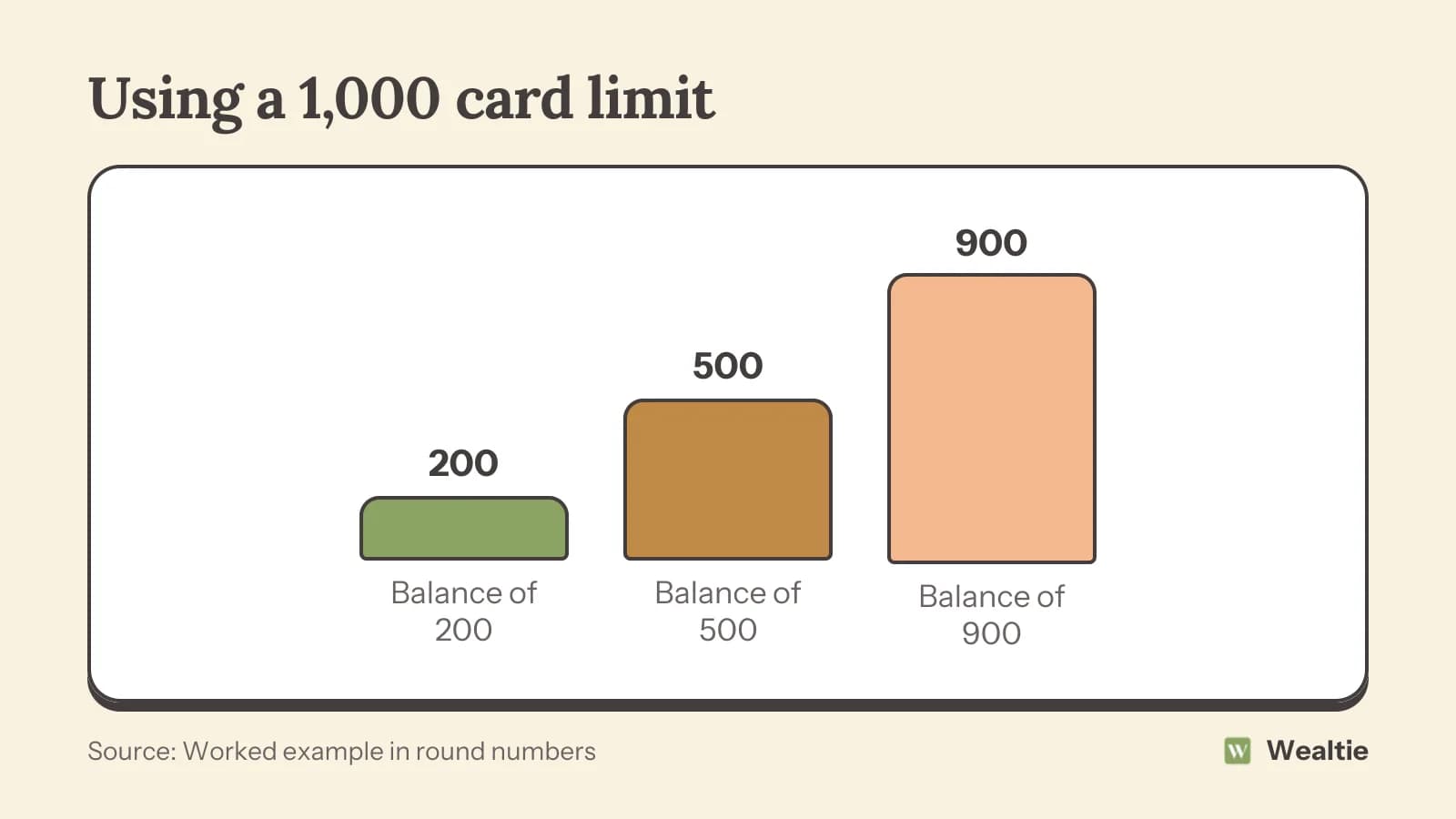
A balance of 200 uses a small part of the limit, which looks better to lenders than 900, close to the limit. Paying your balance down, or paying it off before the statement date, keeps the amount reported low. Why you should pay your credit card in full covers the benefits of clearing the balance each month.
Don't close old cards too quickly
Closing an old card you don't use can reduce your total available credit and shorten your credit history, both of which can affect your score. If an old card has no fee, keeping it open and using it lightly can help. If it charges a fee, weigh that cost against the benefit.
How do you check your credit report?
Get a copy from the credit agencies in your country. In many places, you can see your report for free, at least once a year. Read it carefully for:
- Accounts you don't recognise
- Payments marked late that were paid on time
- Old debts that should have dropped off
- Wrong personal details, like an old address
If you find an error, contact the agency and the lender to have it corrected. Errors are more common than people expect, and fixing one can improve your score quickly. Accounts you don't recognise can also be a sign of fraud, so act on them straight away.
Why does applying for credit lower your score?
Each time you apply for credit, a lender may check your report, and that check can be recorded. Several applications in a short time can suggest you need credit urgently, which lenders see as a risk. Space out applications, and only apply for credit you need.
Many lenders offer eligibility checks that show your chances of approval without affecting your score. Using these before applying helps you avoid rejections.
How do you build credit from scratch?
If you have little or no credit history, lenders have nothing to go on. Some ways to start:
- Register to vote or confirm your address, where this is used for identity checks
- Use a basic credit card for small purchases and pay it off in full each month
- Keep a phone contract or utility bill in your name and pay on time
- Consider a credit-builder card or product designed for people starting out
Start small and be consistent. A few months of on-time payments begins to build a history.
What else affects your score?
Your overall debt compared with your income matters to lenders, even if it's not always part of the score itself. The debt-to-income ratio explains how lenders look at this. Linked finances can matter too: in some places, a joint account or loan with someone links your credit files, so their history can affect yours.
How do you keep on top of payments in Wealtie?
Set up card and loan repayments as recurring transactions with the bill tracker, so you can see what's due and when. Track spending in your expense categories, so balances don't creep up unnoticed. Wealtie doesn't report to credit agencies, but it helps you build the habits that lenders look for.
Questions people ask
Correcting errors on your report can help quickly. Otherwise, paying on time and lowering card balances improve your score steadily.
No. Checking your own report doesn't affect your score. Applications for credit can.
Not always. Closing an old card can reduce your available credit and shorten your history. Keep it if it has no fee.
Usually months rather than weeks. Steady habits over a year or two make a real difference.
This article is general information, not financial, tax or legal advice. Your situation is your own; check the numbers that apply to you before you act on them.