Budgeting: House clearance cost: what to expect and how to save
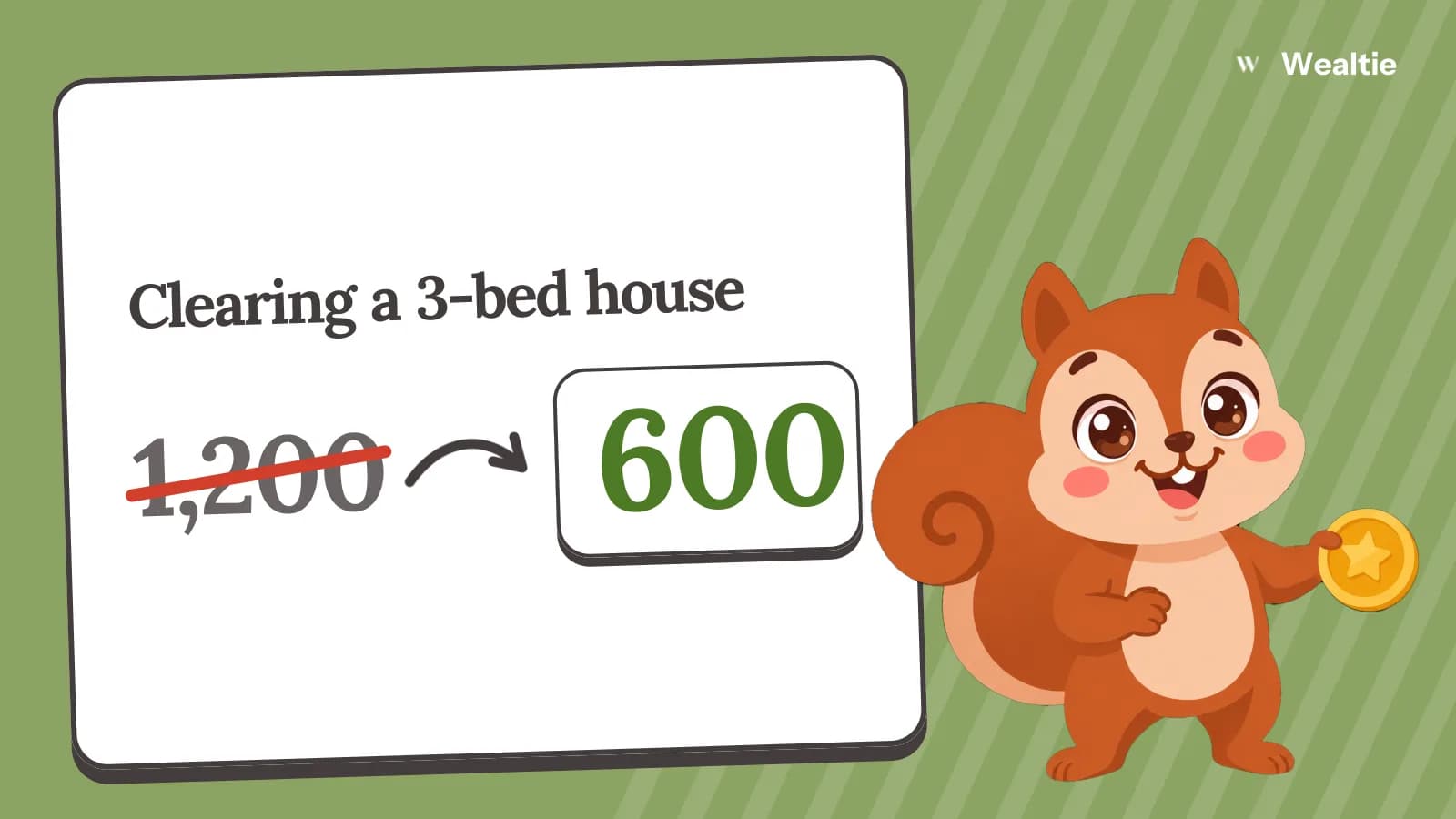
House clearance cost depends on how much needs removing, and selling or donating items first can cut it a lot. In a worked example, clearing a three-bedroom house costs 1,200, or 600 after selling and donating what you can.
 By Wealtie Team · 3 min read
Key takeaways
- House clearance cost depends on how much needs removing.
- Selling and donating first reduces the cost and recovers some money.
- Use licensed waste carriers to avoid fines for fly-tipping.
- Get several quotes and ask what's included.
What does house clearance cost?
House clearance means emptying a property of furniture, belongings and rubbish, often after a death, before a sale, when someone moves into care or when downsizing. It can be an emotional and tiring job, and the cost depends mostly on how much there is to remove, how easy the property is to access and whether you do some of the work yourself.
Here's a worked example of clearing a three-bedroom house, in round numbers that work in any currency:
| Approach | Cost |
|---|---|
| Clearance firm takes everything | 1,200 |
| Sell and donate first, then clear | 600 |
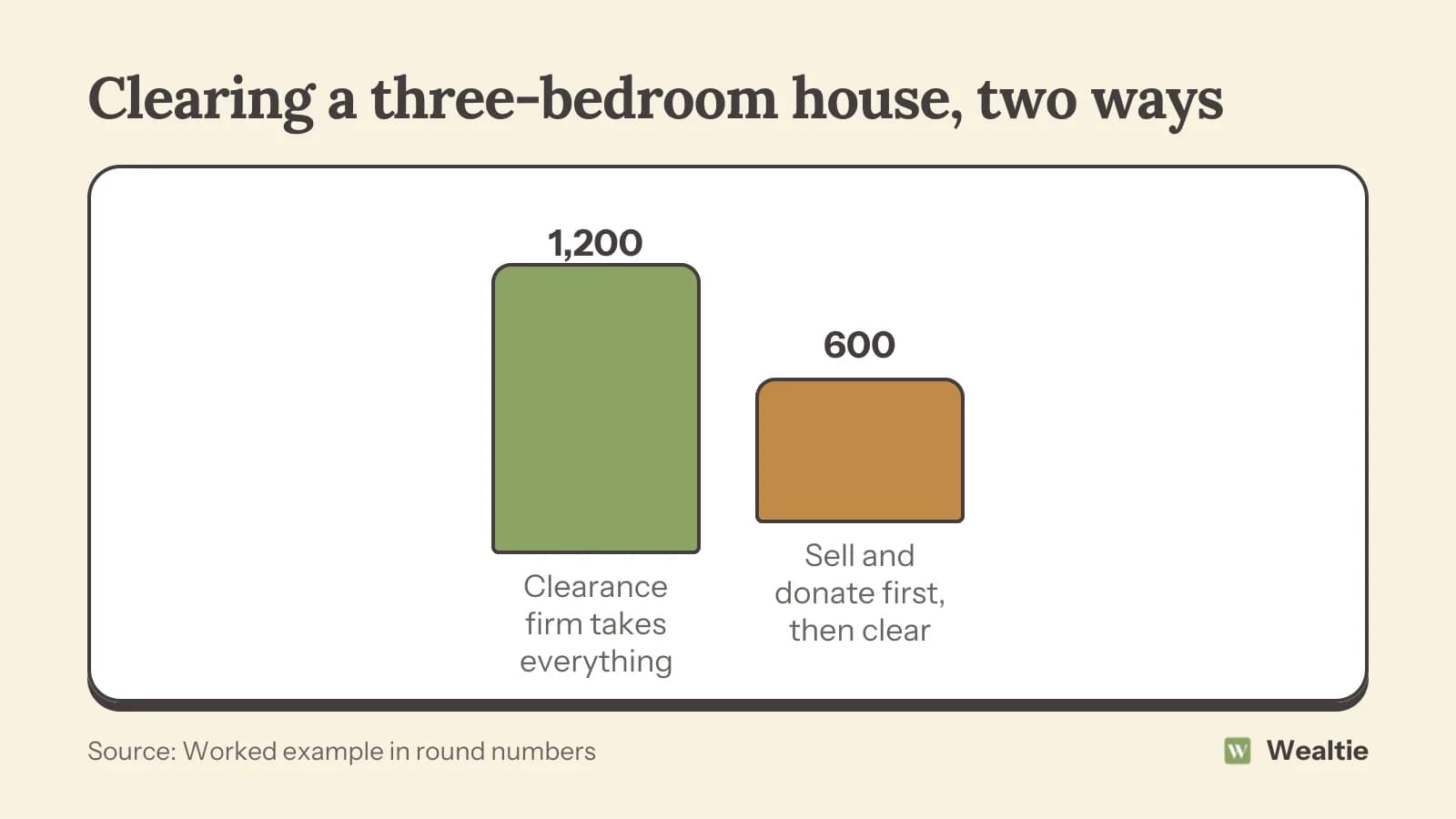
Paying a firm to remove everything costs 1,200 in this example. Selling furniture and valuables and donating usable items first halves the amount to clear, bringing the cost to 600. If selling raises 300, the net cost drops to 300. Prices vary a lot by area and the amount of stuff, so get several quotes.
What affects the cost?
Volume
The more there is to remove, the more it costs. Firms often price by the van load or by the room.
Access
Stairs, narrow hallways, lofts and parking restrictions can add time and cost.
Type of items
Some items, like fridges, mattresses, paint and electronics, cost more to dispose of safely.
Cleaning
Some firms offer cleaning after clearance, which adds to the price but can help if the property is being sold or returned to a landlord.
How do you reduce the cost?
Sort first
Go through the property and separate items to keep, sell, donate and throw away. Family members may want certain things, so give them a chance to choose first.
Sell what you can
Furniture, antiques, collectables, tools and electronics may sell online, at auction or to dealers. How to sell things you don't use covers getting a fair price.
Donate usable items
Charities often collect furniture and household items for free, though they may not take everything.
Recycle
Local recycling centres take many items for free if you can transport them.
Hire a skip for rubbish
For lots of general rubbish, a skip may be cheaper than a clearance firm, especially if you're doing the sorting yourself.
How do you choose a clearance firm?
Get several quotes
Ask at least three firms for a written quote after they've seen the property or photos.
Check what's included
Ask whether the price covers removal, disposal fees, cleaning and any items that cost extra.
Use licensed waste carriers
In many places, waste carriers must be licensed. If a firm dumps items illegally, the person who hired them can be held responsible. Ask for proof of licensing where required.
Ask about value offsets
Some firms reduce the price if they can sell some of the items themselves. Check the value is fair.
Avoid cash-only cold callers
Be wary of people who turn up offering cheap clearance for cash with no paperwork.
What about clearing a home after a death?
Clearing a loved one's home can be very hard emotionally. Take your time if you can, involve family and keep important documents and personal items aside before anything is removed. Check with the executor before selling or giving away belongings, since they may form part of the estate. How to budget for a funeral covers other costs at this time, and the costs of selling a house covers the sale.
Give yourself time if you can. Rushing a clearance often means paying more, since you have less chance to sell items or arrange charity collections. If the property is being sold, ask the estate agent how long you have before it needs to be empty, and plan backwards from that date. Spreading the work over a few weekends with family helping can make it more manageable, both financially and emotionally.
Look out for valuable or important items before anything is removed. Documents like wills, insurance policies, bank statements and property deeds, as well as jewellery, photos and family keepsakes, should be set aside first. Some people find unexpected valuables, like collectables or antiques, that are worth getting valued before sale.
If you're short on time or live far away, a reputable clearance firm can handle everything, including selling and donating. In that case, ask for an itemised quote and a record of what was sold, so the value is reflected in the price.
Finally, look after yourself. Clearing a home, especially a loved one's, can bring up difficult feelings. It's fine to take breaks and ask for help.
How can Wealtie help you track clearance costs?
Log clearance fees, skip hire and any money raised from selling items in their own expense categories. If you're managing costs for an estate or sharing them with siblings, a clear record of what was spent and received makes settling up much easier. Setting a budget for the clearance keeps the total in view.
Questions people ask
In a worked example, clearing a three-bedroom house cost about 1,200, or 600 after selling and donating items first.
Sort items first, sell what you can, donate usable items, recycle and hire a skip for general rubbish.
Get several written quotes, check what's included and make sure the firm is a licensed waste carrier where required.
Check with the executor first, since belongings may form part of the estate.
This article is general information, not financial, tax or legal advice. Your situation is your own; check the numbers that apply to you before you act on them.