Budgeting: Hosting an exchange student: what it costs your family
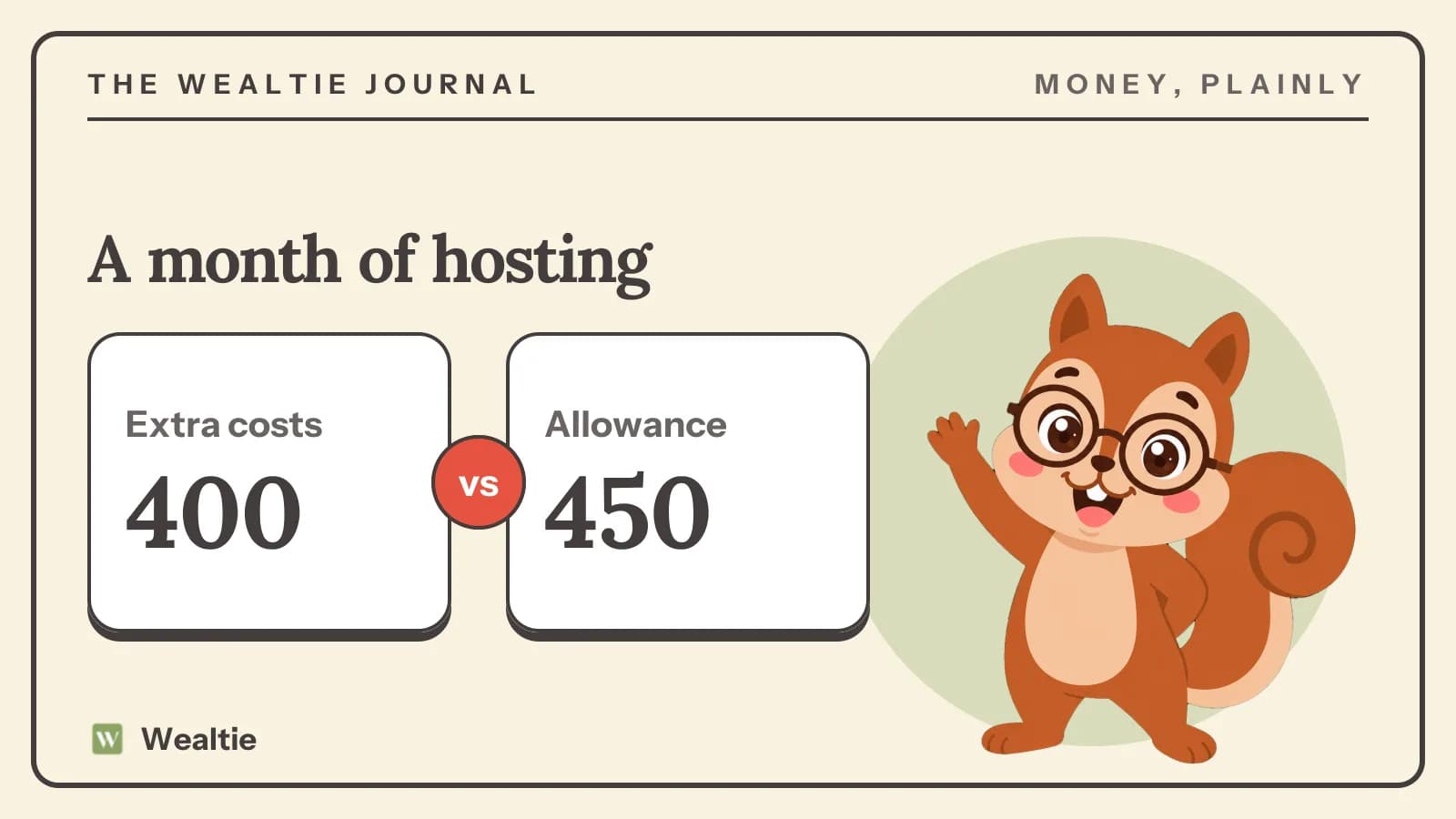
Hosting an exchange student adds food, travel and outings to your family's monthly costs, and an allowance may or may not cover them. In a worked example, a student adds 400 a month, against a 450 host allowance.
 By Wealtie Team · 3 min read
Key takeaways
- Hosting an exchange student adds food, utilities, outings and transport costs.
- Some programmes pay host families an allowance, while others are voluntary.
- Agree with the programme what you pay for and what the student pays.
- Track extra costs for a month to see whether the allowance covers them.
What does hosting an exchange student involve?
Hosting an exchange student means welcoming a young person from another country into your home, usually for a term, a school year or a short language course. It can be a rewarding experience for the whole family, with new friendships and a window into another culture. It also adds to your household costs, since you'll provide meals, a room and a share of family life.
Some programmes pay host families an allowance to cover costs. Others, especially longer cultural exchanges, ask families to host as volunteers. Knowing what you'll spend helps you decide whether hosting fits your budget and what to ask the programme.
How much does hosting cost each month?
Here's a worked example of the extra monthly costs of hosting a teenage student, in round numbers that work in any currency:
| Extra cost | Per month |
|---|---|
| Food | 220 |
| Utilities | 60 |
| Outings and activities | 70 |
| Transport | 50 |
| Total | 400 |
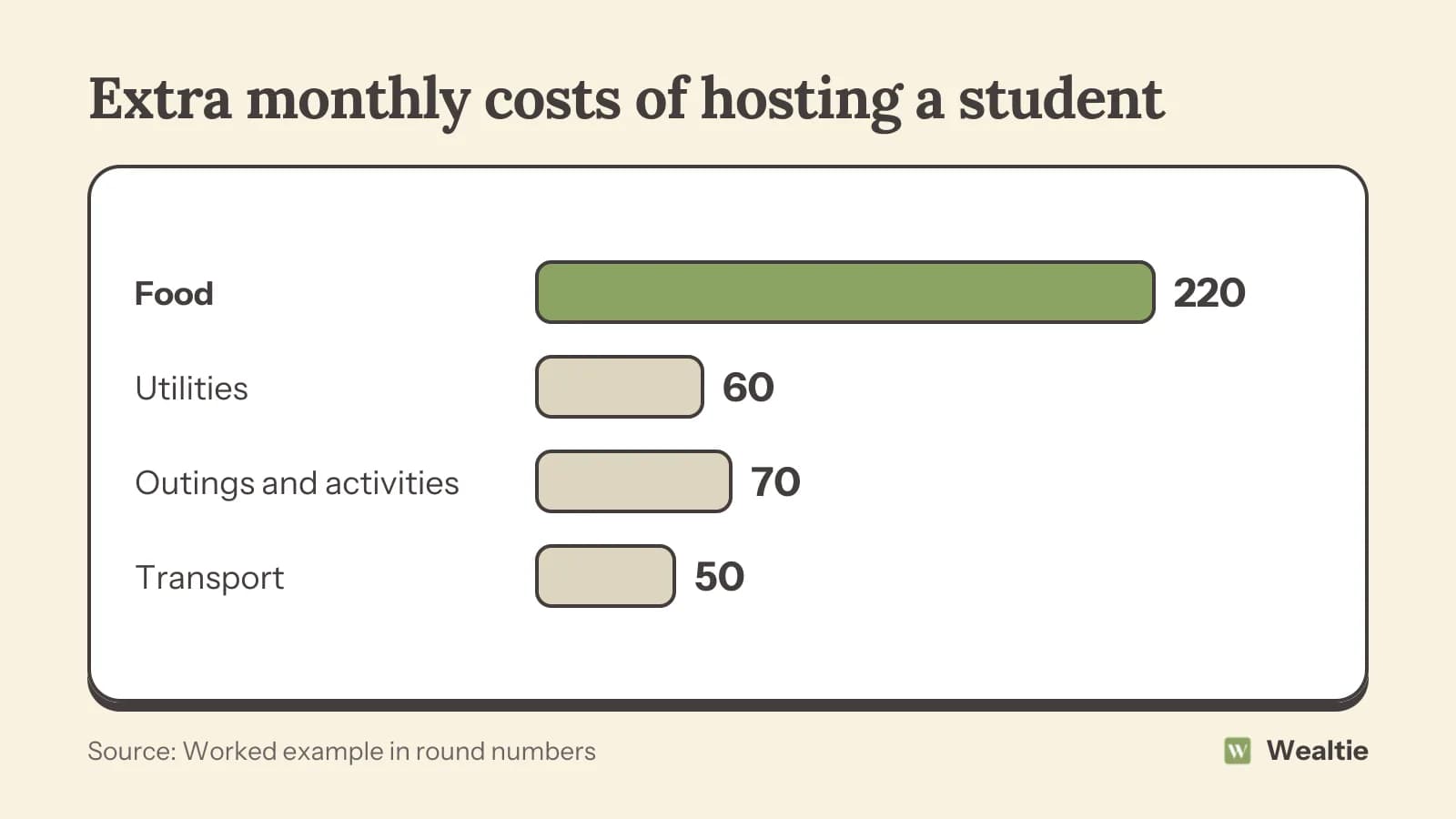
If the programme pays an allowance of 450 a month, it covers these costs with a little left over. If it's a voluntary programme, the 400 comes from your own budget. You might also spend around 150 at the start on bedding, a desk or other things for the student's room.
What costs come with hosting?
Food
Food is the biggest extra cost. Teenagers can eat a lot, and you may want to buy some familiar foods to help them settle. Packed lunches for school add to the bill. How to save money on groceries covers keeping the food budget in check.
Utilities
Another person in the home means more hot water, laundry, heating and electricity.
Outings and activities
Many families want to show their student around, which can mean trips, entry fees and meals out. Programmes usually expect students to pay for their own personal activities, but family outings are often shared.
Transport
You may drive the student to school or activities, or help with travel costs, depending on the programme.
Room setup
The student needs their own bed and a place to study. Most families use what they have, but some buy a few extras.
What do allowances usually cover?
Allowances, where paid, are usually meant to cover food, utilities and a share of household costs. They usually don't cover the student's personal spending, phone, school trips or travel home, which the student or their family pays for. Ask the programme exactly what's expected, and whether the allowance is paid monthly or in advance.
In some countries, allowances for hosting may be taxed or affect benefits, while in others they're exempt up to a limit. Check the rules where you live. If you're hosting mainly to earn money, renting a room may be a different option. How to earn income by renting out a room covers that route.
How do you agree who pays for what?
Talk with the programme and the student's family before arrival. It helps to agree:
- Meals: which meals you provide, including packed lunches
- Personal costs: phone, toiletries, clothes and personal outings
- Travel: school transport and trips around the area
- Family outings: whether the student contributes to tickets and meals out
Writing it down avoids awkward conversations later.
How do you keep hosting affordable?
Plan family-style meals
Cooking larger family meals and using leftovers for lunches costs less than separate meals. How to host a dinner on a budget has ideas for feeding a crowd.
Choose free outings
Parks, museums with free entry, local walks and community events show off your area without high costs.
Involve the student
Many students enjoy cooking a dish from home, which shares the work and introduces new foods.
Before signing up, talk as a family about what hosting will mean day to day. A student needs time, attention and help settling in, especially in the first weeks, and your routines may change. Thinking about how you'll handle school runs, meals and weekends helps you plan the cost and decide whether it suits your household right now.
It's also worth asking the programme about support. Good programmes have a local coordinator who checks in with host families, helps resolve problems and can step in if things don't work out. Knowing that help is available can make hosting less daunting, especially the first time.
Finally, keep receipts and a simple record of hosting costs for the first month. It gives you a clear picture to share with the programme if you need to discuss the allowance.
How can Wealtie help you track hosting costs?
Log hosting costs like extra groceries, outings and transport in their own expense category, and add any allowance as income. After a month or two, you'll see whether the allowance covers the real cost, and you can set a monthly budget for the rest of the stay.
Questions people ask
In a worked example, a teenage student added about 400 a month in food, utilities, outings and transport.
Some programmes pay an allowance to cover costs, while others ask families to host as volunteers. Check with the programme.
Allowances usually cover food, utilities and a share of household costs, not the student's personal spending or travel home.
Students usually pay for personal activities, while family outings are often shared. Agree this with the programme before arrival.
This article is general information, not financial, tax or legal advice. Your situation is your own; check the numbers that apply to you before you act on them.