Saving: Is a home gym worth it? Comparing it with a membership
Is a home gym worth it? It can be if you'll use it regularly, and in a worked example 400 of basic equipment pays for itself in about ten months compared with a 40 a month membership.
 By Wealtie Team · 3 min read

Key takeaways
- A home gym is worth it if you'll use it regularly and have space.
- In a worked example, 400 of basic equipment pays for itself in about ten months against a 40 a month membership.
- Start with a few versatile pieces rather than a full set.
- Second-hand equipment is widely available and much cheaper.
Is a home gym worth it?
It can be, if you'll use it and have the space. A home gym saves on monthly membership fees and travel, and lets you exercise whenever you like. But equipment costs money upfront, and many people buy kit that ends up gathering dust. The answer depends on how you like to train and whether you'll keep it up at home.
If you enjoy classes, the atmosphere of a gym or equipment that's too big for home, a membership may suit you better. If you mostly do simple strength or cardio workouts, home can work well. Being honest about how you've exercised in the past is the best guide to how you'll use a home gym.
How do the costs compare?
Here's a worked example comparing basic home equipment with a 40 a month membership, in round numbers that work in any currency:
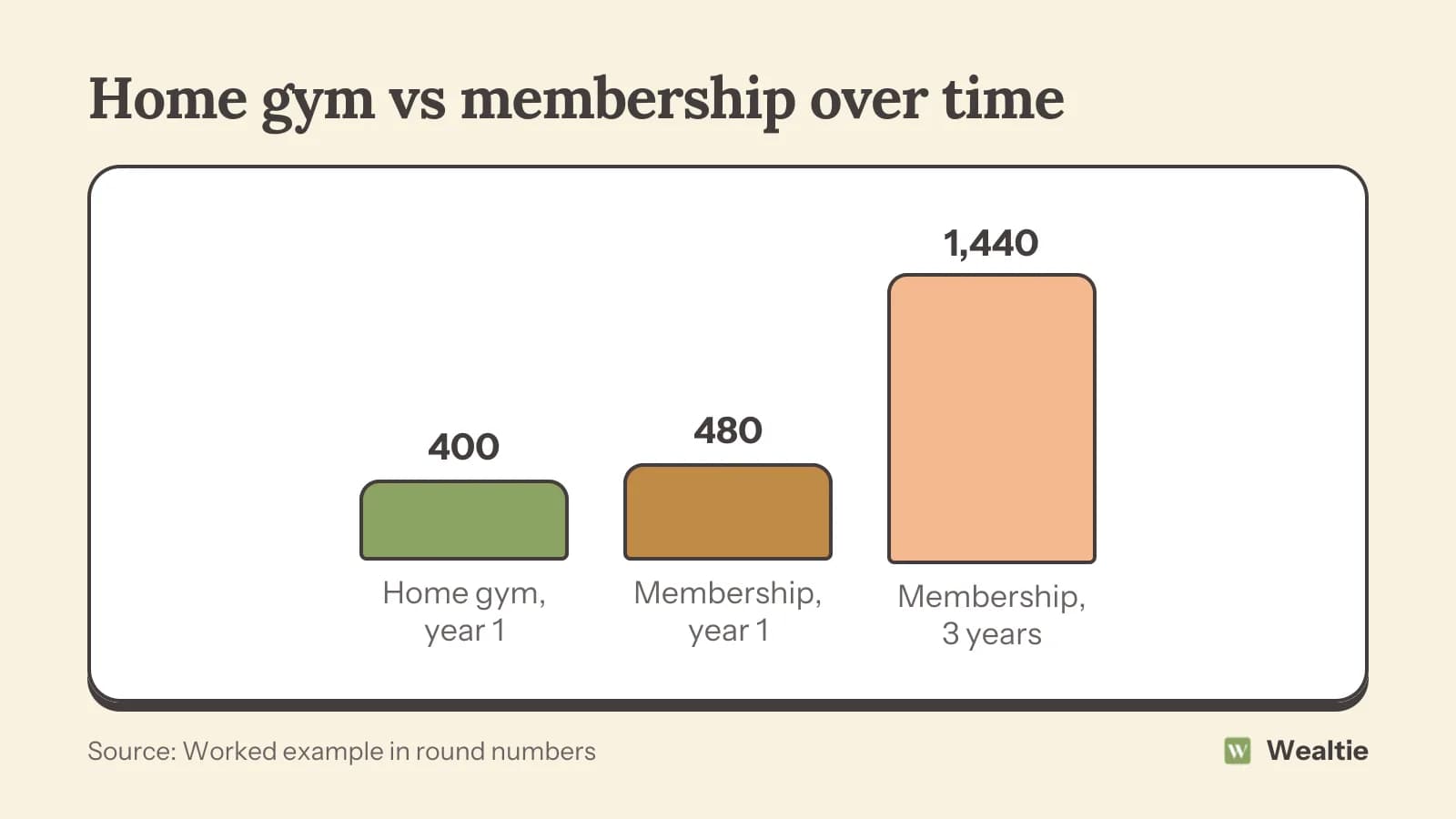
In this example, 400 of home equipment costs less than one year of membership, which comes to 480. After three years, the membership has cost 1,440, while the home gym has cost only a little more for occasional new pieces. Your own costs depend on your local gym prices and the equipment you choose.
Don't forget the hidden costs of the gym
Travel, parking and buying drinks or snacks at the gym add to the cost of a membership. A home gym removes those, along with the time spent getting there. Saving even half an hour of travel per session can make it easier to fit workouts into a busy week.
What should you buy first?
Start small, with versatile pieces you'll use often:
- An exercise mat, about 25 in a worked example
- Adjustable dumbbells, which replace a whole rack, about 150
- Resistance bands, cheap and versatile, about 25
- A bench, for a wider range of exercises, about 100
- A pull-up bar for a doorway, about 30
- A kettlebell, about 40
That's roughly 370, plus a little for extras. You can add more as your routine develops. Bodyweight exercises, like squats, push-ups and lunges, need no equipment at all. Many people get fit with little more than a mat and a set of bands.
Should you buy second-hand?
Yes, for most equipment. Weights, benches and cardio machines are often sold barely used, since many people buy them with good intentions and stop. Check for wear, rust and stability, and test cardio machines before buying. How to buy second-hand has tips on checking quality.
Be careful with big machines
Treadmills, rowing machines and exercise bikes are expensive and take up a lot of space. Make sure you'll use one regularly, and measure your space, before buying. They can be hard to resell and move. Running, walking or cycling outdoors gives similar cardio benefits for almost nothing.
How do you make sure you'll use it?
The biggest risk with a home gym is not using it. A few habits help:
- Set a regular time for workouts, like before work
- Follow a simple plan or free online workouts
- Keep equipment visible and easy to reach
- Track your workouts, so you see progress
If you're unsure, try a month of bodyweight workouts at home before buying anything. If you stick with it, you'll know the equipment will be used. Cost per use is a useful way to judge whether kit is earning its place. Writing down each workout for a couple of months shows whether the habit is sticking before you add more equipment.
Space and storage
A home gym doesn't need a whole room. A corner with a mat, dumbbells under the bed and a pull-up bar on a door frame can be enough. Foldable benches and stackable weights save space. Measuring before you buy avoids equipment that blocks a room or ends up in storage.
What about combining home and gym?
Some people keep a cheaper or off-peak membership for equipment they can't have at home, like heavy weights or a pool, and train at home the rest of the time. Others use a home gym in winter and run or cycle outside in summer. How to save money on a gym membership covers getting more from a membership if you keep one. Some workplaces offer discounted gym access too, which can tip the balance.
How do you track fitness costs in Wealtie?
Log equipment and fitness costs in a health line in your expense categories, so you can see what you spend over a year. If you keep a membership, set it up as a recurring transaction with the bill tracker, and compare its yearly cost with your home setup.
Questions people ask
It can be if you'll use it regularly. In a worked example, 400 of equipment pays for itself in about ten months against a 40 a month membership.
Start with a mat, adjustable dumbbells, resistance bands, a bench, a pull-up bar and a kettlebell.
Yes, for most pieces. Check for wear, rust and stability, and test machines before buying.
Usually over time, especially once travel and parking are counted, if you use it regularly.
This article is general information, not financial, tax or legal advice. Your situation is your own; check the numbers that apply to you before you act on them.