Budgeting: Is a holiday loan worth it? What borrowing for a trip costs
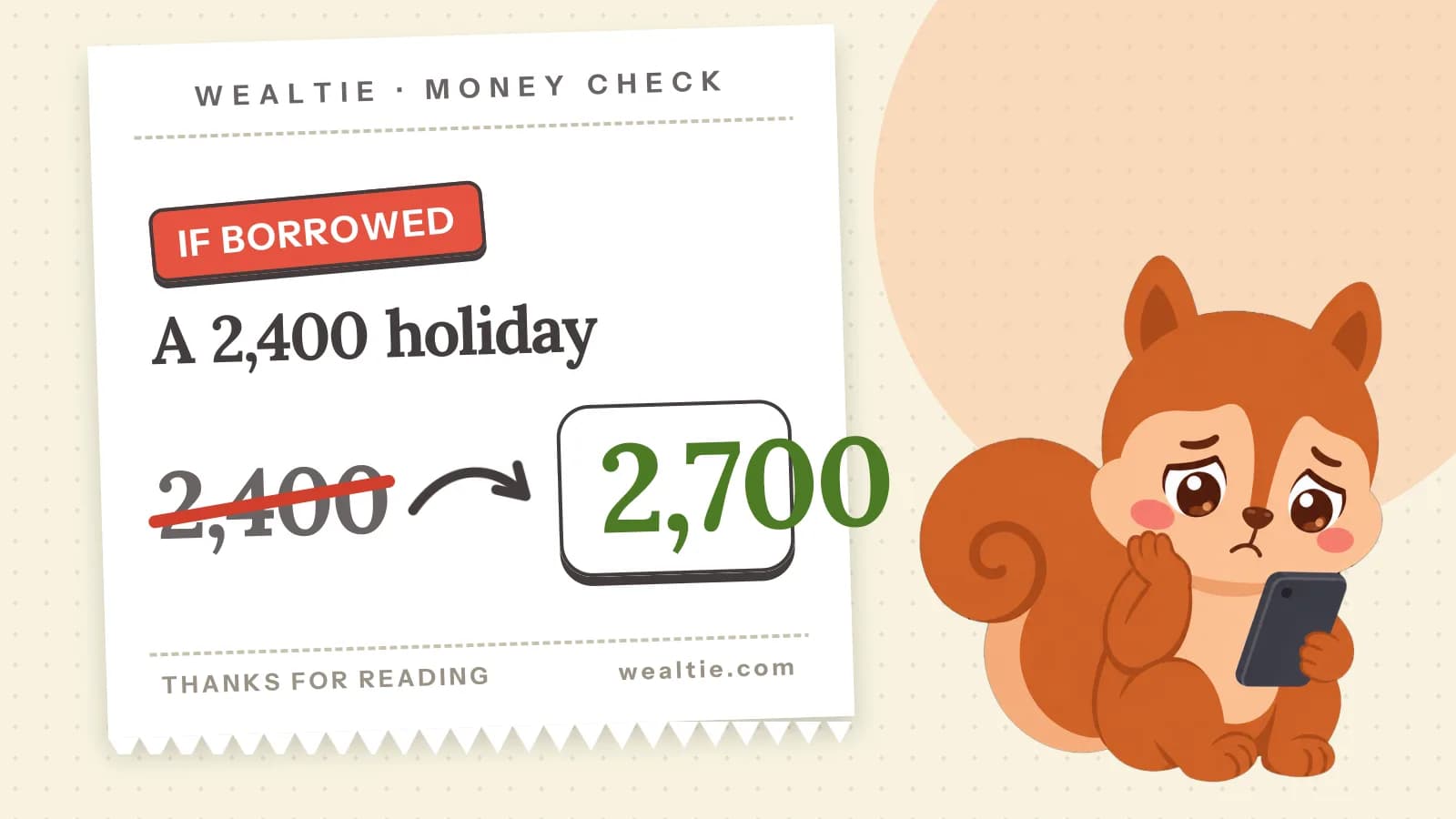
A holiday loan is rarely worth it, because you keep paying for the trip long after you're home, and interest adds to the price. In a worked example, a 2,400 trip borrowed over two years costs about 2,700, while saving first costs 2,400.
 By Wealtie Team · 3 min read
Key takeaways
- A holiday loan adds interest to the cost of the trip, and the payments continue long after you're home.
- In a worked example, a 2,400 trip borrowed over two years costs about 2,700, against 2,400 if you save first.
- Saving for the trip over a year means 200 a month, and the money is yours if plans change.
- If you do borrow, compare the total cost, not the monthly payment, and avoid using a credit card you can't clear.
Is a holiday loan worth it?
Usually not. A holiday is over in a week or two, but a loan for it can last for a year or more, and interest makes the trip more expensive. You end up paying for last summer's holiday while trying to save for this summer's. Saving first almost always costs less and feels better.
There are exceptions, like a once-in-a-lifetime trip with a fixed date and a low-cost way to borrow. Even then, it's worth comparing carefully, and asking whether a smaller trip now and a bigger one later would suit you just as well.
What does borrowing add to the cost?
Here's a worked example, in round numbers that work in any currency. A trip costs 2,400. Borrowed over two years, the monthly payments come to 112.50, which adds up to 2,700. Saved first, it costs 2,400.
| Option | Total paid | Monthly amount | When you finish paying |
|---|---|---|---|
| Save first over a year | 2,400 | 200 | Before you go |
| Borrow over two years | 2,700 | 112.50 | 18 months after you're home |
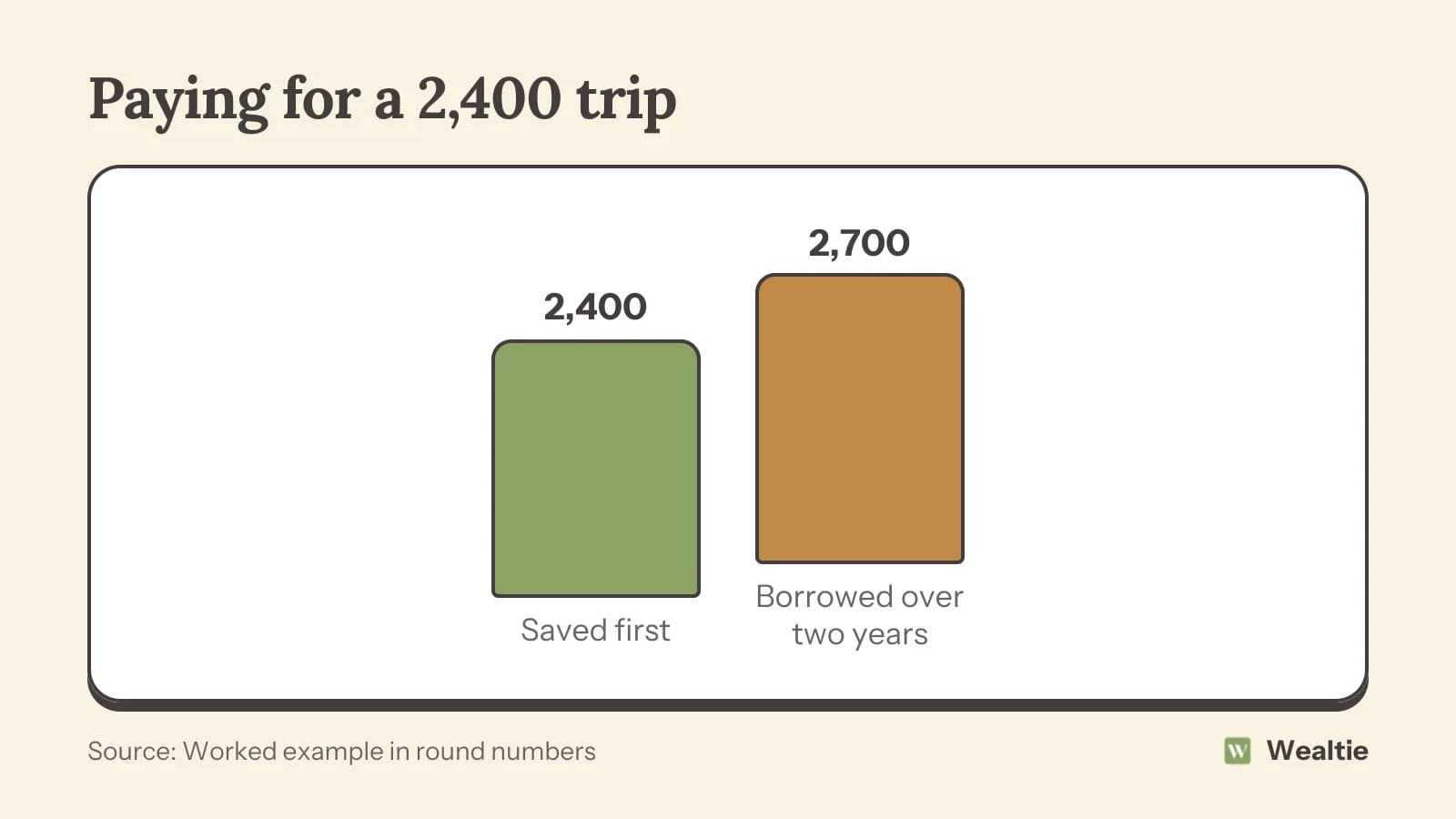
The loan's monthly payment looks smaller, and that's the tempting part. But you pay 300 more in total, and you're still paying long after the trip's over. Your own figures depend on the rate and length you're offered. Loans often come with arrangement fees too, so ask for the total amount repayable, which includes everything, before you sign.
What about putting it on a credit card?
Only if you can clear the balance in full when the statement arrives. Card interest is usually high, and a holiday left on a card for months can cost far more than any loan. What the minimum payment costs explains how a balance grows.
Some people use a card for the protection it gives on bookings, then pay it off straight away from savings. That's a good use of a card. Borrowing on it is a different thing.
Is buy now pay later any better?
It can be interest-free if you pay on time, but it's still borrowing, and missed payments can bring fees. It also makes a trip feel cheaper than it is, which can lead to spending more. Treat it the same way as any other borrowing, and add every instalment to your budget so you can see the total you're committed to.
How do you save for a holiday instead?
Decide the total, divide by the months until you travel, and move that amount each payday into a separate pot. A 2,400 trip a year away is 200 a month. Booking once you've saved most of it locks in prices without borrowing. Price alerts on flights and early booking offers also help once the money's there, and if you're travelling with others, agree costs early.
Saving also gives you flexibility: if prices drop or your plans change, the money's still yours. If 200 a month is too much, look at the trip: a shorter stay, a cheaper destination, travelling outside peak season or self-catering can bring the total down. How to save for a vacation has a step-by-step plan.
What if you've already booked and can't afford it?
Look at what's left to pay and when. You might be able to change dates, reduce the booking, or spread remaining payments with the travel company. Some companies let you pay a balance in instalments without interest, which is cheaper than a loan, as long as you can meet each date. If you're thinking of borrowing to cover it, compare the total cost of each option, and avoid payday loans or high-cost credit. Cutting spending for a few months before the trip can often close a smaller gap without borrowing at all.
When might borrowing make sense?
Rarely, but sometimes: a family event abroad with a fixed date, like a wedding, where you'd otherwise miss it, and where you can borrow cheaply and repay quickly. Even then, keep the amount as small as possible, choose the shortest term you can afford, and have a plan to repay it from income, not more borrowing.
How do you save for a trip in Wealtie?
Add a savings account for the trip and move money into it each payday as a transfer, which isn't counted as spending. Your net worth tracker shows the pot growing. When you book, log the payments from that account, so your budget tracker for the month isn't hit by money you saved earlier.
Questions people ask
Usually not, because interest adds to the cost and payments continue after you're home. Saving first costs less.
About 300 more on a 2,400 trip borrowed over two years in a worked example, though the rate and term change it.
Only if you can clear the balance in full when the statement arrives. Carrying a balance can make the trip much more expensive.
Decide the total, divide by the months until you travel and move that amount into a separate pot each payday.
This article is general information, not financial, tax or legal advice. Your situation is your own; check the numbers that apply to you before you act on them.



