Budgeting: How long to pay off a credit card with minimum payments? 19 years
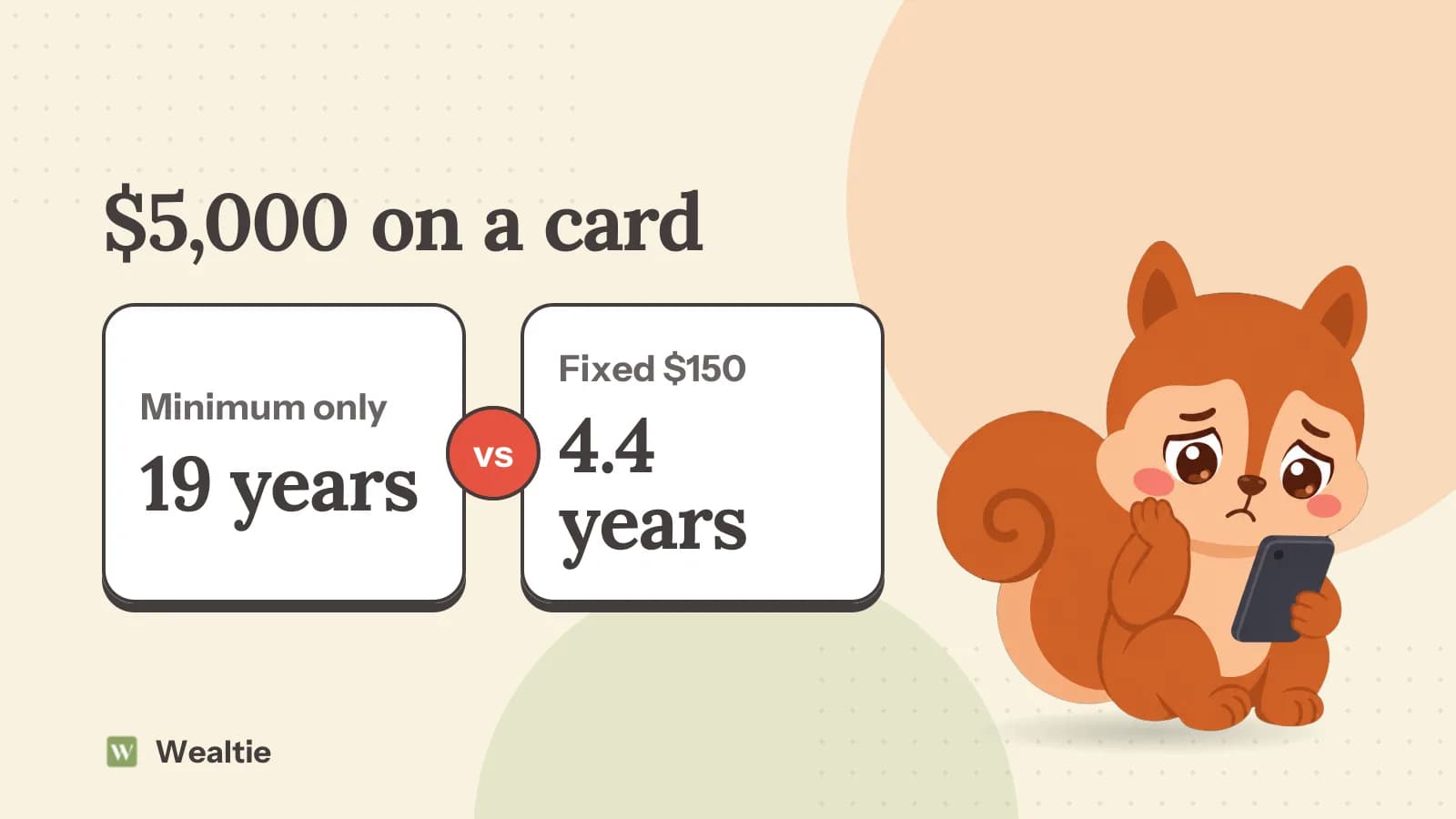
Paying only the minimum, a $5,000 credit card balance at 22.36%, the August 2026 average on cards charging interest, takes about 19 years to clear and costs $8,241 in interest. Keep paying the first minimum of about $150 as a fixed amount instead, and it's gone in under four and a half years for $2,886.
 By Wealtie Team · 3 min read
Key takeaways
- Credit card plans charged an average of 22.36% a year on accounts paying interest in August 2026, according to the Federal Reserve.
- Paying only the minimum on a $5,000 balance at that rate takes about 231 months, over 19 years, and costs about $8,241 in interest.
- The trap is that the minimum shrinks as the balance shrinks, so most of each payment keeps going to interest.
- Paying the first month's minimum, about $150, as a fixed amount every month clears the same balance in 53 months for about $2,886 in interest.
- A fixed payment of $300 clears it in 21 months for about $1,043; set the amount from your budget, not from the statement.
How long does it take to pay off a credit card with minimum payments?
Often decades. In a worked example, a $5,000 balance at 22.36% interest, paid with nothing but the minimum, takes about 231 months, over 19 years, and costs about $8,241 in interest. That's more than the original debt.
22.36% isn't a scary outlier. It was the average rate on US credit card accounts paying interest in August 2026, according to the Federal Reserve's G.19 consumer credit release.
Why do minimum payments take so long?
Because the minimum is mostly interest, and it shrinks as the balance shrinks.
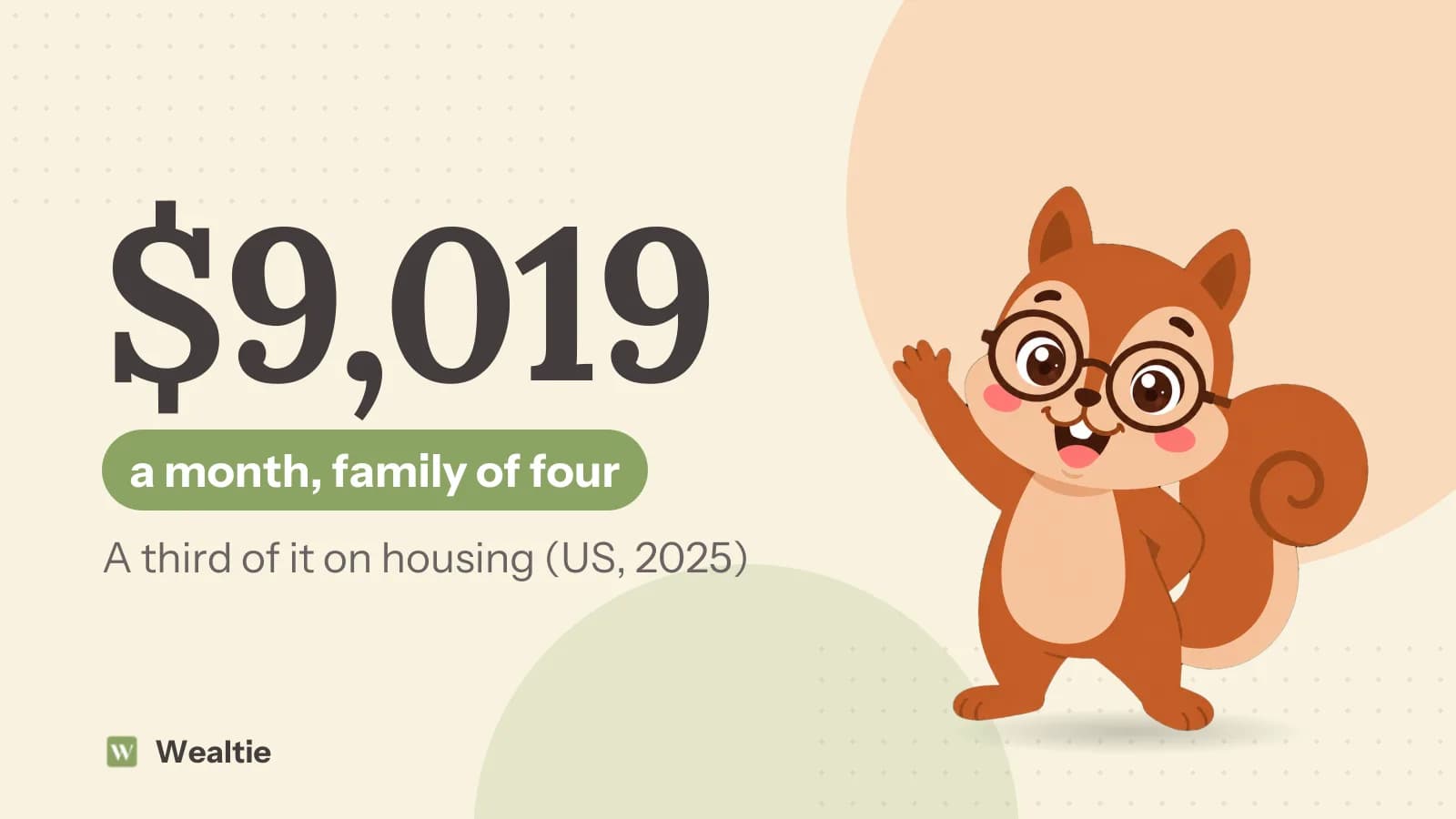
Card issuers set the minimum with a formula. A common one is 1% of the balance plus that month's interest, with a floor of something like $25. On $5,000 at 22.36%, the first month's interest is about $93, so the first minimum is about $143, and only $50 of it reduces the debt.
Next month the balance is a little lower, so the minimum is a little lower, and the slice that pays off debt is a little smaller too. The payment keeps falling with the balance, which is why the last few hundred dollars take years. Your card agreement states your card's exact formula; the pattern is the same for most of them.
The examples here assume no new purchases on the card. Every new purchase makes the timeline longer.
What changes if you pay a fixed amount?
Almost everything. Paying a fixed amount each month, instead of whatever the minimum says, means every month more of the payment goes to the debt.
Here's the same $5,000 at 22.36%:
| Monthly payment | Time to pay off | Total interest |
|---|---|---|
| Minimum only (shrinking) | 231 months (19 years) | $8,241 |
| Fixed $150 | 53 months | $2,886 |
| Fixed $200 | 34 months | $1,793 |
| Fixed $300 | 21 months | $1,043 |
| Fixed $500 | 12 months | $585 |
The second row is the striking one. $150 is roughly the first month's minimum. Just keeping that payment the same every month, rather than letting it fall, cuts the payoff from 19 years to under four and a half, and saves over $5,300 in interest.
How do you choose a payment that clears the card?
Pick a date and work back. To clear $5,000 at 22.36% in two years, the payment is about $260 a month. In one year, about $470.
If the date doesn't fit your budget, pick the largest fixed payment that does, and stick with it. A fixed $200 is a plan with an end date. "Whatever I can afford this month" usually turns into the minimum.
Set it up as an automatic payment for the fixed amount, not the minimum, so it happens even in a busy month.
Where does the extra payment come from?
From your monthly budget, decided before the month starts.
Look at the categories that change month to month: eating out, shopping, subscriptions. Moving 100 a month from them to the card takes the payment from the shrinking minimum to a fixed amount that clears the debt. How to stop overspending goes through where that money usually hides.
The 50/30/20 rule puts extra debt payments in the 20% alongside savings, which is a useful way to size it: on 3,000 of take-home pay, 20% is 600 for savings and debt together. While a card charges over 20% interest, most of that 600 is better spent on the card.
What if you have more than one card?
Pay the minimum on all of them and put every extra dollar on one card at a time, usually the one with the highest interest rate. When it's paid off, add its payment to the next card. That order costs the least in interest over the whole payoff.
Should you stop using the card while you pay it off?
Yes, if you can. New purchases on a card you're paying off add to the balance at the same interest rate and push the end date back.
Keep a small emergency fund so the next surprise doesn't go on the card. Even one month of essentials, or $500 to start, breaks the cycle. How much should be in an emergency fund explains the first target.
How do you keep the payoff on track?
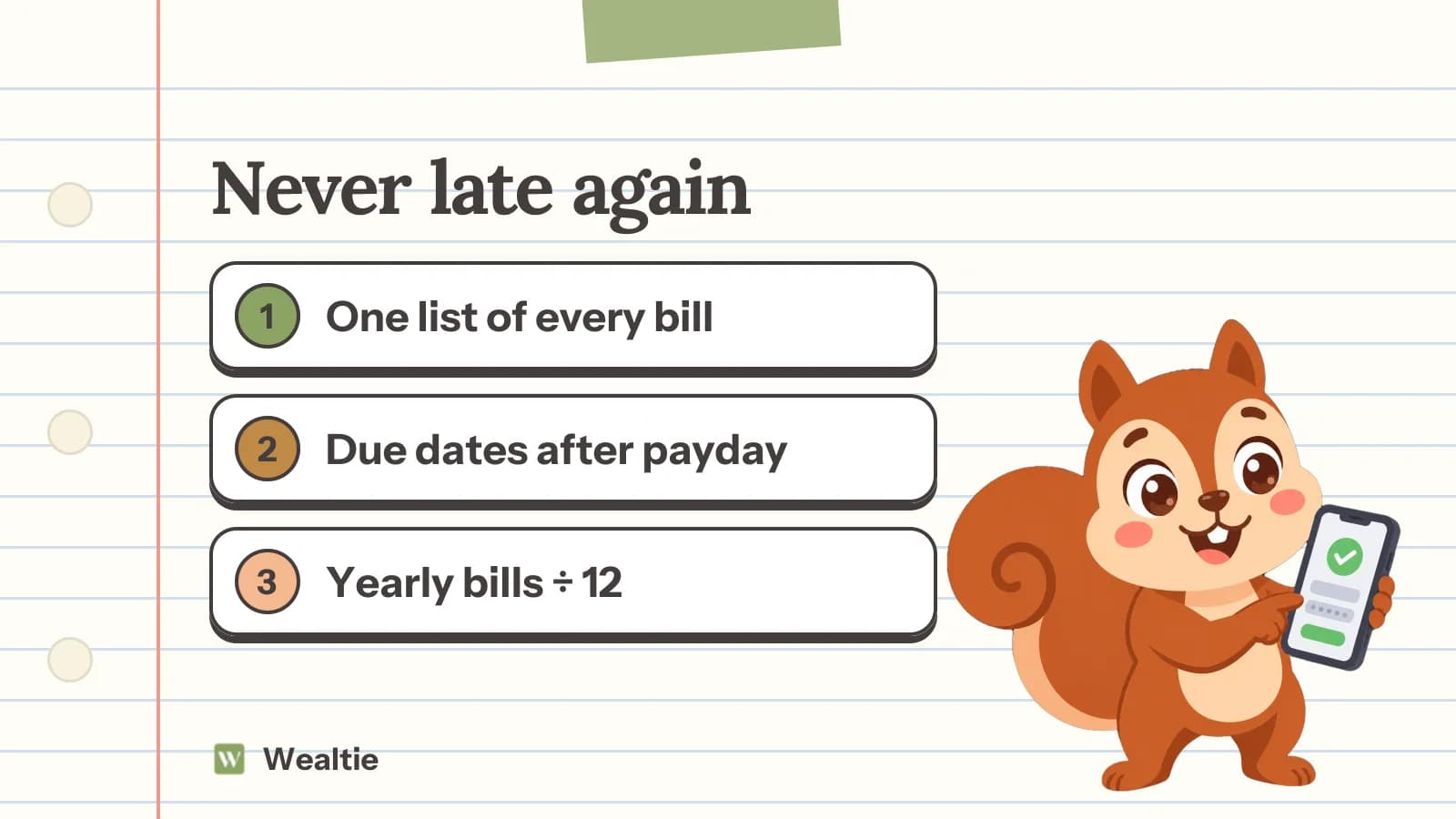
Treat the fixed payment as a bill and the card balance as a number to watch once a month.
In Wealtie, set the card payment as a recurring transaction that logs itself on the due date, and include it in your monthly budget as its own line. Budget Health warns you mid-month if spending elsewhere is heading over, which is the moment that would otherwise end up back on the card.
Questions people ask
Often decades. In this post's example, $5,000 at 22.36% with a minimum of 1% of the balance plus interest, at least $25, takes about 231 months, over 19 years, and costs about $8,241 in interest.
At 22.36% interest: about 53 months paying a fixed $150 a month, 34 months at $200, 21 months at $300 and 12 months at $500. Paying only a shrinking minimum takes over 19 years.
Because the minimum is mostly interest and shrinks as the balance falls. Each month only a small slice of the payment reduces the debt, and that slice gets smaller as the minimum drops.
It varies by card. A common formula is 1% of the balance plus that month's interest, with a floor such as $25. Your card agreement states the exact rule.
Yes. Any amount above the minimum goes straight to the balance. Even fixing your payment at the first month's minimum, instead of letting it shrink, cuts years off the payoff.
Sources
- Consumer Credit - G.19 (release of 7 October 2026) · Board of Governors of the Federal Reserve System · checked 1 November 2026
This article is general information, not financial, tax or legal advice. Your situation is your own; check the numbers that apply to you before you act on them.