Budgeting: Is a holiday home worth it? The real yearly cost
Is a holiday home worth it? Only if you'll use it often, and in a worked example, it costs 9,000 a year to run, against 3,000 for renting a similar place for three weeks.
 By Wealtie Team · 3 min read
Key takeaways
- A holiday home is worth it only if you use it often or let it out.
- Running costs like maintenance, taxes and insurance continue all year.
- Renting holiday homes when you need them is often cheaper.
- Letting it out can cover costs but brings work, fees and tax.
Is a holiday home worth it?
Owning a place by the sea, in the mountains or in a favourite city sounds wonderful: no booking, your own things waiting for you and somewhere to escape whenever you like. But a holiday home costs money every month of the year, whether you're there or not. Whether it's worth it depends mostly on how often you'll use it, whether you'll let it out and what else you could do with the money.
For many families, renting a holiday home for the weeks they need is far cheaper. For others, especially those who visit very often or have family reasons to be in one place, owning can make sense.
What does a holiday home cost to run?
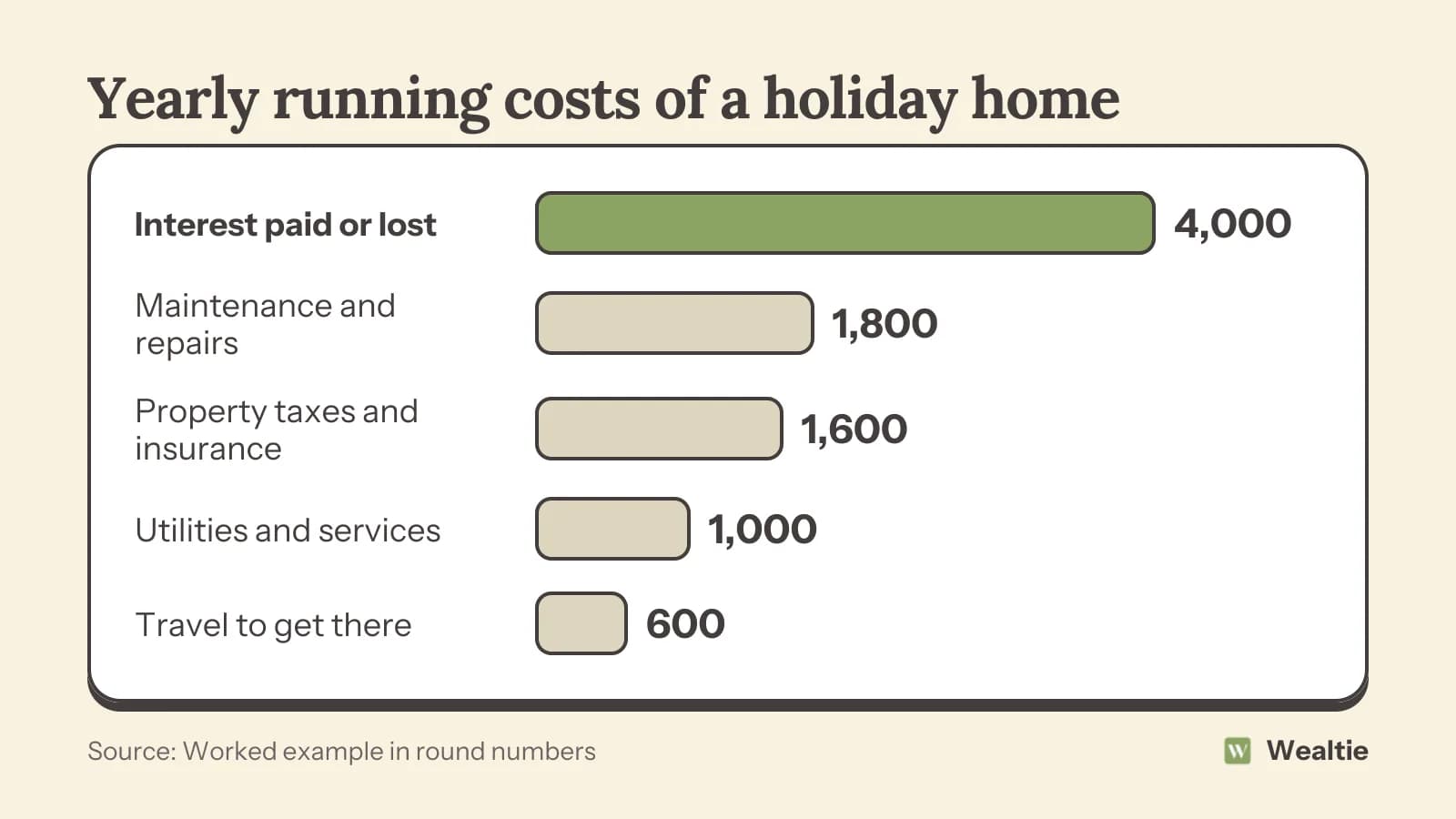
Here's a worked example of yearly running costs, in round numbers that work in any currency:
| Yearly cost | Amount |
|---|---|
| Mortgage interest or lost savings interest | 4,000 |
| Maintenance and repairs | 1,800 |
| Property taxes and insurance | 1,600 |
| Utilities and services | 1,000 |
| Travel to get there | 600 |
| Total | 9,000 |
Even if you buy with cash, the money tied up in the property could have earned interest or returns elsewhere. That's the opportunity cost of owning. Add the upfront costs of buying, like taxes, legal fees and furnishing, and the true cost is higher still. The upfront costs of buying a home covers those.
How often would you need to use it?
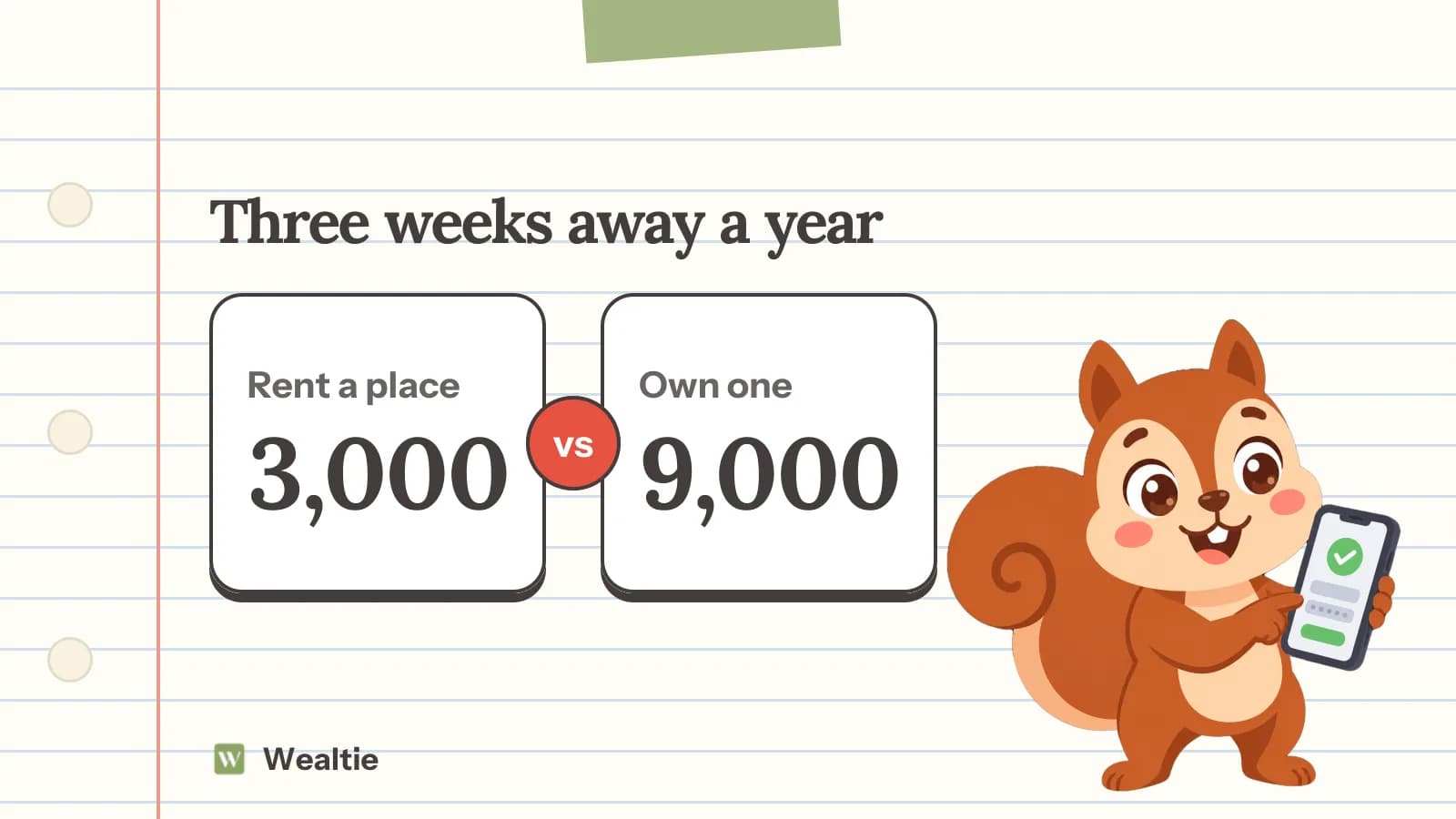
If renting a similar place costs 1,000 a week, three weeks a year costs 3,000. Owning, at 9,000 a year in running costs, only beats renting if you'd use it for about nine weeks a year or more. Many owners find they use their holiday home less than they expected, especially as children grow up and holiday plans change.
| Three weeks away a year | Cost |
|---|---|
| Rent a holiday home | 3,000 |
| Own a holiday home | 9,000 |
Renting also gives you freedom to go somewhere different each year. How to save money on holiday rentals covers finding good value.
Can letting it out cover the costs?
Letting your holiday home to other guests can bring in income. In the example, letting it for ten weeks at 900 a week would bring in 9,000 before costs. But letting comes with its own expenses and work:
- Fees: booking platforms or agents take a share
- Cleaning and changeovers: each booking needs cleaning and laundry
- Wear and tear: more guests mean more repairs and replacements
- Tax: rental income is usually taxable, and rules vary by country
- Rules: some areas restrict short-term lets or require licences
After these, the profit can be much smaller than the headline income, and the best weeks for letting are often the ones you'd want to use yourself.
What are the hidden costs?
Repairs from a distance
Problems like leaks or storm damage need dealing with even when you're far away, which may mean paying someone local.
Empty-home insurance
Homes left empty for long periods may need specialist insurance.
Furnishing and upkeep
Furniture, appliances and decor need replacing over time.
Your time
Maintenance, bookings and travel take time, which some owners enjoy and others find a burden.
When does a holiday home make sense?
It can make sense if you'll use it many weeks a year, have family nearby, plan to retire there, or enjoy the work of letting and maintaining it. It makes less sense if it would stretch your budget, take money from retirement savings, or if you'd mostly use it for a few weeks in summer. Should you rent or buy a house? covers similar trade-offs for your main home.
Before buying, try renting in the same area several times, in different seasons. You'll see how often you want to go back, how long the journey feels after a busy week and what the area is like out of season. Many people fall in love with a place on a sunny summer holiday and find it quieter and less appealing in winter. A few rental stays cost far less than finding that out after you've bought.
Think about who else would use it. If family members would share the costs and the weeks, the sums can look very different, but shared ownership needs clear agreements about who pays for what, who uses it when and what happens if someone wants to sell.
It's also worth asking what you'd give up. The money spent on a holiday home might otherwise go towards paying off your mortgage, saving for retirement or travelling somewhere new each year. Comparing those choices honestly helps you decide whether owning is the best use of your money.
How can Wealtie help you decide?
Before buying, add up what you spend on holidays now, by logging holiday accommodation and travel in their own expense categories. If you already own a holiday home, add its regular costs as recurring transactions, so you can see what it costs each year compared with renting.
Questions people ask
Only if you'll use it often or let it out. In a worked example, running costs of 9,000 a year meant renting was cheaper for under nine weeks a year.
Common costs include mortgage interest or lost savings interest, maintenance, taxes, insurance, utilities and travel. In a worked example, they came to 9,000 a year.
Sometimes, but fees, cleaning, wear and tear and tax reduce the profit, and the best weeks for letting are often the ones you'd use.
For most people who holiday a few weeks a year, renting is cheaper and gives more freedom to go somewhere new.
This article is general information, not financial, tax or legal advice. Your situation is your own; check the numbers that apply to you before you act on them.