Budgeting: The hedonic treadmill: why new things stop making you happy
The hedonic treadmill is the way the happiness from a new purchase or pay rise fades as you get used to it, leaving you wanting the next thing. Spending on experiences, people and time off the treadmill gets you more for your money.
 By Wealtie Team · 3 min read
Key takeaways
- The hedonic treadmill is how the happiness from new things fades as you get used to them.
- It drives a cycle of upgrading and spending that never feels like enough.
- Experiences, time with people and paying for time tend to keep their value longer.
- Spacing out treats and noticing what you have slow the treadmill down.
What is the hedonic treadmill?
The hedonic treadmill, also called hedonic adaptation, describes how people get used to good things. A new phone, car or flat brings a rush of happiness, but within weeks it becomes normal. The excitement fades, and you're back where you started, often wanting the next upgrade. It's like walking on a treadmill: you keep moving but don't get any further.
It works with pay rises too. A higher salary feels great at first, then your spending rises to match and it starts to feel ordinary. This is a big part of why lifestyle creep happens.
How does the hedonic treadmill affect your spending?
Constant upgrades
Once you're used to something, the next model looks better. People replace phones, cars and furniture that still work, chasing a feeling that never lasts long.
Rising standards
What felt like a treat becomes the baseline. Takeaways once a month turn into once a week. A budget hotel stops feeling acceptable. Each step up raises your costs for good.
Never feeling like enough
If every new thing fades, it's easy to feel that more money would fix it. But more money brings more adaptation, so the feeling of "not enough" can follow you up the income ladder.
How quickly does the joy fade?
Here's an illustrative example of how the excitement of a new phone might fade, scored out of 10:
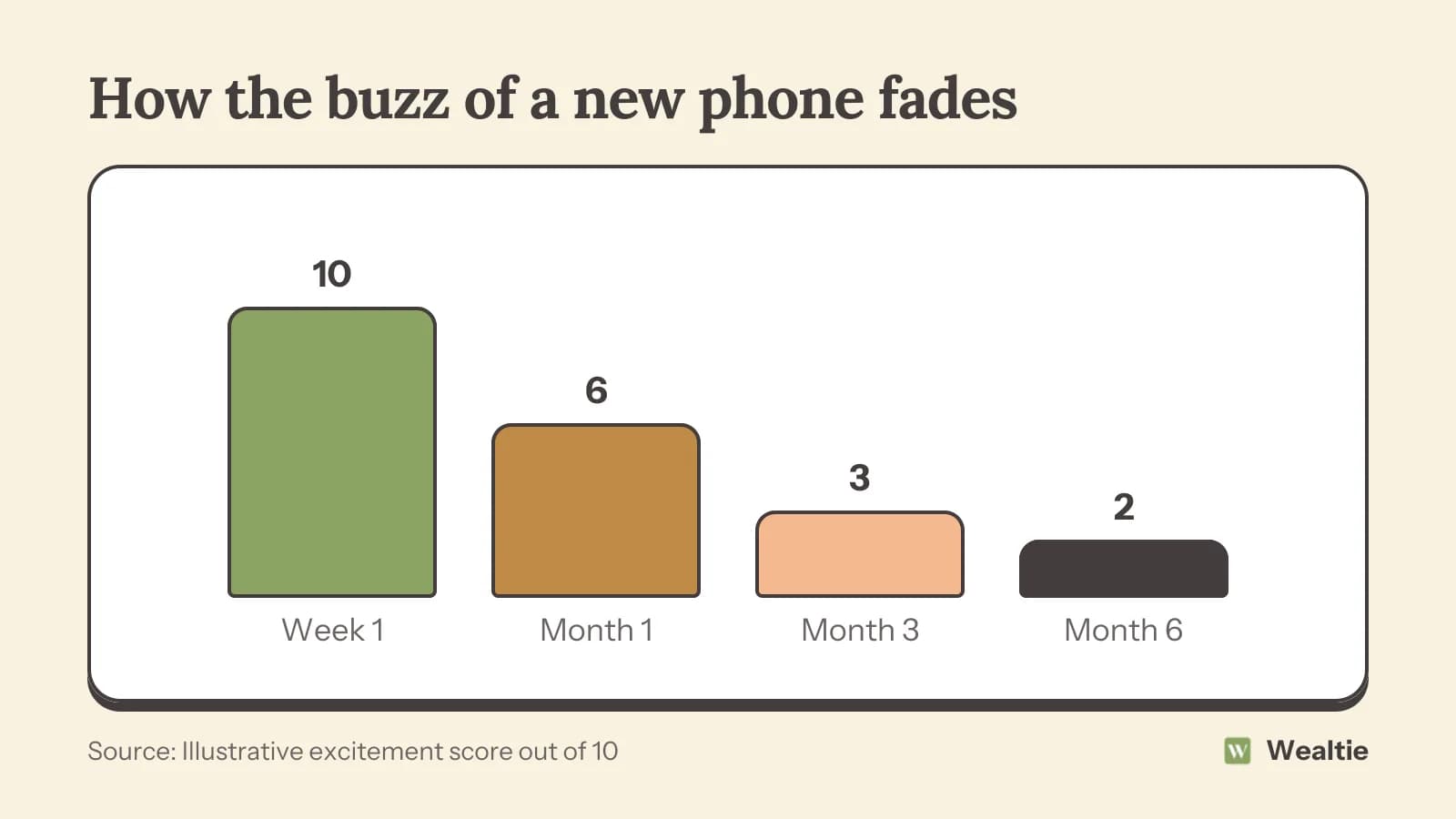
These aren't measured figures, just a picture of a pattern many people recognise. The phone still works as well in month six as in week one. What changed is how much you notice it.
How do you get off the hedonic treadmill?
Spend on experiences
Trips, meals with friends, concerts and classes tend to keep their value longer than things. You look forward to them, enjoy them and remember them for years. They're also harder to compare and upgrade.
Spend on people
Money spent on time with others, or on gifts and help for people you care about, often brings more lasting happiness than money spent on yourself alone.
Buy time
Paying to avoid a task you dislike, like a long commute or a chore that eats your weekend, can improve daily life in a way that doesn't fade as fast.
Space out treats
A treat you have every day stops feeling special. Having it once a week, or once a month, keeps it enjoyable. Taking a break from something you love can make it feel new again. A favourite restaurant visited once a month stays a treat, while the same meal every Friday soon becomes routine, and you end up paying for something you barely notice.
Wait before upgrading
Before replacing something that works, wait a month. Often the urge passes. Cost per use helps you see what you'd get for the money. How to stop impulse buying has more ways to slow down.
Notice what you have
Taking a moment to notice and appreciate what you already own or enjoy slows adaptation. Some people keep a short gratitude list. It sounds simple, but it helps you get more from money already spent.
What should you do with a pay rise?
Keep your spending the same for a few months and save the difference. When you do increase spending, choose one or two things that will make a real difference, rather than letting costs rise across the board. You'll build savings and still feel the benefit of earning more.
Plan spending that lasts
When you budget for fun, lean towards experiences, time with people and things you'll use for years. A budget that includes these tends to feel richer than one that chases the latest upgrade.
Rent or borrow before you buy
For things you're excited about but might tire of, like a gadget, a tool or gear for a new hobby, try renting or borrowing first. If you're still using it after a few weeks, buying makes more sense. If the buzz fades, you've saved the full price. Many libraries and community groups lend tools, games and equipment for free or for a small fee.
It also helps to remember what life was like before a purchase. Thinking back to how you managed without something can show you how little it changed your happiness, and make the next upgrade less tempting.
How can Wealtie help you spend on what lasts?
Track spending in expense categories like experiences, things and upgrades, and set a monthly budget for each. Looking back after a few months shows which spending you still value and which faded fast, so you can move money towards what keeps making you happy.
Questions people ask
The hedonic treadmill is how the happiness from new things or pay rises fades as you get used to them, leaving you wanting more.
People adapt to good things quickly. Once something becomes normal, you notice it less and the excitement fades.
Spend on experiences, people and time, space out treats, wait before upgrading and notice what you already have.
Keep spending the same for a few months, save the difference and raise spending only on one or two things that matter.
This article is general information, not financial, tax or legal advice. Your situation is your own; check the numbers that apply to you before you act on them.