Budgeting: Hair colouring cost: salon vs box dye over a year
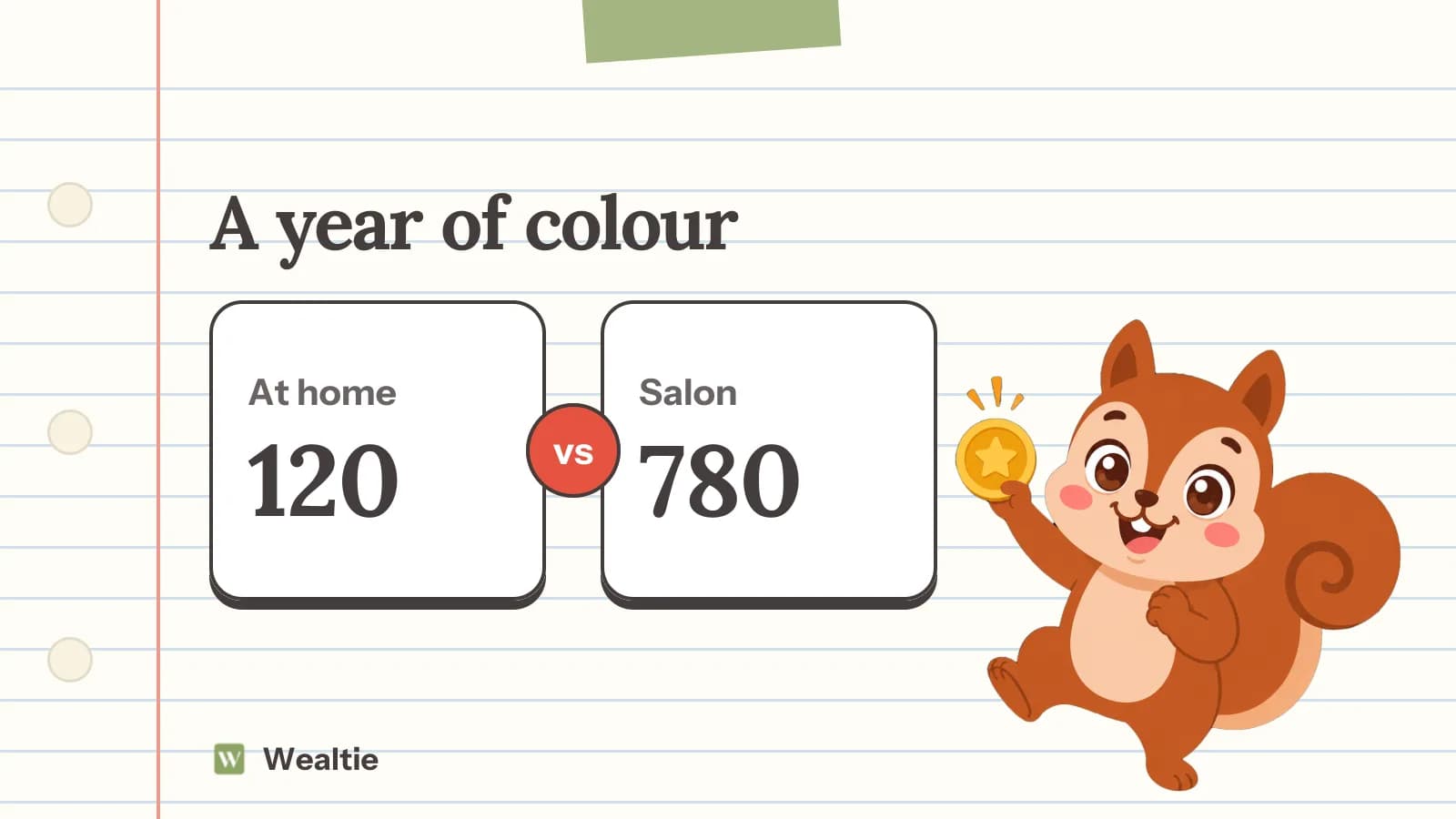
Hair colouring cost depends on the type of colour and how often your roots need touching up. In a worked example, salon highlights every eight weeks cost 780 a year, against 120 for colouring at home.
 By Wealtie Team · 3 min read
Key takeaways
- Hair colouring cost depends on the type of colour and how often you need touch-ups.
- Highlights and full colour at a salon add up over a year.
- Choosing a lower-maintenance colour cuts the number of appointments.
- Mixing salon and home colour balances cost and results.
What is the typical hair colouring cost?
Colouring your hair can be a fun way to change your look or cover grey. But colour needs maintaining, and the cost of regular salon appointments adds up over a year. Hair colouring cost depends on the type of colour, the length and thickness of your hair, the salon and how often your roots need touching up.
Here's a worked example of a year of colour, in round numbers that work in any currency:
| Approach | Yearly cost |
|---|---|
| Box dye at home | 120 |
| Salon roots, home in between | 360 |
| Salon highlights every 8 weeks | 780 |
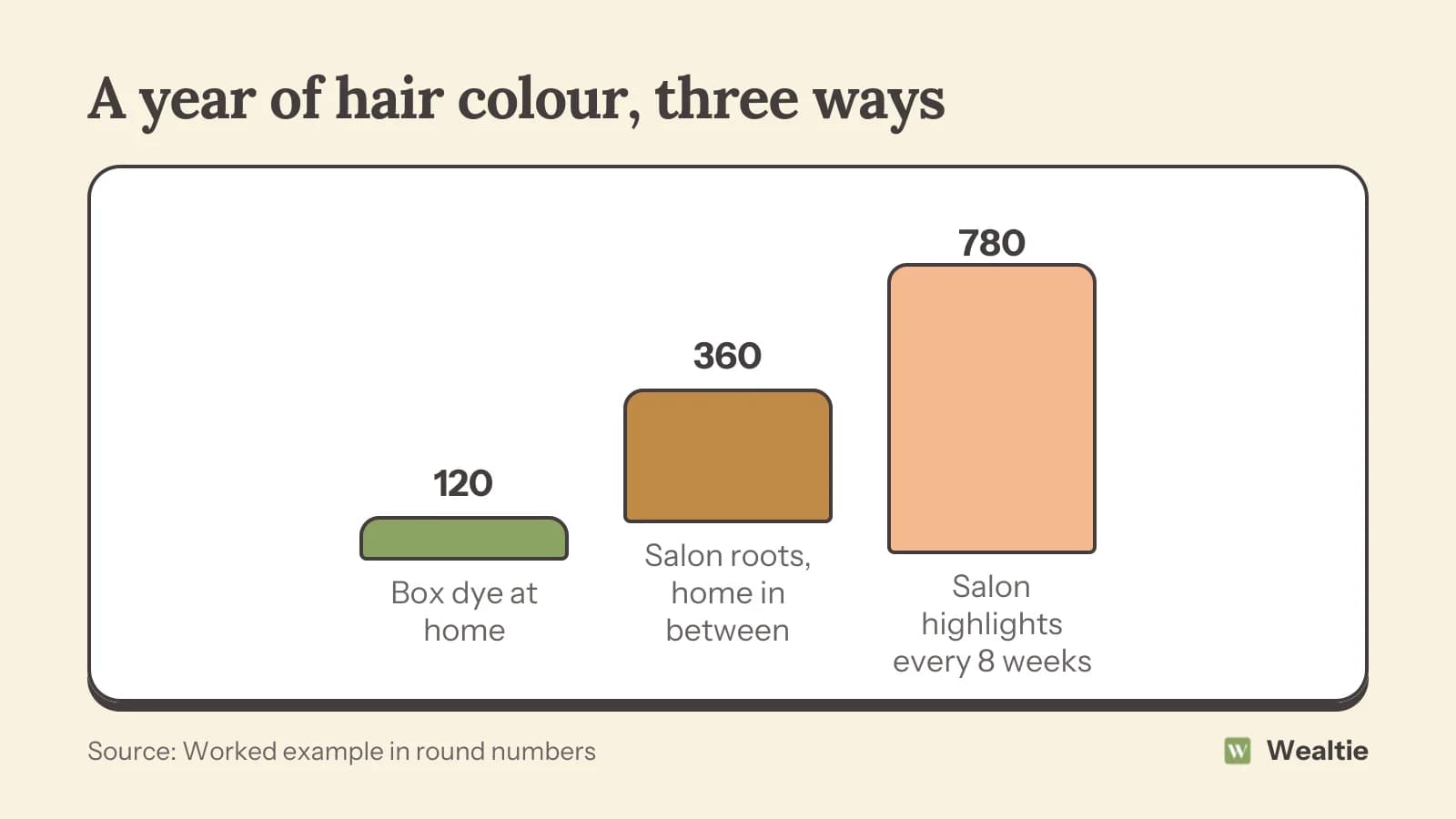
Salon highlights at around 120 every eight weeks cost about 780 a year. Colouring at home with box dye every six weeks costs about 120. Many people mix the two, with salon appointments for bigger changes and home touch-ups in between.
What affects the cost?
Type of colour
All-over colour, root touch-ups, highlights, balayage and colour correction all cost different amounts. Highlights and balayage usually cost more because they take longer.
Hair length and thickness
Longer, thicker hair needs more product and time.
How often you go
Root touch-ups every four to six weeks add up much faster than a low-maintenance colour you refresh a few times a year.
Extras
Toners, treatments, blow-dries and cuts are often added to colour appointments.
How do you spend less on hair colour?
Choose a low-maintenance colour
Colours close to your natural shade, or techniques that grow out softly like balayage, need fewer appointments. Ask your colourist which options suit a lower budget.
Stretch time between appointments
Root sprays, powders and clever styling can hide regrowth for a few extra weeks.
Do roots at home
Touching up roots at home between salon visits keeps colour fresh for less. Ask your colourist to recommend a shade that matches.
Use colour-safe products
Gentle shampoos and conditioners for coloured hair help colour last longer, which means fewer appointments.
Look for training salons
Salons with trainee colourists often offer supervised appointments at lower prices.
Compare salon prices
Prices for the same service can vary a lot between salons in the same area.
Is box dye a good alternative?
Box dye is cheap and convenient, and works well for many people, especially for simple all-over colour or covering grey. It's harder to get even results with big changes, like going much lighter, and fixing a mistake at a salon can be expensive. For dramatic changes, a professional is often worth it. Own-brand box dyes can cost less than big brands with similar results.
How do you budget for hair colour?
Add up how often you colour and what each visit costs, then divide by twelve for a monthly amount. Seeing the yearly total helps you decide whether a lower-maintenance colour or more home colouring would suit you. How to save money on personal care covers other grooming costs, and cost per use can help you judge value.
Talk openly with your colourist about your budget. A good colourist can suggest techniques and shades that look great and grow out gracefully, which means fewer appointments. They can also tell you which products are worth buying to keep colour fresh and which you can skip. Being honest about how often you can afford to come in helps them plan a colour that works for you.
If you're covering grey, think about whether a softer approach, like blending or highlights, might suit you better than full coverage. Blended colour often needs less frequent touch-ups, since regrowth is less obvious. Some people decide to embrace their natural grey over time, which removes the cost altogether.
Protecting your hair also protects the money you've spent on colour. Heat styling, sun exposure and chlorine can fade colour quickly. Using heat protection, wearing a hat in strong sun and rinsing hair after swimming help colour last.
Keep a note of your colour formula if you go to a salon. If you ever change salon or decide to touch up at home, knowing the shade and products used makes it easier to match.
Finally, plan big changes for when you can afford them. Going from dark to light, or fixing a colour mistake, can take several expensive appointments, so it's worth budgeting before you start.
Some people book a colour consultation before committing to a new look. It is often free or cheap and helps you understand the full cost of maintaining a colour before you start.
How can Wealtie help you track beauty costs?
Log hair appointments and products in a personal care expense category and set a monthly budget for hair and beauty. Over a year, you'll see what your colour costs and where you could save.
Questions people ask
In a worked example, salon highlights every eight weeks cost about 780 a year, while colouring at home cost about 120.
Use colour-safe shampoo and conditioner, wash less often, use cooler water and protect hair from the sun.
Yes, much cheaper. It works well for simple colour or covering grey, but big changes are often better done by a professional.
Choose a low-maintenance colour, stretch time between appointments, touch up roots at home and look for training salons.
This article is general information, not financial, tax or legal advice. Your situation is your own; check the numbers that apply to you before you act on them.