Budgeting: Is GAP insurance worth it for a new car?
Is GAP insurance worth it? Mainly if you'd owe more on car finance than your car is worth after a write-off, and in a worked example, it covers a 6,000 gap for a one-off 250.
 By Wealtie Team · 3 min read
Key takeaways
- GAP insurance covers the difference between your car's value and what you paid or owe.
- It's most useful with low-deposit finance on a new car that loses value fast.
- Buying from a standalone provider is usually cheaper than from the dealer.
- If you paid cash for an older car, you probably don't need it.
What is GAP insurance?
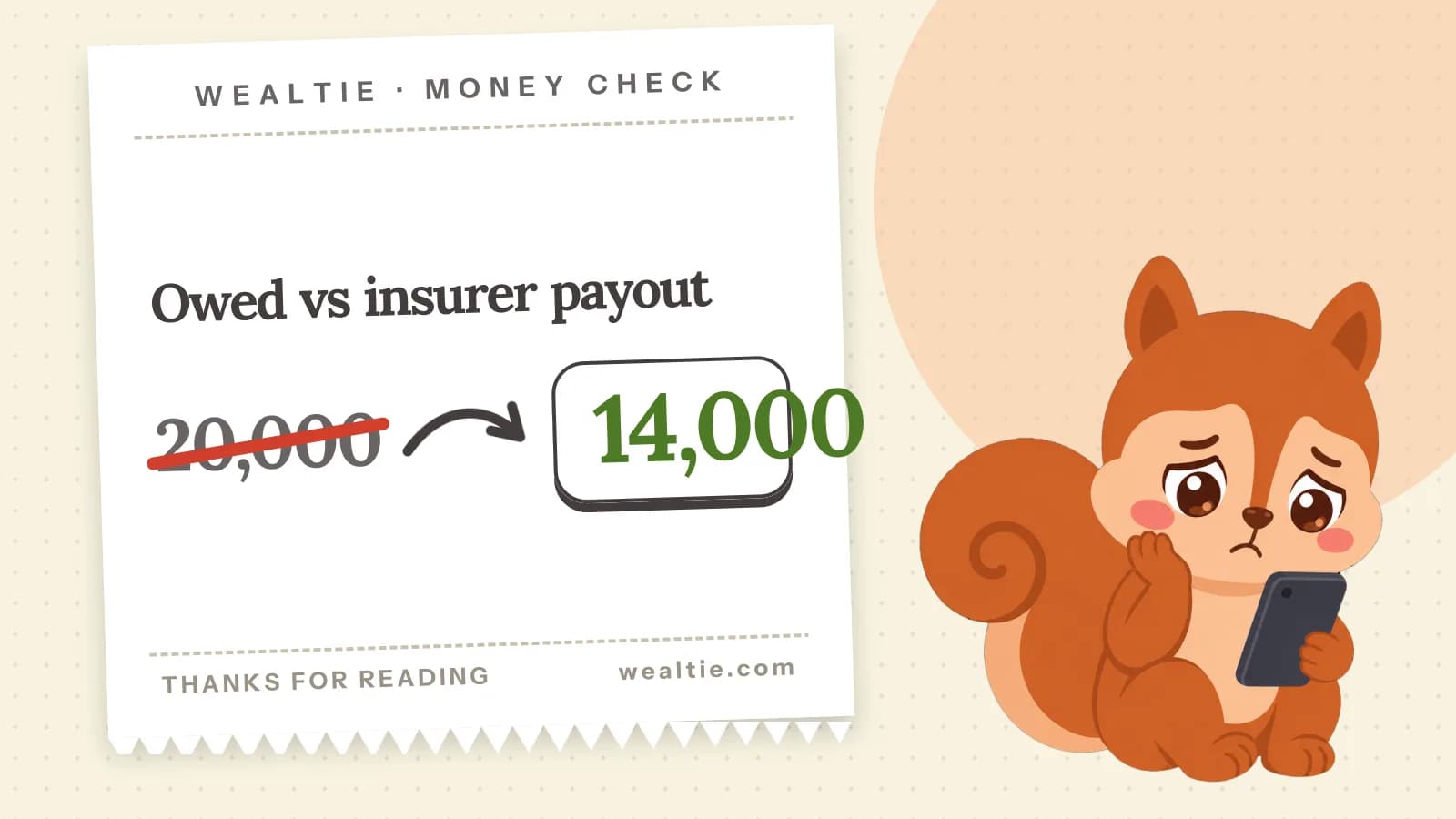
GAP insurance (guaranteed asset protection) covers the difference between what your car insurer pays if your car is written off or stolen and what you paid for it or still owe on finance. Standard car insurance usually pays the car's market value at the time of the claim, and new cars lose value quickly. That can leave a gap between the payout and your finance balance, which you'd still have to pay.
There are a few types. Some cover the gap to what you owe on finance, some to the original price you paid, and some to the cost of a similar new car. The right one depends on how you bought the car.
How big can the gap be?
Here's a worked example in round numbers that work in any currency. You buy a new car for 25,000 with a small deposit and finance for the rest. Two years later, it's written off in an accident.
| After two years | Amount |
|---|---|
| Still owed on finance | 20,000 |
| Insurer pays market value | 14,000 |
| Gap you'd have to pay | 6,000 |
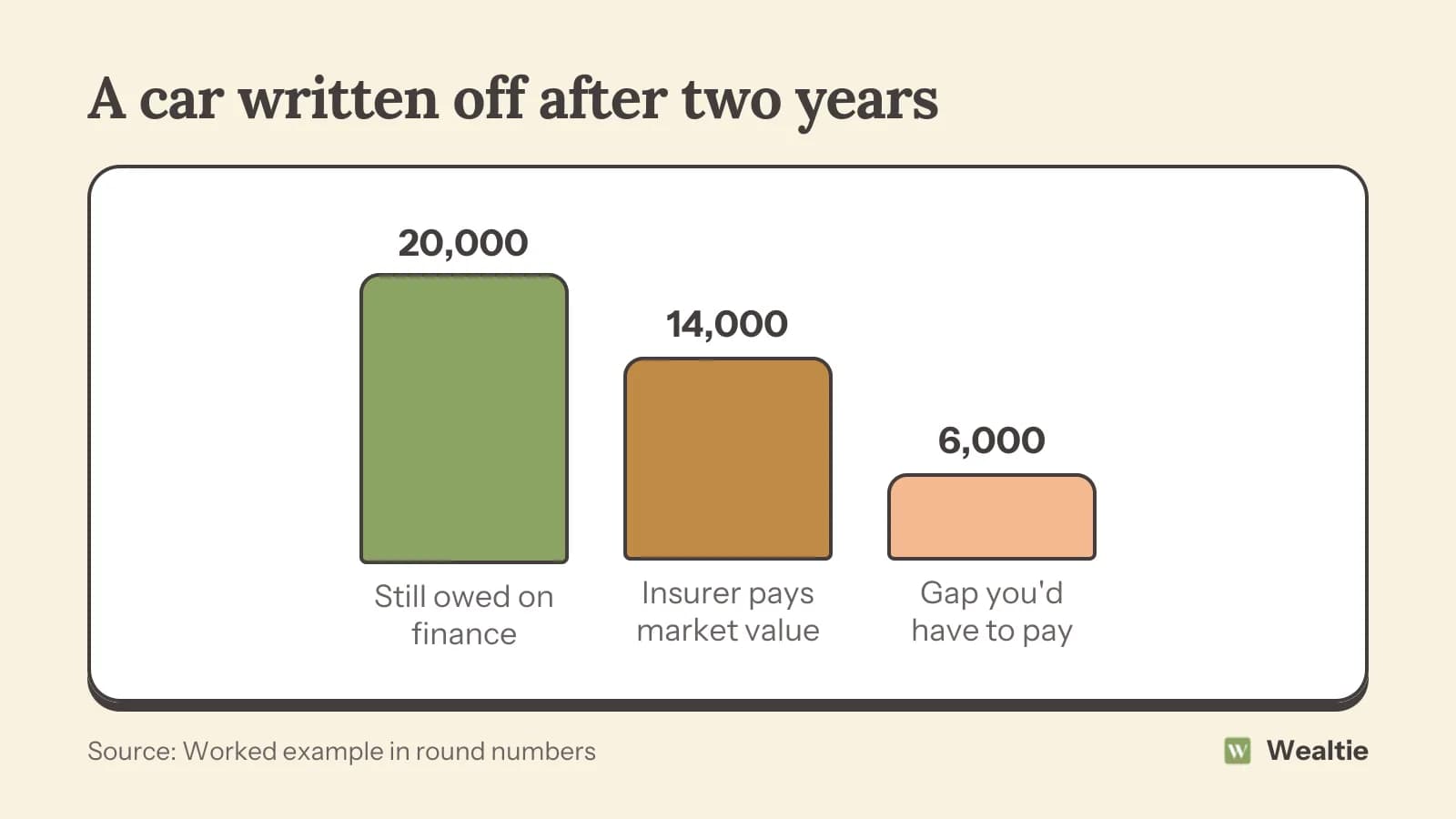
Without GAP cover, you'd need to find 6,000 to clear the finance, while also needing another car. A GAP policy costing around 250 would cover that difference. If the car is never written off, though, the 250 is spent with no payout, like any insurance.
When is GAP insurance worth it?
You have low-deposit finance
With a small deposit, you can owe more than the car is worth for the first few years. That's when GAP cover is most useful. Car finance options covers how different finance deals work.
You're buying new
New cars lose value fastest in their first few years, which makes the gap bigger.
You couldn't afford to pay the gap
If finding several thousand to clear a finance balance would be a serious problem, cover can be worth the cost.
Your lease requires it or makes it sensible
With leasing, you never own the car, and a write-off can leave you owing the leasing company. Should you lease or buy a car? covers the trade-offs.
When is it not worth it?
You paid cash for an older car
Older cars lose value more slowly, and if you have no finance, there's no balance to cover. Standard insurance is usually enough.
You put down a large deposit
A big deposit means you're less likely to owe more than the car is worth.
Your insurer offers new-for-old cover
Some comprehensive car insurance replaces a new car with a new one if it's written off within the first year or so. Check your policy before buying GAP. How to save money on car insurance covers what policies often include.
You're close to paying off the finance
As the balance falls, the gap shrinks and GAP cover becomes less useful.
How do you buy GAP insurance for less?
Don't buy at the dealership automatically
Dealers often offer GAP cover at a higher price than standalone providers. In this example, a dealer might charge 500 for cover a standalone provider sells for 250. You usually have time after buying the car to arrange it separately, so check the rules where you live.
Compare policy types
Choose the type that matches your situation. Cover to the finance balance is often cheaper than cover to a new replacement car.
Check the length and limits
Policies run for a set number of years and may cap the payout. Make sure it covers the period when the gap is largest.
Read the exclusions
Some policies exclude certain cars, uses or claim types.
How does it fit into the cost of a car?
GAP cover is one of several costs on top of the price of a car, alongside insurance, tax, servicing and fuel. How much car can you afford? covers working out the full monthly cost before you buy, so extras like GAP don't stretch your budget.
If you're unsure, work out the numbers for your own car. Find out roughly what your car is worth now, check your finance balance and see how big the gap would be. If it's small, or you could cover it from savings, GAP cover may not be needed. If it's large and would cause real hardship, the one-off cost may be worth paying for peace of mind.
Remember that the gap shrinks each year as you pay down the finance, so cover matters most in the first few years of ownership.
How can Wealtie help you track car costs?
Log GAP cover, insurance, finance payments and running costs in a car expense category, and add regular payments as recurring transactions. You'll see the full cost of owning your car, not just the monthly finance payment.
Questions people ask
It's most worth it with low-deposit finance on a new car, when you could owe more than the car is worth after a write-off.
It covers the difference between your insurer's payout and what you owe on finance or paid for the car, depending on the policy type.
Not automatically. Standalone providers are often cheaper, and you usually have time after buying the car to arrange cover.
You probably don't need it if you paid cash for an older car, put down a large deposit or have new-for-old cover already.
This article is general information, not financial, tax or legal advice. Your situation is your own; check the numbers that apply to you before you act on them.