Budgeting: How to budget for freshers' week
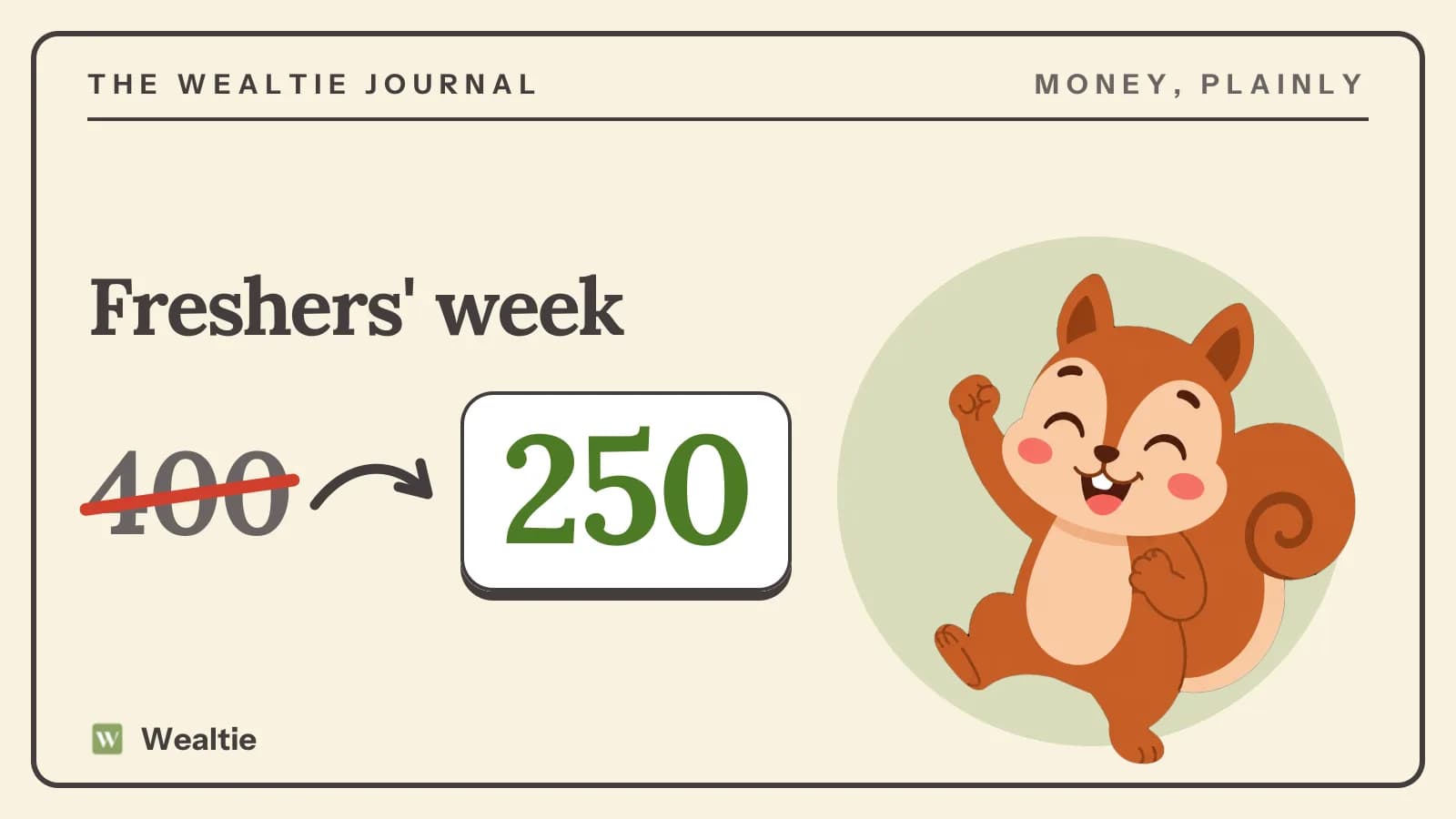
To budget for freshers' week, set an amount before you arrive and decide which events matter most, since tickets, nights out and society fees add up fast. In a worked example, freshers' week costs about 250, against 400 for someone who says yes to everything.
 By Wealtie Team · 3 min read
Key takeaways
- To budget for freshers' week, set an amount before you arrive.
- In a worked example, a planned freshers' week costs about 250, against 400 saying yes to everything.
- Free events are a great way to meet people without spending.
- Your student loan or first payment has to last the whole term, so pace it.
How do you budget for freshers' week?
Decide what you'll spend before you arrive, and choose the events that matter most. Freshers' week, or orientation week, is an exciting start to university, with parties, events, society fairs and new friends. It's also easy to spend a large part of your first loan payment in a few days. A simple plan lets you enjoy it fully and still have money for the rest of term.
What does freshers' week cost?
Here's a worked example, in round numbers that work in any currency:
| Cost | Planned | Saying yes to everything |
|---|---|---|
| Nights out and events | 110 | 220 |
| Food and takeaways | 60 | 100 |
| Society fees | 40 | 50 |
| Room bits and supplies | 40 | 30 |
| Total | 250 | 400 |
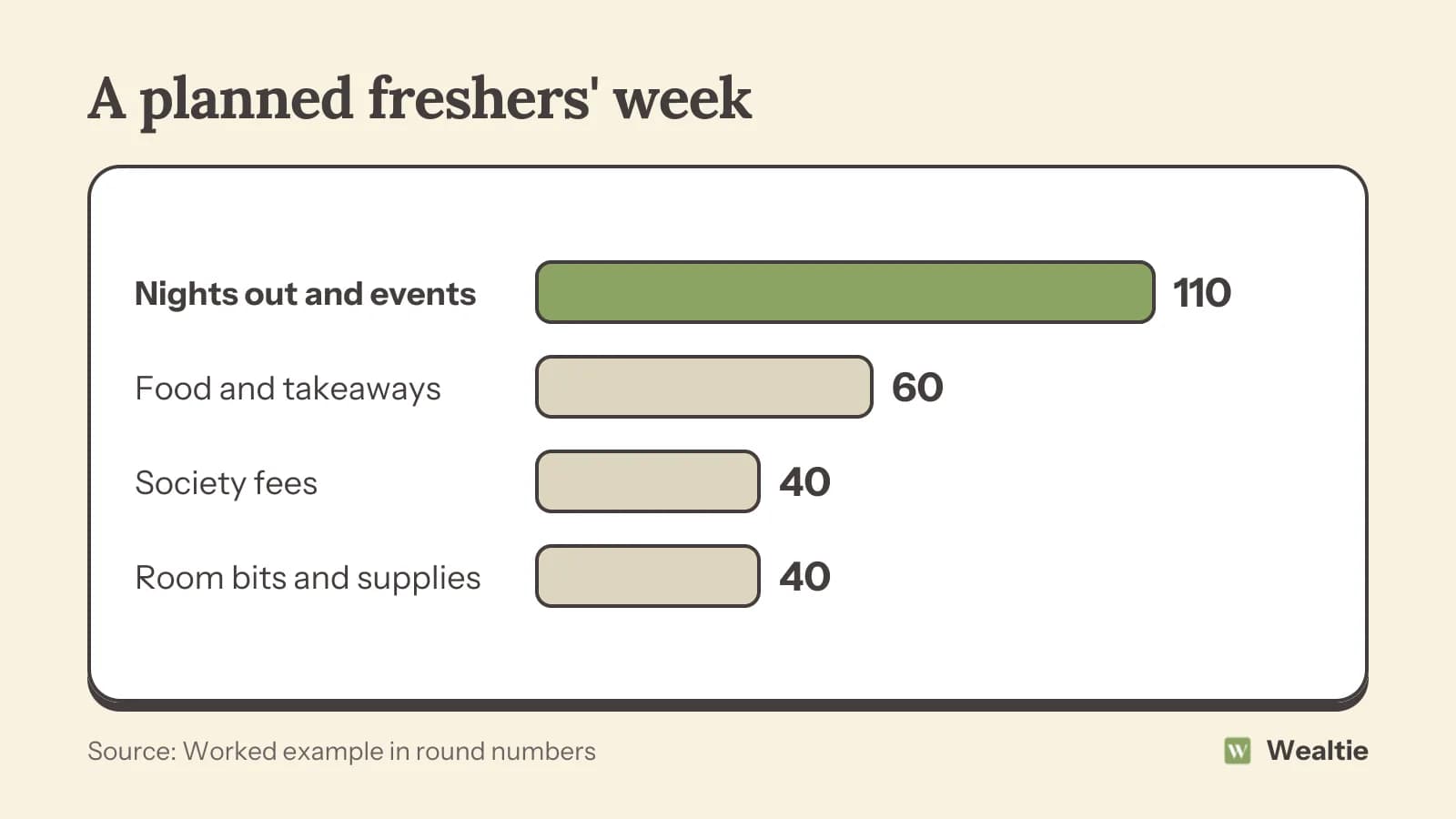
In this example, choosing events carefully and cooking a few meals saves about 150. Your own costs depend on your university, your city and what you enjoy. Big cities usually cost more for nights out and food.
Should you buy a freshers' wristband?
Only if you'll go to most of the events it covers. Wristbands bundle several events for one price, which can be good value if you'd attend them all. But many students find they skip some nights once they've made friends or feel tired. Look at what's included, compare it with buying individual tickets and remember that free events exist too.
Free events
Most universities run free events during freshers' week: campus tours, welcome talks, society taster sessions, sports trials and daytime activities. They're one of the best ways to meet people, often more relaxed than a club night.
How do you save on nights out?
Eat before you go, set a spending limit for the night, and plan how you'll get home. Pre-drinks with flatmates cost less than buying all your drinks out. Avoid buying big rounds for people you've just met. Taking a set amount in cash, or using a separate card with a limit, makes it easy to stick to your plan.
Don't feel pressured
It's fine to skip nights out or leave early. Many students feel pressure to go to everything, but plenty of people prefer quieter events. How to say no to spending with friends helps with those moments.
How do you save on food?
Do a first food shop in your first few days, so you're not relying on takeaways. Cooking with flatmates, splitting the cost of basics like oil, pasta and spices, saves money and helps you get to know each other. Keep takeaways as an occasional treat. A few easy meals in the freezer help on tired mornings after a late night.
Look after yourself
Freshers' week can be tiring, with late nights and lots of new people. Taking a quiet night or two, eating properly and getting some sleep helps you enjoy the rest of the week, and it usually saves money too. The friends you make in the first weeks will still be there next week.
What about societies and clubs?
Society fairs make it tempting to join lots of clubs. Many have fees, and sports clubs may need kit. Join the ones you're most interested in, try taster sessions first and add more later if you have time. Some societies are free or cheap to join, and many let you try a session before paying.
How do you make your loan last?
Your first student loan payment, or other income, often needs to last until the next payment months later. Work out how much you have for the term, subtract rent and essentials, and divide the rest by the weeks until your next payment. That's your weekly spending budget. The college student budget covers this in detail, and university accommodation costs covers housing.
Watch the first weeks
Spending is often highest in the first few weeks. Checking your balance each week, and adjusting if you've spent more than planned, keeps the rest of term manageable.
What to buy for your room
Only the basics. Bedding, a few kitchen items, a desk lamp and some storage are usually enough. Many things can be bought second-hand or shared with flatmates, and you'll find out what you need once you settle in. Course books can wait until you know which are essential. How to save money on books has tips.
How do you track freshers' spending in Wealtie?
Log spending in expense categories like going out, food and supplies, so you can see where your money goes. A monthly limit in the budget tracker, with Budget Health, shows whether you're on pace, and Pro lets you set a weekly budget period if that suits student life better.
Questions people ask
In a worked example, about 250 with a plan, against 400 for saying yes to everything.
Only if you'll go to most of the events it covers. Compare it with individual tickets and free events.
Set a budget, go to free events, eat before nights out, cook with flatmates and join only the societies you're keen on.
Subtract rent and essentials, then divide the rest by the weeks until your next payment to get a weekly budget.
This article is general information, not financial, tax or legal advice. Your situation is your own; check the numbers that apply to you before you act on them.