Budgeting: Fostering allowance: how to budget as a foster carer
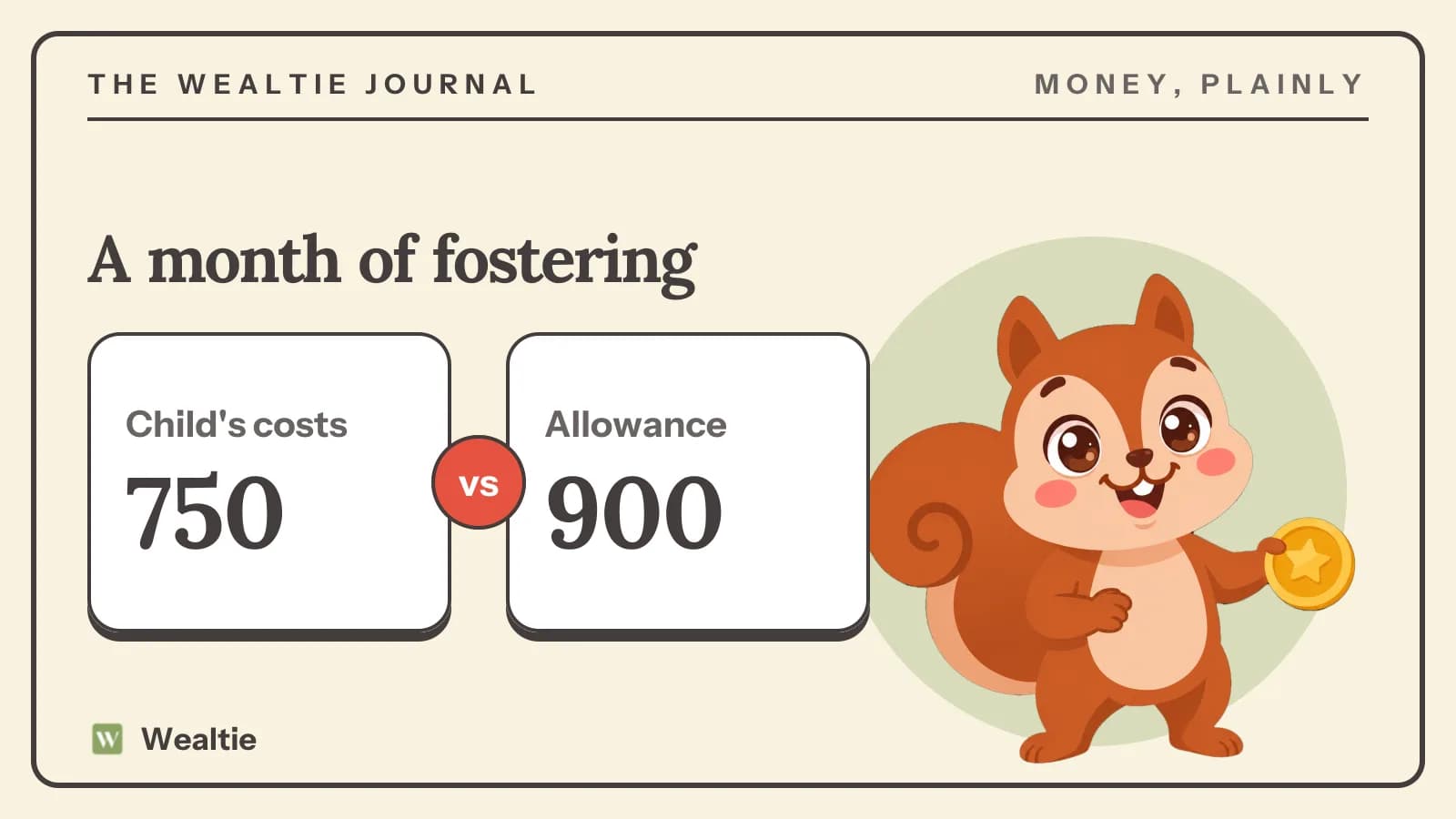
A fostering allowance is meant to cover the cost of caring for a child, so budgeting it separately shows whether it does. In a worked example, a carer receives 900 a month and spends about 750 on the child's needs.
 By Wealtie Team · 3 min read
Key takeaways
- A fostering allowance is meant to cover a child's day-to-day costs.
- Tracking spending shows whether the allowance covers real costs.
- Some agencies pay extra for birthdays, holidays and special needs.
- Rules on allowances, tax and benefits vary, so check with your agency.
What is a fostering allowance?
Foster carers look after children who can't live with their own families, sometimes for a few nights and sometimes for years. In many countries, foster carers receive a fostering allowance from the local authority or fostering agency to cover the cost of caring for the child, like food, clothes, travel and activities. Some carers also receive a fee for their time and skills, separate from the allowance.
Allowances vary by country, agency, the child's age and any extra needs. Budgeting the allowance separately from your household money helps you make sure it's used for the child and shows whether it covers what they need.
How far does a fostering allowance go?
Here's a worked example of a month caring for a school-age child, in round numbers that work in any currency. The carer receives 900 a month:
| Cost | Monthly amount |
|---|---|
| Food | 250 |
| Clothes and shoes | 120 |
| Activities and outings | 120 |
| Travel | 100 |
| Household costs and extras | 160 |
| Total | 750 |
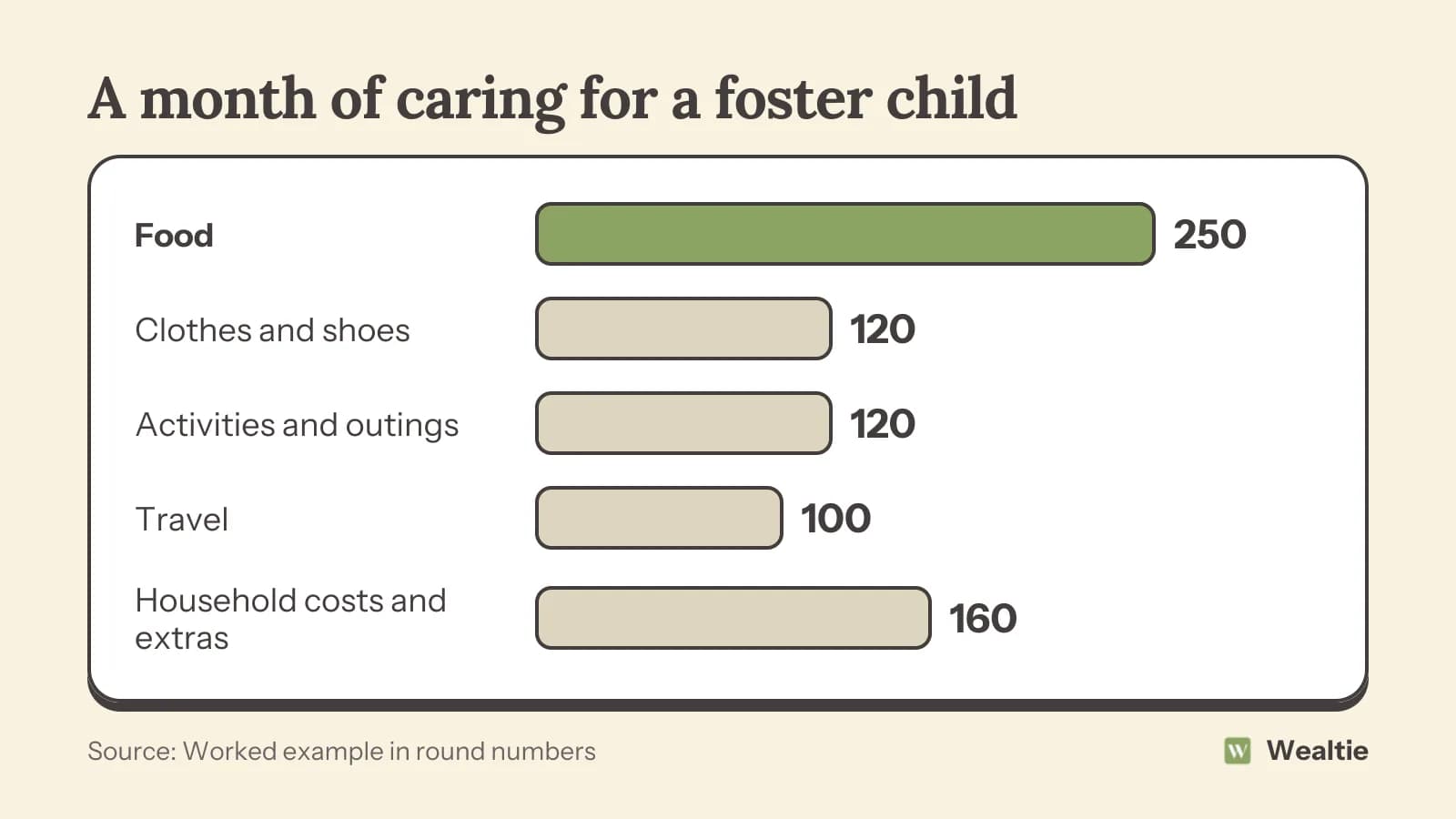
In this example, the child's costs come to 750, leaving 150 for less frequent costs like birthdays, holidays and school trips. Some months will cost more, like when a child arrives with few belongings, starts a new school or has a growth spurt.
What does the allowance usually cover?
Day-to-day costs
Food, toiletries, clothes, pocket money, travel, activities and a share of household bills like energy and water.
School costs
Uniform, equipment and trips are often expected to come from the allowance, though some agencies pay extra.
Birthdays, holidays and festivals
Many agencies pay extra amounts for birthdays, religious festivals and holidays. Check what yours provides.
Additional needs
Children with disabilities or complex needs may receive higher allowances to cover extra costs.
How do you budget as a foster carer?
Keep the allowance separate
A separate account or pot for fostering money makes it easy to see what comes in and goes out for each child.
Track spending by category
Recording what you spend on food, clothes, activities and travel shows whether the allowance is enough and helps when reviewing payments with your agency.
Plan for big costs
Set aside part of each month's allowance for occasional costs, like clothes for a new season, school trips and holidays. A sinking fund approach works well.
Keep receipts and records
Agencies may ask how money has been spent, and good records are useful if a child moves on or for reviews. They also help at tax time.
Ask about extra support
If costs are higher than the allowance, talk to your supervising social worker. There may be one-off payments or support available.
What about tax and benefits?
In some countries, fostering allowances and fees are treated differently for tax, and there may be special rules or reliefs for foster carers. Fostering income can also affect some benefits. Check the rules with your agency or a tax adviser where you live.
How does fostering affect the household budget?
Fostering can change household costs in ways beyond the allowance, like a bigger car, higher energy use or time off work. Some carers reduce their working hours, which affects income. Looking at the full household budget before and during fostering helps you plan. How to make a family budget covers managing a household with children, and how to save money on kids' activities covers keeping activity costs down.
When a child first arrives, costs are often higher than usual. Many children come with very few belongings, so clothes, toiletries, school items and a few familiar comforts may be needed straight away. Some agencies provide a setting-up payment for this. Keeping a small buffer in your fostering pot means you can meet these needs quickly without dipping into household money.
Pocket money and savings for the child are worth planning too. Many agencies expect carers to give age-appropriate pocket money and, in some places, to put aside a small amount for the child's savings. Agreeing these amounts with your agency and recording them helps the child learn about money and gives them something to take with them when they move on. The guide to pocket money by age can help you set amounts.
Finally, look after your own finances. Fostering is demanding, and it's easy to put the child's needs first and neglect your own savings and budget. Keeping your household budget separate and reviewing it regularly helps you sustain fostering over the long term.
How can Wealtie help foster carers?
Log the allowance as income and track the child's spending in their own expense categories, like food, clothes and activities. Setting a monthly budget for fostering costs shows whether the allowance covers them, and keeps clear records for reviews.
Questions people ask
A fostering allowance is money paid to foster carers to cover the cost of caring for a child, like food, clothes, travel and activities.
It varies by country, agency, the child's age and needs. In a worked example, a carer received 900 a month and spent about 750.
Rules vary by country. Some places have special tax rules or reliefs for foster carers, so check with your agency or a tax adviser.
Keep it separate, track spending by category, set aside money for big costs and keep receipts for reviews.
This article is general information, not financial, tax or legal advice. Your situation is your own; check the numbers that apply to you before you act on them.