Budgeting: How to budget for fertility treatment
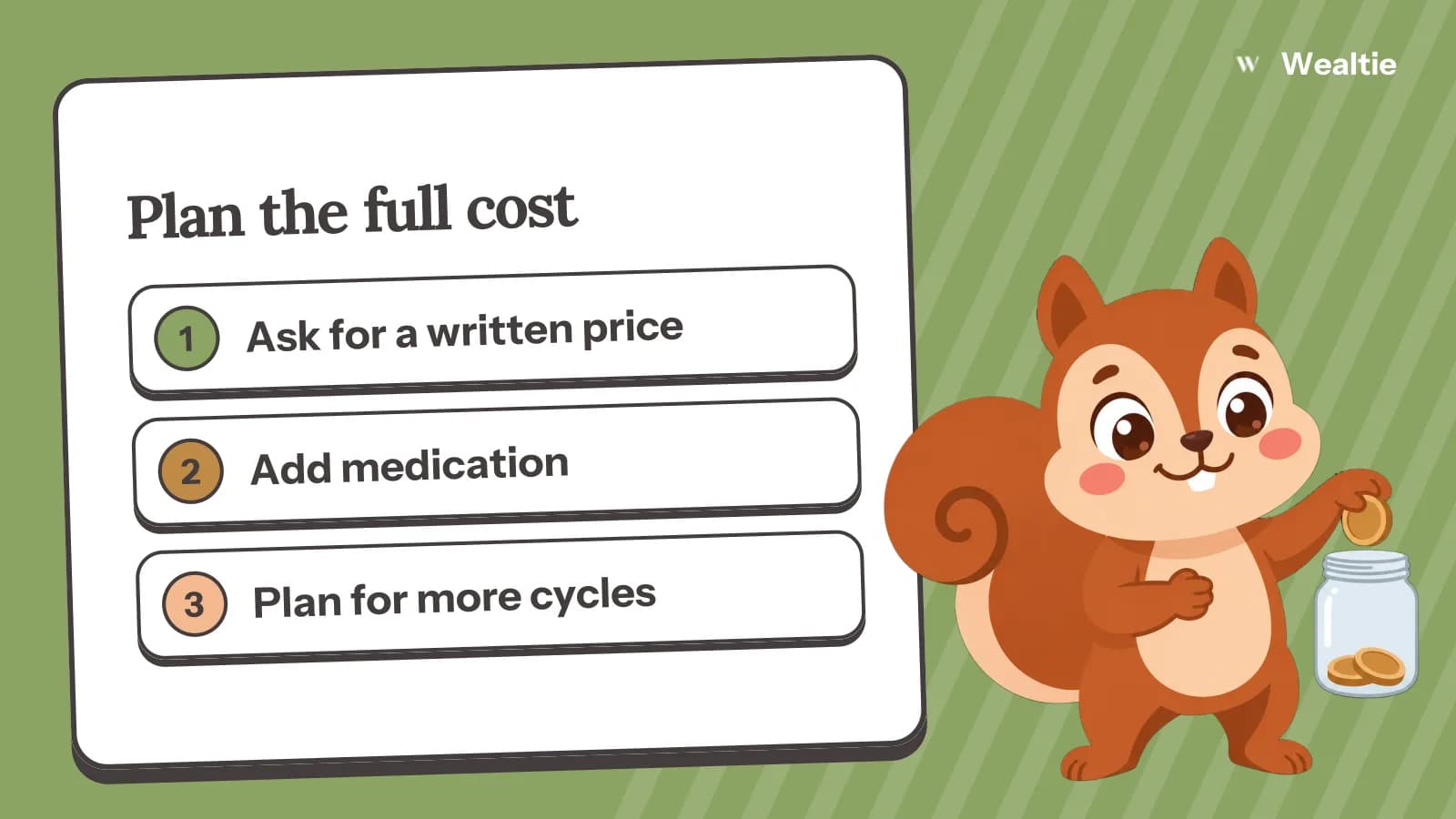
To budget for fertility treatment, ask clinics for a full written price, plan for medication and extras on top of the treatment itself, and consider the possibility of more than one cycle. In a worked example, one cycle costs about 6,000 in total, so knowing the full figure early helps you plan.
 By Wealtie Team · 3 min read
Key takeaways
- A budget for fertility treatment should include medication, tests and extras, not just the headline price.
- In a worked example, one cycle costs about 6,000 in total.
- Ask every clinic for a full written price list, so you can compare fairly.
- Check what public funding, insurance or employer support you may be entitled to before paying privately.
How do you budget for fertility treatment?
Start by finding out the full cost, not just the headline price. Fertility treatment can be emotionally and financially demanding, and costs vary widely between countries, clinics and treatments. Having a clear budget won't make the process easier emotionally, but it can take away some of the uncertainty, so you can focus on your health and each other.
This guide covers the money side only. Your clinic and doctor are the right people for medical questions.
What does fertility treatment cost?
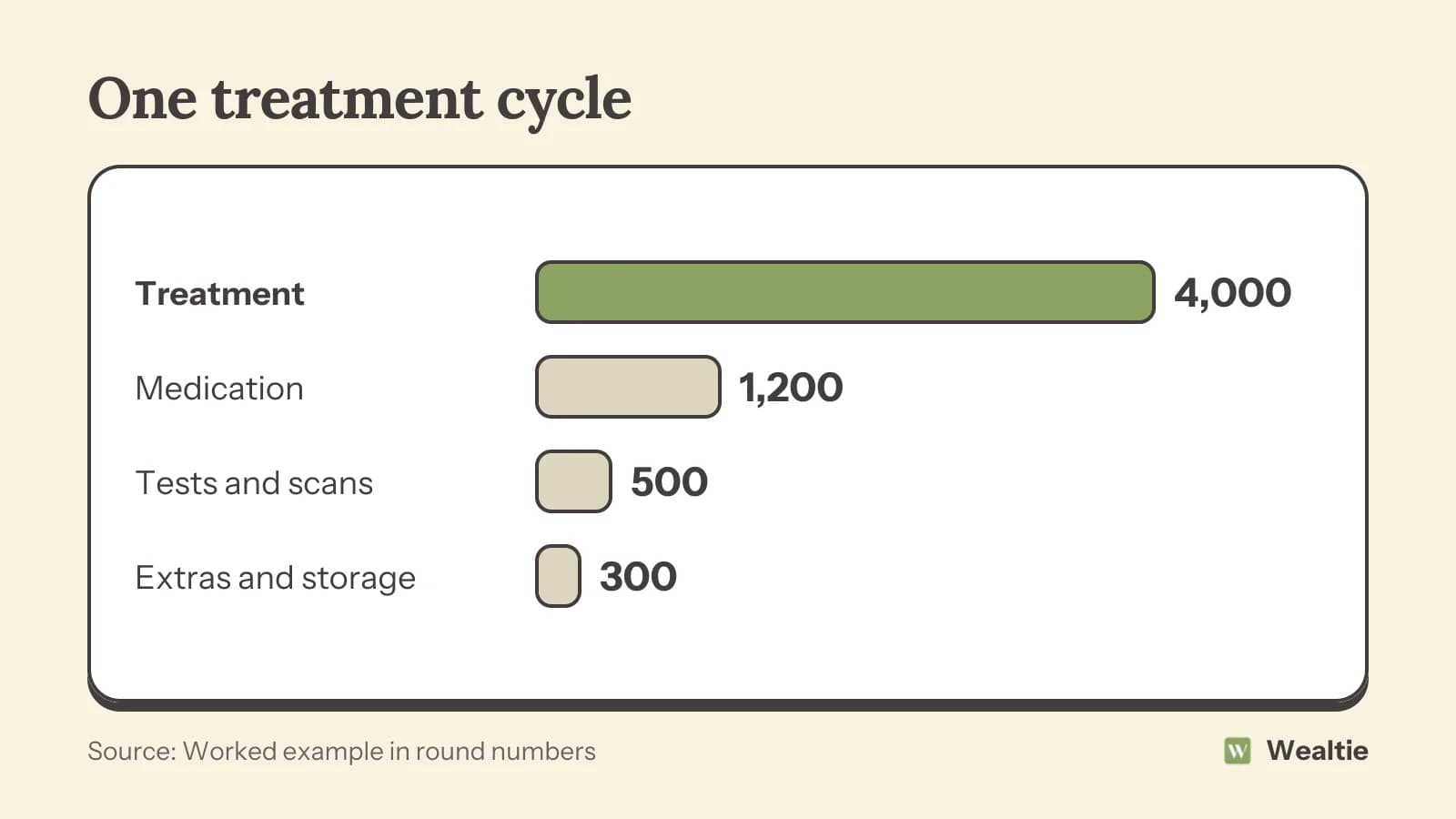
Here's a worked example of one treatment cycle, in round numbers that work in any currency:
| Cost | Amount |
|---|---|
| Treatment | 4,000 |
| Medication | 1,200 |
| Tests and scans | 500 |
| Extras and storage | 300 |
| Total | 6,000 |
Your own costs could be very different, depending on the treatment, where you live and your circumstances. Some people need less treatment, while others need more.
What questions should you ask clinics?
Ask for a full written price list, and compare clinics on the total, not the advertised price. Useful questions include:
- What's included in the quoted price, and what costs extra?
- How much is medication likely to cost, and is it included?
- Are initial consultations and tests included?
- What do optional extras cost, and which do you recommend for us?
- What are the costs for storing embryos, eggs or sperm, and for how long?
- What happens to the cost if a cycle is stopped early?
- Do you offer packages for more than one cycle, and what are the refund terms?
- How does the price change if we need a different treatment part-way through?
Getting answers in writing helps you compare fairly and avoid surprises.
Can you get funding or support?
Check before paying privately. In some countries, public health systems fund some fertility treatment, often with conditions about age, medical history or previous treatment. Some insurance policies or employers cover part of the cost. Ask your doctor, check your insurance and talk to your employer's HR team about what support may be available.
Workplace support
Some employers offer time off for appointments or financial help with treatment. Even where there's no formal policy, it may be worth asking. Knowing your rights to time off helps you plan around work, too.
Should you plan for more than one cycle?
It's wise to think about it. Many people need more than one cycle, and the cost can add up. Knowing your limit before you start, financially and emotionally, makes decisions easier later. Multi-cycle packages can reduce the cost per cycle, but read the terms carefully, especially around refunds.
Talking openly with your partner, if you have one, about how much you're able to spend helps you make decisions together. How to talk about money with your partner has ideas for those conversations.
How do you pay for fertility treatment?
Saving ahead is the safest way, if time allows. Divide your budget by the months before treatment and set that aside each month. A 6,000 cycle saved over a year is 500 a month. Some people use savings, help from family or a specialist loan or payment plan from the clinic. If family offer help, agreeing in writing whether it's a gift or a loan avoids misunderstandings later.
Be careful with borrowing. Loans add interest, and repayments continue whatever the outcome. If you're considering finance, compare the full cost and make sure repayments fit your budget comfortably. Keeping an emergency fund in place, separate from treatment money, protects you if other costs come up. How to build an emergency fund covers the basics.
Other costs to plan for
Treatment often brings extra costs beyond the clinic: travel to appointments, time off work, parking and sometimes counselling or support services. Including these in your budget gives a truer picture. How to budget for medical bills covers planning for health costs more generally.
How do you look after yourself through it?
Be kind to yourself and each other. The financial pressure can add to an already stressful time. Many clinics offer counselling, and support groups connect you with people going through the same thing. If the money side becomes overwhelming, talking to a financial adviser or a debt advice service can help you find a way forward.
How do you track treatment costs in Wealtie?
Add a savings account for treatment and move money into it each month as a transfer, which isn't counted as spending. Log clinic payments, medication and travel in their own expense categories, so you can see the full cost over time. A monthly limit in the budget tracker helps keep everyday spending steady while you save.
Questions people ask
Costs vary widely by treatment and country. In a worked example, one cycle costs about 6,000 including medication, tests and extras.
What the price includes, medication costs, extras, storage fees, multi-cycle packages and refund terms.
In some countries, public health systems, insurance or employers cover part of the cost. Check before paying privately.
Divide your budget by the months before treatment and set that aside. A 6,000 cycle saved over a year is 500 a month.
This article is general information, not financial, tax or legal advice. Your situation is your own; check the numbers that apply to you before you act on them.