Budgeting: Eyelash extensions cost: the real yearly price
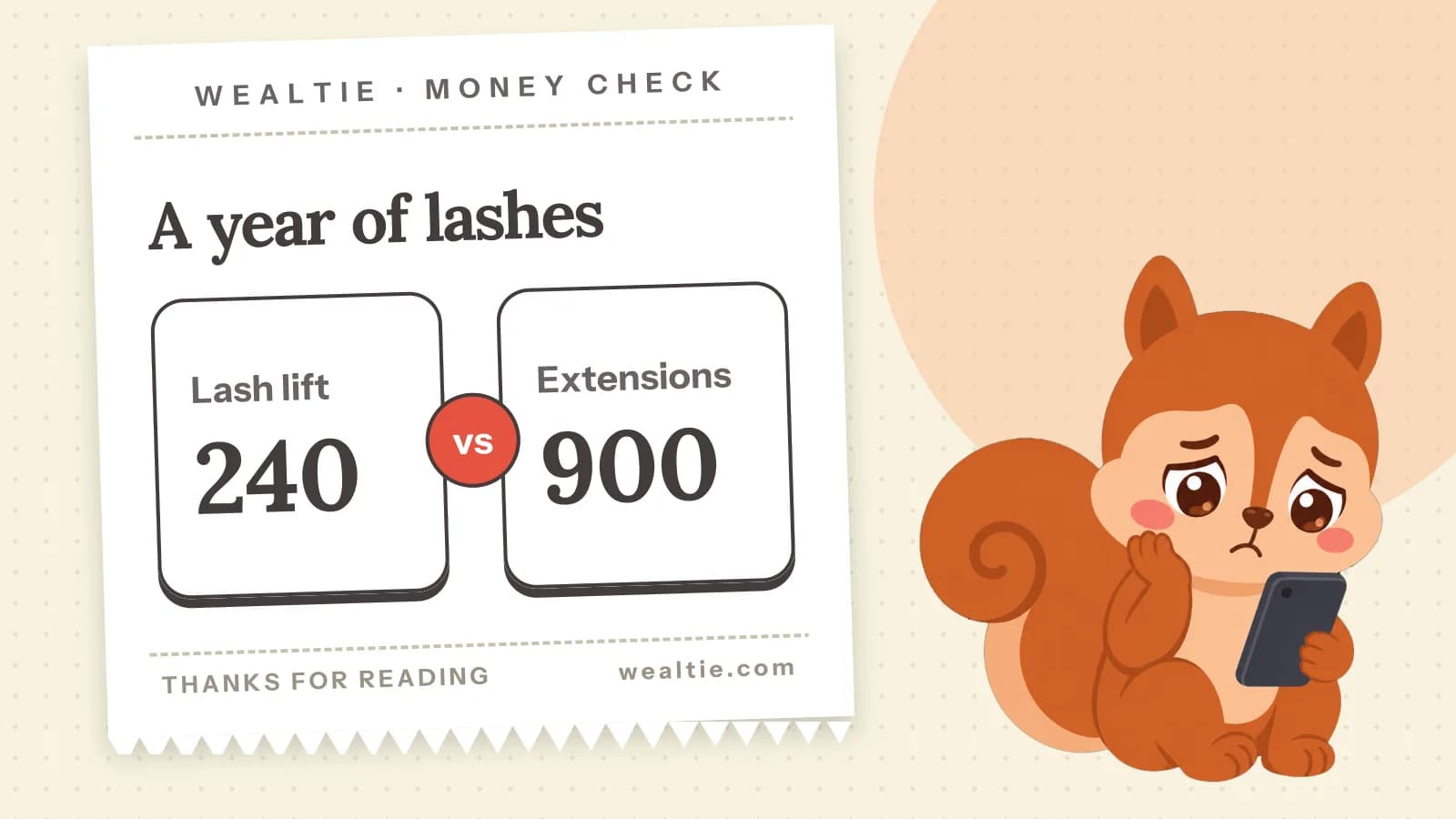
Eyelash extensions cost much more over a year than the first set suggests, since infills are needed every few weeks. In a worked example, a full set plus regular infills costs 900 a year, against 240 for a lash lift every two months.
 By Wealtie Team · 3 min read
Key takeaways
- Eyelash extensions cost far more over a year than the first set.
- Infills every two to three weeks are the main ongoing cost.
- Lash lifts and strip lashes are cheaper alternatives.
- Good aftercare helps extensions last longer between infills.
What do eyelash extensions cost?
Eyelash extensions can save time on makeup and give a striking look, which is why they've become so popular. The catch is that natural lashes shed and grow, so extensions need topping up with infills every two to three weeks. Eyelash extensions cost much more over a year than the first full set suggests.
Here's a worked example of a year of lashes, in round numbers that work in any currency:
| Approach | Yearly cost |
|---|---|
| Strip lashes for occasions | 60 |
| Lash lift every 2 months | 240 |
| Extensions with infills | 900 |
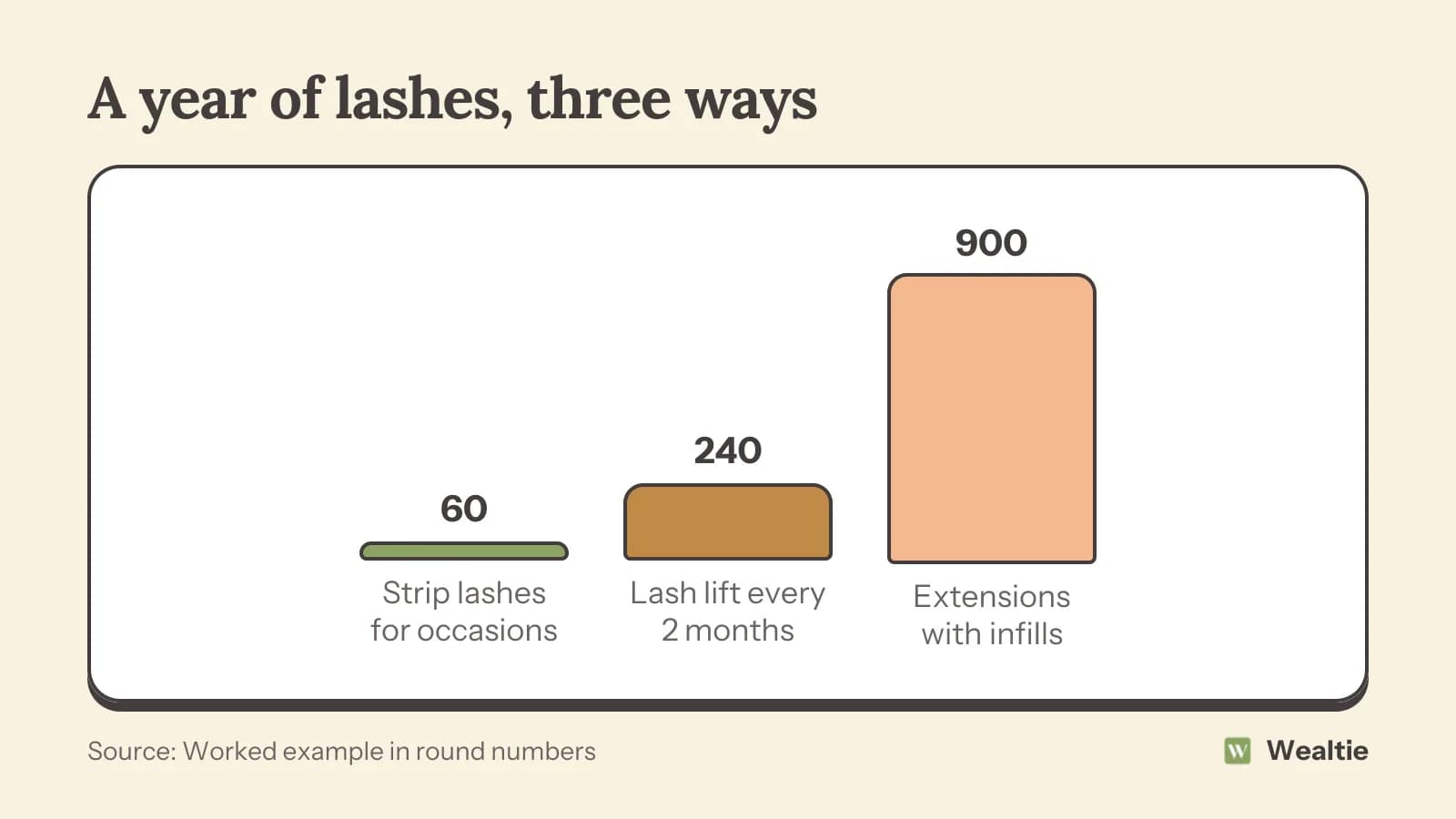
A full set of extensions might cost around 80, with infills around 45 every three weeks. Over a year, including the occasional new set and removal, that comes to about 900. A lash lift, which curls your natural lashes and lasts around six to eight weeks, costs about 240 a year. Strip lashes for special occasions cost very little.
Why do extensions cost so much over time?
Frequent infills
As natural lashes fall out, extensions go with them. Infills every two to three weeks keep them looking full.
New full sets
If you leave it too long between infills, you may need a new full set, which costs more.
Removal
Professional removal is recommended and may cost extra.
Style and technician
Volume and hybrid styles usually cost more than classic sets, and experienced technicians charge more.
How do you make extensions last longer?
Follow aftercare advice
Avoid water and steam for the first day or so, don't rub your eyes and avoid oil-based products near your lashes.
Brush them gently
A clean spoolie brush keeps lashes neat and stops tangling.
Sleep carefully
Sleeping on your back or using a silk pillowcase can reduce lash loss.
Don't pull them out
Picking at extensions can damage natural lashes and mean you need a new set sooner.
What are cheaper alternatives?
Lash lift and tint
A lift curls your natural lashes and a tint darkens them. Results last several weeks with no infills.
Strip lashes
Good-quality strip lashes can be reused several times and are ideal for occasions.
Mascara and lash serums
A good mascara is the cheapest option. Some people use lash serums, though results vary.
Extensions for occasions only
Some people get extensions just for holidays, weddings or special events, then let them grow out.
Are extensions worth it?
For some people, extensions save time every morning and boost confidence, which can make them worth the cost. That's a fine choice if it fits your budget. The important thing is knowing the real yearly cost, so it's a decision you make on purpose. How to save money on personal care covers other beauty costs, and cost per use helps judge value.
Is it safe?
Choose a trained, qualified technician who uses good hygiene, and ask for a patch test if you have sensitive skin or allergies. Poorly applied extensions can damage natural lashes, which can cost more to fix in the long run.
Choosing a style that suits your lifestyle can save money. Very dramatic volume sets tend to need more maintenance and cost more per infill, while a natural classic set may last better between appointments and cost less. Talking to your technician about how you'll wear them, and how often you can come back, helps them recommend a set that fits your budget.
It's also worth giving your natural lashes a break now and then. Wearing extensions constantly for years can stress natural lashes. A few weeks off between sets, perhaps switching to a lash lift or mascara, lets them recover and gives your budget a breather too.
If you're booking extensions for a holiday, remember that swimming, sun cream and humidity can shorten their life. Planning an infill just before you go and accepting that they may not last as long helps set realistic expectations.
Some salons offer loyalty schemes or packages of infills at a lower price. These can help if you're committed to regular appointments, but only buy a package you're sure to use before it expires.
Finally, keep track of how often you go. Many people book infills more often than they planned, and seeing the real number can help you decide what's worth keeping.
Ask about the price of a new full set versus an infill before you book. If you have left it a long time, an infill may not be possible, so knowing the cost upfront avoids surprises.
How can Wealtie help you track beauty costs?
Log lash appointments in a personal care expense category, and add regular infills as a recurring transaction if you book them on a schedule. Seeing the monthly cost helps you decide whether extensions, lifts or occasional strips suit your budget best.
Questions people ask
In a worked example, a full set with infills every three weeks cost about 900 a year.
Usually every two to three weeks, as natural lashes shed and take the extensions with them.
Yes. In a worked example, a lash lift every two months cost about 240 a year, compared with 900 for extensions.
Follow aftercare advice, brush lashes gently, sleep on your back or use a silk pillowcase and avoid oil-based products.
This article is general information, not financial, tax or legal advice. Your situation is your own; check the numbers that apply to you before you act on them.