Budgeting: The endowment effect: why we overvalue what we own
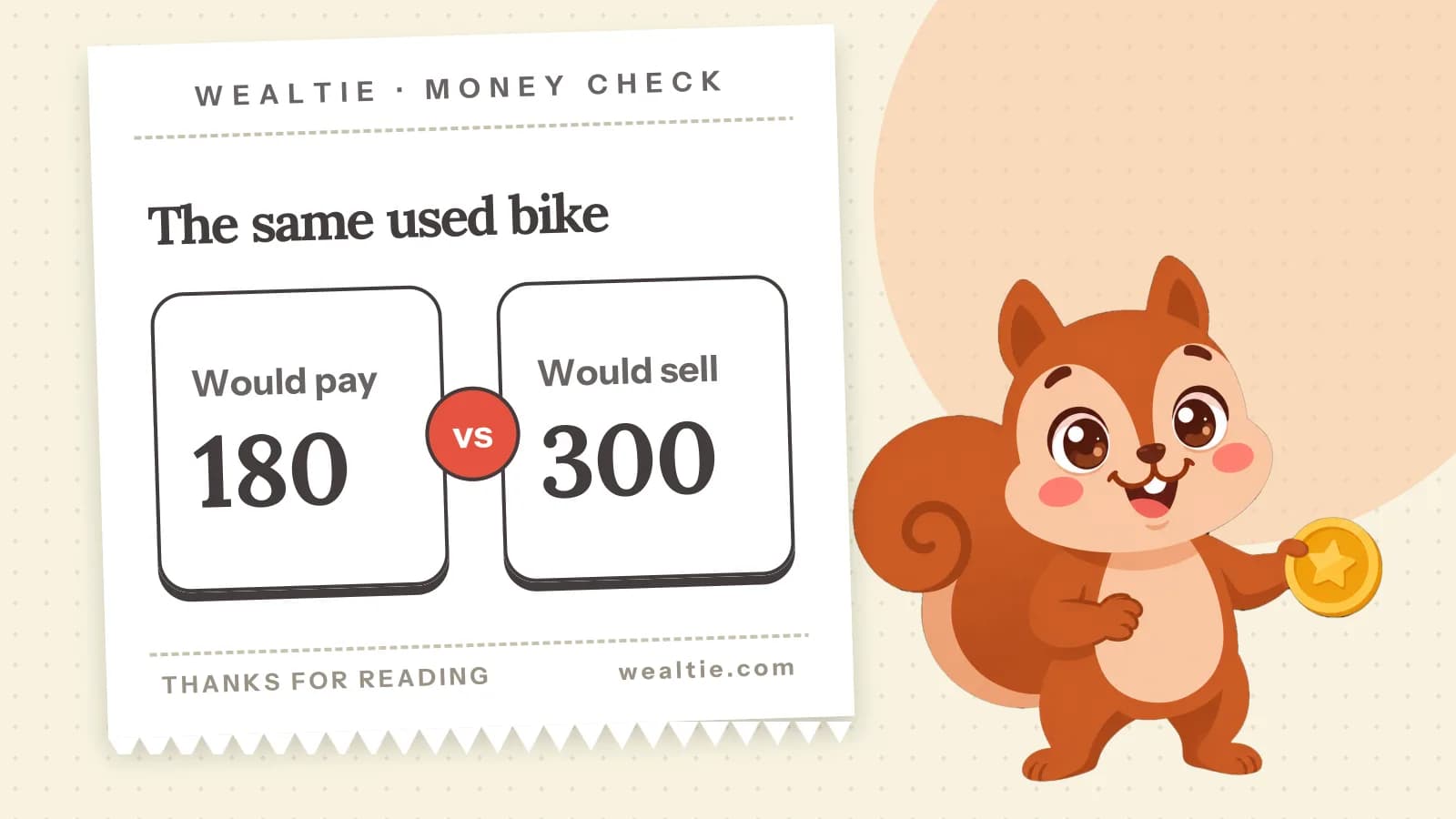
The endowment effect is our habit of valuing things more once we own them, often asking far more to sell something than we'd pay to buy it. You might ask 300 for a used bike you'd only pay 180 for yourself.
 By Wealtie Team · 3 min read
Key takeaways
- The endowment effect makes things feel more valuable once they're yours.
- It leads to overpricing when selling and holding on to clutter.
- Free trials and try-at-home offers use it to make cancelling feel like a loss.
- Asking what you'd pay for an item today gives a fairer value.
What is the endowment effect?
The endowment effect is the tendency to value something more just because you own it. The economist Richard Thaler named it, and in well-known experiments by Thaler, Daniel Kahneman and Jack Knetsch, people who were given a mug asked for much more to sell it than other people were willing to pay for the same mug. Nothing about the mug changed. Owning it changed how much it seemed to be worth.
Part of the reason is that giving something up feels like a loss, and losses feel bigger than equal gains. Memories and effort play a part too: the bike you rode for years or the chair you picked carefully feels special to you, even if a buyer sees an ordinary used item.
How does it show up in real prices?
Here's a worked example in round numbers that work in any currency. You own a used bike in good condition. If you saw the same bike for sale, you'd happily pay 180 for it. But when it comes to selling your own, 300 feels like the fair price.
| The same bike | Price |
|---|---|
| What you'd pay for it | 180 |
| What you'd sell it for | 300 |
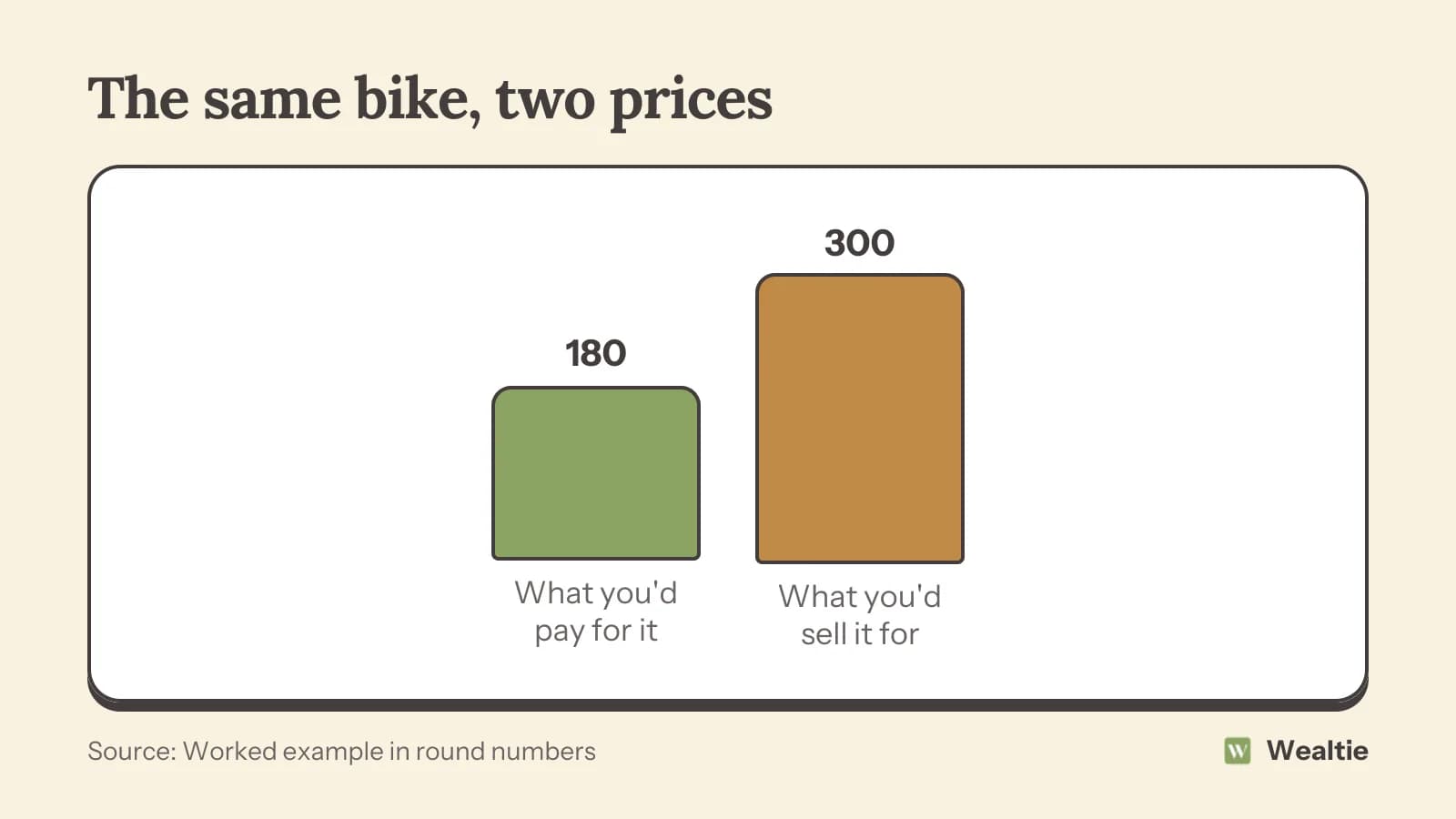
Buyers aren't attached to your bike, so they see it at 180. If you list it at 300, it sits unsold, you lower the price in stages and you may end up keeping it. The gap between those two numbers is the endowment effect at work.
How does the endowment effect cost you money?
Overpricing when you sell
Asking too much means things don't sell, so you keep paying to store or insure them, or miss the best time to sell. How to sell things you don't use covers pricing to sell.
Holding on to clutter
It's easy to keep things you don't use because letting go feels like losing something. That can mean paying for a bigger home or a storage unit for items you'd never buy again.
Free trials and try-at-home offers
Sellers know that once something is in your hands, you'll value it more. Free trials, try-before-you-buy clothes and generous return windows all use this. After a month with a service, cancelling feels like losing something you have, not avoiding something new. How to cut subscription costs covers reviewing what you pay for.
Keeping investments or plans you'd never choose today
People often hold on to old phone plans, insurance policies or accounts because they already have them. Switching feels like a loss even when a better deal is available.
Is it the same as the sunk cost fallacy?
They're related but different. The sunk cost fallacy is about continuing because of what you've already spent. The endowment effect is about valuing what you own more than you'd pay for it. Both make it harder to let go of things that no longer serve you, and both are easier to manage once you know the name.
How do you get past the endowment effect?
Ask the buyer's question
Before you price something to sell, ask what you'd pay for it if a stranger were selling it. That figure is closer to what buyers will offer.
Check what similar items sold for
Look at sold listings, not asking prices. They show what people paid, without anyone's attachment.
Ask if you'd buy it today
For clutter, plans and subscriptions, ask if you'd buy this again today at today's price. If the answer is no, keeping it is the endowment effect talking.
Set a reminder before trials end
When you start a free trial, put the end date in your calendar and decide then, before the habit forms.
Separate the memory from the object
A photo can keep the memory of a well-loved item without keeping the item itself.
Moving house is a good time to test this. Before packing each box, ask if you'd pay to move the item, store it and find a place for it in your new home. Many people find that much of what they own doesn't pass that test, and selling or giving it away before the move cuts both clutter and removal costs.
How can Wealtie help you see the real value?
Log what you earn from selling things as income, and what you spend on storage, renewals and trials in their own expense categories. Adding subscriptions as recurring transactions shows what keeping them costs each month, which makes it easier to decide what's worth keeping.
Questions people ask
The endowment effect is the tendency to value something more once you own it, so you'd ask more to sell it than you'd pay to buy it.
The economist Richard Thaler named it, and experiments by Thaler, Daniel Kahneman and Jack Knetsch showed it using coffee mugs.
It makes people overprice their own things. Checking what similar items sold for, not what they're listed at, gives a fairer price.
Once you've used something for a while, cancelling feels like losing it. Setting a reminder before the trial ends helps you decide calmly.
This article is general information, not financial, tax or legal advice. Your situation is your own; check the numbers that apply to you before you act on them.