Budgeting: How to rebudget when your children leave home
When your children leave home, many costs fall, but some rise, like supporting them at university or helping with a first home. In a worked example, a couple free up about 500 a month, and deciding where it goes stops it vanishing into everyday spending.
 By Wealtie Team · 3 min read

Key takeaways
- When children leave home, some costs fall and others, like support for them, can rise.
- In a worked example, a couple free up about 500 a month.
- Decide where the freed-up money goes, or it tends to disappear into spending.
- It's a good moment to review your home, insurance and retirement plans.
What happens to your budget when children leave home?
Some costs fall, some rise, and the overall picture changes. When children leave home for university, work or a home of their own, grocery bills shrink, activity costs end and the house often feels very different. But many parents keep helping with rent, study costs, phone bills or a first home. Rebudgeting when your children leave home helps you see what's changed and use the difference well.
What costs fall?
Here's a worked example for a couple whose youngest child has moved out, in round numbers that work in any currency:
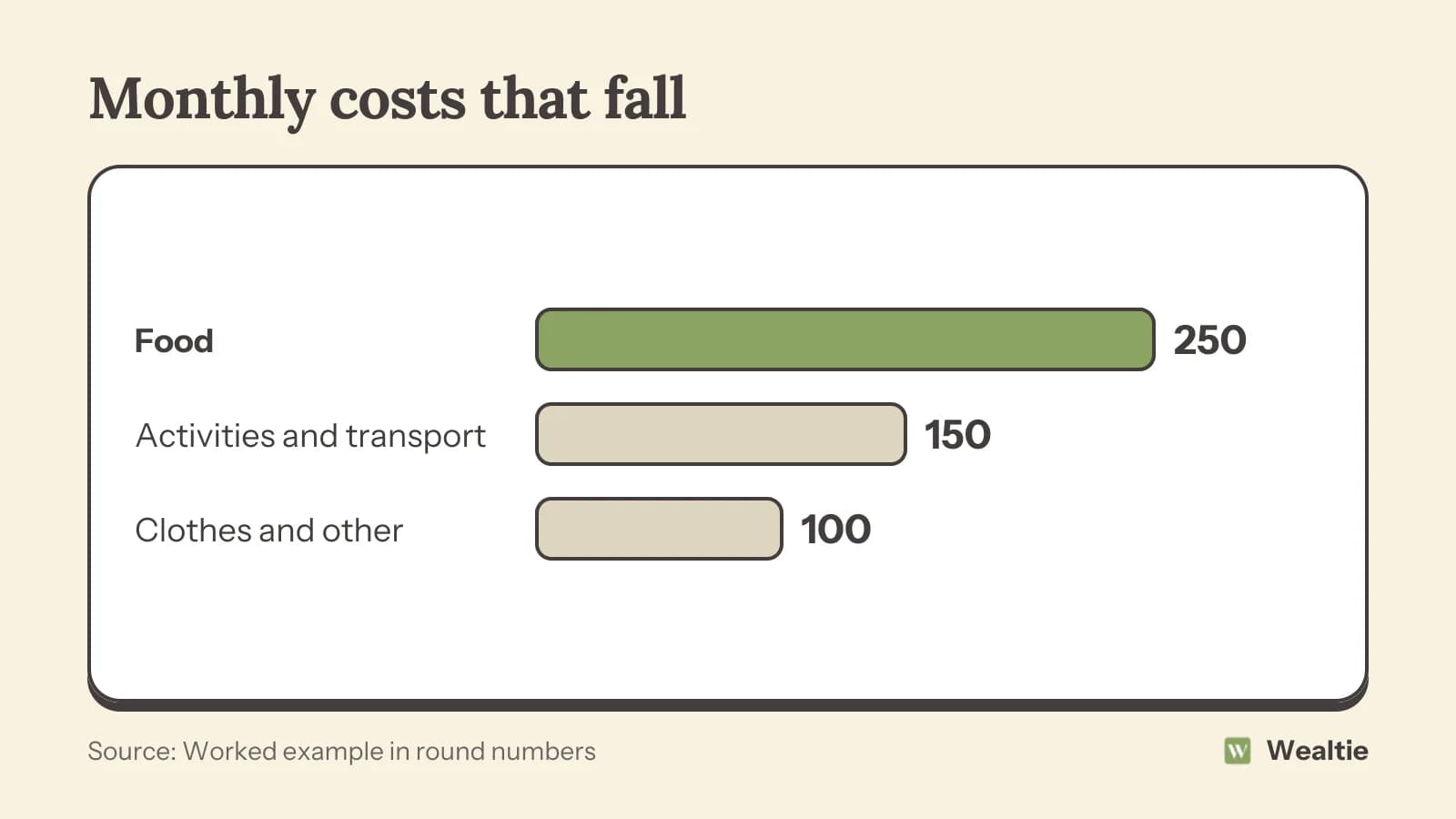
In this example, food, activities, transport and clothes fall by about 500 a month. Energy and water may fall a little too. Your own figures depend on how much your children cost before and how independent they are now. Tracking a couple of months after they leave shows the real change, rather than a guess.
What costs might rise?
Supporting adult children is common. You might help with:
- University costs or living expenses
- Rent or a deposit for a first home
- Phone bills or insurance for a while
- Travel home for visits
- Weddings or other big events later
In the worked example, the couple decide to give their child 150 a month while they study, so the net change is about 350 a month. It's also normal to feel the change emotionally, and spending can creep up as a way to fill the gap. Deciding how much support to give, and for how long, makes it easier to plan and fairer between siblings. Writing down what you've agreed helps everyone remember, and gives you a point to review it.
Children who come back
Many young adults move back home for a while. If that happens, agreeing a contribution towards household costs is reasonable and teaches good habits. How much rent to pay your parents covers how families handle this.
Where should the freed-up money go?
Give it a job straight away, or it tends to drift into everyday spending. Common choices include:
- Retirement saving, especially if you're behind
- Paying off the mortgage or other debts
- An emergency fund, if it needs topping up
- Travel and experiences you've put off
- Helping children with a specific goal
Splitting it between several goals works well. Lifestyle creep explains why money that isn't planned often disappears. Setting up an automatic transfer on payday for the freed-up amount is the simplest way to make sure it reaches your goals.
Should you downsize?
It's a good time to ask. A smaller home can mean lower running costs and release money for retirement. But moving has costs, and many parents want space for visits and grandchildren. Weigh the savings against what matters to you. How to downsize to save money covers the pros and cons.
What else should you review?
Use the change as a moment to look at your finances as a whole. Check car and home insurance, since needs may have changed. Cancel family subscriptions you no longer need. Review life insurance, which may need less cover once children are independent. And look at your retirement plans with fresh eyes. How to budget in retirement helps you picture the next stage. If you'd like more time together, reducing work hours may now be affordable, and the freed-up money can help bridge the difference.
Talk as a couple
An empty nest is a big change for many couples. Talking about what you want the next years to look like, from travel to work to where you live, helps shape the budget around shared goals. Many couples find new hobbies, travel or volunteering, and budgeting for them gives the next chapter a clear shape.
How do you keep supporting children without overspending?
Set clear amounts and timeframes, and be honest about what you can afford. Helping a child with a deposit is generous, but not if it leaves you short in retirement. Some parents prefer to give a one-off sum or help with a specific cost rather than ongoing support. How to save money for your child covers saving for their future.
How do you rebudget with Wealtie?
Compare your expense categories over the months before and after your children leave to see what's changed. Set new limits in the budget tracker, and add savings accounts for each goal you choose, moving money into them as transfers, which aren't counted as spending.
Questions people ask
In a worked example, a couple free up about 500 a month in food, activities and other costs. Your figure depends on your household.
Many parents do for a while. Set clear amounts and timeframes that don't put your own retirement at risk.
Give it a job, like retirement saving, paying down the mortgage, an emergency fund or travel.
It can lower costs and release money, but weigh moving costs and the space you want for visits.
This article is general information, not financial, tax or legal advice. Your situation is your own; check the numbers that apply to you before you act on them.