Budgeting: How to plan a day trip on a budget
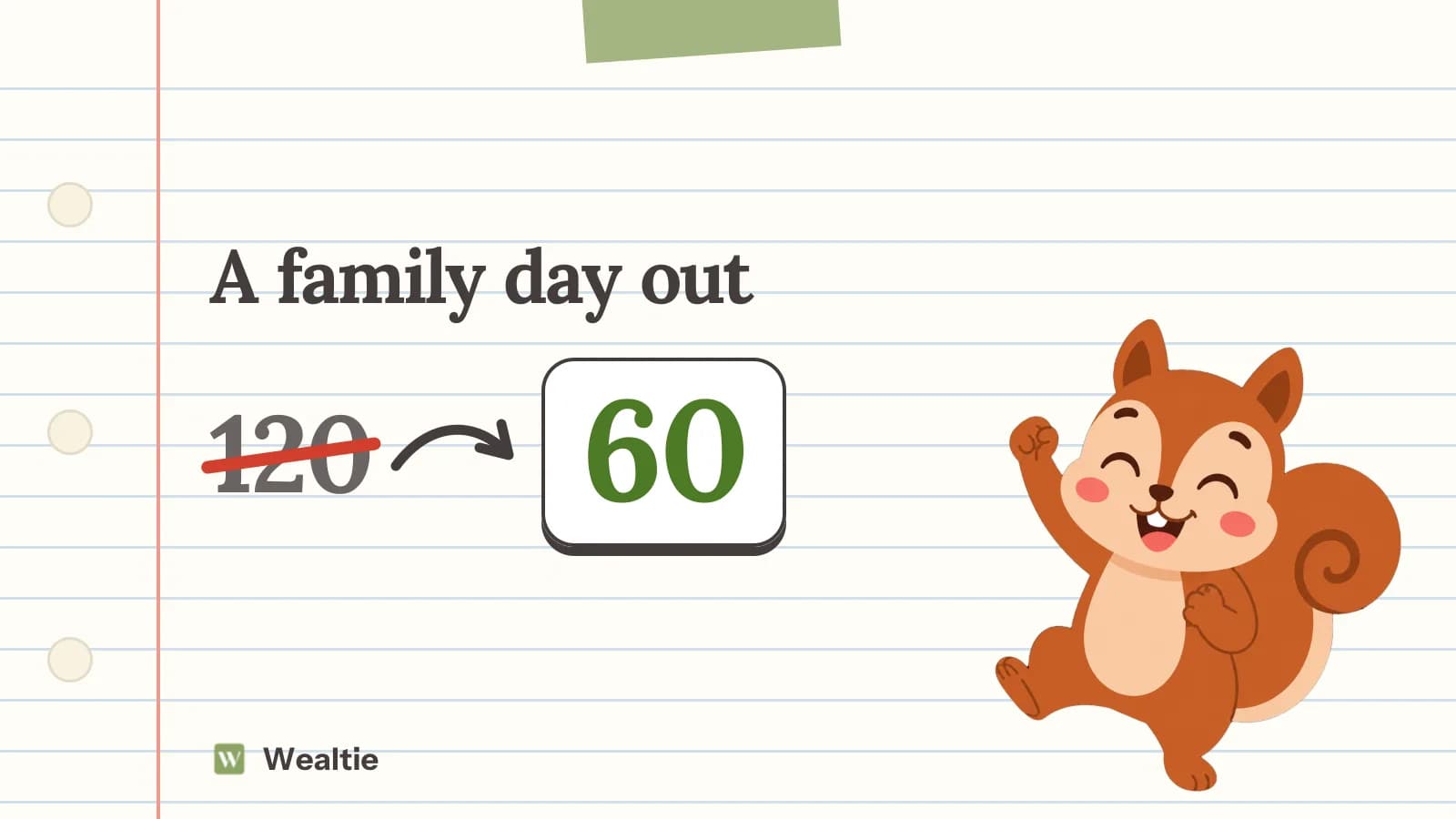
A day trip on a budget means planning travel, food, entry fees and extras before you go. In a worked example, a family day out costs about 120, but taking a picnic, booking travel ahead and choosing free attractions brings it down to about 60.
 By Wealtie Team · 3 min read
Key takeaways
- A day trip on a budget means planning travel, food, entry fees and extras.
- In a worked example, a family day out falls from 120 to about 60 with a few changes.
- A picnic and free attractions are the biggest savings.
- Booking travel ahead and travelling off-peak can cut costs a lot.
How do you plan a day trip on a budget?
Decide where you're going, then plan each cost before you leave. Writing a short list, with travel, food and anything you'll pay for, takes five minutes and shows the likely total before you set off. A day trip can be a lovely break from routine, whether to the seaside, a city, a park or a castle. But travel, food, entry fees and souvenirs can add up quickly, especially for a family. A little planning means you can enjoy the day without worrying about the cost. Deciding on a total budget before you leave, and sharing it with everyone going, keeps the day relaxed.
What does a day trip cost?
Here's a worked example for a family of four, in round numbers that work in any currency:
| Cost | Before planning | After planning |
|---|---|---|
| Travel | 40 | 25 |
| Food | 45 | 15 |
| Entry fees | 30 | 15 |
| Extras | 5 | 5 |
| Total | 120 | 60 |
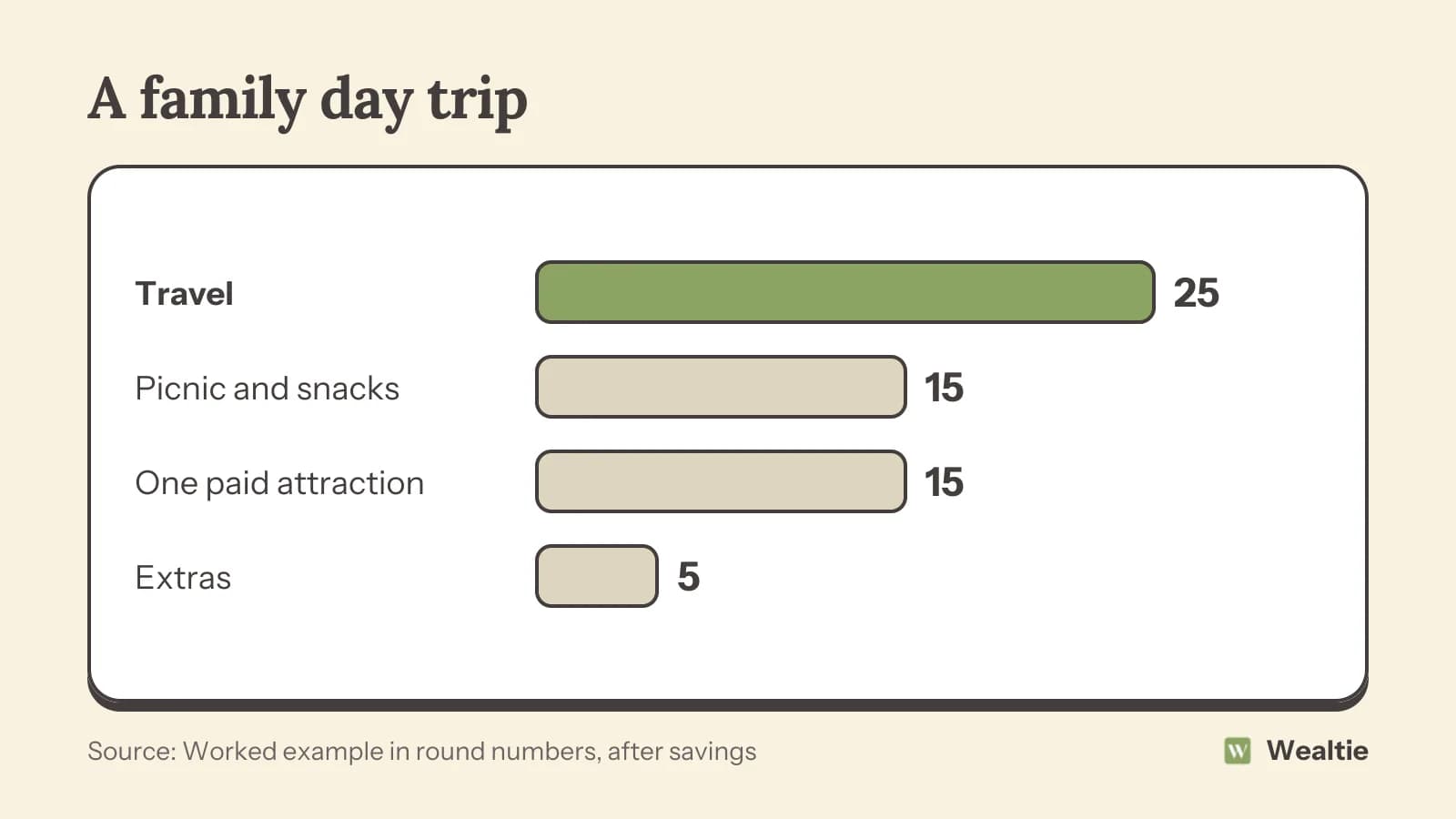
In this example, a picnic, advance train tickets and choosing one paid attraction instead of two halve the cost. Your own figures depend on where you go and how you travel. Even halving the cost of one or two parts of the day makes a noticeable difference over several trips a year.
How do you save on travel?
Book ahead and travel off-peak. Train and coach tickets are often much cheaper booked in advance or outside rush hour. Family and group tickets, railcards and day passes can cut costs further. If you drive, share the car with friends or family to split fuel and parking. How to save money on train tickets has more tips, and the road trip budget covers longer drives.
Go somewhere close
The nearer the destination, the less you spend on travel. Many people have beaches, forests, towns and attractions within an hour that they've never visited. Exploring nearby first is a good way to keep days out frequent and affordable.
How do you save on food?
Take a picnic. Food and drinks bought on a day out are often expensive, especially at attractions. Packing sandwiches, snacks, fruit and refillable water bottles can save a lot. If you want a treat, plan one, like ice creams or chips by the sea, rather than buying snacks all day. A cool bag with frozen drinks keeps food fresh on hot days.
How do you save on entry fees?
Mix free and paid attractions. Many museums, galleries, parks, beaches, nature reserves and historic sites are free. If you visit a paid attraction, book online for discounts, look for family tickets and check for offers with partners like supermarkets or rail companies. Some attractions have cheaper times, like late afternoon. Arriving early also means fewer crowds, so you see more in less time.
Annual passes and memberships
If you'll visit the same attraction or group of sites several times a year, a pass or membership can pay for itself. Count only the visits you'll make. Some memberships also include free parking or discounts in cafés, which add to the value.
What free day trips are there?
Plenty:
- Beaches, lakes and rivers
- Country parks and forests
- Free museums and galleries
- Walking routes and nature trails
- Markets and festivals
- Historic towns to explore on foot
The staycation budget has more ideas for days out close to home. Checking the weather and having a free indoor backup, like a museum, avoids a costly last-minute change of plan.
Make it an adventure
The best day trips often come from exploring rather than spending. A treasure hunt, a nature spotting list or a challenge to find the best view keeps children engaged without paying for attractions. For adults, a walking route with a nice café at the end can feel like a proper outing for very little.
How do you handle extras?
Set a small amount for souvenirs and treats before you go, especially with children. Giving each child a little spending money lets them choose and avoids constant requests. How to save money on a family holiday has more ideas for keeping family trips affordable. Letting children help plan the day, including the budget, makes them more willing to stick to it.
How do you track day trips in Wealtie?
Log travel, food and entry fees in a leisure line in your expense categories, so you can see what days out cost. A monthly limit in the budget tracker helps you plan a few trips a year without stretching your budget. Setting aside a small amount each month for days out means they're ready when the weather's good.
Questions people ask
Book travel ahead, travel off-peak, take a picnic, mix free and paid attractions and set a small amount for extras.
In a worked example, about 120, or about 60 with a picnic, advance tickets and one paid attraction.
Beaches, country parks, forests, free museums, walking routes, markets and historic towns.
If you'll visit several times a year, they can pay for themselves. Count only the visits you'll make.
This article is general information, not financial, tax or legal advice. Your situation is your own; check the numbers that apply to you before you act on them.