Budgeting: How to save money on a family holiday without making it miserable
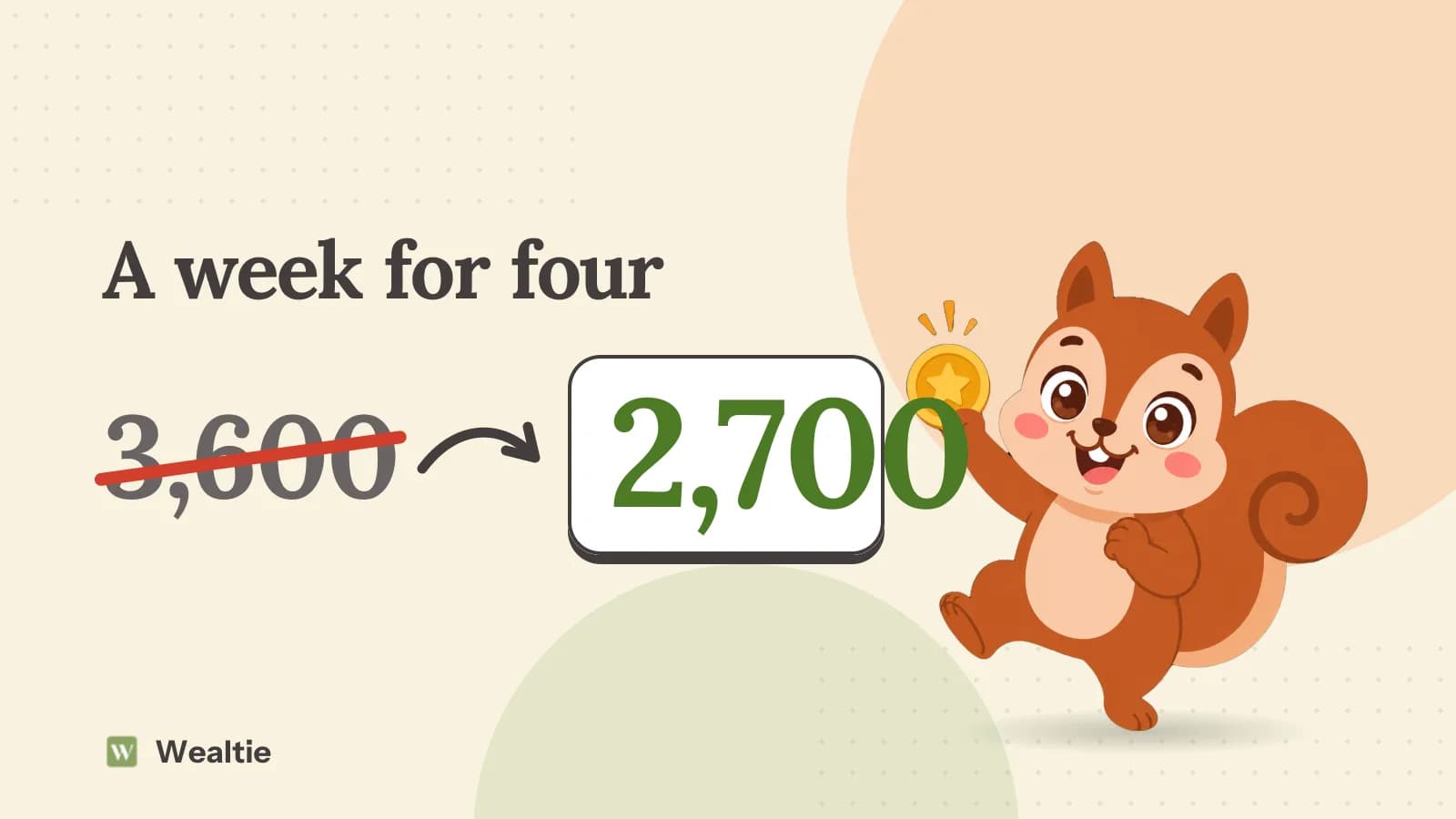
To save money on a family holiday, look at the biggest lines first: when you travel, where you stay and how you eat. In a worked example, a week for four drops from 3,600 to 2,700 by changing those three.
 By Wealtie Team · 3 min read
Key takeaways
- When you travel, where you stay and how you eat usually decide most of a family holiday's cost.
- In a worked example, a week for four drops from 3,600 to 2,700 by changing those three.
- Self-catering for breakfast and some dinners cuts food costs without giving up meals out.
- A daily budget for activities and treats stops small costs adding up unnoticed.
How do you save money on a family holiday?
Start with the big lines, then look at the small ones. Travel, accommodation and food make up most of what a family holiday costs, so a change there saves far more than skipping an ice cream. The aim is a holiday you'll all enjoy at a price that doesn't follow you home. Ask everyone, children included, what they're most looking forward to, and protect those things in the plan.
Where does the money go?
Here's a week for a family of four, in round numbers that work in any currency, before and after three changes:
| Line | Before | After |
|---|---|---|
| Travel | 1,400 | 1,100 |
| Accommodation | 1,400 | 950 |
| Food | 600 | 450 |
| Activities | 200 | 200 |
| Total | 3,600 | 2,700 |
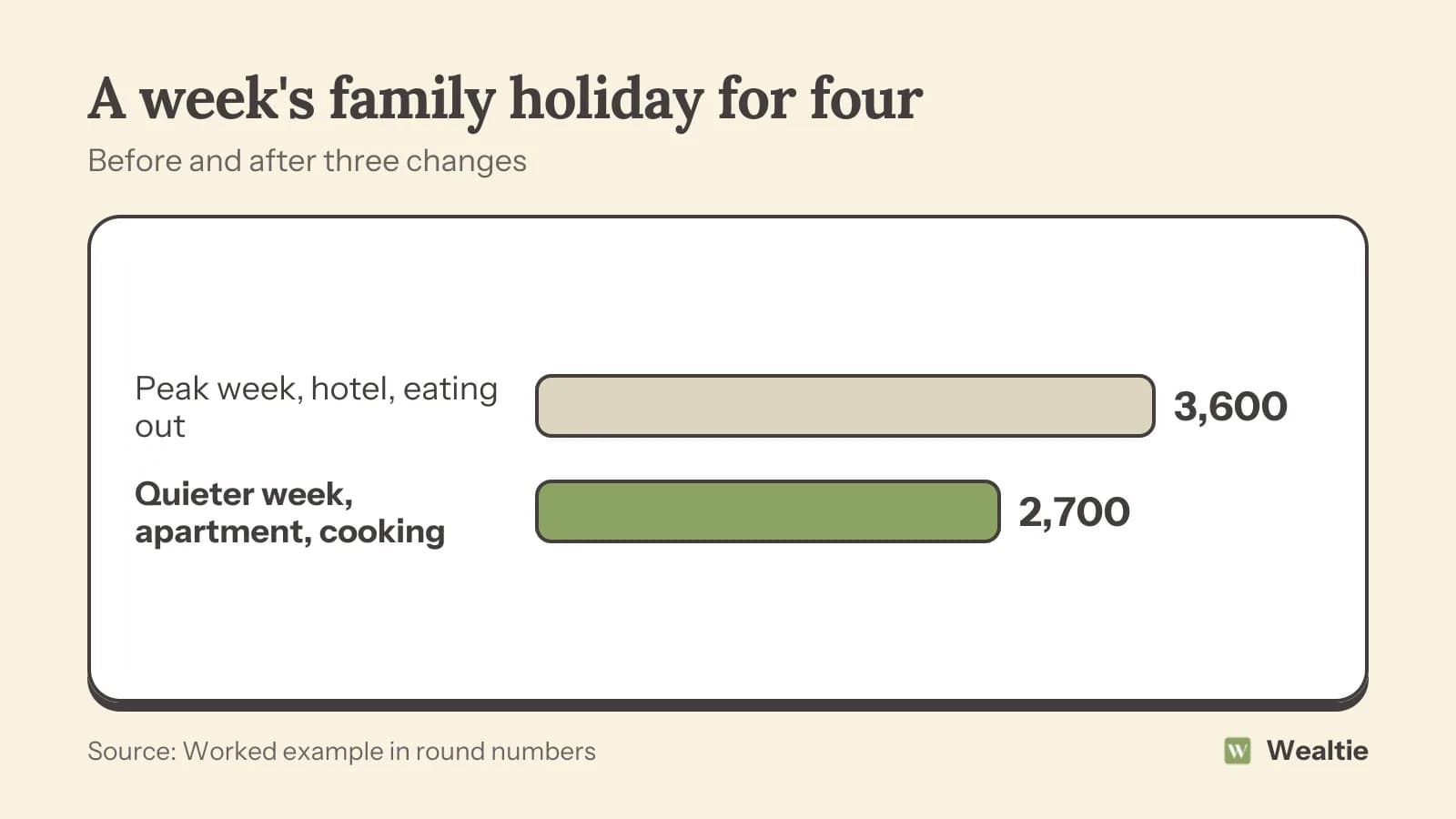
The changes: travelling in a less busy week, renting an apartment instead of a hotel, and cooking breakfast and some dinners. Activities stayed the same, because those are often the point of the trip. Driving instead of flying can cost less for a family of four once airport transfers and bag fees are counted, so compare both.
How much do dates matter?
A lot. Prices for flights and accommodation usually rise during school holidays, when every family wants to travel at once. If your children are at school, you're likely tied to those dates, but there's still room to move:
- The first or last days of a holiday period are sometimes cheaper than the middle
- Flying midweek can cost less than at weekends
- Shorter breaks during less popular holidays can cost much less than the summer peak
Check prices for a few different weeks before deciding, since one week's difference can change the total noticeably. Some families consider travelling during term time. Check your school's rules first, since in some countries it isn't allowed without permission and can lead to a penalty.
Where should you stay?
Somewhere with a kitchen, if the family will use it. An apartment or holiday home can cost less than two hotel rooms, and cooking even some meals saves a lot. Campsites, cabins and caravan parks are often far cheaper again, if that suits you.
Look for a place with a washing machine, which means packing less and can save on bag fees if you're flying. Look at location too. Somewhere a bit further from the busiest spot, with good transport, can cost less and be quieter, which helps with young children.
How do you keep food costs down?
Eat breakfast in, take a picnic lunch on some days and eat out for the meals you'll enjoy most. Food on holiday is where small amounts add up: snacks, drinks, ice creams, a coffee for every adult at every stop.
A first-day supermarket shop for breakfast, snacks and drinks pays for itself quickly. Letting children choose one treat a day from a set list cuts down the negotiations. Bring refillable water bottles.
How do you budget for activities and treats?
Set a daily amount for the extras, say 50 a day for the family, and let everyone know. Older children can have their own small amount to spend however they choose, which cuts down the number of requests and teaches them to choose.
Look for free things first: beaches, parks, walks, free museums and local events. Many places offer family tickets or passes that cost less than individual entries, so check before you go. Some big attractions are cheaper booked online in advance than at the gate.
How do you pay for it without debt?
Save in advance. Decide the total early, divide by the months until you go and move that amount each month. A 2,700 holiday saved over nine months is 300 a month. How to save for a vacation has the steps.
Agree the total with your partner first and write down what's included, so the holiday doesn't grow once you're there. Book refundable options where you can, and buy travel insurance when you book. With children, plans change more often than you'd hope.
How do you plan a family holiday in Wealtie?
Make a Holiday category and log costs there as you go, so the trip's full cost is in one place. Your expense categories show the total, and a monthly limit in the budget tracker keeps the rest of the month on track. If you're saving with a partner, a shared account lets you both see the holiday money, with the account owner on Pro and the other person on any plan.
Questions people ask
Change the big lines first: travel in a less busy week if you can, stay somewhere with a kitchen and cook some meals. Set a daily budget for activities and treats.
It varies widely by destination and season. A worked example of a week for four comes to 3,600, or 2,700 with a few changes.
Often, because one apartment can cost less than two hotel rooms and a kitchen lets you cook some meals.
Set a daily amount for treats and activities, look for free things to do first and give older children their own small budget.
This article is general information, not financial, tax or legal advice. Your situation is your own; check the numbers that apply to you before you act on them.