Budgeting: Damp proofing cost: fixing damp without overpaying
Damp proofing cost depends on the type of damp, and finding the real cause first can save thousands. In a worked example, fixing a leaking gutter costs 200, while an unneeded damp-proof course could cost 3,000.
 By Wealtie Team · 3 min read

Key takeaways
- Damp proofing cost depends on the type and cause of the damp.
- Many damp problems come from condensation or leaks, which are cheap to fix.
- Get an independent survey before paying for expensive treatment.
- Fix the cause before replastering or redecorating.
How much does damp proofing cost?
Damp can cause mould, peeling paint, musty smells and damaged plaster, and it's worth dealing with quickly. But damp proofing cost varies enormously depending on what's causing it. Some fixes cost very little, while specialist treatments can cost thousands. The most important step is finding the real cause before paying for any treatment, since the wrong fix wastes money and leaves the problem in place.
Here's a worked example of common fixes, in round numbers that work in any currency:
| Fix | Cost |
|---|---|
| Ventilation and extractor fan | 300 |
| Gutter or downpipe repair | 200 |
| Repointing a wall | 1,500 |
| Damp-proof course | 3,000 |
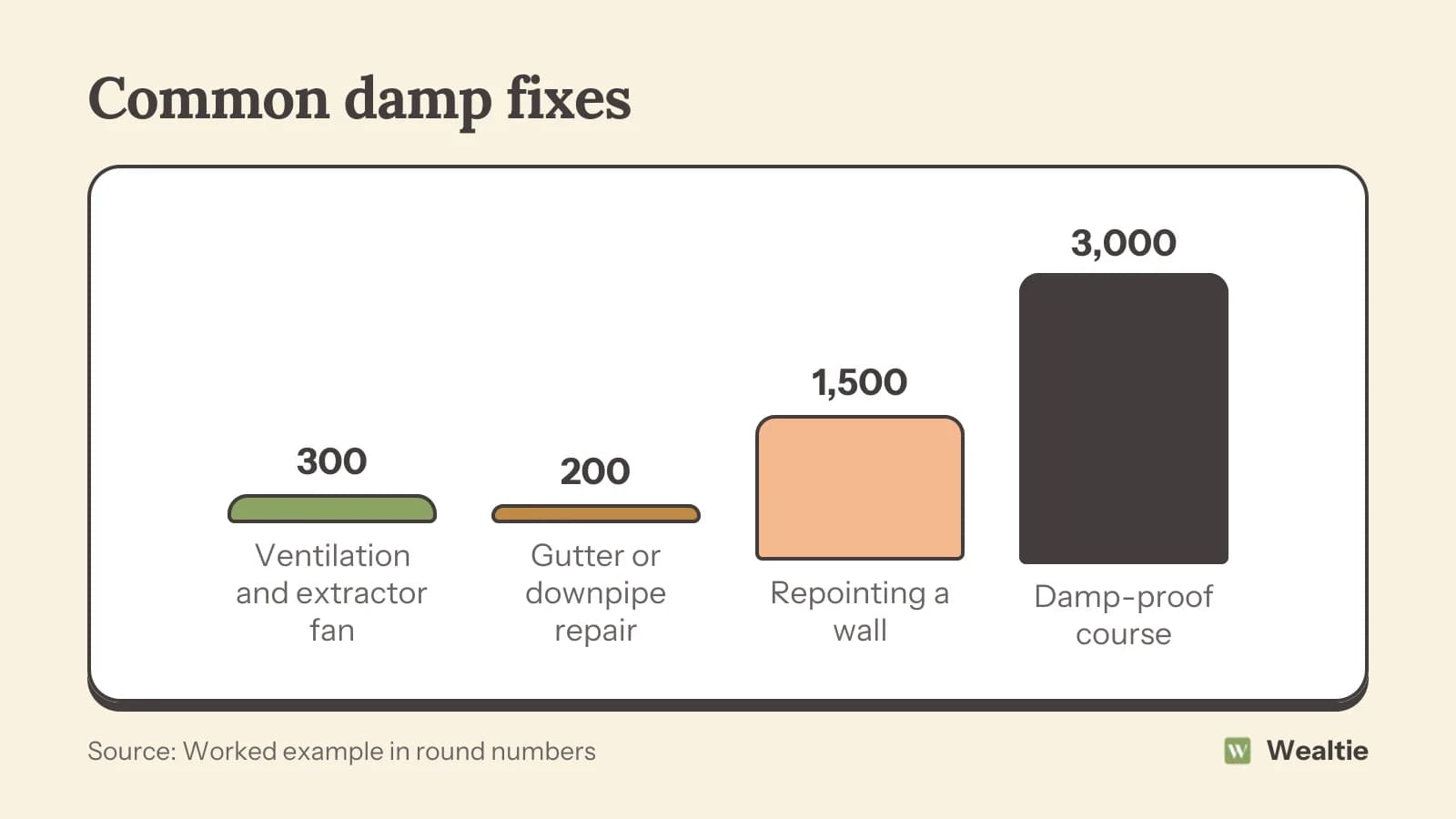
If damp on a wall comes from a leaking gutter above it, fixing the gutter for 200 solves the problem. Paying 3,000 for a damp-proof course in that situation wouldn't help. Prices vary by area and the size of the job, so get quotes for your home.
What are the main types of damp?
Condensation
The most common type, caused by moist air from cooking, showers and drying clothes meeting cold surfaces. It often shows as mould on walls, windows and in corners. Better ventilation and heating usually solve it.
Penetrating damp
Water getting in from outside, through leaking gutters, damaged roofs, cracked render, failing pointing or blocked drains. It often appears after rain and is fixed by repairing the source.
Rising damp
Moisture rising from the ground through walls, usually up to about a metre high. It's less common than often claimed and typically affects older homes without a working damp-proof course.
Leaks
Plumbing leaks from pipes, radiators or bathrooms can look like damp. Fixing the leak and drying the area is the solution.
How do you find the cause?
Look for patterns
Damp that appears after rain suggests penetrating damp. Damp in kitchens and bathrooms, or on cold walls in winter, suggests condensation. A tide mark low on a wall may suggest rising damp.
Check outside
Look at gutters, downpipes, roofs, pointing and the ground level against walls. Soil or paving piled above the damp-proof course can cause problems.
Get an independent survey
If the cause isn't obvious, an independent surveyor who doesn't sell treatments can diagnose it, often for around 300. That's small compared with the cost of the wrong fix.
Be wary of free surveys
Some companies offer free damp surveys and then recommend expensive treatments. A second opinion protects you from paying for work you don't need.
How do you fix damp cheaply?
Improve ventilation
Use extractor fans, open windows when cooking or showering, and avoid drying clothes indoors without ventilation. These cost little and solve many condensation problems.
Heat the home steadily
Keeping rooms at a steady, moderate temperature reduces cold surfaces where condensation forms. How to save money on heating covers doing this affordably.
Fix gutters and drains
Clearing and repairing gutters and downpipes is one of the cheapest ways to stop penetrating damp.
Repair the outside of the walls
Repointing brickwork or fixing cracked render costs more but stops water getting in for years.
When is specialist treatment needed?
If a survey confirms rising damp, a damp-proof course or other treatment may be needed, followed by replastering. Ask for a written diagnosis, the evidence behind it and a guarantee for any work. Make sure the cause is fixed before replastering or redecorating, or the damp will come back and you'll pay twice.
How do you budget for damp repairs?
Fix small problems quickly
Small leaks and blocked gutters become expensive repairs when left. A yearly check of gutters, roof and walls catches problems early. How to plan a home maintenance budget covers setting aside money for this.
Include making good
Replastering, decorating and replacing damaged skirting or flooring can cost as much as the fix itself. Add them to your budget.
Check your insurance
Some damage from sudden leaks may be covered by home insurance, though gradual damp usually isn't. How to save money on home insurance covers what policies typically include.
Keep a simple record of what you see, like photos of damp patches with dates and notes on the weather. It helps a surveyor spot the cause faster, and it shows whether a fix has worked over the following months. Many damp problems take a while to dry out, so patience after a repair is normal.
If you rent, tell your landlord about damp in writing as soon as you notice it. In many places, landlords are responsible for repairs to the structure, like gutters, roofs and walls, while tenants are expected to ventilate and heat the home sensibly.
How can Wealtie help you track repairs?
Log surveys, repairs and making good in a home repairs expense category, and set a yearly budget for maintenance. Over time, you'll see what your home costs to keep in good shape and can plan for bigger repairs.
Questions people ask
Fixes range widely with the cause. In a worked example, a gutter repair cost 200, while a damp-proof course cost 3,000.
Condensation is the most common type. Better ventilation and steady heating usually solve it at low cost.
Be cautious. Some free surveys come from companies selling treatments. An independent surveyor gives an unbiased diagnosis.
Only if a survey confirms rising damp. Many damp problems come from condensation or leaks, which need different, cheaper fixes.
This article is general information, not financial, tax or legal advice. Your situation is your own; check the numbers that apply to you before you act on them.