Budgeting: How much does swimming cost? Pool, lessons and kit budget
The cost of swimming depends on pool entry or a membership, any lessons and a little kit like goggles and a swimsuit. In a worked example, a year of swimming twice a week costs about 450.
 By Wealtie Team · 3 min read

Key takeaways
- The cost of swimming depends on pool entry, any lessons and a little kit.
- In a worked example, a year of swimming twice a week costs about 450.
- A membership often beats paying per swim if you go often.
- Off-peak sessions and council pools are usually cheapest.
How much does swimming cost?
Swimming is one of the cheapest ways to keep fit. You need very little kit, and pools are often run by councils or community groups at low prices. The main cost is pool entry, either per visit or through a membership. Lessons add cost if you're learning or improving technique. In a worked example, a year of swimming twice a week costs about 450.
Open-water swimming in lakes and the sea can be cheaper still, though it needs some extra kit and care.
What does a year of swimming cost?
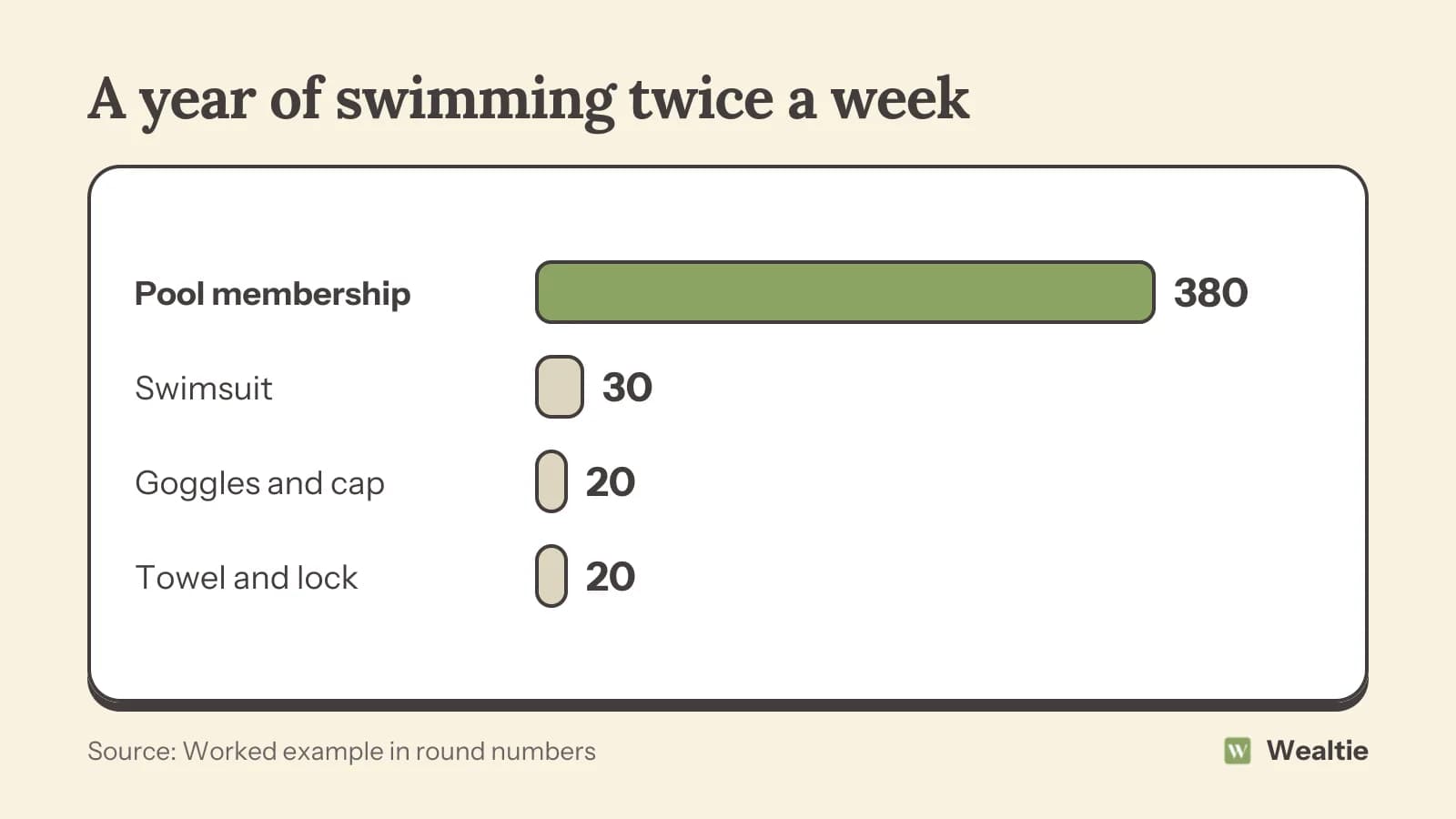
Here's a worked example for swimming twice a week, in round numbers that work in any currency:
| Item | A year |
|---|---|
| Pool membership | 380 |
| Swimsuit | 30 |
| Goggles and cap | 20 |
| Towel and lock | 20 |
| Total | 450 |
If a single swim costs 5 and you go 100 times a year, that's 500, so a membership at 380 saves 120.
What are the main costs of swimming?
Pool entry or membership
Most pools let you pay per swim, buy a pass of several swims or take out a monthly membership, sometimes including the gym. Off-peak sessions are often cheaper, and many pools offer discounts for students, older people and families.
Lessons
Adult lessons help beginners learn safely and help confident swimmers improve technique. Group lessons often cost about 10 a week, so a ten-week course costs about 100. Private lessons cost more but move faster.
Kit
A swimsuit, goggles and a cap are all you need. A towel and a padlock for a locker come in handy. Kickboards and pull buoys are usually provided by the pool.
Open-water extras
For lakes and the sea, a wetsuit, a bright tow float and sometimes entry fees for managed sites add to the cost. Never swim alone in open water, and check local safety advice. Joining an open-water group is a cheap way to swim safely with others who know the area.
How can you swim for less?
- Swim off-peak: many pools charge less at quieter times.
- Use council or community pools: often far cheaper than private clubs.
- Ask about discounts: students, older people, families and people on some benefits often pay less.
- Buy a multi-swim pass: cheaper per visit than paying each time, if you won't go enough for a membership.
- Check what's included: some gym memberships include the pool, so you may not need both.
- Join a club: swimming clubs often have cheap lane time and coaching.
- Make kit last: rinse swimsuits and goggles after each swim, since chlorine wears them out faster.
Is a swimming membership worth it?
Divide the membership price by the cost of a single swim to see how many visits you need to break even. If you'll swim more often than that, the membership pays off. If not, a multi-swim pass is usually better. How to save money on a gym membership covers similar choices for gyms.
Swimming lessons for children
Children's swimming lessons are a common family cost. Council pools and schools often run lower-cost courses. How to save money on kids' activities has more ideas.
Compare with other ways to keep fit
Swimming works the whole body and is gentle on joints. If you're paying for several activities, see which ones you use most. The cost of yoga classes and the cost of cycling cover other options you might be comparing.
What else adds to the cost of swimming?
A few extra costs come with regular swimming. Travel and parking at the pool can add up, especially if you swim before or after work. Chlorine is hard on hair and skin, so many swimmers buy special shampoo and moisturiser. A drink or snack at the pool café after each swim can cost as much as the entry over a month. If you get into the sport, you might sign up for events like open-water swims or triathlons, which have entry fees, plus a swim watch to track lengths. Kit also wears out faster than you might expect, since chlorine breaks down swimsuits and goggle straps, so plan to replace them once or twice a year.
Swim with family or friends
Family passes and group sessions often cost less per person. Swimming with a friend also makes you more likely to keep going, which makes a membership better value.
How do you track swimming costs in Wealtie?
Add your membership as a recurring transaction, so it logs itself on its date. Put lessons and kit in a fitness category among your expense categories, and set a budget for it.
Questions people ask
In a worked example, a year of swimming twice a week with a pool membership and basic kit costs about 450.
It is if you'll swim more often than the number of visits needed to break even. Divide the membership price by the cost of a single swim.
In a worked example, group lessons cost about 10 a week, or about 100 for a ten-week course.
Off-peak sessions at council or community pools, with any discounts you qualify for, or a multi-swim pass.
This article is general information, not financial, tax or legal advice. Your situation is your own; check the numbers that apply to you before you act on them.