Budgeting: The cost of summer camp, and how to budget for it
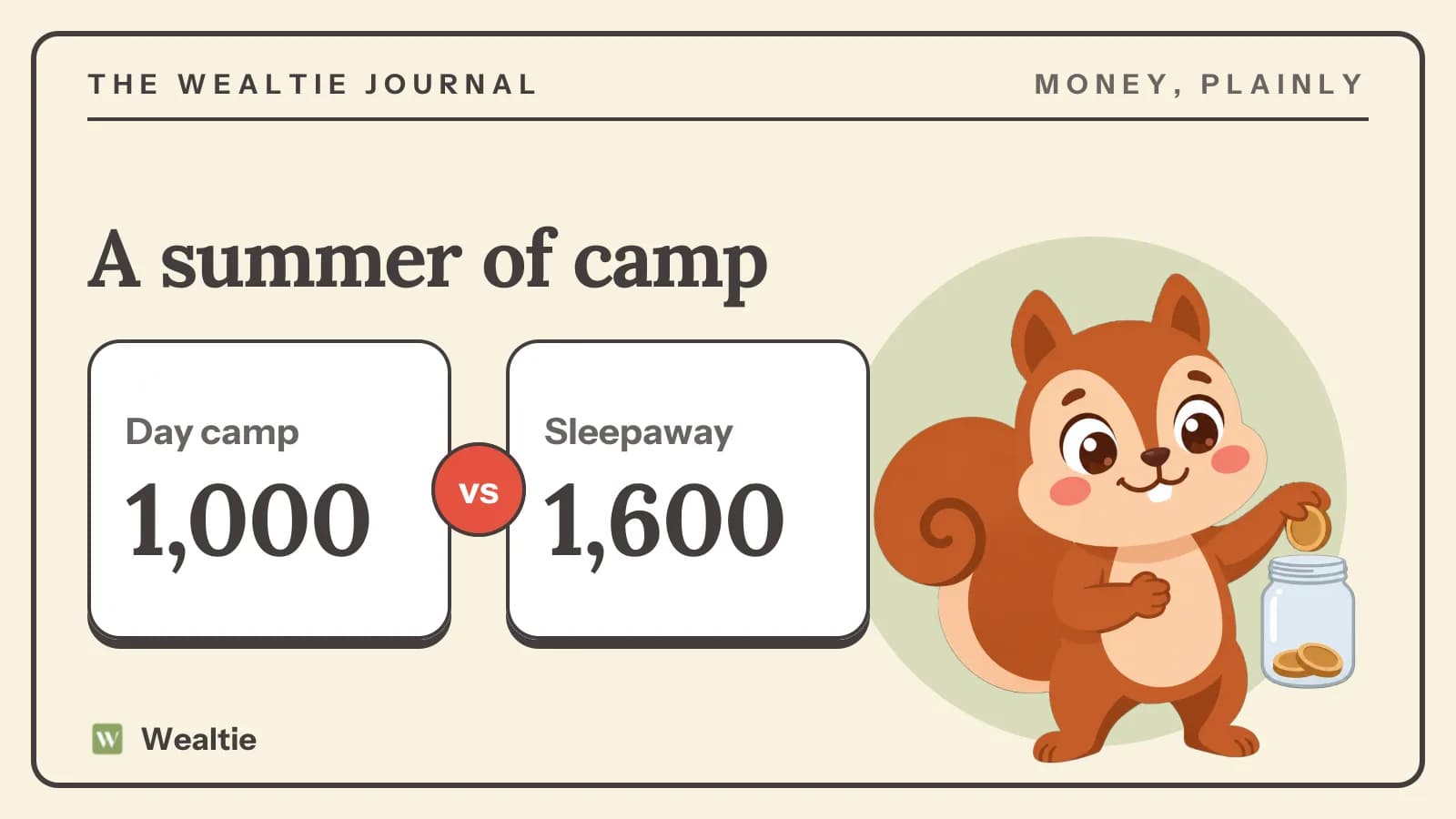
The cost of summer camp depends mostly on whether it's a day camp or a sleepaway camp, and extras can add more than you expect. In a worked example, four weeks of day camp cost 1,000, while two weeks away cost 1,600.
 By Wealtie Team · 3 min read
Key takeaways
- The cost of summer camp depends on the type, length and location.
- Extras like kit, travel, lunches and trips can add a lot to the fee.
- Early-bird rates, sibling discounts and community camps cut the cost.
- Saving a set amount each month from January spreads the cost.
What is the cost of summer camp?
The cost of summer camp varies widely, from free or low-cost community schemes to private camps with specialist coaching. The biggest factors are the type of camp, how many weeks your child goes and where you live. Day camps, where children go home each evening, cost much less than sleepaway camps, which include meals, accommodation and round-the-clock supervision.
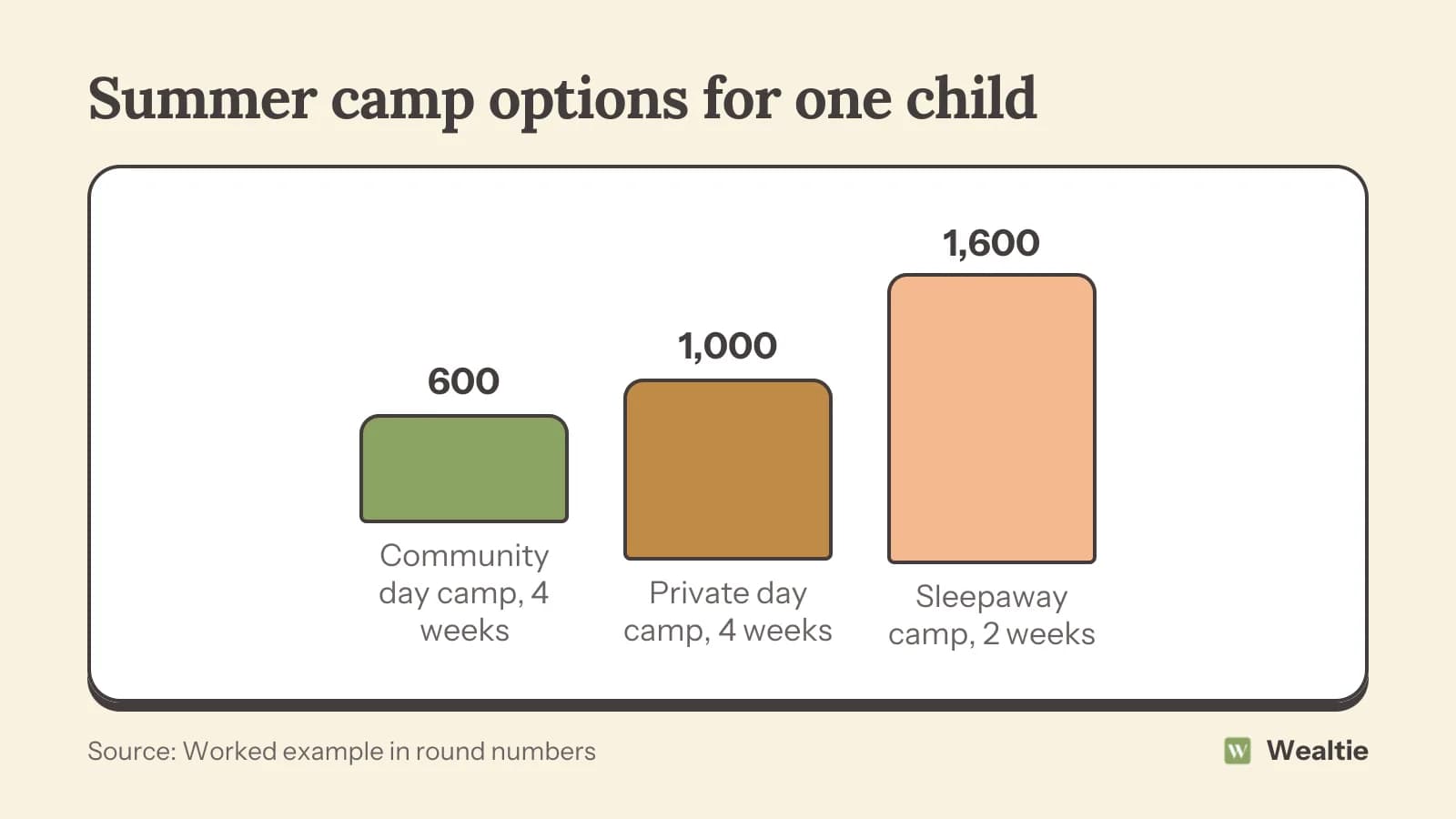
Here's a worked example for one child, in round numbers that work in any currency:
| Camp option | Cost |
|---|---|
| Council or community day camp, 4 weeks | 600 |
| Private day camp, 4 weeks | 1,000 |
| Sleepaway camp, 2 weeks | 1,600 |
For many families, camp is also childcare during the long summer break, so the cost replaces what you'd otherwise pay for care while you work. How to budget for the summer holidays with kids covers planning the whole break, including weeks off and family trips.
What kinds of camps are there?
Community and council camps
Run by local councils, schools, community centres or charities, these are usually the cheapest option. Some offer reduced places for families on lower incomes.
Private day camps
Private camps often run longer days, which suits working parents, and may offer more activities. They cost more per week.
Specialist camps
Sports, coding, drama, music and science camps focus on one skill. They're often more expensive, especially if they include expert coaching or equipment.
Sleepaway camps
Children stay for a week or more, with meals and activities included. They're the most expensive option, but some families see the independence and experience as worth it.
What extra costs should you plan for?
The fee is rarely the whole cost. Here's an example of extras for four weeks of day camp:
- Kit and clothing: 80 for trainers, a water bottle, sun cream and a bag
- Lunches and snacks: 100 if the camp doesn't provide food
- Trips and special days: 60 for outings that cost extra
- Travel: 60 for fuel or bus fares
That's 300 on top of a 1,000 fee. Sleepaway camps can add a trunk of kit, travel to the site and spending money for the tuck shop. Ask each camp for a list of extras before you book, so you can compare total costs, not just fees.
How do you save on summer camp?
Book early
Many camps offer early-bird prices in the first months of the year, and popular weeks fill up quickly. Booking early can save money and gives you more choice.
Ask about sibling discounts
Camps often reduce the price for a second or third child. If you have more than one child, ask before booking.
Mix camp types
Combine a week or two of a specialist camp your child loves with cheaper community camps for the rest. How to save money on kids' activities has more ideas for keeping activities affordable.
Share with friends and family
Taking turns with other parents to cover days, or sharing lifts to camp, cuts both childcare and travel costs.
Check for financial help
Some camps offer bursaries or reduced places, and some employers or local schemes help with holiday childcare. How to save money on childcare covers support that may be available.
Pack lunches
If lunch isn't included, sending food from home is cheaper than buying it on site.
How do you budget for summer camp?
Work out the total early
Add up the fees and extras for every week of camp you plan, so you know the full summer cost by early spring.
Save a set amount each month
If camp will cost 1,000 and you start saving in January, putting away 200 a month covers it by June. A sinking fund keeps the money separate from day-to-day spending.
Remember deposits
Many camps take a deposit when you book and the balance later. Put both dates in your calendar, so they don't catch you out.
Plan around other summer costs
Summer brings holidays, days out and back-to-school shopping too. Planning camp alongside them avoids a tight August.
Talk to your child about what they'd enjoy, too. A camp they're excited about is better value than a cheaper one they dread, and older children often have strong views on which activities and friends they want to spend the summer with. Asking early also gives you time to compare options before the best weeks are booked.
How can Wealtie help you plan camp costs?
Set a budget for the summer and log camp fees, deposits and extras in their own expense categories. You'll see the full cost of camp in one place, and know how much is left for the rest of the holidays.
Questions people ask
Costs vary widely. In a worked example, four weeks of community day camp cost 600, private day camp 1,000 and two weeks of sleepaway camp 1,600.
Yes. Day camps usually cost much less per week because they don't include accommodation, evening meals or overnight supervision.
Book early, ask for sibling discounts, mix community camps with specialist weeks, share lifts and check for bursaries or local schemes.
Kit, lunches, trips and travel are common extras. In a four-week example, they added 300 to the fee.
This article is general information, not financial, tax or legal advice. Your situation is your own; check the numbers that apply to you before you act on them.