Income & freelancing: The cost of starting a podcast on a budget
The cost of starting a podcast can be low, since a decent microphone and free software are enough to begin. In a worked example, a starter setup costs 150 plus 15 a month for hosting.
 By Wealtie Team · 3 min read
Key takeaways
- The cost of starting a podcast can be low with a USB mic and free software.
- Hosting is the main ongoing cost.
- Upgrade equipment only once you know you'll keep going.
- Track podcast costs separately if you hope to earn from it.
What is the cost of starting a podcast?
Podcasting is a popular way to share ideas, build an audience or promote a business, and it's cheaper to start than many people think. The cost of starting a podcast depends on your equipment, the software you use, where you host episodes and whether you pay for help with editing or artwork.
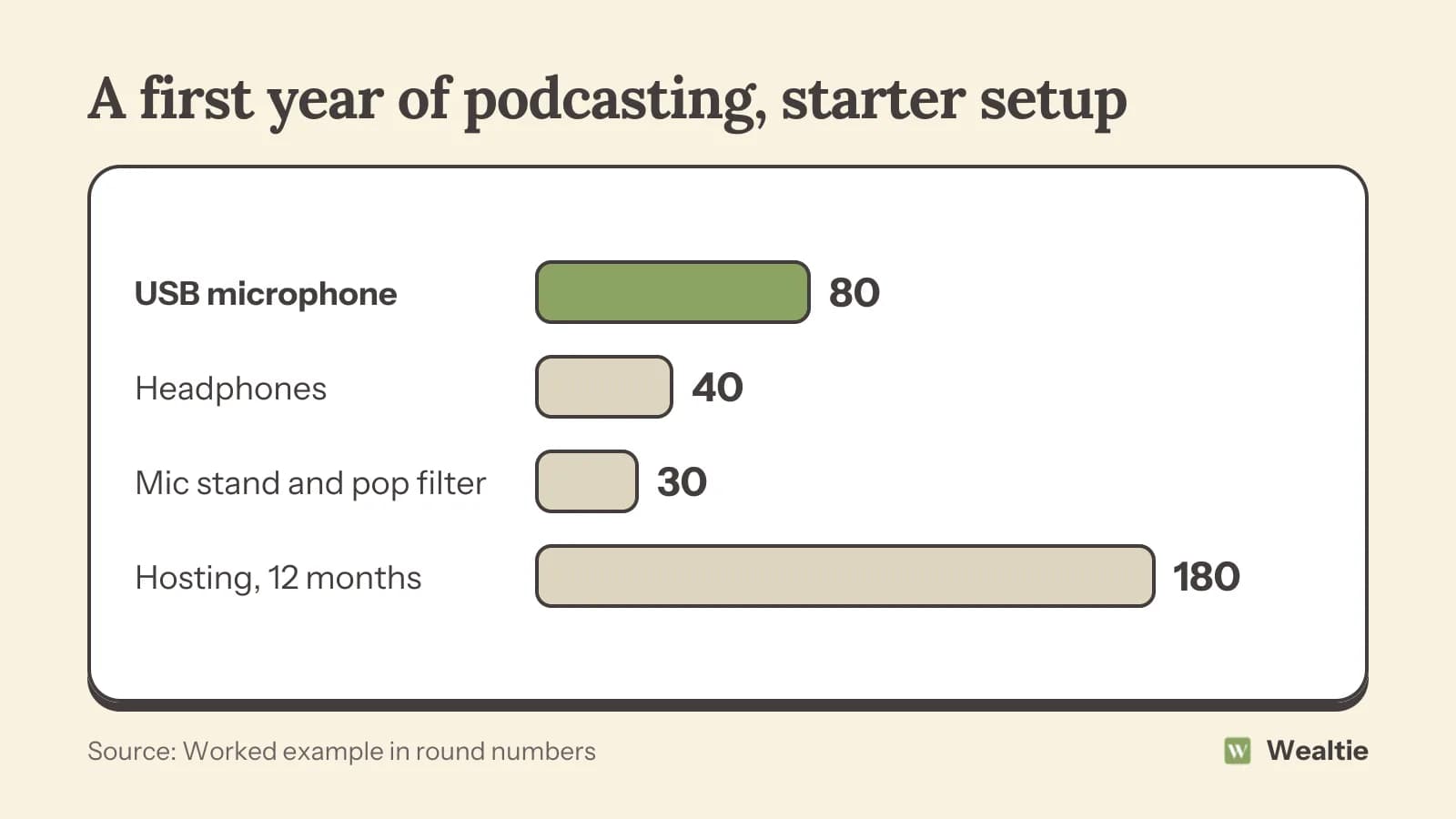
Here's a worked example of a first year with a simple starter setup, in round numbers that work in any currency:
| Cost | Amount |
|---|---|
| USB microphone | 80 |
| Headphones | 40 |
| Mic stand and pop filter | 30 |
| Hosting, 12 months | 180 |
| Total | 330 |
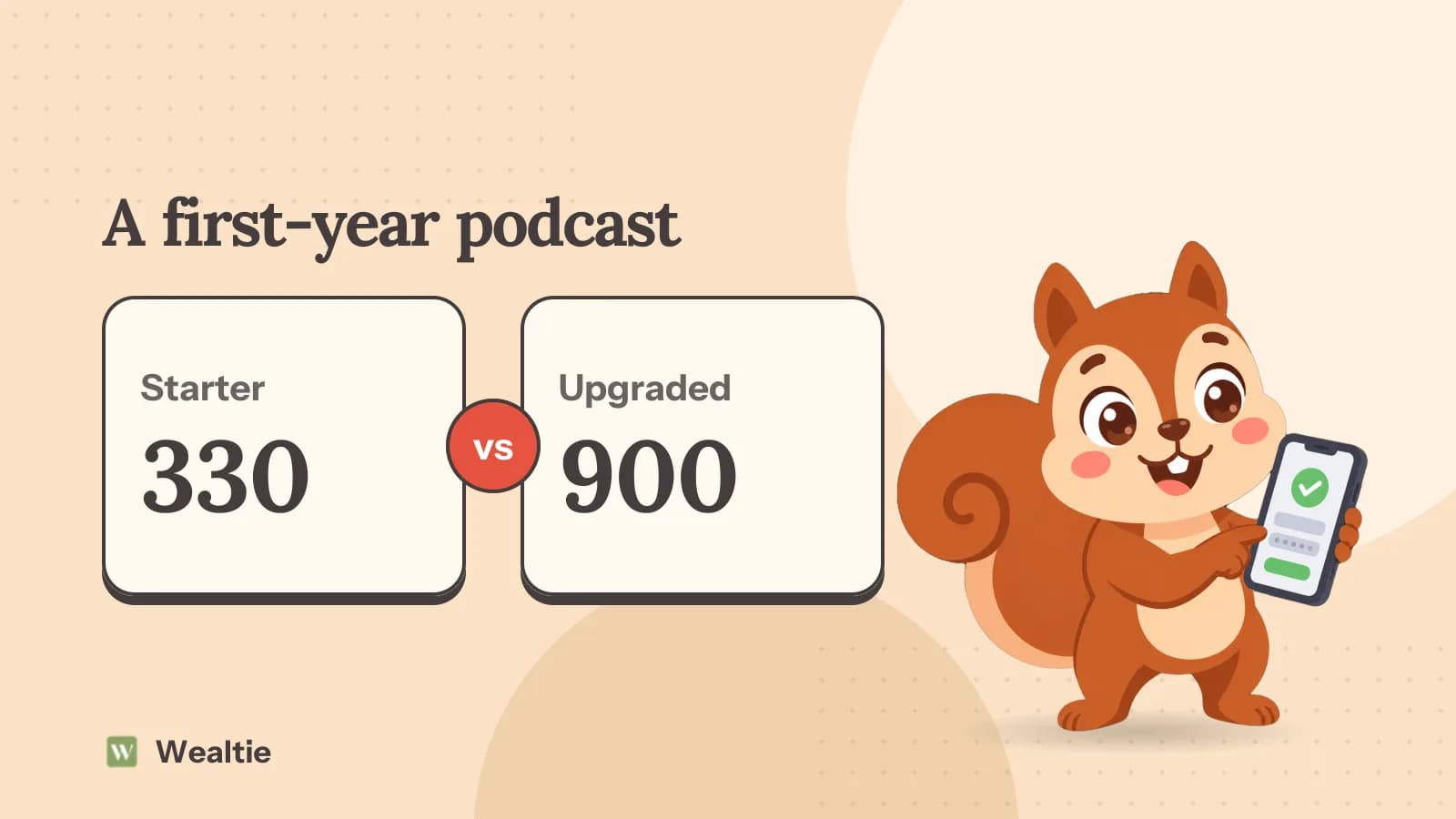
A starter setup costs about 150, plus around 15 a month for hosting. An upgraded setup with better microphones, an audio interface, paid editing software and custom artwork might cost around 900 in the first year. Many successful podcasts started with the simpler setup.
What equipment do you need?
A microphone
A good USB microphone plugs straight into a computer and is the easiest way to start. It makes a big difference compared with a laptop's built-in mic.
Headphones
Closed-back headphones help you hear what you're recording and avoid echo.
A quiet space
A small room with soft furnishings, like a bedroom or wardrobe, reduces echo for free.
Recording and editing software
Free software works well for recording and basic editing. Paid tools add features but aren't essential at first.
Hosting
A podcast host stores your episodes and sends them to podcast apps. Some offer free plans with limits, while paid plans cost a monthly fee.
What are the ongoing costs?
Hosting
The main regular cost. Choose a plan that fits how often you'll publish.
Editing
Editing takes time. Some podcasters pay an editor, which adds to the cost but saves hours.
Guests and travel
Interview podcasts may involve travel or remote recording tools.
Promotion
Artwork, a website or ads to grow your audience are optional costs.
How do you start a podcast cheaply?
Use what you have
Start with your phone, a basic mic and free software. You can upgrade later.
Record remotely for free
Many video call tools can record guests remotely at no cost.
Make your own artwork
Free design tools can create simple cover art.
Batch record episodes
Recording several episodes in one session saves time and keeps you consistent.
Upgrade gradually
Wait until you've published several episodes and know you enjoy it before buying better equipment. How to save money on electronics covers buying gear for less.
Can a podcast make money?
Some podcasts earn from sponsorships, listener support, ads or by promoting a business, but most take time to grow an audience. If you hope to earn from it, track costs and income separately from the start. How to track side hustle income covers keeping records, and the self-employed expenses list covers which costs may count as business expenses where you live.
Plan your first few episodes before buying anything. Deciding on your topic, format and how often you'll publish helps you choose the right equipment and hosting plan. A solo show needs one microphone, while an interview show with guests in the same room needs two. Knowing your format avoids buying gear you won't use.
Consistency matters more than equipment for growing an audience. Publishing regularly, whether weekly or every two weeks, helps listeners know when to expect new episodes. Batch recording several episodes when you have time keeps the schedule going during busy weeks, without extra cost.
If you're podcasting with a co-host, agree how you'll share the costs and any income from the start. A simple written agreement avoids awkward conversations later, especially if the podcast becomes popular.
Think about time as a cost too. Recording, editing and promoting an episode can take several hours. Tracking how long each episode takes helps you decide whether paying for editing help would be worth it as the podcast grows.
Finally, set a small monthly budget for the podcast. It keeps the hobby enjoyable and stops gear upgrades from creeping up before the show is established.
Many podcasters find that the biggest improvement comes from recording in a quieter, softer room rather than buying a better microphone. Hanging blankets, recording in a wardrobe full of clothes or adding cushions around your desk can make a cheap microphone sound much better, for no extra cost. Testing your setup with a short recording before each session also helps catch problems early, saving time in editing later.
How can Wealtie help you track podcast costs?
Log equipment, hosting and editing in their own expense category, and add hosting as a recurring transaction. If the podcast earns money, logging income in the same place shows whether it covers its costs.
Questions people ask
In a worked example, a starter setup cost about 150, plus around 15 a month for hosting, or 330 in the first year.
A decent USB microphone, closed-back headphones, a quiet space, free recording software and a podcast host.
Almost. You can record on a phone with free software and use a free hosting plan, though a basic mic improves sound a lot.
Through sponsorships, ads, listener support or promoting a business, though most take time to build an audience.
This article is general information, not financial, tax or legal advice. Your situation is your own; check the numbers that apply to you before you act on them.