Budgeting: How much do pottery classes cost? A budget for a new hobby
The cost of pottery classes covers the course fee, clay, glazes and firing, and later perhaps a studio membership or your own tools. In a worked example, a ten-week beginner course costs about 250.
 By Wealtie Team · 3 min read
Key takeaways
- The cost of pottery classes covers the course, clay, glazes and firing.
- In a worked example, a ten-week beginner course costs about 250.
- Check whether clay and firing are included before you book.
- A wheel and kiln at home cost a lot, so most people use a studio.
How much do pottery classes cost?
Pottery has become a popular hobby, and many towns now have studios offering classes. The cost depends on the type of class and how much is included. A one-off taster session lets you try the wheel or hand-building for an evening. A beginner course runs for several weeks and teaches the basics. Once you're hooked, a studio membership gives you access to wheels, kilns and space to work. In a worked example, a ten-week beginner course costs about 250.
Most beginners don't need to buy any equipment at first, since studios provide wheels, tools and kilns. The cost grows if you decide to set up at home.
What does pottery cost?
Here's a worked example of three ways to do pottery, in round numbers that work in any currency:
| Option | Cost |
|---|---|
| One-off taster | 50 |
| Ten-week course | 250 |
| Studio membership, a year | 900 |
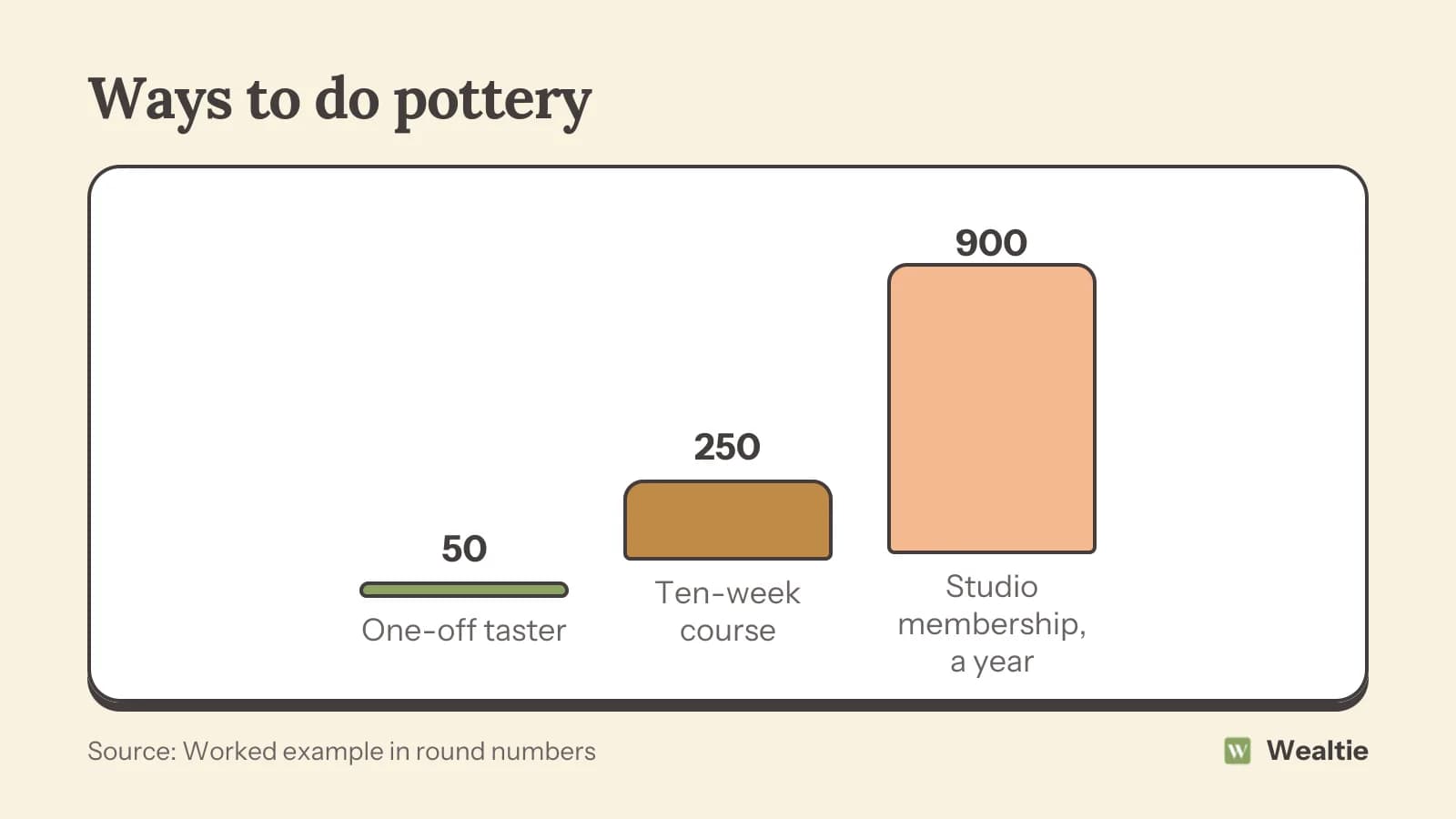
The course figure is 25 a week. The studio membership is 75 a month, which usually includes open studio time but may charge separately for clay and firing.
What are the main costs of pottery?
Classes and courses
Tasters and beginner courses usually include clay, tools, glazes and firing, though some charge extra for firing larger pieces. Ask what's included before booking, so you can compare studios fairly.
Clay
If clay isn't included, you'll buy it by the bag. One bag goes a long way for a beginner, but you'll use more as you get faster.
Glazes and firing
Pots are usually fired twice: once before glazing and once after. Studios often charge firing fees by the size or weight of the piece. Glazes may be included or charged separately.
Tools
A basic tool kit is cheap and useful once you're doing pottery regularly. Studios usually lend tools to beginners.
Studio membership
A membership gives you regular access to wheels, kilns and shelves to store work in progress. It's good value if you go often, but less so if you only manage a session a month.
What else adds to the cost of pottery classes?
A few costs are easy to miss. Firing fees for large or many pieces can add up quickly, since keen beginners make a lot of pots. Some studios charge for storage of work in progress. Workshops on special techniques, like raku firing or throwing large pieces, cost extra. Setting up at home is the biggest jump: a wheel and kiln cost a lot, need space and power, and a kiln can push up your electricity bill. Most hobby potters stick with a studio for this reason, at least until they're sure they'll keep going for years.
How can you do pottery for less?
- Start with a taster: try it before booking a full course.
- Compare what's included: a cheaper course that charges extra for clay and firing can end up costing more.
- Look at community and college classes: often cheaper than private studios.
- Try hand-building: pinch, coil and slab work need no wheel and can be done at home with air-dry clay.
- Share a membership with a friend: some studios offer shared or off-peak memberships.
- Make fewer, better pieces: firing fees reward focusing on the pots you love.
Can pottery pay for itself?
Some hobby potters sell mugs, bowls and plates at markets or online. It can cover the cost of clay and firing, and sometimes more. How to earn money selling crafts covers pricing and costs. If you start selling, keep the income separate from your spending so you can see whether the hobby pays its way.
Is pottery an expensive hobby?
It can be, if you go often or set up at home. But a course every few months, or a membership you use weekly, can be good value per hour compared with many hobbies. Work out the cost per use to see whether a membership beats paying per course. How to save money on a hobby covers more ways to keep costs in check.
Pottery as a gift
Taster sessions and courses make popular gifts. If you're given one, it's a cheap way to find out whether you'll love it before spending your own money.
How do you track pottery costs in Wealtie?
Add a hobby category to your expense categories and set a budget for it, so you can see what you spend on classes, clay and firing. If you sell your work, log the money in the income tracker to see the hobby's real cost.
Questions people ask
In a worked example, a ten-week beginner course costs about 250, a one-off taster about 50 and a year of studio membership about 900.
Often for beginner courses, but not always. Check what's included before booking, since firing fees can add up.
Hand-building with air-dry clay is cheap. A wheel and kiln cost a lot, so most hobby potters use a studio.
It is if you go often. Compare the monthly cost with what you'd pay for courses over the same time.
This article is general information, not financial, tax or legal advice. Your situation is your own; check the numbers that apply to you before you act on them.