Budgeting: The cost of pilates: classes, reformer and at home
The cost of pilates varies widely, from free online videos to reformer classes that cost several times more than mat classes. In a worked example, weekly reformer classes cost 100 a month, against 40 for mat classes.
 By Wealtie Team · 3 min read

Key takeaways
- The cost of pilates depends mainly on mat vs reformer classes.
- Reformer classes cost more because of the equipment and small class sizes.
- Class packs and memberships lower the price per class.
- Mixing studio classes with home practice keeps costs down.
What is the cost of pilates?
Pilates focuses on core strength, posture and controlled movement, and it's popular with everyone from beginners to athletes. The cost of pilates depends on how you practise. Mat pilates classes are usually affordable and widely available in gyms, community centres and studios. Reformer pilates uses a specialist machine with springs and a sliding carriage, and classes cost more. You can also practise at home with videos or apps for little or nothing.
Here's a worked example of a month of weekly practice, in round numbers that work in any currency:
| Option | Monthly cost |
|---|---|
| Free videos at home | 0 |
| App subscription | 12 |
| Mat classes, weekly | 40 |
| Reformer classes, weekly | 100 |
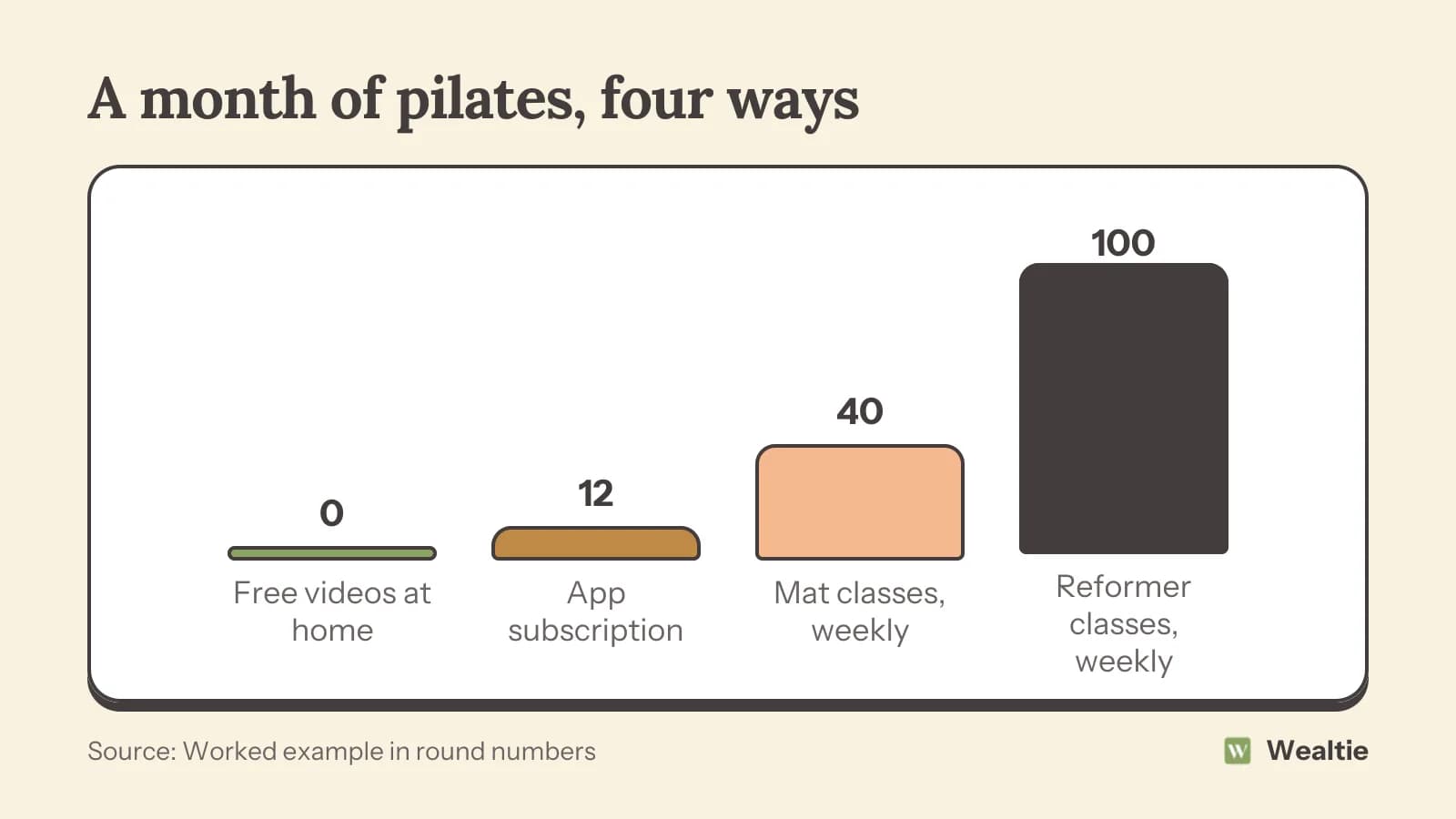
Weekly mat classes at 10 each cost 40 a month. Reformer classes at 25 each cost 100 a month, or 1,200 a year. Prices vary a lot by city and studio, and many studios charge less per class if you buy a pack or membership.
Why does reformer pilates cost more?
Reformer machines are expensive to buy and maintain, and they take up a lot of space, so studios have fewer places per class. Instructors also need specialist training. Those costs are reflected in the price. Many people find reformer classes worth it for the variety and resistance, but mat classes build many of the same skills for less.
How do you pay less for classes?
Buy class packs or memberships
Most studios offer packs of five or ten classes, or monthly unlimited memberships, at a lower price per class than drop-ins. Only buy what you'll use before it expires.
Look for intro offers
New-member deals, like a discounted first month or a few classes for a low price, let you try a studio cheaply.
Use gym classes
If you already have a gym membership, mat pilates classes may be included. How to save money on a gym membership covers getting more from what you pay for.
Try community classes
Community centres and local councils often run cheaper classes.
Choose off-peak times
Some studios charge less for daytime or quieter classes.
Can you practise pilates at home?
Yes. Free videos and low-cost apps offer classes for every level. All you need is a mat, which might cost around 30, and some space. Home practice won't give you an instructor's corrections, so many people combine a few studio classes to learn the basics with regular practice at home. That mix keeps costs down while still building good technique.
Is it worth paying for private sessions?
Private or small-group sessions cost more but give personal attention, which can help if you're recovering from an injury or have specific goals. A few private sessions at the start, then group classes or home practice, can be good value. Personal training follows a similar pattern, with short blocks often enough to learn the basics.
How does it compare with yoga?
Pilates and yoga have similar pricing, with studio classes, packs and home options. The cost of yoga classes covers the yoga side if you're choosing between them or doing both.
How do you decide what's worth it?
Think about how often you'll go and what you enjoy. A class you look forward to every week is good value even if it costs more. Cost per use helps you compare a pricey membership you use often with cheaper classes you skip.
When choosing a studio, look at the instructors' qualifications, class sizes and the level of each class. Beginners often get more from a slower, smaller class where the instructor has time to correct their form, even if it costs a little more. A good start helps you practise safely at home later, which saves money in the long run.
It also helps to set a realistic routine. Two classes a week sounds great, but if you only manage one, a cheaper pack or a lower membership tier may suit you better. Many studios let you pause or change memberships, so review what you're using every few months.
If you have an injury or health condition, talk to a doctor or physiotherapist before starting, and tell the instructor. Some physiotherapy clinics run clinical pilates classes, which may be partly covered by health insurance.
Finally, remember that consistency matters more than equipment. Regular mat practice at home, even for 15 minutes a few times a week, builds strength and flexibility at almost no cost, and makes the classes you do pay for more effective.
How can Wealtie help you track fitness costs?
Add class packs or memberships as recurring transactions in Wealtie, and log drop-in classes in a fitness expense category. Seeing what you spend each month helps you choose the best mix of classes and home practice.
Questions people ask
In a worked example, weekly mat classes cost about 40 a month and weekly reformer classes about 100 a month.
Reformer machines are expensive and take up space, so classes are smaller and studios charge more per class.
Yes. Free videos and low-cost apps offer classes for every level, and you only need a mat.
Buy class packs or memberships, use intro offers, check gym and community classes and mix studio classes with home practice.
This article is general information, not financial, tax or legal advice. Your situation is your own; check the numbers that apply to you before you act on them.